Judith Anderson

  • The Red House (1947)

    (On Cable TV, October 2022) Given that I’m easily amused, I’m still smiling at the irony of black-and-white films named after a colour. But that’s roughly the last funny thing about The Red House, a sombre film-noir era horror thriller featuring, yes, a red house but also a grumpy farmer, a plucky boy, a dangerous forest and about as close a femme fatale as a rural thriller can get. Edward G. Robinson, predictably enough, plays the cranky farmer. Convinced by his adoptive daughter to hire some help, he’s not pleased when his overeager helper starts poking around the forest at the edge of the field, and seems determined to stop him from entering. What’s in there? Well, the red house, of course. As for the rest, the film gets us dark secrets, a love quadrangle, a psychotic break and murder before everything is through. It takes a while to get going (the opening act is heavy on atmosphere and not so much on plot) but it’s not bad when it’s in the thick of its own story. Lon McCallister and Judith Anderson are not bad as the young couple in the middle of the story, but a special mention belongs to Julie London, who brings the femme fatale to the farm. That rural turn is what helps The Red House feel fresh in a sea of mansion gothic thrillers and urban film noir of the same period. There’s a lot brewing under the surface of the script as well, and it seems less coy than many contemporaries in setting up a nightmare. Not a bad pick at all.
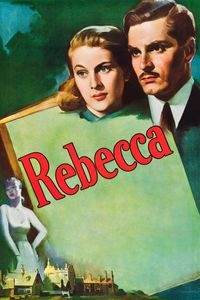
  • Rebecca (1940)

    Rebecca (1940)

    (On DVD, September 2018) For all of his famed ability at creating and sustaining suspense, Alfred Hitchcock could have a surprisingly romantic streak at times, and few of his movies manage to combine both traits as intriguingly as in Rebecca, perhaps one of the best depiction of the Gothic romance sub-sub-genre ever put on-screen, adapted from Daphne Du Maurier’s still well-known novel. The mystery here is intensely personal, as the new wife of a rich man has trouble measuring up to the example set by her predecessor, the mistress of a vast estate who clearly still has her fans in the household help. Against the lonely and oppressive backdrop of a house far too big for its inhabitants, the heroine starts wondering who’s not out to murder her. It escalates into a fiery climax, but the point of the film, after a sunny romantic first act, is the heroine looking over her shoulder, discovering deeper secrets about her new husband and his house, and sparring with a standoffish housekeeper. Rebecca is noteworthy in Hitchcock’s oeuvre in a few respect: it was his first Hollywood project after emigrating from Great Britain; it was produced/dictated by the legendary producer David O. Selznick and it’s the only Hitchcock film to win the Best Picture Academy Award. Both Joan Fontaine and Laurence Olivier are quite good as the leads, but it’s Judith Anderson who has the best role as the ever-faithful Mrs. Danvers. Otherwise, Rebecca is still good fun to watch, not quite noir but definitely Gothic enough to be visually interesting on top of Hitchcock’s usually skillful direction.