Lee Marvin

  • The Wild One (1953)

    The Wild One (1953)

    (On Cable TV, December 2021) Some of the fun in watching older “social issues” movies is how quaint they can feel. The barely repressed panic of The Wild One, for instance, consists in imagining the terrible things that could happen if some of those strange and scary motorcycle enthusiasts would take over a town for the weekend, rampaging through God-fearing innocent folks. (Admittedly all inspired by a rather sensationalistic account of the Hollister Riot.) Nowadays, of course, some cities voluntarily create events for bikers — and the spectre of social disorder has been transferred to other groups. Still, the world of The Wild One is built to accommodate Marlon Brandon as a swaggering biker — but a good one that fights against the truly evil bikers (their leader played by a magnificent Lee Marvin) and romances the village’s purest girl along the way. It’s schematic, but much of the interest of the film is in the methods it uses (safely limited by the demands of the Production Code) to create social terror among its viewers, and then somehow manage to make a likable character out of Brando’s performance. The Wild One reflects an interesting juncture in post-WW2 American history, as biker gangs emerged as organized groups — but take the “inspired by a real story” tack with some indulgence.
  • Cat Ballou (1965)

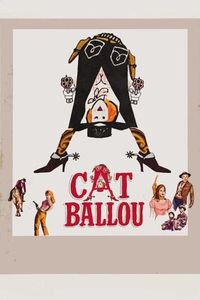
    (On TV, November 2021) While Cat Ballou isn’t quite as funny as it (maybe) wanted to be, there’s still a surprisingly funny western comedy at the heart of it call. Jane Fonda, looking rather terrific in long red hair, is the eponymous Catherine Ballou, a schoolteacher who turns to crime when her father is killed by a local tycoon. But the film’s most memorable Academy-Award-winning performance remains that of Lee Marvin in a dual role as a drunk sharpshooter and his no-good brother. Then there’s Nat King Cole and Stubby Kaye, very likable as the troubadours occasionally stepping into the film to comment on the action and set up the next few scenes. The sense of humour here is occasionally quite odd — not really playing along familiar registers, but seemingly happy to be odd just for the fun of it. There’s definitely a consistent problem of tone, as some sequences are shot very conventionally for a western, but set alongside other sequences that are just weird for weirdness’s sake. The framing device works well, though, and the ending doesn’t disappoint. What does set Cat Ballou apart from other westerns is significant and unforgettable, though — it’s impossible to mistake it for any other film of the genre (well, maybe bits and pieces of the much-later The Ballad of Buster Scruggs) and that’s quite an achievement in itself.

  • The Professionals (1966)

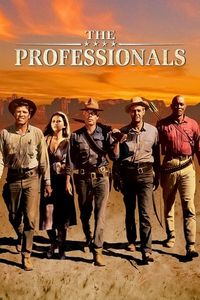
    The Professionals (1966)

    (On TV, September 2021) I’ve seen too many undistinguished westerns lately to expect much from yet another one, but The Professionals gradually won me over. The casting certainly gets things rolling in the right direction: with Lee Marvin and Burt Lancaster sharing the lead as mercenaries going into Revolutionary War Mexico, you’re in good hands — but then throw in Claudia Cardinale and Jack Palance and it just gets better. The film also cranks up the action by featuring an explosive-heavy plot with a demolition expect (Lancaster, looking suitably ragged-down) as a rich American asks them to go south to rescue his wife (Carnivale, lovely) from a Mexican warlord (Palance). Many explosions pepper what happens next, plus a slightly-twisty plot that could have been taken from a film noir. This already sets the film apart from so many other westerns, but the execution more than supports the premise. There are really interesting parallels to be made between The Professionals and the spaghetti westerns that were emerging as renewal engines for the western genre — A Fistful of Dollars had come out in 1964, but the clearest parallels in terms of explosive Mexican Revolution action are with the later A Fistful of Dynamite (1971). Still, compared to many American westerns of the 1960s, The Professionals has more energy, more distinctiveness and more fun to it. No wonder I liked it a lot more than the usual western of the time.

  • Avalanche Express (1979)

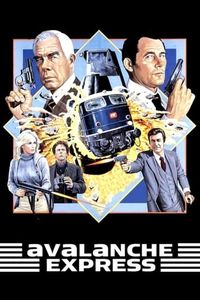
    (On Cable TV, September 2021) It’s fun to go back to Cold War thrillers and experience the paranoia of the time. The era is rife with movies in which the heroes are clearly Americans and the villains are clearly Soviets, with no less than a credible nuclear war hanging in the balance. Seldom have the spy-versus-spy tropes been so complex and variations so elaborate. In Avalanche Express, a familiar starting point veers into a somewhat original premise, as an important defector is put on a transcontinental train going to western Europe, and the Soviet empire targets the train to eliminate the defector by all means necessary, all the way to causing an avalanche. The existence of such a train is nonsense, and so is much of the plot — but it’s the thrills that count. Accordingly, there are a few good elements at play here: The premise has juice, the cast is led by Lee Marvin’s exemplary tough-guy persona, and you can see here the elements that could have been used for a strong film. Unfortunately, the execution doesn’t quite match the early expectations. Once past the necessary bits of plotting required to get everyone aboard the train or in pursuit of it, the joy very quickly goes out of Avalanche Express. Some of the incoherence comes from production issues: both director Mark Robson and star Robert Shaw died during the making of the film, and we can only imagine what impact that must have had on the production. Other issues, though, are more fundamental to the screenplay: There’s a useless romance, for instance, that gums up the pacing of the film. The various incidents across the train trip are not very well structured, and for all of the good-for-their-time special effects used for the avalanche sequence (which is, surprisingly, not the climax of the film), the sequence itself isn’t particularly exciting. Of course, we’re looking at this from the perspective of audiences used to decades of technical refinements — a modern version of Avalanche Express (not a bad idea!) would use digital effects and time-tested structure. But even contemporary films did better with similar elements — I’m specifically thinking of Von Ryan’s Express, from the same director fifteen years earlier, which crammed a lot more characterization and action out of a train-bound journey. Even the final shootout seems curiously anticlimactic, visually flat and dramatically inert. Too bad — I think that there’s a better movie trying to get out of Avalanche Express. It’s just a shame that we couldn’t get it.

  • The Killers (1964)

    The Killers (1964)

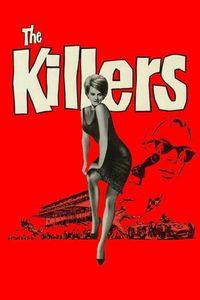
    (On Cable TV, July 2021) As far as remakes of classic movies go, this 1964 take on The Killers has the right idea — take an intriguing premise, develop it in a different direction and throw in a decent amount of talent behind and in front of the camera. The original is good in a classic noir mould, but this remake aptly adapts the story to the sixties: colour cinematography, far more permissive attitudes toward sex and violence, and a lingering amorality that is best exemplified in how the killers become the protagonists moving the story — resulting in what some call the first film of the neo-noir era. Directed by Don Siegel, a veteran filmmaker who would go on to become one of Clint Eastwood’s favourite directors, The Killers is capably handled throughout, especially during its rather overlong pit-stop in the world of professional racing. But it’s the casting that still gets some attention — Lee Marvin is quite impressive as the lead killer, but it’s Ronald Reagan who entertains the most in his last and only villainous role, slapping his moll and gleefully saying, “I approve of larceny” — unlike earlier performances, he here looks enough like his 1980s image that it’s even funnier. It all wraps up into an overlong but entertaining thriller with some great 1960s period detail. As far as remakes go, I approve of this take on The Killers: different enough to be entertaining even when you know where it’s going.

  • Point Blank (1967)

    Point Blank (1967)

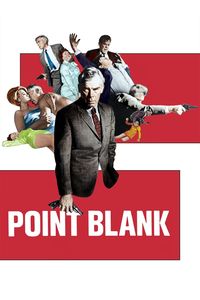
    (On Cable TV, June 2020) Anyone studying how 1967 was the year movies changed from Classical to New Hollywood can add Point Blank to their viewing list, because it’s a film that could not have existed a few years earlier, and yet belongs far more to the cinema of the 1970s. A near-perfect starring vehicle for gray-haired Lee Marvin, it’s a solid piece of neo-noir tempered with European avant-garde style. A dark, moody, violent thriller in which a left-for-dead criminal wants his stolen share of money, Point Blank has a nice sense of late-1960s Los Angeles. Director John Boorman benefits immensely from Marvin’s impassible performance and glum face—it’s hard to imagine anyone else being as good in the same role. The modernity of the film still resonates—determined to place scenes unlike traditional cinema, the plot jumps in time and doesn’t always make easy sense. But that’s not necessarily an issue, considering how much fun it is to watch the protagonist fight gangsters in one scene after another. When a film is as stylish as this version of Point Blank, plot understanding takes a backseat to the moment-to-moment thrills.

  • The Big Heat (1953)

    The Big Heat (1953)

    (On Cable TV, February 2020) At first, I couldn’t quite see in The Big Heat why it has earned such high regard as a film noir. I mean—sure, the film opens with a murder, and there’s a cute barfly dame being antagonistic toward our protagonist… but what about that protagonist? A veteran policeman, a solid husband with a loving wife, a wonderful little girl and a happy middle-class life? Where was the real noir? I shouldn’t have asked (or should have guessed that the happy home life only highlighted what he had to lose), because by the middle of the movie the plot explodes all domestic bliss, turning our protagonist into a vengeful rogue with a gun and no badge to stop him. The barfly is dead, and an even more dangerous woman enters the picture, her face half-scarred from burns. That’s the point where The Big Heat becomes noir, turning into a two-fisted anti-corruption tale that’s well handled through unobtrusive direction by Fritz Lang. It gets noirer the longer it goes on, culminating in an action-filled climax where all the pieces have a role to play. Glenn Ford is simply perfect as the lead character, with some able support from Gloria Grahame as a vengeful moll and Lee Marvin as the Big Boss. While the story clearly harms its protagonist, the ending offers a semi-unusual return to normalcy for him as he picks up the badge again. Noir rarely allows for the possibility of it being a detour into madness, but The Big Heat was a late-period entry in the genre, and remains successful largely because it does not clearly begin nor end in typical fashion.

  • The Delta Force (1986)

    The Delta Force (1986)

    (In French, On Cable TV, July 2019) I’ve come to be grateful for the “time-travel effect” of watching older movies that take us to a past time and place, but that appreciation has its limits, especially when it takes us to a time and place that should remain distant. Part of The Delta Force’s anti-charm is that it takes us to a radicalized version of the mid-1980s where terrorists were everywhere and the only possible solution was violent action taken against them. To be fair, I can imagine a number of good scripts in which this idea is discussed. But none of them happen to feature Chuck Norris as a former Delta Force operative taking on the terrorist almost single-handedly. And few of them go for the cheap theatrics and hyper-manipulative tactics used here. On the other hand, if you really want a taste of how American foreign policy was perceived in America circa 1986ish, then this is the film to watch: it’s not good and it’s not refined and it tells you everything you need to know in as blatant a way as possible. The stereotypes are as blunt as they can be, with Palestinian hijackers, Jewish hostages, American muscle and ineffective Middle Eastern help—is it even useful to note that The Delta Force was produced, written and directed by the very Israeli Menahem Golan and Yoram Globus? Calling it a piece of propaganda doesn’t quite capture it—considering that the villain’s plot was based on two early-eighties real-life events, it’s perhaps fairer to call it a fantasy of excessive retribution. It’s not fair to say that the film rests on a lot of unexamined assumptions about terrorism and violent response—it’s more accurate to say that the film stakes itself on not revisiting those assumptions. There are a few interesting things about The Delta Force. Chuck Norris may or may not be to anyone’s liking, but he is surrounded by an astonishing number of grade-A actors in big-to-minor roles, from Lee Marvin to George Kennedy to Shelley Winters to Robert Vaughn, to Robert Foster. For all of its emotional manipulation, the film does stumble into a few effective scenes (usually sandwiched between far less effective material). Finally, there’s a violent wish fulfillment of seeing terrorists getting their comeuppance, which works even when you’re not a far-right-winger. Any history of 1980s Hollywood movies and their relationship with American foreign policy can talk about Top Gun and Rambo, but it has to include a chapter on The Delta Force: It’s so blunt, with all subtext being presented as text, that it pretty much spells out what other films hesitantly allude to.

  • Ship of Fools (1965)

    Ship of Fools (1965)

    (On Cable TV, January 2019) There are many ways in which Ship of Fools reminded me of Grand Hotel—its 1930s setting, its ensemble cast with overlapping subplots, its black-and-white cinematography and its mixture of American and German characters. However, the comparisons only go so far and the crucial difference between the two movies is not that one is in a building and the other on an ocean liner, but that one was made in 1932 and the other one after World War II. As a result, expect a lot more Nazis in Ship of Fools than Grand Hotel, and the portentous veil that this distance casts over the entire film. As the film begins assembling its large cast of characters, it quickly becomes apparent that this isn’t just about people travelling from North America to Europe on a steam ship, but a message movie about the rise of fascism in Europe. (Contemporary viewers would have known that from seeing that it’s directed by Stanley Kramer, a renowned social issues filmmaker.) The foreboding feeling is accentuated by the characters opposing their views on the world, and the film sides squarely with the marginalized over more conventional heroes. (In addition to characters with terminal illnesses or mental conditions, there are Jewish characters, obviously, and the film’s most likable character, its narrator, is played by 3′10″ Michael Dunn in an Oscar-nominated performance.) The ensemble cast is impressive, what with Lee Marvin, Vivien Leigh (in her last film), José Ferrer and a terrific Simone Signoret. Ship of Fools is certainly preachy, but there’s a powerful sense of impending doom as the characters get closer to their German port of arrival. The last few moments are particularly hard-hitting, as the narrator delivers a bitterly ironic envoi.

  • The Dirty Dozen (1967)

    The Dirty Dozen (1967)

    (On Cable TV, March 2018) Frankly, I thought that I would have enjoyed The Dirty Dozen quite a bit more than I did. Part of it may have been shaped by modern expectations—in modern Hollywood, movies based on the premise of bringing together hardened criminals for a suicide mission are meticulously polished to ensure that the criminals aren’t too bad, or that they meet a morally suitable comeuppance. Our heroes have been unjustly convicted, or operate according to a sympathetic code of honour that may not meet official approval. Their adventures, first in training and then in combat, are calculated to meet focus group approval. But The Dirty Dozen, having been forged in the years following the breakdown of the chaste Hayes Code, is significantly rougher and grittier than the modern ideal. The dirty dozen members are in for reprehensible conduct, not pseudo-criminal malfeasance. The attitude of the film, as Hollywood was pushing the limits of what was acceptable in terms of violence, also permeates everything. While tame by contemporary standards of gore, The Dirty Dozen nonetheless feels … dirty. There are a lot of characters, and they’re often short-changed by the film’s juggling of roles. This being said, The Dirty Dozen is also a showcase of actors: In between Lee Marvin, Ernest Borgnine, Charles Bronson, John Cassavetes, George Kennedy and an impossibly young Donald Sutherland (among many others), there are a lot of familiar faces here, and that has its own appeal. If you can go along with the film’s disreputable atmosphere, it remains a competent war film … but it may be difficult to do so.