Mick Garris

  • Riding the Bullet (2004)

    (In French, On Cable TV, May 2022) If it wasn’t for writer-director Mick Garris, we would have far fewer Stephen King film adaptations since the 1990s. I have a fondness for the cat-craziness of his Sleepwalkers, and thought that his take on Desperation punched above its weight as a made-for-TV movie adaptation, but I hadn’t seen Riding the Bullet until now. Nominally the story of a road trip in which a young man goes back home to visit his sick mother, the film ends up being a hallucinatory succession of episodes as he hitch-hikes his way across Maine, experiencing mental health issues and supernatural occurrences along the way. Broadly faithful to King’s original novella, the film does run into the unfortunate issue of often feeling like a string of disconnected episodes, all trying to spook even when it doesn’t make sense. Still, Riding the Bullet is more than a succession of jump-scares, especially when it goes for ambitious flashbacks and sentimental themes. The limit of that approach, unfortunately, is that the focus of the story is often lost – it may be about a young aimless man’s self-harm tendencies, or it may be about a pact with the devil (an aspect more pronounced in the novella), or about taking care of aging parents, or something else – it feels like a few disconnected things stitched together. The result is still fun (and it’s a great deal more interesting than a monster-of-the-week horror movie), but Riding the Bullet remains the least interesting King adaptation from Garris.
  • Desperation (2006)

    Desperation (2006)

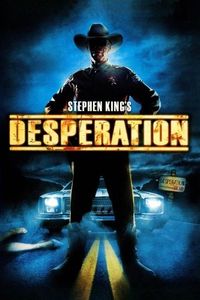
    (In French, On Cable TV, September 2021) It’s easy to admire the way Desperation begins — adapting a weighty Stephen King tome isn’t easy, especially within the limitations of a TV movie, but veteran writer-director Mick Garris (an old hand at King adaptations, albeit not all of them successful) does give it a half-effective try. The opening sequence is not bad at all, as a young likable couple is arbitrarily arrested in the middle of the Nevada desert by a creepy policeman. One of them won’t even survive to detention… and then we cut back to another couple heading in the same direction. It’s a well-handled setup, and it gets us invested in the overall mystery of a small town called Desolation, empty of human life except for that crazy cop locking up everyone and killing a few more along the way. A much grander conspiracy is eventually revealed (most notably through the use of a faux-silent film meant to portray historical events) and a supernatural villain revealed. At that point, seasoned horror viewers won’t really be surprised to realize that Desperation loses whatever uniqueness it had to become a far more generic hero-versus-monster third act. Horror films, alas, are unusually prone to the convergent-premise problem where, no matter how wildly inventive the opening can be, the ending usually boils down to a handful of formulas. Too bad — but there’s still some mildly effective material before then. In the pantheon of King adaptations, Desperation feels ambitious but ultimately just average: perhaps not such a disappointment considering the scope of the original book and the means through which Garris was working with, and still a reasonably effective film.