Nicolas Cage

  • Ghost Rider: Spirit of Vengeance (2011)

    Ghost Rider: Spirit of Vengeance (2011)

    (On Cable TV, October 2012) I’m intrigued by directing team Neveldine/Taylor’s high-energy, high-risk, quasi-experimental approach to their films.  At their best, they can score big laughs and deliver memorable moments.  At their worst, though… it’s all juvenile nonsense and headache-inducing jump-cuts for ninety straight minutes.  While Ghost Rider: Spirit of Vengeance is noticeably more entertaining that the first limp 2008 incarnation of the character, it’s still not very good –although in a different way.  There’s no doubt that Neveldine/Taylor are making an action film here, and that they have tried to re-tool the Ghost character in a far more dynamic fashion.  The ever-entertaining Nicolas Cage seems game to play along, mugging for the camera even when CGIed to a flaming skull.  Some of the action sequences have pep to them, although they remain best described than seen.  It’s very cool to imagine Ghost Rider taking control of a massive excavator or fighting an opponent on top vehicles rushing down a deserted highway.  Unfortunately, it’s not quite as cool to see the flurry of disconnected images that end up presenting the final events.  Neverldine/Taylor have good visual imaginations and an amusing self-awareness, but they need to learn some discipline in order to make their better moments shine.  As it is, Ghost Rider: Spirit of Vengeance feels like a barely-digested blend of good and bad.  The humor works from time to time, some of the Romania/Turkey scenery is nice, the action beats have potential; the decaying villains are more interesting than usual… but it doesn’t work together nearly as well as it should.  For all of the competent actors assembled here (Ciarán Hinds! Christopher Lambert! Idris Elba!) and the distinctiveness of Neveldine/Taylor’s direction, we’re left with a montage reel of interesting things rather than a movie worth watching from beginning to end.

  • Trespass (2011)

    Trespass (2011)

    (Video-on-Demand, December 2011) Once upon a time, maybe in the mid-nineties, a thriller directed by Joel Schumacher and featuring both Nicolas Cage and Nicole Kidman would have been a sure-fire box-office draw.  But this is late 2011 and the most noteworthy thing about Trespass is how a very limited theatrical run was followed barely two weeks later by a wide DVD release.  So does the film best compare to theatrical thrillers or direct-to-video efforts?  From a visual perspective, it’s clear that this is an A-list effort: Schumacher’s direction is effective, the cinematography is striking and even as the film focuses on house-bound action from dusk till dawn, the filmmakers are able to get a lot of visual energy from limited locations.  Much of Trespass, in fact, feels like a theatre production as a well-off family is threatened by a small gang of home invaders.  But the criminals aren’t united, and everyone has secrets to hide: by the film’s twentieth-minute mark, they’re already shouting at each other in trying to figure out what’s happening.  Nearly hidden behind over-sized glasses, Cage gets a typical “Cage flip-out moment” early on by trying to negotiate with people who aren’t expecting negotiations.  The intensity of the psychological drama can’t be sustained over 90- minutes: by the third act, the action diffuses itself back to B-grade movie levels by going out of the house and a few repeated plot beats while we’re waiting for the various elements previously set up to be used in rapid succession.  Once the shouting is over, it’s a bit easier to see the generic nature of the plot and the plot cheats used to constrain it.  Still, Trespass is a clear notch above much of what’s meant to go quickly from theatres to video –more of a comment on the changing video landscape in the age of instant home video consumption than a particular reflection on the film itself.  If nothing else, it’s an average thriller made by above-average filmmakers and stars.

  • The Wicker Man (2006)

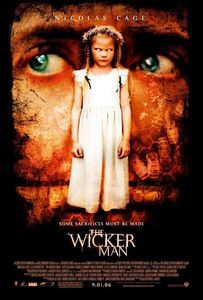
    The Wicker Man (2006)

    (On DVD, October 2011) A bizarre blend of awful ideas and hilarious execution, The Wicker Man is, remarkably enough, just as bad and funny as its reputation suggests.  At times, it feels like the result of the fabled Hollywood idea-flattening process: Whatever creepy quality the premise might have held have been squashed by dumb artistic choices, glossy routine horror tropes and an increasingly unhinged script.  Nicolas Cage truly stars as a policeman investigating a disappearance on an isolated island: his borderline-psychotic performance is uniquely his, and the only sustained pleasure that the film has to offer.  The rest of the film is a mess of weak development, generic tropes, dumb character decisions and a drawn-out ending.  (As with a bunch of by-the-number horror movies, it also fails to explain why the villains go to such extremes in their plans.)  While I’m always happy to see Leelee Sobieski even in a small role, the rest of the film is dull except when it’s bad and intensely predictable throughout.  Ten of the last fifteen minutes are demented enough to be enjoyable, as Cage goes around punching and kicking women (once in a bear suit –I’m not making this up), scaring kids and waving a gun like a crazy man.  It’s hard not to feel sympathy for the antagonists when the protagonist is so obviously unpleasant and unable to muster even the most basic sense of fitting-in.  I’m not sure what writer/director Neil LaBute was thinking when he put together The Wicker Man, but the best thing about it may be the numerous YouTube videos lampooning the result.  (I’m particularly fond of Best Scenes From “The Wicker Man” and The Comedy Trailer)

  • Drive Angry (2011)

    Drive Angry (2011)

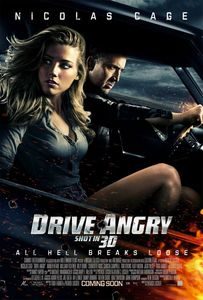
    (In theatres, February 2011) I wish I liked this film a bit more.  After all, what unholy union of escaped-from-Hell supernatural characters, muscle cars, evil cultists, William Fichtner and Nicolas Cage could fail to ignite the interest of any self-respecting geek?  Yet Drive Angry feels a lot less interesting than it should: flat dialogue, familiar action scenes (Another mid-coitus shootout?  Shoot’em Up did it better!), wasted actors, bland script, dull direction and unappealing cinematography all compete to undermine the potential of the film.  While it’s always good to see William Fichtner on the big screen and Nicolas CageCage is always at least kind of cool to see, Fichtner isn’t given any kind of exceptional material and Cage tones down his performance a bit too much.  The scripts and its associate mythology are both filled with holes and hazy rules: there’s little concision to the story, which hurts a lot given its self-professed intent to ape old-school exploitation pictures.  The action scenes feel a lot more ordinary than they should (even the exploding tanker just doesn’t get the blood racing) and Drive Angry never completely clicks.  The mixture of demonic characters, cult sacrifices and American muscle-cars never amounts to much more than a collection of buzzwords: A perfect example of how good B-movie are usually identified by pleased audiences, not deliberately put together by technicians.

  • The Sorcerer’s Apprentice (2010)

    The Sorcerer’s Apprentice (2010)

    (In theaters, July 2010) There’s a lot of generic familiarity in The Sorcerer’s Apprentice, but don’t despair yet: Under Jon Turteltaub’s sure-footed direction, genre-aware script and quirky performances, this fantasy film actually manages to save itself from embarrassment.  Nicolas Cage fans won’t be disappointed by his portrayal of an eccentric sorcerer, while Jay Baruchel more than holds his own as a sympathetic science nerd turned magician.  (Plus: Monica Bellucci, even in a too-brief role.)  There is a lot of special-effects eye candy, and as many different magic tricks as the first four Harry Potter movies combined.  New York locations are effectively exploited, whereas the editing finds a good pace.  But never mind the technical credentials: The real charm of the film is to be found in the script, which correctly assumes that we’ve seen a lot of movies of this type: as a result, a significant portion of the required exposition is sarcastically telescoped.  (The best instance of this happens during the obligatory but well-handled car chase, as Cage’s character quickly deals with his apprentice’s questions without even waiting for him to ask them.)  The one sequence that really doesn’t fit tonally with the rest of The Sorcerer’s Apprentice is a too-goofy clean-up scene that pays homage to the Fantasia animated segment of the same title without bothering to rein in the CGI excesses.  Both Baruchel and Cage are oddball enough that they can do justice to their respective characters and if their delivery could occasionally be improved, the net effect is a film-long smile.  Baruchel, in particular, has an irresistible puppy-dog charm –especially when he comes to enjoy his magical talents.  Frankly, it’s hard to resist a protagonist who charges into the final battle shouting something like “I came armed with SCIENCE!”  For a film that could have been considerably dourer, there’s a refreshing competence at play in this latest Bruckheimer vehicle that is enough to make us forget about the familiarity of it all.

  • Bangkok Dangerous (2008)

    Bangkok Dangerous (2008)

    (In theaters, September 2008) It takes a lot of misguided skill to make a boring film about Nicolas Cage as a gifted assassin, but that’s exactly what this weakly-brewed action thriller ends up being. Cage looks asleep as a weary assassin coming to Thailand for one last series of jobs. Inexplicably, he lets down his usual safeguards, befriend a small-time hustler, romances a deaf local girl, botches his contracts and ends up hunted down by his own clients. There is one single flash of interest late in the film as he fends off killers while his date isn’t looking, but otherwise the film is one single monolith of exasperation. Hampered by cookie-cutter action scenes, trite dialog, glacial pacing and a complete lack of originality, Bangkok Dangerous fuses the worst of Asian and Western cinema to produce something that the whole world will unite to recognize as a bad film.

  • Vampire’s Kiss (1988)

    Vampire’s Kiss (1988)

    (On DVD, May 2008) Nicolas Cage is rarely dull even when he’s not very good, and Vampire’s Kiss is one of the first citations on the list of his oddball projects. While everything about the film suggests a supernatural connection between a man and the vampire seductress who bit him, the reality of the film is far more fascinating, portraying an unrepentant womanizer sinking deeper and deeper in madness after convincing himself he’s turning in a vampire. While it does have a number of darkly humorous moments, it’s one death too far to be a funny film. It’s not an entirely successful one either, as Cage overacts with a grossly annoying British accent in the middle of a script that’s not quite focused enough. Still, some of the scenes are showpieces (yes, this is the film in which Cage eats a live cockroach) and the unusual re-use of vampire mythology is enough to earn this film a dark little place in any horror fan’s heart. Special note much be made of the splendidly multicultural female casting in this film, from an early role for director Kasi Lemmons to Jennifer Beals (as the vampire) and Maria Conchita Alonso as Cage’s terrified office assistant. Plenty of subtle and not-so-subtle details hint at the film’s thematic ambitions, which may warrant a second viewing for viewers mystified by the entire experience. The DVD, fortunately, contains an enlightening commentary by Cage and the film’s director.

  • National Treasure: Book Of Secrets (2007)

    National Treasure: Book Of Secrets (2007)

    (In theaters, December 2007) It’s not high cinema, and it’s not even great genre entertainment, but National Treasure 2 manages to hit the same sweet spot than its predecessor in terms of contemporary adventure, historical lore, Nicolas Cage craziness and sarcastic quips. As this adventure trots around Washington, Paris, London and Montana, it’s hard to resist being swept up with this infectious brand of blockbuster slickness. There are a number of clunkers in the mix (Ed Harris sleepwalks through the film with a Southern accent; some of the early setup is laborious; Geek-boy isn’t as geeky, nor as amusing, as in the first film) and the action scenes don’t work as well as they should, but then there are a handful of scenes that redeem the entire thing: The “book of secrets” concept is rich in possibilities, the London car chase is fun and the series’ overall passion for history is a refreshing change of pace from the usual brand of mass-market anti-intellectualism. The biggest problem with the film is that it occasionally suggest how much better it could be with just a few tweaks: An action-minded director, a more memorable female lead and a screenwriter with more attention for coherence could have brought much more to the film. But while we’re waiting for National Treasure 3: Page 47, there’s still plenty to like here. It’s a perfect end-of-year chaser after so many self-important Oscar-bait motion pictures.

  • Next (2007)

    Next (2007)

    (In theaters, April 2007) Adaptations of Philip K. Dick stories are either SF classics or B-grade pap, and Next goes straight in the second category as a limp action film that never uses its premise to its fullest extent. Oh, Nicolas Cage is entertaining enough as a Las Vegas magician with a few special powers, but there’s little of note in the tedious film that surround him. The action scenes are by the numbers (all the best images are in the trailer), the special effects look substandard, and the ending takes back the entire third act. Boo! Though not quite egregiously offensive or awful, Next nonetheless leaves no lasting impression and will soon go languish in bargain bins all around the world, right next to Paycheck. Isn’t that just a waste?

  • Ghost Rider (2007)

    Ghost Rider (2007)

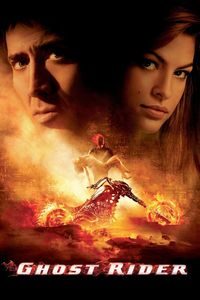
    (In theaters, April 2007) Let’s name names, shall we? Writer/director Mark Steven Johnson, you are the one responsible for the insipid waste of time that is Ghost Rider. The failure isn’t all that surprising after the barely-better Daredevil: the only thing worth pondering is how Johnson was able to get another studio directing job after that train-wreck. Like its predecessor, Ghost Rider wastes every promising element it has, and compresses handily in a moderately interesting trailer that pretty much says everything worth knowing about the film. (The film itself is worse than anything you could imagine from the trailer.) Even the combined appeal of Nicolas Cage and the curvaceous Eva Mendes can’t rescue this turkey as it loses itself in a deeply predictable morass of clichés. The special effects are sub-standard, but it’s really the dull story that fails to engage. Save yourself the trouble: re-watch the trailer again and let this one go.

  • Lord of War (2005)

    Lord of War (2005)

    (In theaters, September 2005) Being disappointed with Lord of War feels a lot like being ungrateful given how it’s already better than most of what you’ll see in theatres this year. This docu-drama about the life of an international weapon dealers is heavy in sardonic humour and originality. On the other hand, sometimes it slips and grinds to a halt as it clumsily goes for earnestness when cynicism works so much better. Nicolas Cage works wonders with a role that plays so well with his image, but the real star of the show is writer/director Andrew Niccol (Gattaca, S1m0ne). His script, based on real events, offers a unique and even daring look at the recent history of gun-running, with details as fascinating as any documentary. A number of crunchy scenes enliven the show, from a life-of-a-bullet opening credit sequence to the highly entertaining aftermath of an emergency plane landing. The movie suffers from trying a bit too hard to be moral in the last third (we already know that arms dealing is bad, m’kay?), but recovers just in time to conclude with a final three minutes of savage realism. Lord Of War is good, but the worst thing about it is that it’s just good enough to make one see how it could have been even better. It’s sort of a Goodfellas-lite, but it could have been a Goodfellas-full.

  • City Of Angels (1998)

    City Of Angels (1998)

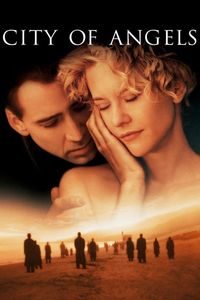
    (On DVD, March 2005) It would be too easy to dismiss City Of Angels as romantic clap-trap about angels, impossible fairytale romance and cheap existential questions. It would be even easier to dismiss the film as a slow-moving morass of fabricated sentiment with an unclear mythology and a script that couldn’t be more obvious if it included subtitles about the screenwriter’s intentions. But to do so would be to ignore, unfairly, the delicious frisson of wonder at some of the film’s visuals: The “angels” watching over Los Angeles like so many dark crows. The idea that angels hang out at libraries (oh, c’mon; even stone-cold atheists would like this one to be true). The handful of scenes that make you go “hey… that’s nice.” Dennis Franz’s performance as a fallen angel who has learnt to appreciate life. Granted, in order to get to these things you have to suffer through love scenes between Meg Ryan and Nicolas Cage. (Ergh.) And possibly fast-forward through chunks of the film. And certainly try not to giggle at the splat-ending, or the contrived death scenes. But even cynics may find two or three things worth keeping about this film, and that’s almost two or three more than they would expect.

  • National Treasure (2004)

    National Treasure (2004)

    (In theaters, November 2004) Everyone loves a good secret, a good chase and a good mystery, so it’s no surprise if such a slick piece of escapist entertainment as National Treasure should tap into the same popular success as The Da Vinci Code. True, the Nicolas Cage / Jerry Bruckheimer combo has produced wonders in the past and this fourth collaboration is pure wall-to-wall fun. It had to happen sooner or later, mind you: a blockbuster tapping American history as a source of adventure and a thin pretext for chases and gunfights. That it works so well is less a testament to the appeal of early American history than to the professionalism of Jerry Bruckheimer’s formula. National Treasure moves at a fast clip, doesn’t waste time on needless material, uses arcane ideas at a prodigious rate (for a film) and disposes of them almost as quickly. Oh, many lines are lame, physics routinely ignored and the characters come straight out of central casting, but that simply reinforces the comfortable blockbuster feel of the whole thing. The only surprise is that the film wasn’t released in the summer. Hey, you can bitch and moan about this being a poor man’s Indiana Jones (and you’d be right), but National Treasure is such an oddball Hollywood creation that it’s hard not to feel some sympathy for an action picture that, at least, pays some lip service to the virtues of knowledge. (“I know something about history that you don’t know… Hold on one second, let me just take in this moment. This is cool. Is this how you feel all the time?”) Good enough for me, at least.

  • Matchstick Men (2003)

    Matchstick Men (2003)

    (In theaters, September 2003) Yet another con man film at a time where we’ve seen a number of them in recent months. But even though, yes, there is a con both on the characters and on the audience, the heart of the film is more of a character study, starring Nicolas Cage in another deeply neurotic performance. Matchstick Men is a story of how conning is affecting the protagonist, and how he’s able to come to a point where he’s able to kick the habit (sort of) and become a better person. Director Ridley Scott once again throws just about everything he’s got on the screen in the hope that some of it will stick and the result, as may be expected, is very uneven. Some of Cage’s antics are annoying, but as usual he’s never as good as when he’s foaming with rage. (Just wait until late in the film). It’s not a particularly deep film, but there’s a twist, a few good scenes, and high-grade production values that are seldom uninteresting. It’s not flashy, but it does the job. Some will have a problem with the happy ending (which reportedly wasn’t to be found in Eric Garcia’s original novel), but it fits with the overall thrust of the movie, which is the story of a man who happens to be a criminal and not the story of a criminal per se.

  • The Rock (1996)

    The Rock (1996)

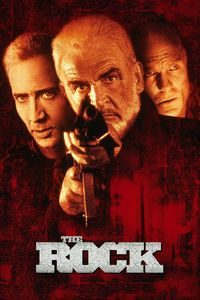
    (Second viewing, On DVD, May 2002) There is something awe-inspiring in the grandiose panache with which this movie flaunts itself. Continuity mistakes, logical flaws and nonsensical developments are swatted aside like irrelevant trivialities, allowing director Michael Bay full power to show incredible images on-screen. The camera moves, sweeps, pans, captures perfect moments and doesn’t give a damn about the words or the continuity. The Rock is as close as anyone has ever come to the ultimate action movie. I still find parts of it silly beyond words—but soon after I’m silenced by the boffo action sequences and the slick polish of the whole production. I love the characters (Nicolas Cage, Sean Connery and Ed Harris are perfect), I love the direction, I love most of the one-liners and I love the explosions. Why should I complain about the rest? To see if you’re a real action-movie junkie, try watching only five minutes of the film. The first-generation DVD includes the film, and nothing else. But the movie is so good…