Paul Weitz

  • American Dreamz (2006)

    (In French, On Cable TV, January 2022) The worst thing you can say about a satire is that it’s toothless. The point of satire is to make a mark, leave an impression and challenge preconceptions. It would be tempting to look at American Dreamz fifteen years later and blame its ineffectiveness on how the world has moved on: the idea of blending terrorism and the American presidency into a reality-TV show sounds almost plausible these days. Nearly every big satirical plank of the movie has been superseded or absorbed. Reality-TV shows? Utterly unremarkable. A terrible president? Much worse awaited those who disliked Bush. Islamic terrorists? Wait until you hear about who invaded the US Capitol! But even if you account for the normalization of its ideas, it turns out that American Dreamz was not that favourably received at the time of its release either. Critics called it limp and unfocused, which remains a fair assessment a decade and a half later. Going for an ensemble cast of characters coming from three very different worlds doesn’t make everything stronger: instead, it dilutes everything into a lumpy soup of ideas loosely developed and badly put together. It doesn’t help that writer-director Paul Weitz takes some terrible shortcuts on his way to the conclusion (including a bomb with instructions so convenient that it can be used by anyone) and doesn’t know when enough is enough: At 107 minutes, it feels much longer and drawn out, with a conclusion meant to be wild but rather feels disconnected. There’s some decent work on the acting front (most notably Hugh Grant playing a deliciously slimy reality-TV host years before he reinvented his career by playing scabrous supporting characters) but everything is held back by an undercooked script that doesn’t seem to have all that much to say beyond pointing at a few things and trying to get us to agree that they’re weird. It certainly played better in 2006 as a thin critique, but today? Not much to see here.

  • Bel Canto (2018)

    Bel Canto (2018)

    (On Cable TV, September 2019) Stockholm syndrome is a terrible thing, especially if you’re not a part of it. In Bel Canto, an American opera soprano is asked to perform at an opulent private residence in South America. But just as she’s performing, a terrorist group swoops onto the estate and take the dignitaries hostage. What follows is a standoff during which captors and their prisoners begin to understand each other. Nice idea, bolstered by capable actors: With Julianne Moore as the singer, Ken Watanabe as a rich industrialist and Christopher Lambert as an ambassador, the film is clearly going for more than a suspense thriller—music is everywhere in the film, and having the singer teach a hostage taker about her craft is meant to show shared humanity between the two groups. Clearly, the point here is to show the growing empathy even as we know that it can’t end well. It’s a laudable goal … and it utterly fails. By the time the brutish government enforcers swooped on the ground of the estate to kill as many terrorists as possible, I was cheering every death, with the added satisfaction that it meant that the film would soon end. Even at a bit more than 90 minutes, Bel Canto feels too slow—obviously, it’s less than a thriller and more of a drama. In the experienced hands of director Paul Weitz, it’s meant to be a prestige production … but that doesn’t save it from ennui, and when it can’t manage to convince its viewers of empathy toward the terrorists, then everything is lost.

  • Admission (2013)

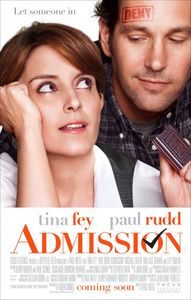
    Admission (2013)

    (On Cable TV, December 2013) While it’s refreshing to see a comedy avoid the usual formula for the genre, Admission risks audience sympathies by doing its own off-beat thing.  The unusual choices made by the script and director Paul Weitz (who’s done quite a bit better in the past) may be explained by it being an adaptation of a novel, but once it becomes clear that Admission is not going to play by the usual rules of film comedy, much of the film becomes predictable and so is the resignation that it will withhold a complete release.  Still, there is a lot to like here: the look at competitive college admission procedures may feel odd to this Canadian viewer, but it’s interesting, and the quasi-satiric look at academia is good for a few laughs.  As leads, Tina Fey and Paul Rudd are at their usual most charming selves, with a remarkable supporting turn by Lily Tomlin.  It’s amiable enough, and the film does try hard to be something more than a generic romantic comedy.  Still, there’s a sense of missed opportunities, of watered-down comedy and intentional misdirection here that makes it hard to wholeheartedly endorse.  Admission will certainly do as a good-enough film, but there are certainly funnier, more heartfelt choices out there.