Penelope Spheeris

  • The Little Rascals (1994)

    (In French, On Cable TV, March 2022) In the land of movies made for kids, no amount of excess is considered enough. Big broad jokes, stereotypes and contrivances? Bring them on. But the question remains: Is The Little Rascals truly a kid’s movie? Adapted from a series of shorts dating back to the 1920–1940s (and sometimes outright re-using gags from those earlier films), there’s a really good case that this is a kid’s film aimed at adults and older audiences who remember early incarnations of The Little Rascals. The clichés and stereotypes used here are clearly from a previous generation, and the film’s insistence in showcasing the cuteness and innocence of its kids’ characters seems squarely dedicated to adult audiences so that they can drag their kids in. Coupled with the overdone sweetness of the result, it usually feels as if The Little Rascals is trying far too hard. It does have its strengths, though: director Penelope Spheeris gets some good footage out of a cast largely made of kids, and manages to capture a nostalgic atmosphere uncomplicated by realism or complexity. That doesn’t make The Little Rascals any less grating and annoying—it makes it intentionally grating and annoying. Everyone will gauge their tolerance for such material—head for the exits if the first minutes don’t work.
  • The Boys Next Door (1985)

    (In French, On Cable TV, March 2022) Like many actors with horror films in their early-career filmography, I suspect that Charlie Sheen doesn’t like to spend a lot of time talking about The Boys Next Door, a film tracking down two teenagers as they go on a murder spree. Not that the film is that much of a blight: under the direction of Penelope Spheeris (and an early script from X-Files writers Glen Morgan and James Wong), the film takes a more gradual approach to its murder spree than comparable slashers, by charting the gradual descent into violence of two high-school graduates. Exploitation is never too far away, though: the ponderous opening sequence makes statements about various American serial killers in an attempt to create a sentiment of pervasive fatalism in the viewer, and there’s a sense that the last half of the film doesn’t have a dramatic progression as much as a deliberate wallowing in one violent death after another. Sheen plays the slightly-reluctant half of the killing pair, leaving much of the psychotic heavy lifting to Maxwell Caulfield. As a slasher, it begins by being better than usual… but it’s still a film in which the protagonists go around killing other people as soon as they pop up on screen. No amount of hand-waving about how society is to blame is convincing when the film is so clearly aimed at trashy thrills. Sheen gets off easily compared to other famous actors’ early horror films. But I can understand if he doesn’t bring this title up all that often.

  • The Decline of Western Civilization (1981)

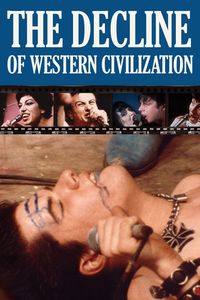
    The Decline of Western Civilization (1981)

    (On Cable TV, December 2020) In retrospect, even mildly successful documentaries can be ennobled by the passage of time if they capture something that can no longer be experienced in later years. In this light, The Decline of Western Civilization is a much better documentary now than it was at its release because its insider’s look at the 1980 Los Angeles punk scene is now the stuff of legend, never again to be recreated. To be clear, The Decline of Western Civilization was never a bad movie: much of what it chronicles, in between generous concert footage and revealing interviews with various punk scene members, was under-covered at the time. Director Penelope Spheeris (best known for Wayne’s World) was a member of the scene at the time, and was able to use her friendships to set up the interviews and film the performances. The result is a document for the ages – a good punk anthology, complemented by a description of the scene by the scene members themselves. I’m not that familiar with punk nor any of the bands here (although I do recognize Black Flag, even if that’s more due to the later presence of Henry Rollins than anything else) but I had a good time listening to much of The Decline of Western Civilization while doing something else.

  • The Beverly Hillbillies (1993)

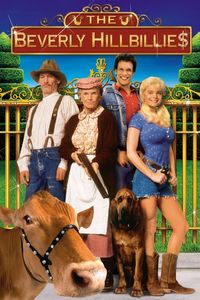
    The Beverly Hillbillies (1993)

    (On TV, March 2020) I was frankly expecting the worst from The Beverly Hillbillies and ended up pleasantly surprised—the TV series that served as inspiration is known as a paragon of low-brow humour, and the very premise of Arkansas hillbillies striking oil and becoming rich enough to move to Beverly Hills seems custom-made for dumb humour. The good news isn’t that the film isn’t stupid, because it is—it’s that there’s some cleverness underlying the intentional stupidity. Of course, keep in mind that the film is directed by Penelope Spheeris, whose other films show a considerable amount of wit. The Beverly Hillbillies is clearly not as smart as in Wayne’s World here, but at least there’s the feeling that someone is paying attention to shore up what could have been worse. There’s constant self-awareness of the silliness of the script and plenty of winks at the audience even as the slapstick is going down. Making the most out of the limitations of the premise they’ve been handed, nearly every actor in the cast brings their A-game to the material. Special mention goes to Dietrich Bader, Erika Eleniak, Cloris Leachman, Lily Tomlin and Lea Thompson in various ways, some of them exceeding expectations (Eleniak), meeting them (Bader), looking cute (Thompson) or just being rocks of dependable humour (Leachman, Tomlin). Not everything works (there’s some crossdressing material that clearly reads as transphobic today) but if your tolerance for broad dumb comedy in which predictability is comforting, then The Beverly Hillbillies is a better film than you think. It works even better if your expectations are down on the floor.