Renny Harlin

  • The Dyatlov Pass Incident aka Devil’s Pass (2013)

    (On Cable TV, May 2022) Message to filmmakers: if you ever find yourself helming a found-footage film, turn back – you may be getting lost. One of the few things distinguishing Devil’s Pass from so many found-footage films of the early 2010s is finding that it’s from once-A-list director Renny Harlin (whose career never really recovered from Cutthroat Island). Harlin’s filmography, of course, is a weird one – from 1990s Hollywood blockbusters to cheap horror/action B-movies to a few Chinese-language movies to, well, who can say – he’s not a director with a strong personal style, and his filmography screams work-for-hire. But with Devil’s Pass, he finds himself handling a wild take on the much-overhyped Dyatlov Pass incident in which Russian hikers died under (if you believe it) mysterious circumstances. What begins as conventional found-footage horror (with American adventurers/filmmakers heading over to the site of the incident for a documentary) eventually becomes a wild science fiction narrative with time loops and mutations. That’s not exactly bad… but I’m not sure the film’s tone is under control. Those who are exasperated with found-footage films will not be converted over by this one, which has enough out-of-focus shots, constant shrieking, annoying characters, dumb decisions and footage that can’t logically exist to reaffirm the film’s belonging to the subgenre. While the opening does raise the hope that the characters will be interesting enough to follow (not always a given in the found-footage method), the rest of the film pretty much dispenses with characterization except in providing different pitches for the inevitable constant screaming. Where Devil’s Pass does better than the average, however, is in Harlin’s experienced directing and in the bonkers concluding arc that goes the extra mile in providing an interesting conclusion. So interesting, in fact, that it unbalances the rest of the film – what were we doing losing our time with those losers if there was such a neat idea waiting at the end? Alas, while this may be enough to help Devil’s Pass float above many, many other found-footage horror films, it’s not quite enough to get it to a recommendation. It feels like a lot of work for not a lot of payoff, and something that could be easily summarized as “…and they all died in mysterious circumstances you won’t care about.”
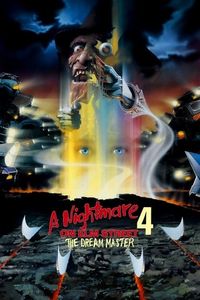
  • A Nightmare on Elm Street 4: The Dream Master (1988)

    A Nightmare on Elm Street 4: The Dream Master (1988)

    (On Blu-Ray, October 2021) Annoying in concept and somewhat better in execution, A Nightmare on Elm Street 4: The Dream Master benefits from having Renny Harlin in the director’s chair. In what ended up being his breakthrough American film, Harlin here shows some flair in setting up the scares, with better-than-expected cinematography, effective special effects (for the late 1980s, of course) and decent pacing. The surreal imagery that distinguishes the series is once again a reason to watch it over more ordinary slasher films of the period, and so are the actresses. (Lisa Wilcox does surprisingly well as the heroine, but I was just sad when Toy Newkirk’s character left the film.) Where I’m not so happy with The Dream Master is in its overall plot, which brings back characters from previous films only to kill them, with this endless parade of kills only reinforcing the arbitrary nature of the series’ plotting. To that we can add the kiddification of Freddy Krueger in an annoying quip-spouting sort-of-protagonist, neutralizing the dread that the character was supposed to cause. But four instalments in—what were we expecting? It’s a minor miracle already that the direction is decent and the visual style still raises the level of the series’ nightmarish imagery. (That insect transformation sequence… yuck.)  The Dream Master is still worth watching if you’re this deep into the series and know what quirks to expect, but I suspect it won’t make many new fans.

  • Cutthroat Island (1995)

    Cutthroat Island (1995)

    (In French, On TV, June 2020) Infamous for being such a box-office bomb that it killed Carolco Pictures, Cutthroat Island is, like many celebrated flops, not quite as bad as its historical reputation would suggest. Now that its notoriously troubled production and budget overruns are things of legend, twenty-first century audiences are free to assess the film on its own merits as a pirate-themed swashbuckler. I will not try to pretend that Cutthroat Island is a misunderstood work of genius—it’s sufficiently flawed that you can see where the disappointed reviews came from. While the film does have its strong points (some of the sets, stunts and action sequences are really good), much of it plays far blander than it should for a film of its type. Geena Davis may look spectacular, but she’s ill suited to the role; the same goes for Matthew Modine, who’s clearly not as memorable as he should be in playing the male lead. The seams of the film’s troubled production are glaringly obvious in the inconsistent writing, cinematography, set design and pacing issues: an added layer of polish is simply missing from the final result despite what feels like a large budget. Other moments (like the baffling presence of a monkey) show that director Renny Harlin was unable to keep the production under control. While the result is watchable, Cutthroat Island merely has everything one expects from a pirate movie, but nothing more. But swashbuckling adventure is a subgenre that thrives on excess, and comparisons with the Pirates of the Caribbean series show how much better the film could have been had it featured sharper characters, more appropriate actors, stronger set-pieces and a savvier use of familiar tropes.

  • Jue di tao wang [Skiptrace] (2016)

    Jue di tao wang [Skiptrace] (2016)

    (In French, On Cable TV, May 2020) The weird pairing at the heart of Chinese action blockbuster Skiptrace—Jackie Chan plus Johnny Knoxville!—isn’t so weird once you realize that both have a comic daredevil persona, and that their differences (Chan as the affable one; Knoxville as the abrasive one) work pretty well as counterbalance. The film’s slight story has them embark on a travelling odyssey while pursued by the mob across Asia (especially Mongolia—when was the last time you saw a film set in Mongolia?), but the point is getting them into one action-comedy set-piece after another. Of course, there’s now a limit to how much bone-breaking behaviour both of them can engage now: They are both getting older and can no longer quite defy the insurance requirements of a major scripted film production. This means action-lite material for Chan (although he can still bring it—the collapsing river houses moment is fun), and largely an observer role for Knoxville, thankfully more subdued than you’d expect. (In another universe, Knoxville could have become an action-movie leading man, and this will show you how.) While the result isn’t one for the history books, Skiptrace nonetheless becomes and remains watchable—it’s amusing and pleasant, even if the climax doesn’t have much grandeur. Renny Harlin directs with professionalism in what’s getting to be the “international action director-for-hire” phase of his career. Of note to action movie fans is how the film deals with globalized mayhem, and relies on Russian mobsters for antagonist—is this going to become a fixture for Chinese movies from now on?

  • Die Hard 2 (1990)

    Die Hard 2 (1990)

    (Third viewing, On DVD, April 2017) I’m sure that I last saw Die Hard 2 roughly ten years ago, but since I can’t find trace of it in my online reviews, let’s have another go at it: A decent follow-up to the first movie, Die Hard 2 leaves the skyscraper for a snow-covered airport and reliably goes for big action sequences no matter their crazy justification. Bruce Willis stars as John MacClaine, a bit more super-powered than in the original but still recognizable as a reluctant everyman hero stuck in a bad situation. It still works pretty well, despite some rough special effects and occasional lulls: Director Renny Harlin was climbing at the top of his game back then, and the tension of the film is effectively handled. What I didn’t remember from previous viewing is how heavily saturated by eighties politics the script remains—the references to Irangate are barely camouflaged, and the film does carry a perceptible whiff of Reagan-era political concerns. But of course, the point are the action sequences, and Die Hard 2 does measure up decently as an action film. While not the enduring classic of its prequel, Die Hard 2 remains a good action movie … and it still lives up to expectations today.