Ricardo Montalban

  • Latin Lovers (1953)

    (On Cable TV, August 2021) Watching older films is a minefield if you’re particularly sensitive to social equality — as a straight white male, it’s a privilege to watch those movies describe a world built by (and often for) people like me, but even I have my limits and Latin Lovers ends on a note fit to give dry heaves to everyone. And yet, at the very same time, you have actors like Lana Turner and Ricardo Montalban being as charming as they can be, taking much of the edge off but not entirely. The plot, as thin as it is, has our wealthy heroine (an heiress) doubting she can attract men uninterested in anything other than her wealth, which explains her dating an even richer man. Her courtship is humdrum, so it’s no surprise if a trip to Brazil means her meeting and falling for a dashing Latin lover (Montalban, in fine form), at which point the question of money comes back to the forefront. After a few shenanigans, her solution is to give all the money away… to him. Now, it’s possible that this is a wry commentary on how wealth distorts love — after all, the script is from Isobel Lennart, who had (despite an early death) a long list of very good and not-so-misogynistic scripts to her credit. Maybe there’s a satirical intention here that I’ve missed. Maybe the script is simple enough and frothy enough that it invites excessive attention to this flaw. Maybe it’s a romance and I should worry about it all that much. But for all of the colourful pageantry of the film’s trip to Brazil and the romantic comedy of the women, I found Latin Lovers empty until the moment it becomes unpleasant, and then merely unpleasant because that’s how it ends.
  • The Mark of the Renegade (1951)

    The Mark of the Renegade (1951)

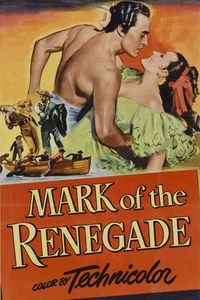
    (On Cable TV, June 2021) You can approach The Mark of the Renegade in a few different ways. Factually, it’s an early 1950s MGM western adventure set in Mexico, featuring Ricardo Montalban and Cyd Charisse. There are obvious Zorro similarities in the setup of a Mexican adventure featuring a lone adventurer fighting a local lord and romancing a luscious heroine — and we’re blessed by history that a dashing young Montalban plays him. (The similarities are not just me pulling out “um, Mexican adventure… Zorro!” out of a hat, considering that the film is based on a novel by Johnston McCulley, who created Zorro.)  As a Charisse fan, I’ll note that the film is one of the last of her pre-stardom days and the third I’ve seen in which this German-ethnic actress played a Mexican character. The two other films (Sombrero and Fiesta) also played on a similar register, purporting to bring some Mexican content to Hollywood but often perpetuating stereotypes. I would like to be a bit more enthusiastic about the swashbuckling adventure aspect of the film, but there’s not much here that’s overly memorable on that front. It’s more perfunctory than anything else, with the notable exception of a dance number between Montalban and Charisse — those two were dynamite together and The Mark of the Renegade is one of their hottest pairings. (I have seldom envied another man more than when seeing Montalban’s suave dance moves with Charisse and Ann Miller in 1948’s The Dancing Bandit, but I’m digressing.)  In other words — I’m happy that The Mark of the Renegade exists and it certainly has its strength, but it could have been much, much more memorable and it just isn’t. That’s really too bad: it’s watchable, but you may not remember much of it the next day.

  • On an Island with You (1948)

    On an Island with You (1948)

    (On Cable TV, June 2021) One of the differences between casual filmgoers and confirmed cinephiles is often the amount of meta-knowledge that the later carry around — including extensive knowledge of actors and their personas. That’s usually an advantage—except when it isn’t, for instance when an all-star cast comes together to produce something decidedly underwhelming. Such is the case with On an Island with You, a minor MGM musical of the late 1940s that brings together a truly interesting cast but doesn’t really do much with them. I mean: Esther Williams, Ricardo Montalban, Cyd Charisse and Jimmy Durante are four strong performers that could have been brought together in a way to play to their strengths. But what they get to do here is, at best, a pale shadow of their potential. With a script that’s only mildly funny or musical, On an Island with You struggles to establish itself as something worth remembering — the look at a film production is intermittently interesting, and doesn’t lead to any highlights. It’s probably important to note that MGM intended the film to be a success — while the film wasn’t part of their flagship Freed unit, it was shot on location in expensive Technicolor and clearly found a good audience during its theatrical run. But it clearly fell into disfavour since then — much better musicals with better roles for its stars followed, and its premise of having its female lead kidnapped by its male lead (assorted with misogynist remarks that would have most audiences up in arms) certainly hasn’t helped the film find new fans in the years since then. As a result, On an Island with You now ranks as a minor MGM musical, barely seen when compared to the better films of the era. Audiences aren’t wrong on this one, so beware if you’re tracking down the filmography of the actors involved. Too much knowledge can create false expectations!

  • Mystery Street (1950)

    Mystery Street (1950)

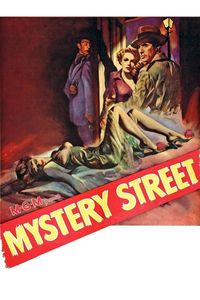
    (On Cable TV, May 2021) I’m always up for a good procedural, and Mystery Street certainly obliges — set in Boston (and filmed there — a rarity at the time), it’s about the murder of a young woman where we, the audience, hold all the facts from the get-go — the suspense is in seeing the police investigator (played by a young Ricardo Montalban!) piece together the clues and use the forensic methods of the time to advance in his investigation. The straightforward script and direction actually work well in letting us take in the period atmosphere: Being close to the facts and unwilling to indulge in flights of stylistic fancy makes Mystery Street a bit of an outlier in a period best known for stylish noirs. The unspectacular nature of the narrative doesn’t stop the thrills, and it allows the atmosphere of the time to be credibly portrayed. Most viewers will latch on the forensic science sequences as the film’s most noteworthy moments, anticipating the CSI series of decades later in combining science and criminal detection. The result is a rather nice B-grade thriller — not quite worth crowing about, but amply rewarding for audiences catching this with no great expectations.

  • Across the Wide Missouri (1951)

    Across the Wide Missouri (1951)

    (On Cable TV, September 2020) One of the main reasons why I dislike westerns as a genre is often its treatment of Native American tribes as nothing more than savage enemies. It took a long time for Hollywood to come around to the idea that there was more to them than violent antagonists, and you can feel the shift beginning with Across the Wide Missouri, which tackles a Dances with Wolves kind of plot in 1950s Technicolor. Featuring none other than Clark Gable as a fur trapper who heads to Blackfoot territory with mercenary intention but is gradually seduced by their way of life, taking up a wife and raising a son. The film steadily shifts from a comedy to more serious drama as it goes on, creating some easy sympathy for its characters before moving on to more serious lessons. I’m not going to pretend that it’s a particularly progressive film by twenty-first century standards: in-narrative, the “romance” between our protagonist and his indigenous wife starts off as a kidnapping-for-ransom scheme, and the perspective resolutely remains that of a white man despite a Metis narration. Out-of-narrative, most characters are played by actors of inappropriate ethnicity, meaning Ricardo Montalban as a Blackfoot warrior and María Elena Marqués as a Native American princess. But it’s the thought that counts for a 1951 film, and Across the Wide Missouri does feel far more humanistic than other westerns. The stunning colour cinematography remains an asset, and I was pleased to see the film making some space for French-Canadian trappers, especially one played by Adolphe Menjou (some of his French is fluent, while some of it is borderline incomprehensible, including a rendition of “Alouette” that manages to mangle every single gendered article). I’ll further note that this is not a western film in the cowboy-and-gun sense as much as it’s one of wilderness and fur trappers—I don’t have to ask myself for long why the second sort is far more interesting to me as a French Canadian. In other words, I got quite a lot more enjoyment out of Across the Wide Missouri than I expected—it’s a surprising Western, and one that does much to reconcile me with at least a subset of the genre.

  • The Kissing Bandit (1948)

    The Kissing Bandit (1948)

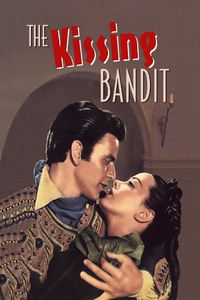
    (On Cable TV, September 2020) Movie history is not kind to The Kissing Bandit: It’s recognized by Wikipedia as “one of the least successful musicals in MGM history,” and “an acknowledged low-point in the careers of Frank Sinatra and Kathryn Grayson.” Is it such a terrible film, though? Of course not. While almost obscure these days, it’s quite entertaining to watch if you’re a fan of Technicolor MGM musical. Gorgeously shot against California mountains with very colourful costumes, the film clearly doesn’t take itself too seriously. The premise alone does a lot of mileage out of blending Robin Hood with Zorro as a Boston-educated young man comes back to 19th-century California to take over his father’s inn, only to discover that he’s expected to step into his father’s true occupation: leader of a masked gang, otherwise known as “the Kissing Bandit” for his habit of, well, kissing female victims. That premise wouldn’t fly today for obvious reasons, but even then—the film seems determined to minimize any unpleasant connotations this may have: our hero spends nearly all of the film shying away from any kissing, and the film spares no means (opening titles joke, comic sound effects, overacting) to let us know that this is a big broad comedy and nothing bad is ever going to happen. A young Sinatra with relatively long hair does well in the lead role, while Grayson is simply lovely as the governor’s daughter. Still, I’m burying the lead here because the single best reason to watch the film as far as I’m concerned is a single number toward the end of the film that has two of my biggest MGM crushes, Ann Miller and Cyd Charisse, in billowing dresses dancing a number with none other than Ricardo Montalban—whew! Let’s not argue that The Kissing Bandit is a great film—it has trouble with tone, and the rather promising opening act somehow doesn’t quite lead to a satisfying middle before the film picks up again toward the end. But it’s fun, funny and offers some great Hollywood stars doing some singing and dancing. Its relative obscurity may even mean that even fans of the era haven’t seen it yet.

  • Sayonara (1957)

    Sayonara (1957)

    (On Cable TV, February 2019) Considering that Sayonara is a late-1950s film about Japan, it’s inevitable that it would be somewhat romanticized—although, notably, not as whitewashed as it could have been. A rather annoying Marlon Brando is featured in the lead role as a very stereotypical American getting seduced by the Japanese way of life (and, obviously, a Japanese woman). Much of it becomes a romantic drama heavily playing off social expectations with the unsubtle style of the time. From today’s perspective, Sayonara isn’t much to talk about: it’s long, melodramatic, plays into some strong clichés of interracial relationships and has a mumbling Brando. It’s very much an adaptation of the James Michener novel, better suited to the page than the screen. While it’s better than many other Hollywood movies of the period in having ethnic-appropriate casting for the white men and Japanese women, it does have Ricardo Montalban play a Japanese man … oh well. And so on. But if you dig down into that the film represented in 1957, then you can understand why the film was nominated for a few Oscars: At the time (and for a few more years afterward). It was one of the few sympathetic and compassionate representation of Japan and to fairly represent interracial relationships. Miyoshi Umeki became the first Asian (and, to date, the only) Asian actress to win an Academy Award, while comedian Red Buttons got an Oscar of his own for a very dramatic role. It has aged, but as a compassion-driven film it had aged far more gracefully than other, more hate-driven ones. While the result definitely feels trying today, Sayonara is a film worth putting in context. I still wouldn’t recommend it to anyone but those trying to complete their list of all Oscar-nominee pictures … but it does have its strengths.

  • Star Trek II: The Wrath of Khan (1982)

    Star Trek II: The Wrath of Khan (1982)

    (Second viewing, On Blu-ray, October 2018) Now this is how you make a Star Trek movie. Learning from the lessons of the infamously slow-paced Star Trek: The Motion Picture, here comes Star Trek II: The Wrath of Khan to set things right. From better uniforms to a pair of great space battles to a memorable antagonist to a thematic exploration of character flaws to zippy pacing and reasonable odds, this film still stands as one of the most-improved sequels in Hollywood history. Writer/director Nicholas Meyer wraps surprisingly dense (and appropriate) thematic concerns in a relatively short running time. I hadn’t seen Star Trek II: The Wrath of Khan in a long time, and I had forgotten that the film is efficiently contained to, essentially, a bridge set and a handful of other locations. Kirstie Alley shows up in an early role as a young officer, the innovative CGI sequence still looks good, the actors are comfortable with their characters (with William Shatner and Ricardo Montalban free to scream as much as they’d like), the film builds upon the existing series mythology and we do get the feeling of a story slightly too big to fit in an hour-long episode, but well aligned with the rest of the franchise. Star Trek II: The Wrath of Khan is still a really good movie by anyone’s standards, but it also remains a particularly good Star Trek movie, perhaps still the best one so far.

  • Spy Kids 3: Game Over (2003)

    Spy Kids 3: Game Over (2003)

    (In theaters, July 2003) As a confirmed aficionado of Robert Rodriguez’s entire oeuvre, you won’t catch me saying anything overly negative about this last instalment of the Spy Kids trilogy. But it’s certainly not a betrayal if I simply state that this is the lesser film of the series and that its interest mostly lies in its 3D gimmick. As someone who wasn’t around in theatres in the early eighties for the previous revival of red-blue 3D glasses, there’s a definite curio factor in seeing such a film. Thanks to modern advances in computer animation technology, Rodriguez can essentially do an ultra-cheap CGI-packed 3D film for the pure fun of it. While the story in interesting enough in its typical Rodriguez hyperactivity, the cool CGI and unbeatable sense of fun are no match for the energy and heart-felt nature of the first two films. Oh, it’s good enough, no doubt about it: Ricardo Montalban and Daryl Sabara turn in good performances, we get to see Salma Hayek in 3D (with pigtails! woo!), Sylvester Stallone doesn’t embarrass himself, there is a great opening sequence with Juni as a private investigator and just about every Spy Kids character of note is back for the finale. The fun is infectious; the movie works rather well, but please, Hollywood, don’t use this as an excuse to make other 3D movies. One each twenty years is more than enough. As a 3D technology, red-blue glasses have to be the cheapest and the muckiest. Unless you’re willing to use polarised glasses, don’t bother.

    (Second viewing, On DVD, April 2004) Definitely the lesser of the Spy Kids trilogy, but certainly not an uninteresting film. Hailed more for its single-handed revival of 3D in theatres than its actual plot, Spy Kids 3D is still a great action film in its own right. Sure, the plot (and even the cinematography) is meaningless without the 3D. Or is it? One of the many qualities of the DVD edition is to present a colourful 2D version of the film, and it still holds up as a piece of entertainment without the silly glasses. Aficionados of writer/director/auteur Robert Rodriguez already know that his DVDs contain plenty of supplementary content and this one is no exception, with a consistently interesting audio commentary, plenty of documentaries and yet another amusing “ten-minute film school”. Fun, fun, fun.