Richard Lester

  • The Knack… and How to Get It (1965)

    The Knack… and How to Get It (1965)

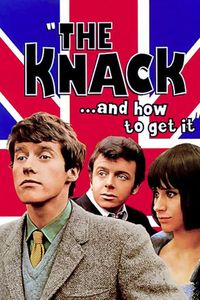
    (On Cable TV, October 2021) Even fifty-five years later, The Knack… and How to Get It is still in the running for one of the most distinctive movie titles in film history, a bit of originality matched by its still-unusual execution. At its heart the story of a romance between a shy young man and an eccentric young woman as complicated by the deeds and declarations of a vastly more experienced friend, the film finds its full expression in the way it’s presented on-screen. Eschewing traditional style, this product of the London-centric Swingin’ Sixties features jump cuts everywhere, occasionally humorous subtitles, older people shaking their heads at the actions of our young protagonists, a decidedly odd sense of humour and more time following the antics of its characters than drinking in the atmosphere of mid-1960s London. (And, if you have to ask, the titular “knack” is being attractive to the opposite sex.)  Rita Tushingham is very cute as the female lead, and the very long sequence in which she repeatedly (falsely) claims rape is either hilarious or offensive (or likely both) even today. To many viewers, The Knack… and How to Get It is somewhere in the middle of a line that touches upon A Hard Day’s Night (also from director Richard Lester the previous year), The French New Wave (with editing techniques borrowed from A Bout de Souffle) but also Benny Hill sketches with its character entering and exiting random doors, non-sequitur dialogue and everything-goes comedy. It’s a wild mixture and while it’s definitely dated, it’s still rather entertaining to watch if you give it a chance.

  • The Four Musketeers (1974)

    The Four Musketeers (1974)

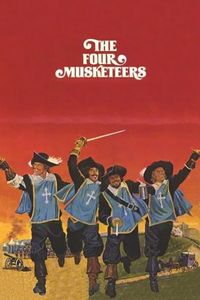
    (On Cable TV, February 2021) There are informal series of remakes out there that become generational touch points of sorts. Well-known stories are reinterpreted every few years with a new crop of actors, giving us a glimpse at how each era makes its movies. The generational updates to dramas such as Little Women and A Star is Born certainly count, but Alexandre Dumas’ Les Trois Mousquetaires is in a category of its own. As an adventure with strong dramatic content, the Musketeers story can be adapted to a variety of contexts, either as out-and-out action spectacles, as costume dramas, or as classic swashbuckling adventures. Actors as different as Douglas Fairbanks, Gene Kelly and Luke Evans have played in well-known versions of The Three Musketeers, and the 1974 version fits right in the middle of 1970s Hollywood. To be fair, this is the second half of a story begun with 1973’s The Three Musketeers, so the comparisons are not exact — this film covers the second half of the Dumas novel that often gets short thrift in other adaptations. (Something not apparent to viewers is how both movies were originally conceived as one and led to movie contract history — with producers splitting the film in two during production, and getting in such incredible judicial problems regarding the cast and crew contracts that the film led to the imposition of the SAG’s “Salkind Clause” to prevent such shenanigans from happening again.)  Watching The Four Musketeers isn’t as much about the story as it is about how they made mid-budget adventure spectacles in the 1970s — with an all-star cast of actors such as Michael York, Oliver Reed, Richard Chamberlain, Charlton Heston, Faye Dunaway, Christopher Lee and Raquel Welch (!!!), a director like Richard Lester (who was still a few years away from superstardom as Superman director) and expansive European on-location shooting. Alas, movies from the 1970s also share the putrid cinematography of the time, with flat colours, dull images and perfunctory sets. I’m not interested in whether the entire shoot was done under overcast weather — I’m interested in the results, and they are as gray and featureless as the story should be vivacious and fun. Some biting dialogue and voice-overs make the film almost as interesting as the Dumas original, but the impression left by this film is one of heaviness and gracelessness: the action sequences pale in comparison to other adaptions of the story, and even the star-power can’t quite elevate the material. I may, however, be interested in watching the film again as part of a double feature with the original. While it’s fun to watch a musketeer film that pays attention to the often-neglected second half of the novel, I probably would have had more fun in watching the introduction first. Still, I did like to see that cast with that story, and in this regard The Four Musketeers does achieve its goal of being one more entry in a century-old conversation between Hollywood and Dumas’ novel.

  • Superman II (1980)

    Superman II (1980)

    (Second viewing, On DVD, May 2017) I’m old enough to actually have memories of the promotional material for Superman II (including, if I’m not confabulating, a View-Master disc about the movie) but revisiting the film much later is like seeing it for the first time. The way it is tied to the first film is impressive—although even a quick look at the fascinating making of the movie reveals that it was nearly all shot at the same time as the first one, then largely reshot when Richard Lester took over Richard Donner as a director. Compared to the first film, Superman II does seem a bit less serious and more overtly comic: However, this may make the sequel more even toned than the first film. (But not entirely, as there are a number of gruesome deaths in the film, such as the one of the astronauts, that are almost immediately glossed over.) The inclusion of super-powered villains makes for good spectacle, especially once the film gets down to its showy New York City street fight—with plenty of blatant product placement! The movie does have a few high notes along the way: the de-powering of Superman doesn’t last long nor mean much, but it’s a nice thought and does mark a high point in the Superman/Lois Lane romance. This being said, there are enough plot holes and dumb choices left and right to baffle anyone. Never mind the trips to/from the supposedly isolated Fortress of Solitude, the regrettable exclusion of Miss Teschmacher from much of the story (although literally jettisoning the Ned Beatty character was the wise choice), the abundance of material for the whole “Superman is a Shmuck” thesis or the suddenly ludicrous “Cellophane shield” superpower. Christopher Reeves is once again very good both as Superman and Clark Kent, while Margot Kidder does seem even more comfortable as Lois Lane. Gene Hackman is welcome as Lex Luthor (arguably better here than in the original) while Terrence Stamp is memorable as the British-accented Zod. Superman II, like its predecessor, is now almost charming in its period blockbuster aesthetics—it’s got grand ambitions, but the special effects are often primitive considering the technology of the time and it doesn’t quite have full control over its tone given the various hands that interfered with its production. Still, it’s got a heart and a certain faux-naïve earnestness. If you’ve seen and enjoyed the first one, the second is mandatory viewing.