Roy Del Ruth

  • The Life of the Party (1930)

    (On Cable TV, November 2022) The point of Pre-Code films, from a contemporary perspective, isn’t necessarily to be found in suggestive outfits, risqué lines or looser language—it’s usually in the less-than-moral attitudes that the characters can adopt in ways that would disappear in 1934 and not reappear before the late 1960s. In The Life of the Party, for instance, we have two Manhattan young women who, after being fired and abandoned by men, decide to adopt the gold-digger lifestyle and work their schemes in Havana (then a playful spot for the rich). There are horse races and millionaires and gigolos working the same scheme from a gender-flipped perspective and, in the end, The Life of the Party feels naughty just for suggesting that romance can take a back seat to material comfort. (But don’t worry—romance comes back by the time the credits roll.)  Director Roy Del Ruth keeps things light, even if the film itself is clearly not the best possible take on its own ideas. The Pre-Code atmosphere makes the film interesting despite some rough early-soundies technical qualities. Some of the film’s shortcomings can be explained by an ambitious production (featuring colour cinematography and musical numbers) that got severely cut down when the American appetite for musicals faltered in late 1930. Maybe, one day, we’ll rediscover the full film.
  • The Maltese Falcon (1931)

    (On Cable TV, September 2022) For movies being remade, the best-case scenario is a forgettable, inferior remake that is soon forgotten and leaves the original with its original lustre. The worse case scenario is pretty much what happened with 1931’s The Maltese Falcon: The remake ended up being a genre-making classic that completely eclipsed the previous version (to the point where it’s often explicitly presented with the caveat that it’s NOT the best-known version) and whose interest is almost entirely measured in comparison to its remake. So it is that the 1931 The Maltese Falcon is… not good. Not as good, anyway. Even putting aside the extraordinary contributions of John Huston and Humphrey Bogart to the 1941 remake, there are two crucial ways in which Roy Del Ruth’s 1931 version falls short. First, obviously, is the technical polish of the production. Dating from early in the sound era and not exactly being a prestige production for the studio, this Maltese Falcon is marred by vexing technical shortcomings: frequent dead audio, incredibly rough editing, static camera shots—no wonder it seemed like a prime candidate for a remake: Even the in-between comic remake titled Satan Met a lady would greatly improve on those aspects even five years later. But the more crucial difference illustrates the importance that tone and style can make on even the same kind of narrative: 1931 was one decade too early for film noir, and so the first Maltese Falcon offers, to seasoned noir fans, the utterly bizarre spectacle of an archetypical noir story being done is rather bland mystery style—missing the added layer of shadowy cinematography, downbeat tone and urban decay that made film noir such a landmark. It does make for hypnotically bemused watching—especially if you’re familiar with the other versions. There is one important aspect, however, in which the 1931 is superior and will surprise viewers, and it’s in the Pre-Code frankness of the script: the sexual aspects of the original novel are toned down but far more obvious than the later versions of the film: it feels harsher and occasionally more honest about its own subject matter. Strike another one up for Pre-Code Hollywood. This version of The Maltese Falcon is, without many realizing it, a modern treat—as with many Pre-Code films judged too racy for the Production Code years, it was unavailable for public viewing from 1934 to 1966. Ironically, this may be why we ended up with the 1941 version—a way to remake it according to the strictures of the time, and accidentally producing a classic along the way. So rests the 1931 version of The Maltese Falcon—forever in the shadow of its successor.

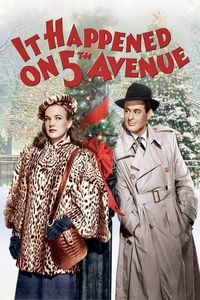
  • It Happened on Fifth Avenue (1947)

    It Happened on Fifth Avenue (1947)

    (On Cable TV, December 2020) Generally speaking, the best Christmas movies are both about the typical values of Christmas (family, generosity, kindness) while having other things on the go than simply waiting for December 25. Such is the case with It Happened on Fifth Avenue, a film that doesn’t necessarily revel in the pageantry of the season, but does its best to showcase Christmas values. The story has, over the years, acquired a patina of period-specific characteristics, as veterans returned from WW2 can’t find places to stay due to a housing crisis, and see themselves left on the margins of society even as able-bodied, skilled people. A solution offers itself to the protagonist of our story, as he’s told about a rich man’s mansion left unoccupied while the owner winters over in another state. Two homeless men living in luxury seems like an ideal arrangement until the daughter of the owner shows up and passes herself off as another vagabond. Then the father comes back and also pretends to be a homeless person in his own house… Pretty soon, the film is awash in romance, hidden identities, crucial choices, a makeshift micro-society in an opulent house, and Holiday cheer as Christmas draws closer and closer. Director Roy Del Ruth does a good job keeping everything humming along, which is supported by Don DeFore as the protagonist, and the very cute Gale Storm as the disguised owner’s daughter. While It Happened on Fifth Avenue is not specifically geared toward being an outright comedy and thus suffers from a few lulls, the entire film is quite charming and Christmas-adjacent enough to be worth a look even if you’re burnt out by Christmas Eve. It’s a crowd-pleaser in the most classic sense, and hits its marks no matter when you see it during the year.

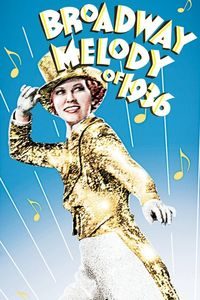
  • Broadway Melody of 1936 (1935)

    Broadway Melody of 1936 (1935)

    (On Cable TV, June 2018) While occasionally billed as a sequel to the Oscar-winning The Broadway Melody, this 1936 update is almost entirely unconnected (save for the title song) to the original. On the other hand, those lucky enough to experience both movies as a double-feature evening will be shocked to notice the rapid progress of the Hollywood musical between 1929 and 1935. After a perfunctory opening that suggests a better technical control over sound and dialogue (and clearly sets its mid-thirties Manhattan/Broadway setting), the film hits its early peak with “I’ve Got a Feelin’ You’re Foolin’”, a full musical number complete with furniture popping in and out of the scenery, and even rudimentary (but effective!) split-screen special effects. Clearly, Hollywood had a few years to work out the kinks of musicals, and the result feels far more natural than its predecessor. Adding a plot that largely revolves around journalism is another way to keep things interesting, although by the time the story diverges in an elaborate attempt to promote a non-existing singer, only the repeated punchline of a character slugging another in the face is good to keep things interesting. Director Roy Del Ruth’s Broadway Melody of 1936 is relatively obscure these days, and as such represents your average Hollywood musical of the period. It’s far more interesting as an example of the form than as a particularly interesting film in its own right. Still, I did enjoy it: it may not hold a candle to the Astaire/Rogers musicals of the time, but it’s fun enough to be watched without fuss.

    (On Cable TV, January 2020) Having the occasion to build myself a triple-bill of the last three Broadway Melody movie, I took the occasion to refresh myself regarding the 1936 installment even if all four are narratively unconnected. Much of what I wrote upon my first viewing remains the same — the “I’ve Got a Feelin’ You’re Foolin’” number is good, and the musical is a representation of the state of the art at the time. What I liked less this time around were some of the narrative connective tissue — there’s a running subplot about a snoring expert that’s, well, a snooze (the repeated punching stays funny, though.) What I’m in a better position to appreciate this time around is Eleanor Powell’s work, especially in the final “Broadway Melody” number (“Gotta dance!”) where she gets to strut her long-legged tap-dancing. Broadway Melody of 1936 also serves, along with the other films in the series, to illustrate MGM’s rise as the premier Musical-making studio.