Rudy Ray Moore

  • Dolemite Is My Name (2019)

    Dolemite Is My Name (2019)

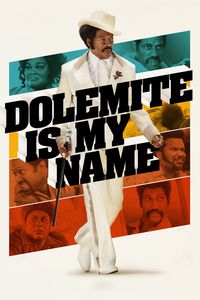
    (Netflix Streaming, December 2020) So, do we officially have a subgenre of great movies about the making of bad movies, now? We had Ed Wood (about Plan 9 From Outer Space), The Disaster Artist (about The Room) and now Dolemite is my Name, which describes the making of Dolemite. I know; I know – Dolemite was conceived as a comedy and thus doesn’t quite rank as an unintentional disaster. But I watched it right before Dolemite is my Name, and it is a wretched film from a technical standpoint: rough script, amateur filmmaking, terrible audiovisual quality, approximative acting and substantial pacing problems. But what this fictionalized making-of accomplishes is to give us a look behind the scenes – at Rudy Ray Moore trying to find his voice on the comedy circuit, at black creators trying to put together a film appealing to their sensibilities, at a crew of student filmmakers working on their first production with a minuscule budget. Eddie Murphy gets one of his best roles in years as Moore, keeping some of his worst tics in check and playing a character for once. Dolemite is my Name is never as enjoyable as when it shows the amateur filmmakers putting together a movie – especially if you have a fresh memory of the original. It all amounts to a somewhat inspiring finale, although it’s made even better in that Moore surpassed his wildest ambitions in putting together Dolemite – the film may not be very polished or funny to contemporary audiences, but it was a massive hit back in the mid-1970s. For Murphy, too, the film feels like a success equivalent to Dolemite – it was a passion project for him, and it must be gratifying to get the kinds of notices that Dolemite Is My Name earned, seeing how its look at a bad film became a really good one.
  • Dolemite (1975)

    Dolemite (1975)

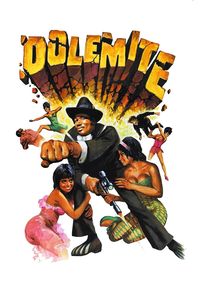
    (Tubi Streaming, December 2020) Aaargh. I know that Dolemite is a bit of a cult classic, and I can see where the fuss comes from: The grander-than-life nature of Rudy Ray Moore’s character is hard to resist, and the flowery use of language is the kind of thing I really like in movies. I approve of the filmmakers’ agenda at play here in taking back blaxploitation from the big studios (especially given how much I like blaxploitation already), and I really enjoyed the demented pimp-centric world that the film sets up, bit by bit. But let’s be honest: Dolemite is far too often a chore to get through. The production values are abysmal, the audiovisual quality is terrible, the script is borderline moronic and the moral values promoted here are abominable. You can definitely see it as a comedy, but seeing it as a satire takes substantial presumptions to cut through the amateurish filmmaking to see which point the film was trying to make. I watched Dolemite as prelude to 2019’s fictionalized making-of Dolemite is My Name, and I don’t regret it. But I would have had a much harder time and a much harsher appreciation had I tried watching it on its own, without a much slicker production right afterward to help make sense of it.

    (Second viewing, On Cable TV, April 2022) I don’t often re-visit films, but one of the surest way to get me to do that is create a sense of doubt when comparing my reaction to the film versus everyone else’s: Have I missed anything? Did I simply not catch what there was to catch? In Dolemite’s case, I suspected that my first viewing conditions (low-resolution, bad audio version of the film) were not ideal, and that a best-possible presentation could make it a different experience. I was right, somewhat – As presented on TCM from the best available digital copy of the film, Dolemite does feel different: the production values are terrible but not intolerable, and you get to see details (such as fake fighting blows clearly missing their marks) that reinforce the sometimes non-obvious comedy of the film. (Well, let me qualify that – Dolemite’s comedy is not always distinguishable from earnest low-budget weirdness.) I still think it doesn’t quite achieve what it wants to, and the same self-indulgence that makes the film special (in allowing Rudy Ray Moore’s irrelevant monologues, for instance) are what stops the film from going that extra level. Still, I found the film better a second time around – funnier, more compelling and closer to the consensus opinion about Dolemite. Don’t underestimate the impact of a good presentation!