Saw series

  • Spiral: From the Book of Saw (2021)

    Spiral: From the Book of Saw (2021)

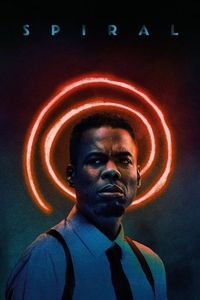
    (On Cable TV, October 2021) As a vocal opponent of torture films, gory violence and cinematic nihilism, I do have a softer spot than many would expect about the Saw series. While I don’t have much use for its elaborate traps or sudden sprays of bodily parts, I rather liked some of its more outrageous narrative twists, grimy industrial settings, go-for-broke editing (especially when it’s trying to cover up some plot nonsense) and moralistic intentions—even when it doesn’t stick to it. This being said, I wasn’t begging for another instalment: Considering Tobin Bell’s inimitable performance and the convoluted backflips of the narrative after nine instalments, the series can rest easy for a long while. Spiral wisely doesn’t try to fit even more material in the series’ overstuffed mythology—it plainly goes for an explicit spinoff, and adopts a slightly different tone by moulding itself into a police thriller. Chris Rock, of all possible choices, gamely tries to reinvent himself as a more serious dramatic actor by playing an outcast police officer who becomes the focus of a copycat killer working in Jigsaw’s tradition. Much of the film, from a narrative perspective, plays like one of those 1990s serial killer thriller, with the police racing to find the culprit. The distinction here is that the killer is targeting corrupt cops—alas, a concept that seems too timid now that everyone is grappling with the consequence of systemic police brutality. The result is something like a new direction for the series, but one that doesn’t manage to get very far in establishing itself as something worth pursuing. Sure, it’s interesting to see Rock (his face sculpted by age and facial hair) go for thrills and drama while still spouting his fair share of one-liners. Oh yes, Samuel L. Jackson does have something new to do here. Fine, the police procedural is a nice change of pace. Indeed, there’s a narrative twist worthy of the Saw series. But none of this is quite enough. The fascination for the traps is overdone and underwhelming: the film could have dispensed with them without problem, especially considering how insipid they become over time. (Worse: the film tries to have its cake and eat it too by allowing the victims to defeat the trap… only for them to die gruesomely anyway moments later. But this is far from the first instance of botched morality in the series.)  It’s all loud and quick on the editing, but the substance is just as lacking as in earlier repetitive instalments of the series. I’m not sure if Spiral will ever get a sequel, but I don’t think anyone will demand it.

  • Saw 3D aka Saw VII (2010)

    Saw 3D aka Saw VII (2010)

    (On Cable TV, October 2019) There are times, seven movies deep into a horror series, where you can justifiably think, “They should stop now.”  Not because it’s gotten bad yet (well, arguably), but because it’s clearly heading in that direction and it should cut its losses before it gets there. So it is that Saw 3D does have its share of interesting moments (the opening sequence visibly shot in downtown Toronto, the idea of a victims support group, the final revelation answering a few questions by bringing back a character) but was clearly running out of steam in its seventh instalment. Considering the wildly intricate chronology of the first six films, it’s not a real surprise if the temporal shenanigans of the series are mostly gone, the cast of characters thinned out, the moral pretensions almost completely wiped away (especially with one character running around like a mass murderer) and the focus on the traps—not my favourite aspect of the series—is getting tiresome. Then there’s the 3D: trendily hopping on a craze now gone back under control, Saw 3D sends flying body parts in the viewers’ faces, which just looks weird and contrived in 2D. (There’s also some colour grading issues with the 3D-to-2D conversion, but who cares, really.)  I don’t exactly hate the results, but it does feel like a lesser movie for the series, and a justifiable reason for its subsequent break. Indeed, in retrospect, the 2017 Jigsaw felt a bit reinvigorated, amply justifying the seven-year pause in what had been until then a yearly series.

  • Saw VI (2009)

    Saw VI (2009)

    (On Cable TV, October 2019) I have enough basic problems with the Saw series that I’m not going to pretend that I love it … but I’ve been vocal enough in my appreciation of its movies that I can’t pretend not to like it even a little bit. What’s appealing about the Saw series isn’t as much its gory torture sequence or botched morality, but the blend of twisted chronology, well-executed industrial trash aesthetics, and the crazy use of editing and soundtrack whenever the movie shift in high gear and doesn’t want you to pay attention to the details. I’d somehow skipped Saw VI when it came out (although I still remember joking that the title of the film, when pronounced in French as “Saw Six,” sounds like “saucisse”—meaning sausage) and it was time to six the oversight.  Don’t worry if you’re coming in late: this sixth entry quickly recaps much for the series as it brings together a reunion of nearly all of the surviving characters—and a few dead ones as well. I’m singularly uninterested in discussing the various traps/kills of the film, especially when there’s more fascinating material in how the film turns political as it draws explicit inspiration from the US health insurance system, and even takes a few moments to explain its insanity. (Reminder: The film, like most of the series, was filmed in Toronto.)  In doing so, and flash-backing so often that there’s nearly enough material for a drama-based prequel movie, it moves even closer to making Jigsaw a folk hero taking on the system. The chronology of the film isn’t as twisted as the previous ones, but it’s not simplistic either: In addition to the numerous flashbacks, there’s also a parallel plotline about the Jigsaw successor being investigated (leading to a rare non-trap death sequence) and getting a comeuppance slight enough to allow for a sequel. For a sixth instalment, that’s not too bad—the social content alone is enough to make the film relatively watchable even if you haven’t been paying attention to the series so far … and if you can stomach the gore. Still, no amount of plotting games and social content can disguise the fact that Saw VI is still meant to be a gory horror movie in the first place.

  • Jigsaw (2017)

    Jigsaw (2017)

    (On Cable TV, October 2018) I’m not generally a fan of torture horror and extreme gore, but I do have a softer spot for the Saw series for a few very specific reasons: I do like the rhythm of its films, especially when the soundtrack goes crazy in an attempt to distract us from weaker plot points. While the series has constantly been a let-down in the way it doesn’t fulfill its own moralistic objectives, it is special in how it constantly plays with structure to indulge in temporal misdirection and surprising revelations. The obvious weakness of such complex shenanigans constantly digging in the same material for twists, acolytes and time loops is that the series feels incredibly convoluted after eight instalments. That’s why I would have much rather preferred Jigsaw to have been a series reboot than yet another increasingly untenable instalment seven years later. But it only took the opening score to put me back into the series’ twisted aesthetics and the curious comfort of a film still going for broke in its direction, set design and plot twists. Jigsaw is pretty much exactly what we’d expect from another entry in the series. Convoluted traps, bloody gore, half-hearted morality plays, death-punctuated narrative and final revelations that don’t make sense the moment you think about them. Everything is incredibly convoluted, but that is part of the charm—don’t use real-world logic and you’ll be fine. This late instalment switches the rusty industrial visual atmosphere of the series to a more rural one, and it’s not much of an improvement … or a change. The Spierig Brothers handle direction duties, bringing their usual flair to the series’ established style without much of a clash. (I’d rather see the Spierigs do more original material, but if Jigsaw keeps them commercially viable, then I won’t complain too much while awaiting their next film.) Jigsaw’s adherence to the codes of the series means that experienced viewers will spot when the film pawns a few cards—whenever a death occurs with an unusual lack of gore, for instance, it’s easy to recognize it as A Clue to later revelations. Jigsaw, in other words, is no more and no less than another instalment perpetuating more of the same. Fans and haters will react accordingly.

  • Saw IV (2007)

    Saw IV (2007)

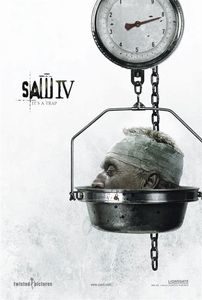
    (Netflix Streaming, November 2015) I had previously seen bits and pieces of Saw IV, but watching it from beginning to end so soon after seeing Saw III only highlighted what I’d gathered from my cursory first look, albeit with a stronger caveat.  First, the good: The integration of Saw III and IV is clever, misleading viewers just well enough to be interesting.  The grimy industrial atmosphere of the series is finely upheld (if that’s your kind of thing –I’ve found that a little of it is enough to last me a long time) and so are the usual ticks and tricks: the music that blares the moment something is happening, the camera that goes wild as if to mask the gaping logical gaps of the story… and so on.  As I’ve said: One Saw film per year or two is enough to satisfy: more than that, and the holes start to show.  It doesn’t help that this fourth volume is less satisfying than the previous ones: The mean-spiritedness of the series (via its elaborate traps, casual disregard for human dignity and flashy gore) is far less tempered by any kind of redemption.  This is partially addressed in the story (original villain Jigsaw’s legacy is being repurposed by other, more nihilistic imitators) but let’s not fool ourselves: At the fourth volume, this is also the series creators reacting to what the series fans are asking for: sadistic blood-soaked deaths, meat puppets being torn apart and rusty warehouse decadence.  As for me, it feels as if I had seen enough by the previous installments: This one seems more than redundant.

  • Saw III (2006)

    Saw III (2006)

    (Netflix Streaming, June 2015)  How fitting that one of the thematic threads in Saw III be the tension between sadism and redemption.  In the universe of the film, we get an argument between the lead villain (who does allow for extreme redemption) and his apprentice (who would rather kill in gruesome ways), which finds an echo in the tribulations of a putative protagonist offered the chance to take revenge upon the killer of his son and the enablers that let him walk free.  But in a wider context, redemption and forgiveness make for lousy horror franchises: The Saw series is built upon grimy traps, gruesome deaths, gross-outs and twisted revenge.  While I would personally like the series to err more frequently on the side of the compassion it professes to embrace, we know that this wouldn’t sustain a fan base big enough to allow for seven installments.  Part of the proof is in the way Saw III casually kills its recurring characters, forbids the rescue of its imperilled victims (all the way to a hilariously contrived shotgun blast) and embraces humanity’s infuriating penchant for self-harm.  Having seen bits and pieces of the next two films in the series a while ago, I found myself intrigued by the appearance of various plot hooks (and throwaway characters) used by latter installments in the series, and a bit captivated by the decaying atmosphere of the film and its dynamic direction.  I’m not as amused by the gore, the meanness or the nihilism of the series’ attitude, but then again I’m not really part of the horror audience courted by the series.  And while I’m curious about the three other installments in the series that I haven’t yet seen, I have a feeling that waiting a while between films is the best approach.

  • Saw V (2008)

    Saw V (2008)

    (On DVD, April 2009) I can’t say that I’ve followed this series closely (I’ve seen the third and fourth installment in bits and pieces, just enough to keep up with the storyline), but this fifth entry is easily the least satisfying yet. While the series has always been a contrived exercise in self-referential carnography, the third and fourth volumes at least had the decency of some intricate plotting, along with occasional flourishes of cinematography (such as the clever scene transitions in Saw IV) and rough morality. This fifth entry, on the other hand, is more nihilistic than sadistic, and does little to enhance the series: Everyone even remotely sympathetic dies horribly (I predict that no one in this series will survive it), and there’s no point to it all. The traps have finally become a substitute for plotting, and the appeal of Jigsaw as a lead character feels more overdone than ever. Yet Saw VI is nearing post-production…

  • Saw II (2005)

    Saw II (2005)

    (In theaters, October 2005) While no classic, the original Saw at least played with a very unnerving idea: The thought that someone could put you in a situation where your only chance at survival would be to do extreme violence to yourself. Simple idea, fairly well executed despite a number of misfires. Unfortunately, the shell of this concept seemed to have been lost in this sequel, which ignores the horror of puzzle boxes to instead rely on a bunch of fairly unlikeable people thrown together as for an extra-gory reality TV show. The murderer is once again an all-knowing, all-powerful villain: his unlikely influence on the events is a bit too much to consider seriously. Overall, the film sputters without much of a clue: even the end’s climactic mutilation seems more dumb than horrific. (Use mirrors, dude!) Oh well; as exploitation horror sequels go, I’ve seen much worse.

  • Saw (2004)

    Saw (2004)

    (In theaters, November 2004) It’s no accident if, at least three times during its duration, Saw starts throwing loud music, fast cuts and insane visuals at the viewer. It’s very impressive, but it just masquerades a fundamentally unlikely premise. You could certainly see it as yet another entry in the ever-more-extreme “Clever Serial Killer” mystery genre popularized by The Silence Of The Lambs. Here too, innocent characters find themselves at the mercy of a mastermind criminal who plans everything ahead of them. Chances of survival? Slim. Believability of the whole premise? Slight. But it’s all in the execution, and so Saw is built like a puzzle, with interlocking parts often glossed over when the film doesn’t want you to pay attention to plot holes. Amazingly enough, it works: The film is grim enough, different enough and fast enough that the conclusion has the time to take your breath away before you can go “Yeah, but…!” There is some dynamic film-making at work here, especially when the style overwhelms the substance. Telling you more about the story would be a disservice, but warning you that this is a seriously twisted film is probably fair enough. Here, it’s obvious that the screenwriter is the one who is manipulating both audience and characters like puppets. It all amounts to a decently-entertaining pitch-dark crime drama. It works like a nightmare and makes just about as much sense. Enjoy, if you can.