Sydney Greenstreet

  • Pillow to Post (1945)

    (On Cable TV, March 2022) One of the side-benefits of having seen so many classical Hollywood movies is being able to spot obsolete tropes and micro-phenomenon specific to a brief period of time in history. So it is that Pillow to Post’s premise smashes two things we don’t really see nowadays: the World War II housing shortage and the quaint trope of instant marriages. Watching some older Hollywood film, you could be forgiven for thinking that marriage was quick, cheap and easy, as characters got married on a whim then spent the rest of the film figuring out if they were romantic matches. It’s a big screenwriting conceit more than a reflection of how things were, of course—what better way to crank up the romantic tension than to throw characters together and let them react? Pillow to Post adds one trope to the other and comes up with a narrative in which a vivacious young woman (Ida Lupino, luminous as always), sidesteps a housing crisis by “marrying” a stranger to get a married-couple-only bungalow. Things predictably get more fun once his superior and her family come around and start poking at the situation. The rest is by-the-numbers romantic comedy, somewhat enlivened by the social constructs leading to the complications, and the charm of the lead actors. Sydney Greenstreet is an imposing figure as a high-ranking military office, but it’s really Lupino who’s the focus of the picture. (Louis Armstrong appears in a bit role, but don’t be fooled by mentions of Dorothy Dandridge being in the film—it’s a fleeting glimpse more than even a small role.)  Pillow to Post is not a film that will earn many dedicated fans—it’s slightly fun and nothing more. But it will do the job if you’re just looking for something light and amusing to wrap up the day, or a look at comic devices of past ages.

  • The Velvet Touch (1948)

    (On Cable TV, February 2022) Aside from a leading performance from the ever-reliable Rosalind Russell, there really isn’t much to say about film noir The Velvet Touch. It does start on a promising note, as our heroine accidentally kills her producer, and the film then (through flashbacks) takes noir archetypes to the Broadway circuit. As usual for the genre, there is a very comforting quality in tackling murder and mayhem in the late-1940s context: it’s dark and suspenseful enough to be interesting, but you know that there are limits to how far the film will go. Executed as slickly as most of its contemporaries, it tries to go beyond the sordid crime story to tackle the neuroses of an actress pursuing dramatic fulfillment. The fusion of noir themes and Broadway backdrop works well in bringing together two of Hollywood’s most enjoyable subgenres, but The Velvet Touch can’t quite sustain the expectations created by its premise. The dialogue is triter, not quite as hard-boiled as it should be, and the conclusion can be inferred from the aforementioned limits of Classic Hollywood. Sydney Greenstreet does turn in one of his last performances here as a dogged policeman on the case, and he’s the one with the best lines as the film wraps up. Not terrible, not exceptional, The Velvet Touch may work better as comfort material for viewers wanting a bit of crime in their Broadway stories or a bit of Broadway in the noir films.

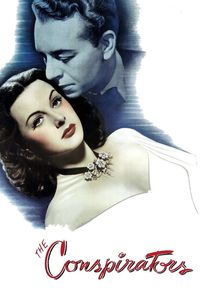
  • The Conspirators (1944)

    The Conspirators (1944)

    (On Cable TV, March 2021) I’m not sure why it took me so long to discover this, but Warner Brothers turned out a slew of Casablanca-light movies in the mid-1940s. Most of them took place in Europe, dealt with a combination of often-fictionalized European politics and romance, often featured Nazis as villains, and Casablanca performers as players. The Peter Lorre/Sydney Greenstreet duo alone is a good way to identify the half-dozen films in that sub-sub-sub-genre, and here they are indeed in The Conspirators, a film that sticks far closer to Casablanca than the other films in the same vein. Here, the Lorre/Greenstreet pairing is supplemented by Paul Heinreid and the beautiful Hedy Lamarr as members of a Portuguese anti-Nazi resistance group trying to root out a traitor among them. It’s all fairly familiar stuff, but the cast knows what it’s doing, and so does the Warner Brothers apparatus surrounding them. Lamarr is close to her most glamorous here, and the Greenstreet/Lorre combo is a known quantity as well. Churned out quickly to take advantage of topical events and the American public’s appetite for anti-Nazi material, The Conspirators is, in some ways, an ordinary wartime thriller, but the combination of some above-average elements does make the result more interesting even when it’s clearly trying to repeat a much-better film.

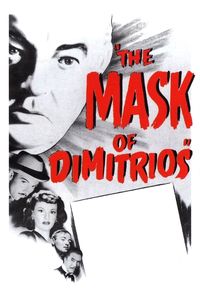
  • The Mask of Dimitrios (1944)

    The Mask of Dimitrios (1944)

    (On Cable TV, March 2021) An interesting blend of noir aesthetics, mystery and international geopolitics circa late-1930s, The Mask of Dimitrios features Peter Lorre as a novelist tracking down the life of a mysterious man of intrigue (the titular Dimitrios), through a cross-European journey that eventually gets him close to another mystery man (played by Sydney Greenstreet) with a grudge against the deceased. If the deceased is indeed deceased, which becomes increasingly unlikely as the narrative advances. Much of the action takes place in southeastern Europe, where the geopolitics of time are subordinated to the requirements of an exciting plot. At times, it does feel like a Casablanca spinoff — the Lorre/Greenstreet pairing is evocative enough, the Warner Brothers sensibilities are similar and using Europe as a playground for thrills is in the same neighbourhood, although it does lack a strong heroic protagonist and/or a romance to be anywhere near its more illustrious equivalent. Accordingly, expectations should be modulated in approaching The Mask of Dimitrios: it’s closer to an average film with its own distinctive atmosphere. There’s a curious non-emphasis on the rising Nazi threat, but the film is more concerned about its own thriller elements than making a stab as real-world relevance — and there’s probably an argument to be made that by 1944, no one needed another reminder about the Nazis. Reasonably entertaining and featuring a sufficiently different protagonist as played by Lorre, The Mask of Dimitrios makes for a decent watch as long as you don’t expect too much.

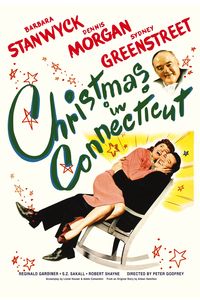
  • Christmas in Connecticut (1945)

    Christmas in Connecticut (1945)

    (On Cable TV, December 2020) One of the central tenets of my evolving Grand Unified Theory of Christmas Movies is that for one to succeed, it must simultaneously depend on Christmas and yet be interesting outside of it. In other words, farther away from quantum uncertainty: The plot must be made possible by Christmas, yet be interesting enough to be watchable anytime from January to November. On those two metrics, Christmas in Connecticut succeeds admirably: It features a comic premise in which a single childless columnist having never set foot outside Manhattan is forced to pretend to be the exemplary rural housewife of her columns due to a Christmas publicity stunt. At the same time, it quickly becomes the kind of farce that’s well worth watching at any time of the year. It certainly helps that it features Barbara Stanwyck at her funniest, with capable character actors such as S.Z. Sakall and Sydney Greenstreet to keep things funny even when she’s not on-screen. The complications, deceptions and convoluted plans pile up as quickly as the romantic tension between the protagonist and a war hero targeted by the charade, leading to a climax in which everything is revealed. As a comedy, it’s quite good enough to satisfy even without the Christmas element, but removing it would make the film collapse under its own contradictions. (If the lesson here is that Christmastime makes people behave irrationally, well, I think that’s my point.) The depth of Hollywood Christmas movies is such that I hadn’t seriously looked at Christmas in Connecticut before this year, but now that I have, I can see it become a season favourite.

  • Hollywood Canteen (1944)

    Hollywood Canteen (1944)

    (On Cable TV, May 2019) Here’s what you need to know about Hollywood Canteen: During WW2, Hollywood celebrities got together and paid for a club in Los Angeles exclusively reserved for servicemen on leave where they could get free drinks and meals. Adding to the appeal, glamorous movie stars donated their time by actually bartending and waitressing for patrons of the place. This is all true—although accounts of the place usually underplay the considerable Pro-Hollywood publicity value in this arrangement. Further adding to the mystique is this film, not a great one but a fascinating time capsule of propagandist wish fulfillment that shows WW2 soldiers enjoying a few days in Los Angeles and spending time at the Hollywood Canteen where they get a chance to rub shoulders with movie stars. (Lost to twenty-first century audiences is the idea that when this film was shown to servicemen overseas, they could have been these guys.)  The film itself, once past the bare-bones setup, is a series of performances by Hollywood then-stars at the Canteen, effectively turning the film is a series of variety show sketches while the film’s protagonists kiss Hollywood starlets, empty sandwich trays or watch the acts with mouth agape. If some scenes make you somewhat queasy at the way the actresses are offered to soldiers for kisses, then you do have a good grasp at the hierarchy of values presented here, elevating the fighting soldier on a special pedestal. Hollywood Canteen remains both a wartime propaganda film, and a revue of who was who in Hollywood at the time—some of them featured in the movie, others referenced through dialogue. Many of the jokes are obscure now that the stars are gone—Jack Benny gets a laugh from the characters just by showing up, for instance, leaving twenty-first century audiences puzzled for a few moments. It’s fun to see some Hollywood stars in a far more relaxed environment, though—especially Bette Davis in a more comic role. The Canteen acts as a pretext, as the characters have adventures around town, our protagonist gets to romance a movie star and we tour the Warner Bros studios of the time. It’s actually quite a fun movie even with the propaganda material … but it works far better as a reminder of a bygone era.

    (Second viewing, On Cable TV, February 2021) I first saw Hollywood Canteen barely two years ago, but since I’ve spent much of the intervening time deepening my knowledge of classic Hollywood, revisiting it felt like a different experience. This is true of most films if you’re interested in the vast meta-narrative of Hollywood, but it’s particularly relevant in discussing Hollywood Canteen, as it’s a film that relies a lot on celebrity cameos for effect. The plot of the film remains the same from a first viewing to a second: it’s a fictionalized homage to the real “Hollywood Canteen” that, during WW2, offered free meals, refreshments and entertainment to servicemen on leave in the Los Angeles area. Thanks to the effort of notables such as Bette Davis, Hollywood studios pooled their resources and stars for the upkeep of the place, and it wasn’t rare to see a screen legend serving tables at the Canteen. The result was a propaganda victory for Hollywood, and fuel for fantasies involving soldiers and starlets. Alas, this aspect makes it intact in the film, as there’s a truly uncomfortable amount of time and attention lavished on named stars granting kisses and weekend getaways to the film’s fictional soldier characters, each of them over the moon to get some personal attention from their screen favourites. The film is at its worst when focusing on Joan Leslie playing “Joan Leslie,” an object of lust for many but luckily snagged by our protagonist as the millionth G.I. to enter the Canteen. Blech. But plot is the least of Hollywood Canteen’s worries when there’s a stream of musical numbers and comic cameos to act as a revue musical. That’s when a second viewing comes in: Cameos can be more mystifying than satisfying if you’re not familiar with the actors making a winking walk-on appearance, but they pay off the more you’re familiar with the comic point being made. 1944 audiences had no trouble catching the various jokes, allusions and parodies in Hollywood Canteen, but modern audiences will be tested on their knowledge of early-1940s pop culture — and specifically the Warner Brothers roster of stars. Having brushed up on my classic Hollywood in two years, I now knew who was Joe E. Brown and now could appreciate the donut gag as intended. The more you know about the character actors at the time, the more you can appreciate the bit with S. Z. Sakall and his cheeks, or Sydney Greenstreet hamming it up menacingly with Peter Lorre. My growing appreciation of Ida Lupino went up with every word of French she spoke (a gag made even funnier by Victor Francen’s follow-up), and so did my slow-burn liking of Bette Davis as she came onstage to explain the genesis of the Canteen. I’m not as up to speed when it comes to musical stars, but even I could appreciate the Andrew Sisters, Roy Rogers and his horse Trigger, the rather funny “You Can Always Tell a Yank” (which eerily sounds like a Disney song for reasons I can’t quite figure out), duelling violins and the background music by Jimmy Dorsey and his orchestra. Even the second time around, I maintain that Hollywood Canteen is somewhat distasteful as a narrative, but I grew much fonder of the remaining three-quarter of the film, as a comic musical revue.