Ted Danson

  • Living with the Dead (2002)

    (In French, On Cable TV, April 2022) By the time some movies show up on French-Canadian TV, a lot of the context around them has been removed, changed or evolved beyond initial intentions. This is not necessarily a bad thing: The steamroller effect of presenting everything as just another TV guide entry is like a bulldozer flattening preconceptions about what’s a prestige big-budget release, a direct-to-streaming cheap production or something even stranger. For Living with the Dead, for instance, it pops up on a horror-dedicated channel as a single staggering four-hour-long film, with a cast including well-known names such as Ted Danson, Mary Steenburgen, Diane Ladd, Jack Palance and Queen Latifah (in an admittedly early role). What this obscures is that it began life as a two-part made-for-network-TV film, with some marquee names in small quick roles. As such, it does present a different kind of experience than a quick 90-minute horror film, and one that works to the film’s advantage in many ways. Adapted from a “true story,” Living with the Dead follows a man as he realizes that he can see and communicate with the ghosts of dead people, and tell the future from touching other (living) people. Far from immediately focusing on the horrific potential, the film is at its best and most distinctive in how it presents this ability as comforting – a way to warn, to make things right with the living, to resolve long-standing questions. The made-for-TV slow pacing of the story is most appropriate to those early and middle segments of the film, with overlapping episodes that don’t necessarily rush from one plot point to another – this isn’t structured along a familiar three-act pattern. Of course, that doesn’t make for much drama over the long-term, and that’s how a much grimmer story of child abduction keeps brewing throughout the film, finally becoming the dominant plotline in the last half-hour of the show. While the length of the result will prove overpowering if you’re expecting a short and snappy horror film, the result is not bad if you approach it with the right expectations. Danson is better than usual (especially at that time in his filmography) in a non-comedic role, while Steenburgen is just as compelling as usual as a police detective. Horror fans can tune out for much of Living with the Dead and have their attention snap back by the end. A better-than-average “made-for-TV” movie, especially if you can make your peace with the running time.
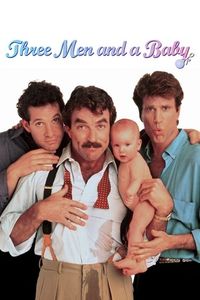
  • 3 Men and a Baby (1987)

    3 Men and a Baby (1987)

    (Disney Streaming, August 2021) Perhaps the most noteworthy aspect of 3 Men and a Baby now is outside the film itself, as an evocative example of box-office irrelevance. Upon release, it became the highest-grossing Hollywood movie of the year, outclassing such films as Full Metal Jacket, The Princess Bride, Predator, Lethal Weapon, RoboCop, Spaceballs, Evil Dead II or Wall Street. Of course, the irony today is that any of those movies are significantly better-known than 3 Men and a Baby, and for good cause: they all still have a daring, distinctive quality, whereas 3 Men and a Baby was always meant as a common-denominator kind of comedy, the type of film that families grudgingly compromise on seeing together, especially at Christmastime, which was the film’s savvily-targeted release season. To be fair, it’s not a bad film: The plot seems custom-made for the Christmas season as well, as three bachelors are abruptly forced to take care of a baby, the result of one of their casual romantic trysts. Directed by Leonard Nimoy (a fascinating piece of trivia by itself), 3 Men and a Baby makes good use of the charms of co-leads Steve Guttenberg (in one of his best movies), Ted Danson and Tom Selleck, who’s particularly good at selling the emotional core of the story. The dynamic opening sequence sets the tone of a bachelor’s utopia with a great apartment and a wild party — but the real fun begins as a baby is dropped on their doorstep and they need to figure out everything with minimal female supervision. I’m not sure I ever watched the entire film before, because even if some elements were familiar, the entire criminal subplot felt newish (and unnecessary, even if something had to bring the film to 102 minutes). Otherwise, 3 Men and a Baby is predictable, with big plot strings seen well in advance, and a feeling of comfort amply fulfilled by the big happy finale. You can see why it made so much money… and also why it slipped away from the collective unconscious even as its contemporaries have shown stronger staying power. Here is something to consider when you see dull or terrible films rake in the money even as some fan favourites languish: you can’t always tell what will endure and what won’t.

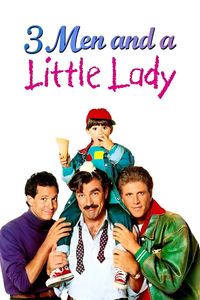
  • 3 Men and a Little Lady (1990)

    3 Men and a Little Lady (1990)

    (In French, On Cable TV, April 2020) If you’ve seen 3 Men and a Baby, get ready for the contrived sequel 3 Men and a Little Lady—a big gloppy 1990s-vintage comedy that barely cares about how ludicrous it is. Despite a capable cast, the film suffers from a bad case of sequelitis in which everything is bigger, crazier and yet less interesting than this original. In this case, our three titular men are shocked out of their poly-conjugal arrangement when the mother of the little lady abruptly announces that she’s getting married and moving to England. (Don’t ask why. A sequel is why.) Contrivances piled upon contrivances are this script’s idea of plotting, and there’s no other choice than to ride along until the predictable ending. Nothing in this film feels real, from the absurdly manipulated situations all the way to a marriage that piles clichés on top of another. This is not necessarily a bad thing as long as we know what we’re in for: A script that milks all potential jokes out of a situation before moving on to the next one. While 3 Men and a Little Lady hasn’t necessarily appreciated much in the past thirty years, it does feature some performances from actors whose star power has considerably dimmed since then. Tom Selleck does get a good role, Ted Danson hams it up in a variety of costumes and roles, while Steve Guttenberg doesn’t get much to do… and circa-1990 Fiona Shaw gets insistently coded as unattractive, which is very much up for debate for anyone away from Hollywood. Still, the film is generally watchable, even if it loses a bit of its way in the England-set second half and its madcap wedding comedy antics. But then again—afflicted with such a severe outbreak of sequeltis, where else could it go?