Toni Colette

  • Nightmare Alley (2021)

    (Disney Streaming, March 2022) I framed my experience of this Nightmare Alley in a very specific way by choosing to watch it right after another viewing of the 1947 version. As a result, I may be evaluating the film more on its distinctions from the previous version than on its own merit… but that’s as valid an approach as any other. The first impression of this newest adaptation (not necessarily a remake, as it clearly goes back to the original novel far more than it tries to ape the Classic Hollywood adaptation) is that writer-director Guillermo del Toro has given it the lavish treatment. Visually, it’s polished in ways that would have been unimaginable in earlier decades. In presenting this tale of a circus huckster turning his sight on upper society, the film revels in the carnival atmosphere—at least half of this version’s 30 additional minutes are spent hanging around this low-rent stationary carnival, rubbing shoulders with the mentalists, strongmen, freaks and geeks (in a most literal and R-rated bloody sense) that del Toro finds most likable in this film’s uncharacteristic absence of the supernatural. Bradley Cooper makes a great protagonist, his ability to portray likable bastards being an ideal fit for the role. While Mara Rooney is a bit bland, Toni Colette is very interesting as a carnival mentalist and Cate Blanchett is up to her usual standards as a devious psychologist going head-to-head with a clever conman. The visual polish of the film is immensely satisfying (even compared to the better-than-average visual presentation of the original)—alas, we can’t quite say the same of the film’s pacing: The additional half-hour weighs heavily in the third act, as even del Toro’s greatest admirers may start feeling as if it will never end. As for the coda—it has the advantage of being much snappier than the first film, and reverts to the very bleak ending of the original novel. This Nightmare Alley is quite a slick production—cleverly recreating the 1940s at their art-deco highs and carny lows. It doesn’t replace the first film, but it does update the presentation material in a compelling fashion.

  • Dream Horse (2020)

    (On Cable TV, February 2022) While Dream Horse ends up being a very familiar, suspiciously contrived feel-good comedy, I frankly expected something much duller. Hurrah for low expectations, I guess—but those expectations were set by an underwhelming opening sequence in which we’re stuck in a small English town alongside a protagonist going through the repetitive motions of a boring life. Her job is unfulfilling, yet still more interesting than her marriage. The town is sleepy and the neighbours are dull. The spark comes as she hears about a racing horse syndicate—the idea being to sell shares into a racehorse, and hopefully benefit from its winnings. Before long, a large cast of eccentric characters joins in, the mare gives birth to a promising foal and (time-skipping forward to the good parts) the horse starts winning race after race. Dream Horse is adapted from a true story, but the dramatization dictates that something bad is about to happen and indeed we’re soon asked to consider whether the injured horse should be put out of his misery. They Shoot Horses, Don’t They? this isn’t, though, as the third act goes for a comforting arc that sees everyone get some money and the horse retire quietly to the good pasture. Toni Colette is the anchor here, as the godmother of the syndicate and the one who experiences the most personal growth along the way. There’s something a bit weird and convenient is showcasing a story about winning against incredible odds without spending much time talking about those odds—as if anyone could come up with a race-winning foal, and find contentment in winning money (recast as “being part of something great” and “finding fulfillment in life”) from gambling. But such questions are beyond the intent of Dream Horse, which is meant to make viewers happy without asking too many questions. It does work as such—and as mentioned, I expected much worse. Who doesn’t like a winning horse?

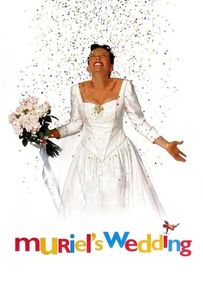
  • Muriel’s Wedding (1994)

    Muriel’s Wedding (1994)

    (On Cable TV, December 2021) The spirit of humiliation comedy is strong in Muriel’s Wedding, a film in which an outcast girl in a small Australian town (Toni Colette in an early big-screen role, unexplainable presented as a “plain girl”) gradually learns to affranchise herself, albeit not before letting her fantasies drive her to weird and unsustainable complications. She eventually earns her happy ending but there’s a lot of discomfort, cringing and bad ideas along the way. Also making her big-screen debut here is Rachel Griffiths as Muriel’s far cooler friend that manages to get her out of the small town and to the city where she’s better suited. While it sports an ABBA soundtrack, Muriel’s Wedding is far too often a melancholic affair about an outcast without specific skills or strengths. A lot of sympathy-for-the-underdog is required to make it through the film’s most excruciating moments, but it ends on a strong note. One notes that Muriel’s Wedding, historically speaking, happened during the indie boom of the early 1990s — a welcoming environment for such oddball heartfelt movies consciously running against the Hollywood ideal. It worked then, and it still works now.

  • In Her Shoes (2005)

    In Her Shoes (2005)

    (On TV, November 2015)  One of the advantages of going back in time and catching moderately-popular movies from a decade ago is that they can help fills a few gaps along the way.  If I had seen In Her Shoes back in 2005, then Cameron Diaz’s similar turn in 2011’s Bad Teacher may not have been so surprising.  It also helps answer the question “What has Curtis Hanson done since L.A. Confidential?” and “Does Toni Colette look better with or without glasses?” (Answer: “With”, but then again I’m always answering that.)  Otherwise, the most noteworthy thing about In Her Shoes is getting further proof that a romantic melodrama adapted from a book often feels far less formulaic than similar original screenplays.  There’s an added depth and complexity to the story that comes straight from the novel, along with a number of literary devices that for some reason seem more common in adapted screenplays.  (Reading a synopsis of the novel does help in finding out that the screenplay isn’t above some compression and simplification, but that’s how these things go.)  Balancing heartfelt sentiment about long-lost family relationship with sibling rivalry and more straightforward romantic subplots, In Her Shoes doesn’t seem like much, but it lands its emotional beat honestly, takes an expansive left turn past its first act and features a few good performances by Diaz, Colette and acting-her-age Shirley MacLaine.  Hanson’s direction gets the point across effectively, and if the film does feel a bit too long at times, it definitely ends well enough.