Van Heflin

  • B.F.’s Daughter (1948)

    B.F.’s Daughter (1948)

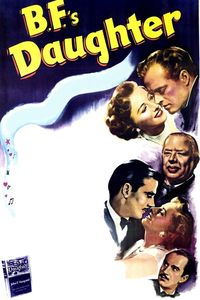
    (On Cable TV, October 2020) I know, intellectually, that there are thousands of perfectly enjoyable movies that have been more or less forgotten by history. Still, it’s always fun to catch some random film on TCM and be unexpectedly charmed by the result. I probably recorded B.F.’s Daughter because it stars Barbara Stanwyck—she’s one of the few stars of the 1940 that I find interesting in her own right and not simply as a variation on leading lady stereotypes. But the story of the film does have a way of drawing audiences in, as our protagonist, the daughter of a rich self-made man, decides to trade off an ambitious upper-society lawyer boyfriend, for a humble working-class academic. It does help that the male lead is played by Van Heflin, a likable actor I’ve recently put in perspective thanks to such movies as East Side, West Side. But that whirlwind romance is only the beginning of a story that stretches over ten years and into World War II, as our hero becomes a noted academic and a trusted advisor to the upper sphere of the US government thanks to hard work… and an initial secret push from his wife. Their romance is prickly, complicated by other factors and severely put in jeopardy thanks to a crucial evening. Much of the third act is dedicated to the resolution of two crises, as the heroine suspects her estranged husband is having an affair (he’s not in the film, but he was in the original novel), and her old flame is presumed dead over the Pacific. It’s not really a great movie, but I thoroughly enjoyed Stanwyck and Heflin at work, and the look at the professional progression of an academic over a few years is the kind of material I actually enjoy watching. By the time the film raises issues about selling out principles in favour of access, I was as invested in those ideas as the central romance. Some movies, for lack of better descriptions, simply click and B.F.’s Daughter is one of those: I approached it without too many expectations and was very pleased by the results. Now let’s keep watching older films to see what other happy surprises are hidden in the archives…

  • East Side, West Side (1949)

    East Side, West Side (1949)

    (On Cable TV, October 2020) There’s a glorious, fascinating messiness to East Side, West Side that shows how the Hays Code era wasn’t necessarily an impediment for some heavy-duty melodrama. The film begins with a seemingly-happily married couple. But this façade soon comes tumbling down when, first, an ex-flame of the husband comes to town and then an ex-crush of the wife comes to town. That would be enough to power a film by itself, but the script peppers complications throughout, throwing in performers such as Cyd Charisse in a minor role that serves no real big purpose, then hinges an entire third act on the murder of one of the four main players, leading to a detective subplot that suddenly involves another main character. (It also leads to a fairly long and now-shocking sequence in which the male detective gets into a slaps-and-punches struggle with a female killer.) There are characters and sudden shifts of tone here that add a lot of texture, at the expense of what we would consider a polished script. It’s messy but a lot of fun, although you’ll have to work harder than usual to keep up with the twists and turns. An all-star cast sweetens the deal. James Mason is quite good in his own distinctive fashion as the protagonist cad, while Barbara Stanwyck is equally compelling as his increasingly estranged wife. Ava Gardner is the temptress that exposes the fault lines in their marriage, while Van Heflin rounds up the main cast with a character that increasingly reveals how resourceful he truly is over the course of the film. Top dialogue keeps things rolling, while the cinematography gives a noirish edge to New York City. Director Mervyn Leroy has enough experience to keep all the moving pieces together, and the result is a strong drama that will keep you invested from beginning to end despite its lack of clear focus.

    (Second Viewing, On Cable TV, June 2021) The interesting thing about revisiting East Side West Side, even after a few months, is its all-star cast. In-between James Mason, Barbara Stanwyck, Eva Gardner and Van Heflin (with none other than Cyd Charisse being fifth-billed in a remarkably small role), it’s very much a collection of some of my favourite actors in the business at the time. But here’s the thing: It took me an embarrassingly long time to become a fan of Stanwyck and Gardner – While Mason is distinctive and easy to like, and a previous viewing of East Side West Side made me an instant fan of Van Heflin largely thanks to his remarkable character, it took me years to like Stanwyck given her lack of adherence to a rigid persona. Meanwhile, it took me until Night of the Lizard to finally see what others saw in Ava Gardner. But now that I’m on-board for all of them, East Side West Side takes on a different quality. Oh, the film more than stands on its own as a 1950s Manhattan melodrama – With the plot revolving around an ill-fitting couple contemplating affairs with past flames, it’s rife with dramatic situations, including woman-to-woman verbal combat and a superb mother-in-law-to-no-good-husband put-down. Mason is (as often) surprisingly good as a bad husband, while Heflin gets to play a character than, in most other movies, would be the protagonist: an immensely capable special forces operative with an uncanny ability to solve problems. One of the film’s highlights remains the physical altercation he gets with a murder suspect while they’re both sitting in a car – the fact that it’s a male/female fight is surprisingly shocking, perhaps even more so given that he’s clearly in the right in subduing a killer. The slapping, pulling and grabbing goes on for a surprisingly long time, and the close quarters of the car’s front seats mean that there’s nowhere to go. It’s not necessary to like the entire film (including a slow start and adequate finale) when it has those highlights and those stars. East Side West Side is well worth a revisit, especially if you get to appreciate the actors in other films in between those viewings.
  • A Woman Rebels (1936)

    A Woman Rebels (1936)

    (On Cable TV, September 2020) If there is no Katharine Hepburn biography titled A Woman Rebels, then it’s a missed opportunity for the ages. The film of that name is so very much a 1930s Hepburn film, featuring her headstrong personality and embracing surprisingly feminist themes roughly three decades before everyone else. In Victorian England, a woman shows her independence by raising a child out of wedlock, and by becoming an activist for women’s causes -an ideal role for the iconoclastic Hepburn. Often blunt but nonetheless fascinating, A Woman Rebels is an illustration of just how good Hepburn was in the 1930s—a mesmerizing beauty, a ferocious screen presence and a canny performer. Alas, the film flopped and led to a near-career-death experience for Hepburn, who took years to get back on top as box-office performer. File this one under “the future knew better.” Also worth noting: Van Heflin in his film debut. While A Woman Rebels is not that good of a film (a bit fuzzy, a bit jumbled, a bit overlong), Hepburn easily overpowers those flaws to make the film worth watching, especially for her fans or anyone interested in film progressivism.

  • Patterns (1956)

    Patterns (1956)

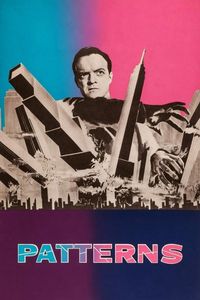
    (On TV, August 2020) I really wasn’t expecting, as I sat down to watch Patterns, to have such a shining illustration of how things have not changed in business between the mid-1950s and now. Redress the sets, change a few technical details with Internet mumbo-jumbo, and this tale of corporate office intrigue would fit right in 2020. Van Heflin stars as a young executive brought to headquarters after performing brilliantly in a satellite office. His mentor is a high-level executive whose hard-nosed attitudes run against his second-in-command’s desire to reconcile business with humanity. Torn between two influential superiors, the protagonist illustrates the constant tug-of-war between those two contrasting attitudes, with the prize being membership in the Manhattan business community. As I said – Timeless themes, bolstered by a no-nonsense execution by director Fielder Cook, working from a screenplay by the legendary Rod Serling. There’s some interesting examination and cross-examination of business ethics here, somewhat undermined by the eventual epiphany that the only people out of the rat race are the dead. Nonetheless, the script does have a compelling moment-by-moment rhythm to it, and it climaxes in a fantastic (if not entirely realistic) confrontation between the protagonist and his former mentor. We think that the world has changed, especially in offices, but the surprising timelessness of Patterns belies the claim.

  • The Strange Love of Martha Ivers (1946)

    The Strange Love of Martha Ivers (1946)

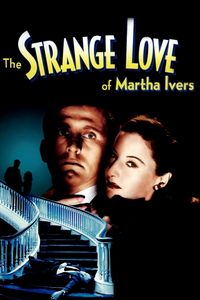
    (On Cable TV, May 2020) Film noir classic The Strange Love of Martha Ivers may not be all that iconic, but it has enough great things in it to warrant a look for fans of the genre. For one thing, it sports Grande Dame Barbara Stanwyck playing the kind of superpowered character she did best. Then the casting gets surprising: Kirk Douglas (in his film debut) playing her weak and easily cowed husband, then Van Heflin as a street-smart punk whose arrival on the scene creates danger—for he is the third holder of a secret that could have a devastating impact on the two other characters. There’s more, and quite a bit of murderous melodrama along the way, but the film (as with its score) builds up to a grandiose ending. It’s pretty good—although film noir fans will say that it doesn’t have enough noir concision to be a classic. True, but also besides the point: By the standards of mid-1940 Hollywood melodrama, The Strange Love of Martha Ivers is competent and absorbing. See it for Stanwyck, for Douglas or for Heflin, but it’s worth a look.

    (Second Viewing, On Cable TV, September 2021) It’s really interesting to revisit The Strange Love of Matha Ivers after tearing through Barbara Stanwyck and Van Helfin’s filmographies, because their on-screen antagonistic romance is the highlight of the film. It felt like a decent-enough film noir upon first viewing, but re-watching it with particular attention to Stanwyck’s performance as a femme fatale, and Heflin’s unusually muscular turn as a man who easily dominates every room he’s in (often roughly) is a different experience. As is, for that matter, seeing Kirk Douglas’ first film role as a meek, ineffectual, rather loathsome supporting character. The other highlight is the aggressive score, which shows no shame in highlighting the action with bold musical accents every time the characters butt heads – which is often. There are a few subplots and a prologue starring the characters as kids, but the film is most fascinating when Heflin and Stanwyck figuratively dance warily around each other, sometimes kissing, sometimes trying to kill each other. A fine noir melodrama, it’s easy to see why The Strange Love of Matha Ivers continues to earn such acclaim – and even more so if you’re a fan of both lead actors.