Month: August 1998

  • Days Of Thunder (1990)

    Days Of Thunder (1990)

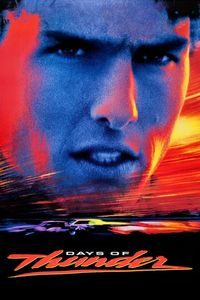
    (On TV, August 1998) “Shut up and drive!” would be my only recommendation to the scriptwriter (The quasi-legendary Robert Towne) of this moderately enjoyable sport thriller. Simply put, Days Of Thunder is more interesting when our stock-car-driving hero (played by Tom Cruise) is on the circuit driving. Everything else feels like filler, up to and including the romance with the pretty neurologist (Nicole Kidman, now Cruise’s wife). Otherwise, it’s another movie from the Simpson / Bruckheimer team. Consciously made to appeal to the blue-collar crowd. Works well.

  • Cool World (1992)

    Cool World (1992)

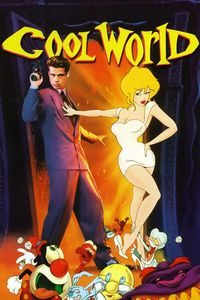
    (On TV, August 1998) Far from being as good as the other humans-and-toons comedy Who Framed Roger Rabbit?, but at least has the merit to try for a more adult approach. I say “try”, because ultimately the adult potential of the movie (and there is a lot of it), seems diluted in atrociously unfunny adolescent antics that end up cheapening the rest. A considerable disappointment. This movie should have been re-written for a hard-R rating.

  • Easy Riders, Raging Bulls: How the Sex-Drugs-and-Rock’n’Roll Generation Saved Hollywood, Peter Biskind

    Simon & Schuster, 1998, 506 pages, C$35.00 hc, ISBN 0-684-80996-6

    In the classic Brave New World, Aldous Huxley took a certain pleasure is describing the inane entertainment (“feelies”) perpetrated by Hollywood in his imagined future. It was obviously intended to be a parody of the lousy movies of the thirties, with its simplistic plot, stereotyped characters, obvious racism and happy expected ending.

    Fast forward half a century: We’re still being fed pap by Hollywood. From a storytelling standpoint, cinema is the mentally retarded cousin of prose fiction. Most of the time, it does simplistic things, only to be applauded when it does something decent. The average novel on any shelf -including romance- is a better story than the average movie.

    And yet, for a brief time in the seventies, it seemed as if Hollywood was re-inventing itself. Young film-makers like Hopper, Coppola, Friedkin, Bogdanovich, Scorsese were making challenging movies like EASY RIDER, APOCALYPSE NOW, THE GODFATHER, THE EXORCIST, RAGING BULL… But then came JAWS and STAR WARS, and the blockbuster mentality that now prevails.

    At least, that’s the history that Easy Riders, Raging Bulls tries to tell. A fairly fat book, this non-fiction account remains unusually readable while also being formidably well-researched. (There is an excellent 23-pages index, as well as 35 pages of notes, most of them referring to personal interviews between Biskind and the people concerned.)

    There is a lot of dirt in this book. The Seventies are described by Biskind as an era of unbridled hedonism, where everyone slept with almost everyone else, drugs were supplied by the bowls and rock’n’roll defined a generation. Biskind spares no punches in describing the descent through hell of most of the film-makers of this era, their troubled love lives and their constant flirting with auto-destruction. This should be a source book for anyone trying to portray South California as the modern Babylon.

    Most of the book is in the details. It’s a shock to read about the behaviour of some now-quite-conservative personalities. This accumulation of anecdotes helps to sustain our interest in a book that could otherwise be stuffy. This is one great book for party anecdotes: “Did you know that Coppola once said to…”

    Beyond the dirt and the shocking stories, though, Easy Riders, Raging Bulls fares less well at convincing the reader that there was indeed a “New Hollywood” in the seventies. A look at the most popular movies of the time probably reveals a bunch of movies that were neither superior, nor particularly innovative. We remember THE GODFATHER and THE EXORCIST… but the rest? If drugs, sex and rock’n’roll were necessary for better movies, was the price worth it? Or was the “New Hollywood” of the seventies only an new extension of the general climate of revolution that swept through the sixties?

    It is ironic, though, to find out that the main perpetrators of the blockbuster mentality (Spielberg, Lucas, Don Simpson) were encouraged -even nurtured- by the “New Hollywood”. Biskind’s chapters about the success of JAWS and STAR WARS take on a bittersweet quality that’s well developped.

    On the other hand, Biskind’s conscious silence about some latter work is surprising and self-defeating: Why not mention that of all these film-makers, only Spielberg and Lucas have managed to take control of film-making means (Lucas with ILM, Spielberg with Dreamworks)? Why conveniently forget Spielberg’s brilliant and artistic SCHINDLER’S LIST? Why not mention Coppola’s THE GODFATHER III? Or the good movies of the eighties and nineties? Or the bad movies of the seventies?

    You could say that Easy Riders, Raging Bulls is a book to read for all the wrong reasons: For the dirt and the scandals; for an unbiased history of STAR WARS; for the self-destructive paths of a few brilliant film-makers… An interesting book in its own right, Easy Riders, Raging Bulls nevertheless fails to convince that the “Sex, Drugs and rock’n’roll generation saved Hollywood.”

    Imagine that.
  • Blazing Saddles (1974)

    Blazing Saddles (1974)

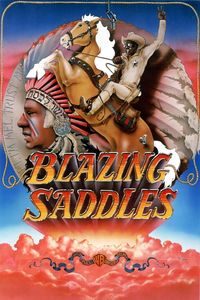
    (On TV, August 1998) Now, why are people calling this Mel Brook’s greatest movie? It’s amusing, but not funny. It has its moments, but doesn’t sustain them. Some bits are fun, but most aren’t. Even Spaceballs was better. Seems to me that the western genre is ripe for another send-off. (Although, to be fair, the pacing of modern comedies is so much more frantic that it probably spoils what must have been hilarious twenty-five years ago.)

  • Blade (1998)

    Blade (1998)

    (In theaters, August 1998) This is the movie that Spawn tried to be. A very cool comic-book-inspired action-fest starring a bigger than-life superhero against a conspiracy of evil creatures (in this case; vampires). Blade begins with one of the most gripping introduction possible (I won’t spoil it), and if it doesn’t quite maintain this level of energy all throughout the movie, it finishes on an adequately action-packed finale. The direction is kinetic, and the little over-the-top stylistic touches push Blade in the realm of the really cool movies. Wesley Snipes is great, the girls are cute, the hardware is mouth-watering and the villain does a creditable job. It’s not only a B-movie, it’s a B+-movie!

    (Second viewing, On DVD, May 2002) Most dynamic vampire-hunting film ever? Well, not since the sequel came out, but the original Blade still kicks a lot of blood-sucking butt, and the DVD is still one of the best collector’s editions out there. Not only does it include the requisite making-of, but it also features a half-finished alternate ending, plus plenty of discussion about how and why they settled on the finished product. The best thing about the disc, though, is the commentary track, which features snippets from various crew and cast members. Wesley Snipes seems arrogant and silly; Stephen Dorf sounds a bit sloshed and star-stuck. There is a cinematographer that can’t stop bitching about the compromises he must make in his work. A considerable amount of time is spent discussing rejected concepts and alternate sequences. (One of which, the “baby vampire” seems cruelly absent, though the “body freeze” answers one huge logical howler I’d noted in a previous review.) In sum, a very good track that takes some time to deliver, but which really does hold our interest. The filmmakers always knew what kind of movie they wanted to deliver, and the result is there in its full DVD glory. A must-buy if you’re a fan of the film.

  • Baseketball (1998)

    Baseketball (1998)

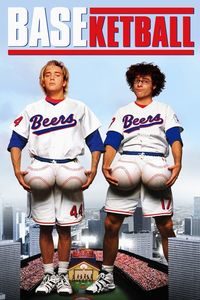
    (In theaters, August 1998) For a reason I cannot fathom, Baseketball flopped badly, pulling in less than $5M on its opening weekend to finish 11th at the box office tally. It was at our local dollar-theatre its second week. For $2.75C., it couldn’t be much of a disappointment, and wasn’t. Baseketball is funny. Not a classic, not a very good comedy, but a relatively satisfying one. Moments of cleverness lurk behind the remainder of this enjoyably silly movie. I predict a certain cult-status among late-night movie fans. Give or take a star whether you like cheerleaders in tight black leather underwear or not. It’s that kind of movie.

    (Second viewing, On DVD, August 2002) I was one of the few supporters of the film when it was first released (and then promptly sank at the box-office), but a look at the film four years later only confirms my moderate enthusiasm. Hey, I still think it’s one of the most solid spoofs of the late nineties, but I’m not quite as taken by the (relatively modest, given its latter contemporaries) degree of gross-out humor or the often-inconsistent pacing. The film sets itself in a familiar narrative structure that’s very comfortable but doesn’t do much to spoof itself. It’s too bad that the film’s tone never equals its brilliant first two minutes about the decline of professional sports. There are several lulls, and a lack of background gags but there are also a few good moments and the two lead actors pull their own. Give it a try if you still haven’t seen it. The DVD contains a perfunctory making-of, but not much more.

  • How Like a God, Brenda W. Clough

    Tor, 1997, 287 pages, C$32.95 hc, ISBN 0-312-86263-6

    While “superpowers” are usually the province of comic book superheroes, Science Fiction also touches on the subject from time to time, usually from a much more “realistic” perspective. Compare Robert Silverberg’s Dying Inside to any issue of the X-Men for a good shock.

    Brenda W. Clough seemed to be aware of this as she wrote How Like a God. It’s the story of an ordinary husband, father and computer programmer named Rob Lewis who suddenly acquires the power to read and shape minds. Clough’s protagonist makes several explicit references to the numerous comic books he had read at a younger age, while undergoing a descent through the lowest levels of society.

    Unfortunately, How Like a God combines attempts a science-fiction sensibility with comic-book plotting to create a book that’s pleasantly readable, but also disappointing in its unevenness.

    For instance, there is almost no scepticism about the powers of Rob Lewis. Even he seems to arrive fairly easily to the conclusion he’s a super human. People around him also seem to believe him quite easily.

    The psychology of the characters seems suspect. When Rob’s wife starts sprouting presidential ambitions, when Rob callously leaves his family, when Edwin Barbarossa starts helping a strange-looking hobo, when Rob almost assaults a young girl… they all seem like forced choices.

    Which brings us to the numerous coincidences that make up most of How like a God‘s plot. The two worst are the meeting of Barbarossa and Lewis, and the fire that destroys Lewis’ workplace. No explanation is provided. These two things simply happen. While worse fault have been seen elsewhere, there are ways of bringing coincidences in a story in an acceptable manner. (This reviewer’s favourite example is in Tom Clancy’s The Sum of All Fears, where twenty pages are devoted to explaining how a beam of solid American wood comes in contact with the screw of a nuclear-powered submarine in the middle of the Pacific ocean. Amazingly, it works.)

    The Atlantic City passage is also incredibly weak. Couldn’t Lewis just try his hand at poker instead of blackjack?

    Then there’s the last third of the book, which abandons all pretence of scientific verisimilitude, and goes full-throttle in magical fantasy-land where Gilgamesh (yes, that Gilgamesh) is a full-featured character. The novel drags on for another fifty pages after what should have been the final confrontation and has the gall to end on the steps of what should have been the book’s most powerful scene!

    Is there anything else to say? Well, the title alone is a source of countless nanoseconds of fun: Apart from the obvious parodies (How? Like a God!, How Like a Dog, How so Very Very Much Like a God, How to Like a God, Show Like a God, How Licks a God?, etc…), you can spend some time trying to find ways of saying “How Like a God” in normal, everyday conversations.

    The cover illustration by Rick Berry is oddly attractive, suggesting both personal power, pain and transcendence. (That ugly mug in the upper right corner has to go, though!) [September 1998: The ugly mug is gone from the paperback edition, although the resulting illustration loses some power.]

    Nevertheless, How Like a God isn’t nearly as bad as the above might presuppose. The writing is brisk, and the story flows along at an acceptable pace once you accept the succession of coincidences. Not one of SF’s shining releases for 1997, but reasonable entertainment as long as you don’t spend too much money on it.