Month: July 2002

  • Stranger Than Fiction: A book of literary lists, Aubrey Dillon Malone

    Contemporary Books, 2000, 314 pages, C$23.95 hc, ISBN 0-8092-9904-6

    Writers are a strange breed.

    Even accounting for the usual diversity of characters, temperaments and manias distributed more-or-less evenly across the human bell curve, writers have long been considered among the most eccentric specimen of our species. Part of this reputation is due to the demands of the job: not many entirely sane people can sit down and string words together for months in order to produce a text of respectable length. Most authors are not mad, but most of them are abnormal.

    But then again, like modern-day bloggers, writers have long been in a privileged position to chronicle their own eccentricities and those of their other writer acquaintances. Other professions such as, say, tailors, might have been collectively just as bizarre, but haven’t had the chance to accumulate a written pedigree for hundreds of years.

    In any case, Aubrey Dillon Malone’s Stranger Than Fiction will quickly convince you, if that remained to be done, that writers are indeed a strange caste. This little-known quasi-novelty book is a collection of thematic lists about writers and their habits, from “Five writers involved in tragic accidents” to “Five writers who were vegetarians”. It doesn’t stop there, of course: “Fifteen writers who were spies”, “Thirty authors’ famous last words”, “Ten writers put to death by the state”, “Five writers’ phobias”, “Ten Shakespearian insults”, the all-time classic “Ten writers who went insane” and much, much more…

    Writer/journalist Malone has done an admirable, often hilarious job at compiling some of these lists. Often ribald -if not downright obscene-, Stranger Than Fiction pulls no punches and digs deep in literature’s dirty closets. There is trivia here for everyone, and enough quotable material to make you a certifiable bore at your next office party. It’s not a unique book (as I write this, I’m midway through Robert Hendrickson’s similar collection The Woodsworth Book of Literary Anecdotes, though Stranger Than Fiction was far more entertaining than Hendrickson’s uneven collection.) but it’s a good one, with something like 300 lists in one handy paperback-sized hardcover.

    My main quibble stems from ignorance: I’m a child of the sci-fi ghetto and so my grasp of classical literature isn’t as good as it should be. I was rather embarrassed to learn things I should have known about a few very-well-known writers. Still, it’s a fair criticism to remark that Stranger Than Fiction is concentrated mostly on the “respectable” English canon, with often perfunctory attention to other literatures. As a confirmed SF buff, I can proudly claim that our writers are as interesting as the mainstream ones. Yet Robert A. Heinlein and Philip K. Dick are conspicuously absent, while Isaac Asimov and Arthur C. Clarke share a paltry three mentions. (On the other hand, have I mentioned the great index-by-authors? Yep; you can use this book as reference!)

    Stranger Than Fiction is, in many ways, a tribute to the quirkiness of writers, those magnificent madmen (and madwomen too!) without whom our shelves would be so much poorer. It’s a crash-course in English literature, an amusing entertainment, a great source of anecdotes and a pretty nifty discussion piece by itself. It would make a great gift for any avid reader in your neighborhood.
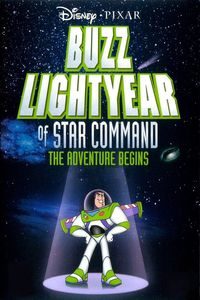
  • Buzz Lightyear of Star Command: The Adventure Begins (2000)

    Buzz Lightyear of Star Command: The Adventure Begins (2000)

    (On VHS, July 2002) Perfunctory pilot episode to a kid’s series starring Toy Story‘s Buzz Lightyear character. (Be warned, though, that this feature is hand-animated, and doesn’t feature computer animation except for a very brief introduction.) The film itself is fine; a nice way to keep the kids entertained, if not much else. There are a few clever lines, but you’ve heard them all elsewhere. All in all, this is a strictly average production. Acceptable, not great but good.

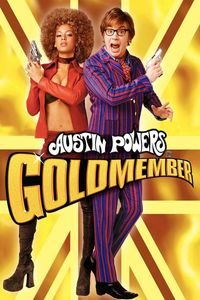
  • Austin Powers in Goldmember (2002)

    Austin Powers in Goldmember (2002)

    (In theaters, July 2002) As a big fan of the original film’s low-budget spy parody, I was let down by the scatological humor of the sequel and this impression only worsens with this third entry. The jokes become increasingly self-referential, up to a point where there isn’t much here that doesn’t refer to the Austin Powers mythology itself. Spy parody? Forget it! It doesn’t help that the “writer” is working with a palette of roughly five jokes, which are repeated time and time again way beyond the point of diminishing results. What’s worth saving are the first five minutes, which feature a series of celebrity cameos and a high-energy opening sequence. The rest goes downhill fast, even though I think this film is better than the second one if only because the gross-out humor is toned down in comparison. The only latter flashes of humor, though, are a G*dz*ll* reference and a gag on reading white subtitles on white background. (Alas, as with all the other jokes, this last joke is stretched for about a minute more than it ought to be.) On the other hand, it’s still good to see the familiar gang of Powers characters come back. Among the new character, though it’s mixed bag: Michael Caine is particularly good as Nigel Powers. Beyonce Knowles is positively adorable in one scene (in Power’s pad) and simply wasted in the rest of the film; she deserves better material. As for the title character, Goldmember is one of the lamest thing about the film, a character who doesn’t elicit one single laugh. The rest of the film plays as a parade of wasted opportunities; why don’t you go see Undercover Brother for a film that not only does disco-blacksploitation right, but is also considerably funnier to boot?

  • Amores Perros [Life’s a Bitch] (2000)

    Amores Perros [Life’s a Bitch] (2000)

    (In theaters, July 2002) One fatal car accident; three stories. The first one is fascinating, a look at life in low-rent Mexico City where crime is an entirely acceptable option to get ahead. It’s brutal and compelling and you almost hope the entire film will be like that. Alas, the second story isn’t as good, dragging us through the domestic disputes of a high-class couple whose stupid dog won’t emerge from under the false floor of their apartment. The third story is good but far too long, a moralistic tale about an assassin on his last mission. Overall, the film is impressively directed and acted, but feels overlong at more than two hours. Your mileage may vary, especially if you can manage to be interested in the last two stories.

  • About A Boy (2002)

    About A Boy (2002)

    (In theaters, July 2002) Another satisfying entry in the “British novel adaptation” category, About A Boy is a bit too meaningful to be strictly funny. Oh, Hugh Grant is at the top of his game as an immature bachelor who discovers a better life: his internal monologue contains enough quotable gems to keep you smiling. But it’s small quibbles such as a deliberately humiliating finale, a ghastly-looking Toni Collette (who might actually look worse and worse in each successive film) and, oh yes, a suicide attempt that sour the comedy of the film. Now, purists may argue that it simply makes the funny stuff funnier and (again) more meaningful, but for anyone looking for the next Bridget Jones’s Diary, well, it’s no breezy summer entertainment. Make no mistake, though; this is a great film, well-written and decently directed. But as far as enjoyment goes, hmm, your mileage may differ.

  • The Angel of Darkness, Caleb Carr

    Ballantine, 1997, 752 pages, C$9.99 mmpb, ISBN 0-345-42763-7

    For an author, one danger in writing a distinctive best-seller is to try to do the same thing again without innovation. Caleb Carr’s first novel, The Alienist, was a crime thriller set in late nineteenth century New York, featuring a bunch of characters doing their damnedest to catch a serial killer using revolutionary methods who just happen to be similar to the ones used today. In The Angel of Darkness, the surviving characters of the first novel are back once more to track down another killer using quasi-anachronistic methods.

    But don’t be scared away; not only are there significant differences between this novel and the first one, The Angel of Darkness is so much fun that everyone who liked The Alienist will want to take a look at the sequel.

    The biggest change in tone is that the narrator of this follow-up isn’t the cultivated journalist John Moore, but the reformed street urchin Stevie Taggert. It’s an odd choice, but a logical one given Stevie’s role is the follow-up. Stevie might not be as cynical or polished, but he’s in the middle of the story, which isn’t the case with Moore this time.

    Here, the team is hot on the trail of a child kidnapper who is eventually revealed to be a far more sinister figure. The quest takes our heroes upstate, away from Manhattan and deep in rural country where the rules are completely different. Along the way, they will also have to face some courtroom drama, some late large-scale brawling and a few new characters.

    What remains is Carr’s impeccable flair for recreating the atmosphere of the time and presumably exact historical references. The prose style is polished but unusually readable; even though the book clocks in at an impressive 750+ pages, it’s good enough that you won’t mind the occasional lengths and the lopsided drama which peaks well before the conclusion. The constant references (by way of narrator’s hindsight) to terrible events about to happen are simultaneously annoying, ominous and charming.

    The genius of The Alienist was to bring modern procedural police methods to one of the earliest possible times when it was possible to conceive and use such things, making it both a genre novel and a genre commentary. The same also applies to the second novel, as our protagonists use controversial profiling techniques and new detection techniques. Even The Alienist‘s occasional usage of historical cameos is also repeated, most notably with the inspired presence of a famous historical character as a courtroom antagonist. There’s a lot of intellectual material to digest, from sexual roles a century ago to a bit of international politics.

    The villain alone is a piece of work, a complex character whose multiple facets are fiendishly effective against our protagonists. Though one feels as if a touch too much life-history has been packed in only a few years, there’s no denying that the antagonist is more interesting than the garden-variety serial killer who starred in The Alienist.

    There’s too much familiarity with the characters exhibited here to suggest that The Angel of Darkness is a book that stands alone without the benefits of having read the prequel. But as much as The Alienist is a recommended read, The Angel of Darkness also ranks as more than a worthwhile follow-up. It’s difficult to think of a satisfied fan of the first volume who’d dislike this one.