Year: 2002

  • Punch-Drunk Love (2002)

    Punch-Drunk Love (2002)

    (In theaters, October 2002) I really wanted to like this film, but the problem is that film doesn’t want to be liked. It reminded me (slightly) of The Shining, in which an intellectual director takes on a “popular” genre without having much respect or affection for the said genre. The result may be a brilliant deconstruction of romantic comedy clichés, but if you’re looking for a good time, you might as well go back to the usual popular stuff. It’s easy to be impressed by elements of this film, mind you: Adam Sandler’s character is a direct reference to his usual screen personae, a dysfunctional moron whose childlike rages here do not go unpunished. As an actor, it’s definitely a step up for him… but it doesn’t make him likeable. P.T.Anderson’s direction is sparse and relatively breezy, but it’s also deliberately sloppy and unpolished in an attempt to lend it some art-house credibility. A few moments are genuinely amusing (I’m thinking here of the “backlit kiss”, deliberately marred by what looks like a parade of visual distractions), but most of the film plays like nails on chalkboard, an impression heightened by the deliberately intrusive soundtrack that does an effective job at putting us in the mind of a loathsome protagonist. I wasn’t impressed by any of the “romantic” elements, which seem glossed over for no good reason at all; in his rush to deconstruct, Anderson has forgotten to construct. Once again, even though Punch-Drunk Love is at least an hour shorter than Magnolia, it still feels loose and self-indulgent. But then again, self-indulgence has been a hallmark of Anderson’s work since the very beginnings. What’s not present here, though, is a reason to like this film, not simply admire it.

  • Lung foo fung wan [City On Fire] (1987)

    Lung foo fung wan [City On Fire] (1987)

    (On DVD, October 2002) Yes, this is the film that inspired Quentin Tarantino’s Reservoir Dogs, a fact that will be obvious to viewers only five minutes before the end of the movie. Fans of Hong Kong action cinema might want to temper their expectations a bit before watching City On Fire, though: It’s far more of a straight-up criminal thriller than an out-and-out action film. As a film, it succeeds almost purely on the strength of lead Chow Yun-Fat’s charisma. While he plays a horny, cocky and slightly unlikeable character, Yun-Fat does it with such charm and coolness that it’s hard not to be attached. Otherwise, this is standard Hong Kong cops-and-criminals stuff, with the typically dark ending made even more poignant by our attachment to the protagonist.

  • Kung Pow: Enter the Fist (2002)

    Kung Pow: Enter the Fist (2002)

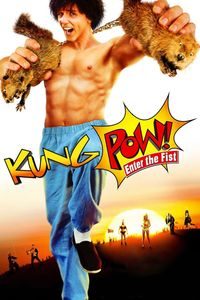
    (On DVD, October 2002) Let me be frank: This isn’t a very funny film. It starts from one joke (hey, let’s re-dub an old kung-fu film, insert a character in them, add new scenes and be really silly!) and doesn’t add much more to it. The humour is often juvenile and repetitive (oo-ee-oo-ee!) Even so, I ended up grinning through most of the film and laughing like an idiot every five minutes or so. Don’t ask me why, because I’m as baffled by it as you are. It’s probably the sheer silliness of it all that got to me, as cows, squirrels and woodchucks are used as weaponry and evil French Aliens try to take over the world. (Mm. That was a rather huge spoiler.) Good silly fun, nothing more. The DVD contains a bunch of extra scenes (most of them are just lame) and a few more language tracks (French, Spanish, Commentary, “original dialogue” and a “book-on-tape” dry English narration that’s hilarious for about five minutes.)

  • Knockaround Guys (2001)

    Knockaround Guys (2001)

    (In theaters, October 2002) Kept in the studio’s vaults for a while and released in theatres mostly to cash in on Vin Diesel’s popularity, this film is slightly better than the usual straight-to-video, but not by much. My biggest problem with the film is the way it smothers a rather fun mob comedy with a wrapping of intense drama. Your mileage may vary, but it’s far more fun to see a gang of slick New York mobsters deal with a sleepy Midwest town than to hear the constant whining of a pretty Mafioso’s son. The ending is lazy, killing everyone in sight in an attempt to solve plot problems. Acting-wise, Diesel is as good as usual, but doesn’t stretch his range much. Barry Pepper continues to atone for the Battlefield Earth debacle. Along with 2002’s We Were Soldiers, maybe we can forgive him now. Seth Green is misused, but John Malkovich is just right. This is the kind of film you can rent without too much guilt. But then again, it’s nothing special.

  • Ten Thousand Bullets: The Cinematic Journey of John Woo, Christopher Heard

    Lone Eagle, 2000, 269 pages, US$15.95 tpb, ISBN 1-58065-021-X

    Even though the cumulative effect of some of his movies is often disappointing (WINDTALKERS, anyone?), I really do like John Woo’s work as a director. His eye for action choreography is unmatched, and even when he’s hampered by practical constraints, his visual style stands tall above the work of most of his colleagues. It’s no accident if I happen to consider films like HARD-BOILED and FACE/OFF to be minor classics.

    So, obviously, a book like Ten Thousand Bullets would be naturally interesting. While I know a fair bit about Woo’s work since the late eighties, the earlier part of his life isn’t commonly discussed in the media, and it seemed to me that this biography could shed some light on that part of his life. Fortunately, it delivers. Unfortunately, it doesn’t do much more.

    Ten Thousand Bullets is, logically enough, arranged in chronological order. Starting at his birth in 1946 and ending in pre-production for MISSION IMPOSSIBLE 2 in 1999, this biography details most of the thirty-odd films of Woo’s career, with a particular attention to the eight last action films that followed his 1987 breakthrough A BETTER TOMORROW. More information is offered as the book goes along, for reasons that will become clear in a moment.

    I noticed that Ten Thousand Bullets was written by Christopher Heard only after I had bought the book. I don’t think that this would have influenced my decision had I known beforehand, but the name still rang alarm bells: Heard is the author of Dreaming Aloud, a biography about James Cameron that I’d read some time ago. Though I did like the book, I was concerned, at the time, about the derivative nature of Heard’s work, a book that read as if it had been cribbed from a few magazine articles, along with multi-page summaries of Cameron’s films. Would it be the same thing with Ten Thousand Bullets?

    Well, not quite as bad, but pretty much, yes. On a technical level, Ten Thousand Bullets is workmanlike, presenting basic information in a suitably accessible style without panache or great insight. If you want a quick biographical sketch of Woo’s life, this is the book for you, a highlight reel of his career along with very basic biographical information. As a work discussing Woo’s motifs, motivations and work methods, though, it’s a recipe for disappointment. While material like Woo’s Catholicism is briefly mentioned, it’s not referenced in the index nor discussed in any meaningful length.

    True, Ten Thousand Bullets seems to rely on more sources than Dreaming Aloud (wow, count’em: six books and seven articles), but once again, Heard seems to be writing from second-hand sources. Woo’s life is narrated, but we seldom get a glimpse into the reasons why it’s happening this way. Coverage of his work seems to increase in proportion to the number of material published in the United States. Save from an interview with Chow Yun-Fat (heavily featured as “Appendix A”, even though the link with Woo isn’t integral), there isn’t much of a sense that Heard wrote much more than a collage of previously-published works, minor interviews and personal impressions. As such, it’s a pretty good read, but it may be more appropriate to beginners and casual Woo fans rather than his aficionados. There remains a place on the marketplace for a book delving deeper in Woo’ life and passions. For the rest, well, there are plenty of web sites.

    This being said, I’m still not too disappointed by the book: It’s a fast read, it does a basic job at describing the life and work of John Woo and it brings together information from many sources in one convenient package that fits comfortably on my reference shelf. It’s a bit of a bother that it stops short of Woo’s biggest hit MISSION IMPOSSIBLE 2, but -hey- that’s the problem with paper books. On the other hand, maybe it’s a relief that Heard’s breathless narrative stopped short of his latest two American films. Seeing how he bends himself out of shape trying to compliment HARD TARGET, it would have been embarrassing to see him try to praise WINDTALKERS on anything but a purely visual level…

  • Histoire De Pen [Prison Story] (2002)

    Histoire De Pen [Prison Story] (2002)

    (In French, In theaters, October 2002) Prison dramas are, by now, a well-established kind of crime stories, and Histoire De Pen plays on familiar ground when telling this story. All the requisite elements are there, from the schizoid comic relief to “the hole” to the intimidation on prison grounds to homosexual violence and the callousness of “the outside world.” Not much is new here, especially when you consider that the overall story arc feels a lot like writer/director Michael Jetté’s previous Hochelaga. But Histoire De Pen is raw and (mostly) un-romanticized. This is far from The Shawshank Redemption in that pretty much all of the characters are unlovable, unrecoverable and rather stupid to boot. There is a certain impressive visual polish, especially given that it’s a low-budget French-Canadian production, and few dull moments mar the narrative. But the dialogues of the film are striking by their inappropriateness, scarcely sounding as if they really come from the hardened protagonists; a more consistently street-level dialogue style would have worked better. The ending is also a bit loose, taking the resolution out of the prison context, which strikes as kind of a cheat. This isn’t a pleasant film, but it’s an interesting one for most of its duration.

  • Hedwig And The Angry Inch (2001)

    Hedwig And The Angry Inch (2001)

    (On DVD, October 2002) It’s unfortunate that my interest for (trans)gender issues is almost precisely equal to zero and that my musical tastes are more driven toward hard rock and dance-electronica. Because, frankly, I didn’t go nuts for this musical about a transsexual soft-rock singer. Oh, it’s not devoid of amusing moments and cute sight gags, but there’s just not much there to interest me. As the film progresses, curiosity takes a back seat to ennui as the film slows down and finally turn out a gratuitously symbolic finale. Your mileage will undoubtedly vary. The DVD contains stuff like a making-of and a director’s commentary, but I couldn’t be bothered to watch any more of it. Eh. Go figure.

  • Hannibal (2001)

    Hannibal (2001)

    (On DVD, October 2002) I have always suspected that Thomas Harris’ Hannibal was a practical joke played by the reclusive author on the too-rabid fans of The Silence Of The Lambs. Grotesquely overblown with flamboyantly evil characters, it seemed to thoroughly pervert the character of Clarice Starling, laugh at the readers’ expectations of gory horror while overwhelming them with an exasperating array of meticulously-researched details. The film doesn’t appear to be as bad, but it’s still kind of a dark comedy when you look at it from a detached point of view. On some levels, it plays a lot like the most expensive, most pretentious splatter-film ever made: the quality of the visuals and the acting effectively masks a story that comes straight out of a “Weird Tale” pulp story. Director Ridley Scott uses all sorts of tricks to make everyone look better than the material… and it works! Julianne Moore is a respectable replacement for the decade-older Clarice, and Anthony Hopkins looks as if he’s having some fun as the evil Lecter. The over-the-top final scene is effective in a Grand Guignol kind of way, being blackly amusing even as it’s repulsive. All in all, the film works much better than I would have expected, if only for the technical polish: It’s may very well be garbage, but it’s impeccable garbage.

  • Freaks (1932)

    Freaks (1932)

    (On VHS, October 2002) Let’s face it: most movies of 1932 have now blissfully sunk out of popular memory. But this one has endured, even gaining a small cult following in horror circles. Part of the appeal comes from the originality of the premise, even 70 years later: Here, we follow a group of circus freaks, from retarded pinheads to men-babies to a man without a lower torso (think Kenny) and another without arms or legs. Compared to them, the dwarves and bearded lady are positively normal. Keep in mind, though that these are all real freaks, without CGI trickery or faked costumes. Their acting isn’t very good (the squeaky voices of the leads can be hard to understand especially given the low quality of the audio) but the authenticity is enough to give pause (and unease) to any viewer. The thin plot is ridiculously simple, featuring a gold-digging shrew marrying and poisoning the protagonist to inherit his money. The revenge of the freaks is terrible, and indeed the shot of them crawling through the mud toward the evil woman, holding knives, is something that’ll stay with you for a while. But even then, the sympathy of the film rests firmly with the freaks (“Gobble-gobble, we accept you, you’re one of us!”), which -I guess- was a bit of a shocker back. As it turns out, it is this sensibility that ensures that the film can still be watched even decades later. A curio.

  • The 51st State aka Formula 51 (2001)

    The 51st State aka Formula 51 (2001)

    (In theaters, October 2002) If “Samuel L. Jackson in a kilt” doesn’t raise your eyebrow and your interest, that’s fine, move along, nothing to see here… but for everyone else, Formula 51 is a fun little crime comedy. Dynamically directed by Hong Kong action maven Ronny Yu, this film follows the adventures of a very American chemist (Jackson, wearing a kilt throughout) stuck trying to make a drug deal in Liverpool, UK with the help of a reluctant sidekick (Robert Carlyle) while under the gun of a hired assassin (the unspeakably cute Emily Mortimer). Oh, there’s also Meat Loaf, as “The Lizard”. I’m not going to pretend that this is a classic for the ages, but there are quite a few fun moments here and there, from a dynamic opening credit sequence to a golf-club whuppin’ to a car chase (where both leads go “aaah!” at the same time, thereby fulfilling a basic requirement of buddy comedies) to plenty of double-crosses. It’s crunchy good fun, though there’s a bit too much spilt bodily fluids to be clean fun. There’s some amusing material on British/American differences, which is fitting for a Canada-Britain collaboration, I suppose. Younger fans of action/crime comedies should consider checking this one out. More mature viewers may wish to pass…

  • Fung wan: Hung ba tin ha [The Storm Riders] (1998)

    Fung wan: Hung ba tin ha [The Storm Riders] (1998)

    (On DVD, October 2002) Interesting: A rather cool Chinese fantasy film stuffed with fights and special effects. It’s a discovery of sorts for western viewers, as it presents more thrills and visuals than almost all of the American so-called “fantasy” epics of the last decade. Fans of period kung-fu films probably know what to expect, what with a feudal-era Chinese lord, his daughter (Shu Qi, very cute) and the young warriors vying for her affection. A lot of fighting ensues, but with the marvels of digital special effects, The Stormriders crams what looks like hundred of special effects in the various battle scenes. Jaded Special Effects addicts might want to check the film only for that reason. Alas, the direction is a bit too chaotic to be effective, seldom offering a coherent, sustained view of the action. But then again, the gonzo approach of some of these fights might be enough to tide you over a first viewing. The R1 DVD reviewed here sadly offers only an indifferent dubbed English version (sacrilege!) with neither an original Chinese audio track, nor even English subtitles (bastards!). Swordfights, cute Chinese girls, magic spells and tons of CGI… can it get any better? Golden Monkey says no!

  • Das Experiment [L’Expérience] (2001)

    Das Experiment [L’Expérience] (2001)

    (In theaters, October 2002) Small-scale, high-tension thriller loosely adapted from a real-life psychology experiment conducted in the sixties in which randomly-picked students were assigned “guard” and “prisoner” roles. The real-life experiment was scheduled to run two weeks and was stopped after six days out of concern for the participant’s mental stability. This fictionalized version, of course, is much worse and ends with a body count. While the film is low-budget, it’s exceedingly well-done with a real visual flair. The “scientific rigor” of the experiment’s handlers is laughable, but let’s not ask questions as long as it leads to some drama. And there’s plenty of drama here, mostly sparking from a smart-alexy protagonist who’s got a really good reason to cause mischief and a Hitler-haired antagonist who comes to use his position as a guard to let loose with his sadistic tendencies. It escalates, engulfs the rest of the participants and even spills in “the real world”. Good stuff! It’s a shame that this film won’t get a wider distribution, because it’s actually provocative, nightmarish and gripping. Destined to a certain cult following, much in the same way than the not-dissimilar Cube did. But even with the unsatisfactory coda, Das Experiment fares better as a psychological thriller. This film should prove to be of special interest to psychology students and fans of claustrophobic suspense. (Seen in French)

  • Bowling For Columbine (2002)

    Bowling For Columbine (2002)

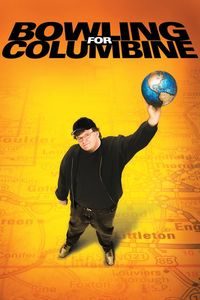
    (In theaters, October 2002) There’s a lot to say about America’s fascination with guns, deaths and violence, and it’s probably for that reason that Michael Moore’s documentary film clocks in at nearly two hours. But don’t worry, because you won’t feel bored at any point: Moore runs from comedy to tragedy in such a way that you can’t help but be impressed even as you realize how he’s manipulating you. We warned, though, that this isn’t as much filmed journalism as much as it’s filmed editorial. Some parts don’t really work, but there’s so much great stuff elsewhere that it doesn’t really matter. As a Canadian, I supposed that I’m having an easier time seeing the absurdity of the American condition… indeed, watching Bowling For Columbine does at time feel like a big love-you letter to Canada. (It helps that Canadian money co-financed the film) Moore comes up with surprising conclusions about violence in America, but there are times where we’d wish for more analysis (or, at least a deeper exploration) rather than some of the showier stunts he pulls. His commentary on the culture of fear is fascinating, though, and the ways he uses in which to make his point are quite effective. Don’t be surprised if you come out of this film liking Marilyn Manson more than Charlton Heston. The real tragedy of Bowling For Columbine, though, is that despite every viewer telling others how good, how insightful and how entertaining it is, people simply won’t bother to see it. In 2002, more people will forget about trash like Austin Powers 3 than people will see Bowling For Columbine. And yet, in 2052, guess which film will be most remembered? If there’s still a United States of America by then, that is…

  • Bait (2000)

    Bait (2000)

    (On DVD, October 2002) I’m typically a fan of those black-crime-comedy film (think Beverly Hills Cop, Blue Streak, Double Take, etc.) and Bait looked like it may be one of these. Alas, there’s a touch too much crime and a tad not enough comedy to make this one work at the appropriate level. While Jamie Foxx does his best to act like a moronic protagonist, the film tries to force him in a dramatic “family man” role, with typically scattered results. In the context of the film, the various drama/comedy directions taken by the script are conflicting and eventually harmful to the film. It’s a good thing, then, that Antoine Fuqua’s direction is rather tight and nervy. Despite the script’s occasional lengths, the film manages to maintain our interest through it all. (Well, except for the end where enough is enough.) While the film isn’t an overall wreck, it falls short of its potential and tries to have it both funny and thrilling without achieving much of either.

  • Lady Be Good, Susan Elizabeth Phillips

    Avon, 1999, 372 pages, C$8.99 mmpb, ISBN 0-380-79448-9

    Faithful readers of these reviews may be excused if they’d rather skip over to the next one. For what I’m about to do will be seen by many as a betrayal of my usual techno-scientific reading standards. A hidden side of my personality will be revealed! Multitudes will be shocked! For I am about to review a romance novel! And, darn it, a romance novel that I liked!

    Lady Be Good came to me in a serendipitous way not dissimilar to how hero and heroine usually meet in romance novels: I was walking down a country road at the end of a rainy day when I saw a book abandoned in a ditch, its pages curled by the moisture. I kept walking, but my bibliophile instincts ultimately took over. I felt an irresistible impulsion to pick up this poor lonely paperback, rescue it from an ignoble, humid end and give it a good home. Dried and flattened, it found a place on my bookshelves.

    Contrarily to what you may expect from the bulk of reviews on this site (SF, thrillers, scientific non-fiction, etc.), I don’t particularly dislike romantic fiction. True, I prefer other genres, but well-written (non-formula) romantic fiction can be a lot of fun if the author knows what she’s doing.

    And Susan Elizabeth Phillips is an author who knows what she’s doing. It doesn’t take a lot of time for Lady Be Good to announce its colors. A Texan golf superstar is pressured into acting as an escort to a prim English lady visiting the area. She assumes he’s a gigolo, hardly suspecting he’s a multimillionaire with attitude problems (hence his temporary suspension from the sport). But then again, little does he know that she’s deliberately trying to acquire a reputation as a bad girl in order to shock some folks back home… This naturally enough, is only the first of many misunderstandings that drive the plot in a typically shticky, but enjoyable fashion.

    Much as Science-fiction fans really dislike it whenever an outsider broadly confuses the genre with Star Trek, romance readers hate it when outsiders lump all romance with the basic Harlequin series. Well-written romance is much more than that, and Lady Be Good is an illustration why. The quality of the dialogues alone is enough to raise this novel a notch above most romantic fiction: It’s sharp, occasionally literate and crackles with intelligence. Characterization is also very well-handled, with enough quirks and convincing traits to endear us to the whole cast.

    As with many other contemporary romances, the love scenes are handled with a candid frankness that can easily compare to some pornographic fiction. There’s something hot for everyone here: One subplot’s denouement even takes the form of a spanking scene!

    Ultimately, though, this is the kind of novel to read for comfort value, for a little escape in a reality where good is rewarded, evil is punished, love leads exceptional people to wild impulsive decisions, everyone has devastatingly effective wit and everything ends really well. This is a romantic comedy of the purest order, so if there’s something that’s not quite right, just wait a few more pages and order will be restored.

    Frankly, I enjoyed it. Life’s too short for me to devote much reading time to romance, but I’m not averse to a few good fun reads from time to time. Good romantic fiction makes you smile and cheer for its characters, which is a pretty good deal compared to a lot of dour “harder” fiction out there. My knowledge of the genre isn’t sufficient to be able to say with confidence that, hey, Lady Be Good may be a shining example of contemporary romance, but I still think it’s a pretty nifty read.