Month: October 2009

  • McMafia, Micha Glenny

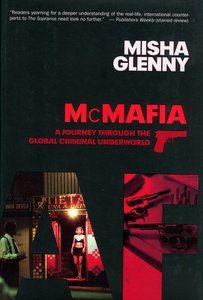
    McMafia, Micha Glenny

    Anansi, 2008, 375 pages, C$29.95 hc, ISBN978-0-88784-204-7

    Even as a pimply know-nothing teenager reading well-above his intellectual capacities, I was never completely convinced by Francis Fukuyama’s End of History. For those who missed it at the time, it was a book-length 1992 essay arguing that since the Cold War had just ended in favour of Western democracies, history as we knew it was over: Democracy would prevail, and everyone else could just go home.

    History, since then, has persuasively argued against Fukuyama’s thesis. If nothing else, the end of the Cold War has been the dawn of a far more interesting history than the frozen decades of the USA/USSR stare-off. Misha Glenny’s McMafia has no explicit links to Fukuyama’s book, but it serves as a pretty damning overview of a world unshackled by the end of the Cold War. A world dominated by organized crime, both outside and within the borders of the first world.

    Glenny is no stranger to the subject: Having been a correspondent in the Balkans during the war-torn nineties, he starts his globe-trotting book in Eastern Europe, where he details the changes that took place in the vacuum left by the strong institutions of the Soviet Empire. Prostitution, smuggling, arms trade, protection rackets –the countries change as the book advances, but the criminal tunes remain the same. As Glenny circles the globe (touching the North America continent only long enough to talk about the drug trade), he delivers an alternate occult history of the past twenty years that makes a number of puzzle pieces fit together. Along the way, he discusses trends that seldom make mainstream news in the West: Nigerian scams (and how their perpetrators justify them), the emergence of a sizable Russian minority in Israel, the outsourcing of violent work from the Yakusa to the Chinese Triads, and scores of other gripping vignettes.

    Glenny is an experienced journalist, and some of the best moments of the book describe the various troubles he had in researching his material, along with the people he meets along the way. McMafia is a mixture of high-level statistics and personal anecdotes trying to illuminate a subject that, by its nature, would rather stay hidden. It generally succeeds at portraying an unstable world where developing countries are in a race to outwit their criminal elements. It doesn’t help that the corruption of original institutions is most reliably financed by money coming from developed countries: Sex tourism, drug consumption and cheap caviar are only some of the way “good western dollars” are going to wreak havoc on countries with weaker social institutions. We, obviously, are all guilty of something.

    Where McMafia is less successful is in finding a strong central thesis in its accumulation of criminal situations. For a book that pretty much literally circles the globe, it can feel scattered and flighty as it studies region after region. There doesn’t seem, thankfully, to be a super-organisation of organized crime (although market-sharing agreements come pretty damn close to such a thing), but the book occasionally feels more like a succession of TV programme transcripts than a coherent argument making its way to a specific thesis.

    The other vexing issue with the book is the occasional nagging suspicion that some sensationalism has been slipped in the mix. The portrait of the drug trade between BC and the USA occasionally seems a bit too grandiose (100,000 people involved in that industry? Really? Does that count the gas station attendants where the traffickers fill up?) and there’s a good laugh in the second set of photos when the venerable Bank Street head shop “Crosstown Traffic” is captioned as “The blooming industry in Ottawa, the capital”. Crosstown Traffic as evidence of anything but aged Glebe hippies and pretentious college students? Really? Did you cherry-pick your arguments elsewhere, Glenny?

    Still, the book is a great deal more convincing whenever it flies away from North America and describes in fairly intricate details the lives of Chinese organized criminals, anti-corruption officers in Nigeria, Eastern-European smugglers and all sort of other people taking full advantage of their form of globalization. What ultimately emerges from McMafia, paradoxically, is the portrait of an active, vivid globe where economic inequalities have opened windows of opportunity for the unscrupulous. I suppose that I’m more optimistic than other in seeing here a sign of emerging civilization, perhaps even a temporary phenomenon as more and more countries are working their way to Western-style modes of law enforcement. McMafia is the underground flips-side of those triumphant portraits of how the world is being dragged kicking and screaming into a twenty-first century that will belong to everyone, and not just the United States of America: Dangers ahead, but plenty of amazing things as well.
  • Zombieland (2009)

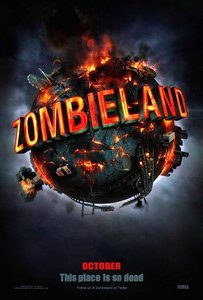
    Zombieland (2009)

    (In theatres, October 2009) By this point in the zombie-movie craze, some stories are redundant. The basic zombies-take-over-the-world narrative has been to death and back, and anyone seriously considering making a zombie film should find an original angle on the concept –we don’t actually need another dour and nihilistic 28 Months Later. Fortunately, Zombieland takes a not-so-blackly comedic approach to the aftermath of a zombie apocalypse. From the opening sequence onward, there’s a playful tone, what with explicit survival rules, kills-of-the-week and on-screen title gags. The picture is anchored by great performances by Jesse Eisenberg as a paranoid nerd and Woody Harrelson as a redneck with a natural talent for killing zombies. It’s a shame that the female characters don’t come across as fully realized, but the pacing of the picture is often too quick to allow for reflection. It’s not quite as brilliant or subversive as Shaun of the Dead, but Zombieland does manage a pleasant, well-executed B-movie vibe. Director Ruben Fleischer uses special effects wisely, has a keen aesthetic sense of slow-motion, keeps things hopping and only occasionally lets the energy of the picture flag in too-long conversation sequences. (Even at a snappy 81 minutes, the film occasionally feels a bit long.) The ending misses full marks by a few inches (the tension is diffused too quickly), but that it gets there at all without letting down the rest of the picture is remarkable. Far funnier than it is gruesome or suspenseful, Zombieland has a good future ahead of itself as a late-evening fan-favourite. The less you know about the celebrity cameo, the better.

  • XKCD: vol 0, Randall Munroe

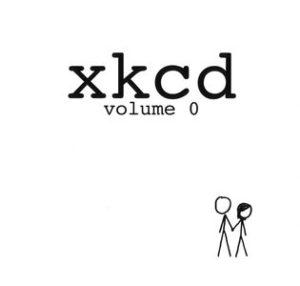
    XKCD: vol 0, Randall Munroe

    Breadpig, 2009, 111001 pages, US$18.00 tp, ISBN 978-0-615-31446-4

    Faithful readers are probably over-familiar by now with the fact that I’m a proud and unrepentant nerd. As such, there’s probably no better book to prove my hard-core nerd credentials as a glowing review of Randall Munroe’s XKCD: Vol 0.

    Over the past few years, the simple-but-sophisticated stick figures of the XKCD webcomics have become one of the emblems of Internet nerd culture. Making use of everything from philosophy to math theorems to videogames to computer science (with a heavy dose of sentimentality, as appropriate for “A webcomic of romance, sarcasm, math, and language.”), XKCD is now a touchstone for a large chunk of Internet users from reddit to single-user blogs. Even a quick search for “an XKCD for everything” will reveal a surprising number of results. In the past, I’ve been able to refer to specific XKCD comics to instructors, friends, SF fans, online correspondents and other assorted hoodlums knowing that the reference would be immediately understood.

    If you’ve never heard of XKCD, that may not be accidental: part of the peculiar pleasure of Munroe’s humor is the knowledge that very few people in the world can put together the elements of particular jokes. Twelve years after graduation, I’m still getting the most mileage out of my Computer Science degree from XKCD punchlines. As such, XKCD’s humor can be one of clubbish self-recognition more than actual amusement… so when I say that the book isn’t for everyone, don’t take it personally. It also serves to explain why, as of this writing, XKCD: vol 0 isn’t to be found at amazon.com: Mostly sold though the XKCD web site, it’s both a trophy of nerd devotion and a collection of 200 of the strip’s first 600 entries.

    Many of the fan favourites (and perennial references) are there: “userdel megan” and “Cory Doctorow – cape and goggle” share the same page, while “citation needed”, “boom de yada”, “someone is wrong on the internet” aren’t too far after. Of course, other memorable strips didn’t make the cut (Where’s the Xenocide one?!), raising hope for a Compleat XKCD at some point in the future.

    When they do get to that point, I hope that the design of the book is a bit better than the one here. While Munroe and his designer were able to solve such problems as the alt-caption gags (by putting them in the gutters between panels), the book occasionally frustrate by the lack of dates and titles, not to mention the lack of indications when strips are linked to others –the best example being between pages 11110 and 20000. Of course, other design touches just work beautifully. The book is crammed with small mathematical jokes (such as the skew binary page numbering scheme and the Fibonacci sequence replacing the edition number line on the copyright page), various forms of puzzles and additional comments and sketches in red ink.

    Reading all the strips in succession never fails to bring a smile to my face (even paging through the book again while I’m writing this review), but I’m not so sure that the book is completely impenetrable to non-nerds: For one thing, there’s a surprising amount of romantic and philosophical material that benefits, but doesn’t require esoteric technical knowledge. For another, everyone on the Internet is a nerd of some sort or another, and XKCD is really good at finding jokes in mundane web experiences. There’s a mixture of whimsy and absurdity in XKCD comics that should reach even readers left unaffected by obscure references to cryptography theory, 4chan memes and Linux installations.

    For those who do get all of those references, XKCD: vol 0 is exactly the book you need for Christmas. There’s at least half an hour of “Ooh, I can’t believe I remember that!” in stock alongside the more familiar gags and half-remembered punchlines. At a time where the Internet is being blamed for just about every social problem, it’s a comfort to realize that it also enables Randall Munroe to deliver a webcomic to such a highly-specialized readership… and others to make use of the jokes as they see fit.