Month: January 2017

  • Season of the Witch (2011)

    Season of the Witch (2011)

    (On DVD, January 2017) I wasn’t expecting much from a medieval fantasy film starring almost-VOD-era Nicolas Cage, but it turns out that Season of the Witch, while formulaic and unambitious, does have a few redeeming moments. The generous-enough budget and the visual style of director Dominic Sena allow for a convincing recreation of plague-era Eastern Europe, while Cage and Ron Perlman each have the chance to shine as the main actors. (Cage even gets one of his patented overly dramatic speeches ranting against God itself.) Otherwise, well, the first half-hour is promising enough to create disappointment when it becomes obvious that the small group assembled in the first act is really there to be picked-off one by one in the following journey. We can gauge how close we are to the conclusion with counting the remaining characters, and the film’s two big third-act twists will be greeted as obvious by anyone paying even the slightest attention. It’s a fantasy film and generic one at that, but it’s not completely worthless. I don’t expect to remember much of Season of the Witch in a few weeks, but I haven’t wasted my time watching it. (Although, granted, I was washing dishes at the time.)
  • Solace (2015)

    Solace (2015)

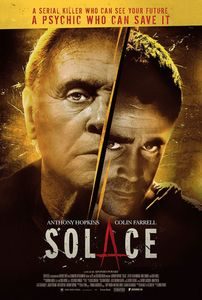
    (Video On-Demand, January 2017) I’m not, in theory, a big fan of supernatural police thrillers—usually, the fantastic elements overwhelm the procedural aspects of the thriller and make much of it moot. Solace’s particular reputation is affected by the knowledge that it took nearly two years to be released, and that it ended up on VOD rather than theatres. All of this makes up for low expectations, but there’s something curiously engaging in the result. The plot is filled with nonsense, the “rules” are barely adhered to, the characters are sometimes barely sketched … but it sort of works thanks to the directing and acting. Anthony Hopkins headlines the film, playing a psychic asked by a police friend to help with one last case … a case that seems to be targeting him directly. Colin Farrell turns in a remarkable third-act appearance as the antagonist, marking up another good supporting role now that he’s wisely shied away from superstar status. But director Afonso Poyart turns in the best performance with savvy directing that’s not above borrowing familiar images and methods, but still elevating the material above B-grade status. There’s a surprising amount of special effects, especially in the last third of the film, keeping up Solace’s ability to keep viewers interested in the most basic what-will-happen-next sense. There’s some interesting material in the conclusion of the film, even as broad as it can be at times. In short, I had a better-than-expected time, and that’s enough for a marginal recommendation as something more than the usual VOD thriller.

  • Saturday Night Fever (1977)

    Saturday Night Fever (1977)

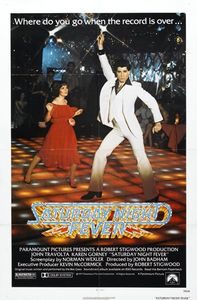
    (On Cable TV, January 2017) Disco was such an instantly dated phenomenon that it would be easy to assume that any movie made about it during its heyday would be a disposable fluff piece, celebrating disco and featuring the music at the expense of everything else. But that’s not what Saturday Night Fever actually is—daringly using disco as a window into the inner struggles of a young man trying to figure himself. It arguably starts where lesser disco movies would end—with our protagonist mitigating his humdrum family life and low-end job with wild nights at the discotheque where he is the king of the dance floor. But that, of course, is not the end of the story. Despite the gleeful disco scenes at the beginning of the film (and this is a film that features its most exhilarating moments early on), Saturday Night Fever gradually delves into darker and more dramatic material, as our protagonist meets a woman out of his class and becomes aware that he’s got a lot of growing up to do. Issues of lost faith, dangerously strong yearnings to be loved, unwarranted success, young people trapped in untenable situations are discussed, taking us far beyond what we’d expect from a disco movie. (Although, as noted elsewhere, most disco-themed movies do usually delve deep into darkness.) The ending is particularly bittersweet, stabilizing our protagonist’s situation after a few crushing losses. It’s almost hard to reconcile just a multilayered dramatic film with its all-hits soundtrack (you can have the “Staying Alive” opener, I’ll keep the “A Fifth of Beethoven” club entrance sequence) and reputation as a major cultural milestone. A very young John Travolta turns in a terrific performance, not only as a dramatic actor but as an impressive dancer as well. It all amounts to a far more satisfying film than expected, and a captivating period film about the disco era that feels more finely aged than hopelessly dated. I’m told that there’s a sequel and that it’s to be avoided… [February 2017: There is a sequel, Staying Alive, but it’s merely ordinary.]

  • High School Musical (2006)

    High School Musical (2006)

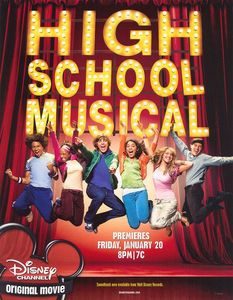
    (On TV, January 2017) I have a list. A list of movies. Popular movies. It’s generated automatically from votes on a web site. I don’t ask why the movies are popular—I just record them off the TV, watch them and cross them off the list. The list tells me what to do. I don’t question the list. The list told me to watch High School Musical. I did. I don’t dislike musical, but I really didn’t realize that this is a Disney Channel made-for-TV movie. I’m a grown man. I will watch what I want. I will feel no shame about it. Even if it means watching something made for tweenagers. Fortunately, High School Musical isn’t too bad, considering its pedigree. The sugared squeaky-clean fantasy vision of a high school is a welcome antidote to far darker movies. (High School Musical vs Brick; discuss!) The actors are all preposterously good-looking, but the small treat here is seeing Zac Efron and Vanessa Hudgens in likable but soft-edged early roles, almost as prototypes of the screen persona they’d build over the following decade. Of the songs, I liked the ironic “Stick to the Status Quo”, but couldn’t find anything else to hum. I’m far from being the target audience for this film, but I found it charming and inoffensive—I’ll take that over downbeat bore-fests passing themselves off as grown-up entertainment most days of the week. And that’s the power of the list I follow: It takes me away from my comfort zone.

  • Marley & Me (2008)

    Marley & Me (2008)

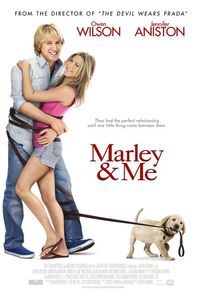
    (In French, On TV, January 2017) I’m more a cat person, so while I can appreciate the basic concept of Marley & Me (“A family’s life as seen through the lifetime of a dog”) as clever, I wasn’t brought to tears by the inevitable ending as much as satisfied that the story had been neatly tied up. Owen Wilson and Jennifer Aniston star at the initially young couple that adopts a dog and then starts a family, experience setbacks, moves across the country and eventually settle into middle age while badly behaved Marley grows old. The stakes are very personal, and much of the film consists of episodes in the life of the protagonist, trying to balance family life and professional opportunities. The dog becomes progressively less important during the movie, but never quite goes away. Wilson slightly tones down his usual hangdog persona (a requirement of the character, who’s supposed to be universally relatable) and the result is a bit duller than expected. Meanwhile, Jennifer Aniston is Jennifer Aniston, which is to say innocuously likable but blander than necessary. More successful are minor roles for Alan Arkin (as a crusty newspaper editor) and Kathleen Turner (as a dog trainer). Otherwise, Marley & Me is cleanly shot, stylistically ordinary (except for a frantic year-in-the-life sequence that drags a bit too long) and not entirely manipulative despite the subject matter, which is already quite a bit better than expected. But, as I said, I’m a cat person.

  • Hidalgo (2004)

    Hidalgo (2004)

    (In French, On TV, January 2017) I’m not much of a horse guy, and Hidalgo is clearly designed to be a movie about a man and his horse. As a late-nineteenth-century cowboy head over to the Middle East to compete in a desert race, this is an adventure story in which the various women encountered by our protagonist don’t ever measure up to his affection for his own horse. It’s not a short film—once you factor in the lengthy prologue, various desert adventures, lengthy pans of the arid scenery, theme-juggling and various character-building moments, Hidalgo clocks at almost two hours and a half. (For a film about a long-distance desert race, the race itself often takes a back seat to other more pressing matters.) Fortunately, there is something good at the heart of it all. Thanks to director Joe Johnston, the action sequences are capably put together and the adventure eventually gets a good sense of forward rhythm. Thanks to Viggo Mortensen, the protagonist earns our respect and pinto mustang Hidalgo himself makes quite an impression. Meanwhile, Louise Lombard and Zuleikha Robinson bring a welcome female presence to what could have been a mostly male story. In an effort to deliver a movie that has as much stuff as possible, Hidalgo also brews a complex mixture of thematic concerns, from a stranger-in-a-strange land narrative to a man-and-his-horse romance to more prosaic survival and rescue segments. As rousing desert adventures go (judiciously ignoring claims of it being “based on a true story”), Hidalgo is often better than most, even though some judicious cutting could have improved things for audiences who aren’t quite as much into horses and deserts as the filmmakers.

  • Safe Haven (2013)

    Safe Haven (2013)

    (Netflix Streaming, January 2017) Seasoned movie reviewers often praise execution over originality, and movies like Safe Haven tend to prove their point: what works in this film is familiarity, while what doesn’t work is audaciousness. As a romance/thriller hybrid, Safe Haven feels familiar from the get-go, although the opening segment insists forcefully on the thriller aspect of it. Things soon settle down on an idyllic portrayal of a woman on the run (Julianne Hough, unremarkable) finding temporary peace in a small coastal community. Preposterously cute, this segment of the film feels the most comforting: our protagonist soon finds a job, a place to live (without showing any papers!), friends and eventually an impossibly ideal boyfriend (Josh Duhamel, in a good role). It is, after all, adapted from a Nicholas Sparks novel. In parallel, sequences featuring a dangerously unhinged cop suggests that this is all about to crash down … and it does, at the same time as lies are exposed, a relationship seemingly breaks apart and the town revels in its Fourth of July celebration. Familiar stuff, ably directed by veteran Lasse Hallström but comforting all the same: Likable actors such as Mimi Kirkland and Red West help sell the fantasy of a small town where people can just come in and be warmly received. But the film does have two twists up its sleeve and if the first one isn’t too far-fetched by the standards of the thriller genre, the final one (about Cobie Smulder’s character) just feels moronic, even by the conventions of heartwarming romances. It does help cement a generally unfavourable impression of a film that, up until then, was teetering between comfort and cliché. Once the final revelation rolls by, Safe Haven becomes easily dismissible as nothing more than romantic pulp, perhaps engaging at time but ultimately tainted by one useless twist too far.