Month: January 2019

  • America America (1963)

    America America (1963)

    (On Cable TV, January 2019) It’s always interesting when a filmmaker uses the tool of their craft to tell us a story about themselves or their family. Here, we have veteran writer/director Elia Kazan helming a production (adapted from his own book) telling all about how his uncle made it from Turkey to America, with numerous obstacles along the way. It’s both a foreign film and a deeply American one, illustrating the underdog immigrant mythology that anyone is welcome to the United States and that opportunities await those willing to work for it. Viewers should be warned that America America is long: nearly three hours, and almost all of them spent in the company of the central character, in a magnificent lead performance by Stathis Giallelis—who has nearly no other screen credits to him filmography. The black-and-white cinematography does seem like a missed opportunity to present the story in an even more expansive format, but it’s easy to remain impressed by this effort to put on film a piece of Kazan’s family history.

  • Red Sonja (1985)

    Red Sonja (1985)

    (In French, On Cable TV, January 2019) There was a fantasy film boom in the early-to-mid-1980s, and not all of them were created equal. While Arnold Schwarzenegger’s performance as Conan in the two eponymous movies left a mark, it’s not possible to say the same about his turn in spin-off Red Sonja, or the entire movie itself. A fairly standard heroic fantasy adventure, this is a film that still earns attention today based on two things: its place on Schwarzenegger’s filmography, obviously, but also Brigitte Nielsen as the titular red-headed warrior. But looking fine and acting well are not the same thing, and Schwarzenegger in a rare supporting role only highlights how badly he did when the spotlight was away. It doesn’t help that the script is terrible, with a dull plot, terrible dialogue and sexual politics more outdated than its prehistoric setting—rape is used as a plot device, lesbianism is incarnated by the evil witch and the title character doesn’t have much agency in a movie that’s supposed to revolve around her. The result is an all-around embarrassment devoid of most of the thin guilty pleasures of its other two related movie. And yet, I can’t help thinking that in the proper hands (specifically, a female creative team), Red Sonja would be a movie ripe for a remake.

  • A Christmas Horror Story (2015)

    A Christmas Horror Story (2015)

    (On Cable TV, January 2019) There’s a surprisingly strong subgenre of Christmas horror movies, and A Christmas Horror Story seems like it wants to be four of them at once. An anthology of four short stories loosely linked by none other than William Shatner as a radio DJ (and a few more throwaway links), it’s a Canadian tax-dollar-financed low-budget feature aimed at domestic cable channels in an effort to meet CanCon requirements. While most movies of that type are terrible, A Christmas Horror Story is a little bit better than most: the direction and production values aren’t bad, and the stories generally hold up. Still, not all segments are created equal, and the film’s standout sequence is a Santa-versus-zombie-elves story (and then on to Santa gunning for Krampus himself) with deliciously filthy dialogue and a surprisingly nasty stinger. A Christmas Horror Story is the kind of thing you watch as an antidote for Christmas cheer, and it’s almost exactly what it portrays itself to be (even though your cable channel may mistakenly tag it as comedy). The soundtrack features some pretty good spookified version of holiday tunes, and the end credit promises us that “no elves were harmed during the making of this film”. (Whew.) It’s bound to be watchable in the January-to-October timeframe.

  • Santa Jaws (2018)

    Santa Jaws (2018)

    (On Cable TV, January 2019) How can you resist not seeing a movie called Santa Jaws, even though the title also practically guarantees a bad movie? I couldn’t, even knowing what to expect from a Syfy movie. And, whaddaya know, it’s exactly what it says on the tin: A tongue-in-cheek shark movie set around Christmastime, with our comics-obsessed teenager seeing his cherished comics creation coming to life and eating most of his family. Obviously low-budget and featuring lesser talents (I rarely comment on acting skills but—whew—this film doesn’t have much of it), Santa Jaws is meant to be the kind of film you watch without expectations, happy if it even delivers a story or please that it delivered on ironic expectations. On this low metric, Santa Jaws is a half-success: While the script shows no evidence of having been anything but a first draft, it does move its plot pieces along, and fulfill the basic elements of a formula. Still, let’s not get crazy about the results: Santa Jaws is what you want and Santa Jaws is what you will get, with no frills on top. The crazy premise (because why not) is the story driver here, but the Christmastime setting really isn’t used to its fullest potential—the drab washed-out cinematography is about as far from lush Christmas colours as you’d imagine, and surprisingly little of the film actually exploits Christmas iconography even for laughs. But, as I’ve said, this is Santa Jaws and it’s from Syfy—even a failing grade runs above expectations.

  • Cobra (1986)

    Cobra (1986)

    (In French, On TV, January 2019) There are times when, watching 1980s movie, you really start to wonder if Hollywood was sane at all during that decade. For instance: Cobra, the generic action movie featuring Sylvester Stallone at the epitome of the cowboy cop, ready to shoot and maim and kill before even thinking of maybe asking questions. Cobra takes the cop movie clichés of the decade and cranks them up to eleven—the cool car, the big weapons, the moody cop, the evil villains. Its excessive violence is made even worse by the lack of self-awareness of any kind of humour. Reading about the film’s horrible production confirms suspicions that emerge during the film itself: Stallone himself is the problem, thinking of himself as bigger than the movie and relishing the over-the-top psychopathy of the so-called hero. Even the film’s choppy plotting and editing goes back to Stallone, as he ordered last-minute trims to the film in order to compete in theatres. There are side benefits to watching the movie, but not many: Brigitte Nielsen has an outstanding supporting role, and the film does ooze mid-1980s atmosphere. Otherwise, well, Cobra ranks high on the list of exhibits why we really should not indulge in 1980s nostalgia.

  • Elvis Gratton 3: Le retour d’Elvis Wong (2004)

    Elvis Gratton 3: Le retour d’Elvis Wong (2004)

    (In French, On TV, January 2019) By the time you’re creating a third instalment in a series, either you know enough to make it work, or the entire thing has degenerated in a painful copy-of-a-copy-of-a-copy. Elvis Gratton 3: Le retour d’Elvis Wong falls squarely in the second scenario, as it has become a simply grotesque collection of episodes featuring the Elvis Gratton character going through writer/director Pierre Falardeau’s usual pet peeves and comic crutches. This time around, Gratton becomes (with a bit of help from American clichés) a rock star, a cultural sensation and ultimately a media mogul. The pale imitation of the previous two movies’ gags is egregious, and the constant references to then-hip pop and political culture makes the film feel incredibly more dated than many older titles. (Especially in hammering on Chrétien-era Federal Liberals—give it a rest, Falardeau.) While I do share many of Faladreau’s concerns about media manipulation and control, I can’t stand the incredibly blunt and simplistic way he goes about it in this film. The added cabotinage from writer/actor Julien Poulain as Gratton is increasingly annoying and the result is not fun, not funny and not as subversive as it thinks. Elvis Gratton 3: Le retour d’Elvis Wong’s herky-jerky narrative rhythm doesn’t help, and neither does Falardeau’s surprisingly amateurish direction, considering that he was capable of far better. But the Gratton series has always been a cash cow for him, so maybe it wasn’t surprising to see the result of this third instalment.

  • The Star (2017)

    The Star (2017)

    (On Cable TV, January 2019) The increasingly affordable nature of computer animation means that you now often get small studios taking chances on projects that would have been too odd or niche to accomplish at a higher budget. Hence The Star. A nativity story featuring talking-animal comedy is not exactly the kind of thing that seems obvious—the mixture of the sacred and the, ahem, profane is odd enough, but with a budget set at $20M it became a conceptually profitable endeavour even for a major studio such as Sony (working with Cinesite’s Montréal Studio), distributing a film far more faith-based than most Hollywood releases. The budget most clearly shows in the rather amazing voice cast assembled here, from Oprah to Tyler Perry to Ving Rhames to Zachary Levy to Kristin Chenoweth to Christopher Plummer—with Mariah Carey singing along the way. Still, the strange blend of religious earnestness and talking-animal comedy does works better than expected, and The Star should become a minor holiday reference for a few years to come.

  • Odd Thomas (2013)

    Odd Thomas (2013)

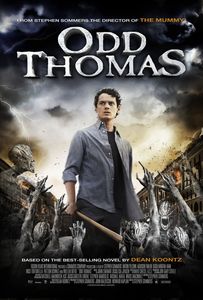
    (On Cable TV, January 2019) I ignored Odd Thomas for years, working from the conviction that it couldn’t be more than an average film if it had been adapted from a Dean Koontz novel. (I once read twenty-some Koontz novels in the span of a single year, and liked only one of them.) But as it turns out, this movie adaptation is something different from the usual Koontz. Introducing us to a small-town California psychic, this is a film that makes use of chatty protagonist narration, a fast-paced plot and some off-beat details to tell a story with a well-rounded execution from familiar elements. I suspect that much of the fluidity of the result comes from director Stephen Sommers, a capable sfx storyteller who had a few high-profile movies between 1998 and 2009 but seems to have been sidelined of the industry since then. The plot has something to do with preventing a mass shooting, but the way we get there is far more interesting than expected with plenty of humour, suspense, ingenious use of fantastic tropes and good actors in key roles. The late Anton Yelchin stars as Thomas, with an early role for Gugu Mbatha-Raw and a supporting turn from Willem Dafoe. The hook is interesting, and while there is something slightly off about the overly cute banter as well as some of the individual moments along the way (including a far too dark romantic conclusion), the execution is generally above average and the film is a bit of an unassuming surprise. Even though it’s more of an underrated B-movie than anything else, I probably shouldn’t have waited so long to see it.

  • Game Night (2018)

    Game Night (2018)

    (On Cable TV, January 2019) With the simultaneous resurgence in R-rated comedies and immersive gaming for adults, it’s not such a surprise that something like Game Night would emerge—a comedy aimed at adults, taking on the mind games of a what’s-real-and-what’s-not kind of entertainment. The plot has to do with a regularly scheduled “game night” between friends spinning out of control as mystery men burst in the house and take away a player. As the group enjoys figuring out the clues to find the kidnappers, there are plenty of warnings that the line between entertainment and real danger is thinner than they expect. What could easily have been a thriller is here presented as a dark comedy, with characters blithely walking in danger when they are expecting the safety net of an arranged scenario. The distinction is further blurred by showy cinematography far closer to off-beat thriller than flat comedy—it supports the gaming thematic by playing head games with the audience, bathing everything in shadows and even tilt-focusing the images so that we’re reminded of game board pieces. Jason Bateman typically anchors the cast by providing level-headed snark even as the other actors are left to go wild. Rachel McAdams is a good foil as his wife, while Jesse Plemons is perhaps a bit too good as a lonely neighbour trying to join the gaming group—his performance is a bit too unnerving for comfort. The result is surprisingly good, especially when compared to other R-rated films: while I would have toned down the violence, the result does manage to find the tricky balance inherent in any black comedy, and the result is highly entertaining to watch. It even finds that meta-balance between the safety net of a comedy/game and the tension of a thriller/crime. Making good use of trendy elements, Game Night is a bit of a surprise and a welcome one at that.

  • Pontypool (2008)

    Pontypool (2008)

    (On Cable TV, January 2019) It took me far too long to see the unusual Canadian horror film Pontypool, considering that it starts with a great setup for a zombie movie and then leaps into something much stranger. It doesn’t quite manage to deliver a satisfying ending, but at least it tries something unusual and does feature some great atmosphere along the way. It all starts with a radio shock jock (played with sufficient panache by Stephen McHattie) on the first day of his new job in a small Ontario town—driven out of the big markets thanks to some unspecified offence, he brings big-city attitude to a folksy community. The community has other plans than to listen patiently—before long, his intention to sleepwalk through yet another morning show is dashed by reports of violence within broadcasting range. Stuck in the confines of his studio with his manager and assistant, he tries to piece together a local story with global implications, and soon finds himself besieged by attackers behaving strangely like zombies. But not exactly zombies, as something far more bizarre is happening, something having to do with a word-based virus. By the end of the film, Pontypool plays with language and semiotics and the nature of reality itself. (Neal Stephenson’s Snow Crash even gets a visual shout-out.) If its sound ambitious and heady, it’s perhaps no surprise that the film disintegrates slightly toward the end, as it doesn’t quite manage to leap to that next level gracefully—and the post-credit sequence sort-of makes sense if you read about it, but feels cool-yet-awkward without considerable hand-holding. Director Bruce McDonald (working from a script by Tony Burgess adapting his own book) does manage quite a few nice things along the way, though—even by taking place essentially on one set, Pontypool creates an interesting fusion of Wolfman-Jack-meets-rural-Ontario, effectively cranks up the tension throughout the film and eventually delivers a conclusion of sorts, even though I wish the third act could have been rewritten, clarified and executed more persuasively. There are a lot of cool ideas here (the idea of English being “infected” while French isn’t could lead to the Great Politically Charged Canadian SF Novel considering the bilingual nature of the country, but that’s merely brushed upon here). Pontypool still comes up frequently in discussions of cinematic “gems you haven’t yet seen” and it’s easy to see why—even at a time when zombie-type movies are overexposed, this one still has a few things to say.

  • Flirting with Disaster (1996)

    Flirting with Disaster (1996)

    (On Cable TV, January 2019) Twenty-few years later, you could think that Flirting with Disaster would be worth a look solely for being an early vehicle for writer/director David O. Russell and a cast with more known names than is worth enumerating. But Russell’s script deliberately leans in the oddball direction (like most of his other movies, in fact) and so this quirky independent comedy soon takes us through the United States with a bunch of eccentric characters as the protagonist tries to find the identity of his biological parents. The plot is contrived, but that’s the nature of the thing. There are twists and turns, humiliating moments, some flirting for both married characters and a few false leads in the biological parent search. Ben Stiller, Patricia Arquette and Téa Leoni make up for a decent trio of leads, with decent supporting players in smaller roles. Mostly but not solely worth watching by Russell fans, Flirting with Disaster amounts to a quirky, amiable, decently entertaining film but not a particularly memorable one even despite its conscious decision to be off the wall.

  • Super Troopers 2 (2018)

    Super Troopers 2 (2018)

    (On Cable TV, January 2019) The Troopers are back for more silliness in Super Troopers 2, with the Broken Lizard comedy troupe offering more of their specific sense of humour. This time, nothing less than national sovereignty is at stake, as an old surveying error leads to the American border being repositioned to take up a slice of Canadian land. In the meantime, the disgraced Troopers are asked to set up a Highway Patrol outpost in the contested zone. While the plotting has a few moments (“passive smuggling” is a clever concept), the point of Super Troopers 2 is, once again, the low-brow humour milking the Trooper’s stupidity, propensity to pranks and overall sociopathy. Those who loved the first film will like the second, even though it feels more calculated and less funny than it could have been. As a Canadian viewer, I had a lot of fun with the various unflattering stereotypes and dumb jokes playing off the difference between the US and Canada—even if some of the details ring patently false. As a low-budget film, it’s best not to expect too much from the result, although director Jay Chandrasekhar does manage a few convincing set-pieces along the way. I suppose I could make a half-hearted cultural representation argument that few of the French-Canadian actors are played by French-Canadians, but I don’t even believe that to be a problem, especially not when steps in Rob Lowe and Emmanuelle Chriqui (who, upon verification, was actually born in Montréal). Super Troopers 2 is not meant to be watched for a nuanced take on cross-cultural issues when there are dumb jokes to be made, and the best we can say is that it’s definitely in the same vein as its predecessor, often funnier than the similar French-Canadian Bon Cop Bad Cop 2, and entertaining enough if you’re in the right mindset.

  • Arthur Christmas (2011)

    Arthur Christmas (2011)

    (On Cable TV, January 2018) Watching Christmas movies after December 26 is a risky thing—at a minimum the air’s gone out of the Christmas spirit, and at worst, well, anyone can be excused for thinking that they don’t even want to hear about Christmas for another eleven months. In other words: that’s the time of the year during which to distinguish the good Christmas movies from those who only run on holiday magic. Fortunately, Arthur Christmas is one of the decent ones, and this surprisingly enjoyable animated fantasy film gets going early on with a detailed depiction of Santa Claus’s Christmas delivery logistics, from Santa using an army of elves as a staging crew, a gigantic ship, an enormous mission control and the refinements we can expect from an ultra-high-tech operation. This, in turn, leads to one of the central conflicts in the film—the contrast between the technology required to achieve a mass toy-delivery operation, and the Christmas spirit that motivates it. Our hero is a clumsy but well-meaning young man, Santa’s least favourite son—not seen as the favourite to take over operations once the old man retires. In the tradition of modern CGI features, Arthur Christmas is a zippy story that uses the possibilities of the medium to show us how a Santa operation could run, then strands the protagonist in multiple adventures to have them prove their worth. The depth of imagination, both visual and conceptual, can be explained by this being from the Aardman animation studio. But no matter the pedigree, Arthur Christmas is an engaging film, and one that most won’t mind revisiting throughout the year.

  • Young Guns (1988)

    Young Guns (1988)

    (On Cable TV, January 2019) Not being much of a western fan, it was probably inevitable that I wouldn’t care much about Young Guns. Clearly made with the intention of bringing sexy back to the western genre, it does have the good sense of casting the Brat Pack of photogenic young actors for a nice little shoot’em up. Even today, who wouldn’t be tempted to have a look at young Emilio Estevez, Kiefer Sutherland, Lou Diamond Phillips, Charlie Sheen and Dermot Mulroney in the same horses-and-guns movie? Alas, the movie around those actors isn’t quite up to the promise—for all of the then-trendy soundtrack, this retelling of the Lincoln County War and Billy the Kid’s life does feel perfunctory. I suppose that here’s a cultural element at play here—Being Canadian, I have little use for outlaw legends along the lines of Billy the Kid, and so that aspect has nearly no grip on my particular imagination. While stylish, Young Guns definitely shows its age and late-1980s pedigree—thirty years later, it looks flashy, dated and a bit ridiculous with its overcoats and lengthy slow-motion moments. I don’t quite dislike the result, but neither do I care for it much—although I suspect that the deliberately accumulated sex appeal of half a dozen guys is wasted on me.

  • Elvis Gratton II : Miracle à Memphis (1999)

    Elvis Gratton II : Miracle à Memphis (1999)

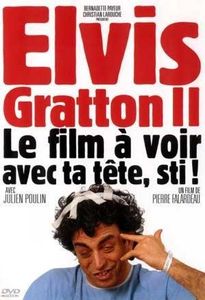
    (In French, On TV, January 2019) Whew, what a movie. The most useful piece of background information in discussing Elvis Gratton II: Miracle à Memphis is that it was a consciously commercial endeavour, trying to capitalize on the success of quasi-legendary Québécois character Elvis Gratton in order to finance writer/director Pierre Falardeau’s next and riskier project, the pro-independence historical drama 15 février 1839. To this end, this sequel maximizes everything that Gratton stood for—more slapstick, more bigotry, more anti-federalist sentiment, more satirical content. The script wastes no time in establishing a broad canvas for the film’s gags—as a resurrected Gratton becomes a media sensation, an American talent manager takes over his career to enable him to become a rock star, restaurant owner, bestselling writer, real-estate mogul, without compromising the essentially small-time vulgarity of the character. It’s really not subtle nor successful: Gags are quoted verbatim from the previous film with slightly more polish, laugh-free sequences are dragged on far longer than necessary, and the political content is blatantly shoved in viewers’ faces. The episodic nature of the plot enables the film to play without much of a dramatic arc, so much so that the film eventually ends with a discussion between director and star/screenwriter Julien Poulin as they ponder how they’re going to end the movie. Their consensus is to blatantly laugh at viewers, which they’ve been doing anyway. While such a scene does get a few chuckles (along with the film’s funniest character; a smart car openly contemptuous of its owner), Elvis Gratton II: Miracle à Memphis is a wild, uncontrolled film that wallows in the same ignorance that it attempts to criticize. Once again, the character of Gratton becomes not an object of derision, but a folk hero of sorts that tranquillizes the masses rather than unnerve them. Faladreau passed away in 2009, and his beloved separatist movement went into a coma shortly afterward, making the political aims of his films look dated and risible at once. But even if you go soft on the film’s political aims (and I am!), the rest of it is usually nothing more than a dumb comedy with lengthy laughs-free passages. Too bad; I do think that Falardeau had what it took to make a truly incendiary satire. In this case, he chose not to…. Maybe he had his reasons.