Month: November 2019

  • Fearless (1993)

    Fearless (1993)

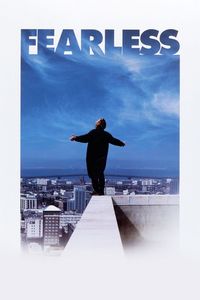
    (In French, On Cable TV, November 2019) There is something interesting about movies that dare navigate the fine line that separates realism from the extraordinary. Fearless is one of those movies that skirt the edge of a realistic drama by focusing on the survivor of a plane crash who develops some unusual psychological disorders, helped along by ambiguously fantastic events. Played by Jeff Bridges in one of his best roles, our protagonist overcompensates for his survivor’s guilt by becoming convinced that he is already dead, eating allergenic food without consequences and even crashing his car to make a point. His detachment from reality becomes spectacular at times, such as walking away from the crash scene without notifying anyone. His mental health issues are aggravated by the aftermath of the crash—the FBI investigation, the media attention, the legal proceedings, the guilt shared by fellow survivors. Directed by Peter Weir, who has often handled such tricky material, Fearless is an effective character study of someone ordinary in exceptional circumstances. A clever script heavily (but cleverly) relies on flashbacks to show us the before-and-after circumstances of the protagonist. With such skillful touches, Fearless is far more entertaining than expected for such weighty subject matter—and with such interesting actors as Rosie Perez (deservedly nominated for an Oscar), Isabella Rossellini, Benicio del Toro and John Turturro along for the ride, it’s also not a bad choice for anyone looking at the state of mainstream drama movies from the mid-1990s. Even if, at times, Fearless does push much realism as far as it can go.

  • I Still See You (2018)

    I Still See You (2018)

    (On Cable TV, November 2019) One of the fundamental writing lessons that they don’t often teach in how-to books is focus. Or, in other words, “calm down, and don’t make it so complicated.”  Writers often spend so much time with their story that it becomes almost a necessity to add fancy adornments to it. To make it even more complex. To add a plot so complicated that no one else can follow it. This is even more crucial in screenwriting, given the necessities to fit everything in a limited amount of time. Focus, screenwriters, focus! Don’t throw everything but the kitchen sink, then add a romance, a murder mystery, a voyage of discovery and a global apocalypse on top of everything. But novelist Daniel Waters didn’t listen and screen writer Jason Fuchs didn’t listen and director Scott Speer didn’t listen in the making of I Still See You, with starts with a future world in which ghosts have some influence over the real world, but then goes on to add romance, grief, conspiracy, murder and self-actualization on top of it. Pick two out of five, maybe. I Still See You doesn’t help its case by inventing a new vocabulary to talk about its ghosts, and then impose a curriculum that requires you to learn about a decade’s worth of future history in order to even make sense of what’s happening. The story becomes even worse once you discover that there’s someone in the protagonist’s entourage that has a significant role in how this world-changing incident happened. At some point, it all becomes too much for too little return. I would be amazed to say this considering that I spent a lot of time in my life enjoying thick science-fiction books about entire future empires, but the problem is that I wanted to enjoy those SF series, whereas I really don’t care about any aspect of I Still See You: it’s dark, dull, painfully less interesting than it imagines itself to be, and doesn’t have anything to keep viewers invested in what it has to say. A great story will spawn hundreds of fanfiction stories to expand upon the world it suggests, but as proved here a bad story will make viewers reluctant to even engage with its core. Goth Bella Thorne could have been interesting … but not in this film. There are plenty of other better YA horror (ish) stories out there to spend any more time even thinking about I Still See You. Go see those instead.  Please, no sequels.

  • Ski Party (1965)

    Ski Party (1965)

    (On Cable TV, November 2019) The Beach Party series takes an odd but not entirely unpredictable turn in Ski Party, as part of the gang heads for the mountains for snow partying. Our two lead lads, played by Frankie Avalon and Dwayne Hickman, have the bright idea to disguise themselves as women to learn all about what they need to know in order to seduce. Many wacky hijinks then follow, in the somewhat anarchic type of comedy of the series. The film frequently breaks the fourth wall, with even terrible special effects being part of the fun. It’s reasonably entertaining as a comedy, but the real discovery of the film is its soundtrack, featuring on-screen appearance by Lesley Gore (“Sunshine, Lollipops, and Rainbows”) and James Brown (“I Got You [I Feel Good]”) as themselves. The charming silliness is infectious, and Ski Party itself feels fun even if it’s an insubstantial add-on to an already frivolous series.

  • Astérix aux jeux olympiques [Asterix at the Olympic Games] (2008)

    Astérix aux jeux olympiques [Asterix at the Olympic Games] (2008)

    (On TV, November 2019) There were four live-action movies based on the Asterix comic books between 1999 and 2012, and there’s a fair case to be made that Astérix aux jeux olympiques is the worst of them. Sure, the first film had some issues in terms of how to integrate comic book exaggeration in a live-action setting. But the script was generally serviceable, and that’s more than we can say about this third instalment. The most fundamental of its mistakes is to make an Astérix and Obélix story in which both main characters are supporting players in another plot having to do with fairly minor characters. The detour to Greece for the titular Olympic Games is (in keeping with the original comic book) an excuse to parody the modern Games, but they keep adding more subplots that have little to do with the putative heroes of the film. Much of the film is spent wondering when we’ll ditch the useless characters and go back to the lead duo. The chariot race that composes much of the third act does bring some much-needed energy back into the film, although that’s not a constant—whenever you puzzle over some lame joke, scene or one-off character interrupting the flow of the action, head over to the film’s Wikipedia page and you will realize that you’ve just seen a celebrity cameo from someone you’ve never heard of as a future viewer hailing from a future distant enough from 2008, which is already starting to happen in 2019. But Astérix aux jeux olympiques keeps the worst for last, as rather than wrap things up neatly with a quick banquet scene, it drags on for another 5–10 minutes for the sole purpose of bringing back an annoying character from the previous film (played by infamous showboater Jamel Debbouze) as well as other celebrity cameos. Enough. By that time, we just want it to be over. The special effects are better than the previous film, but not used judiciously or even tastefully. The direction isn’t particularly strong, and while it’s fun to see French-Canadian Stéphane Rousseau in a leading role, the amount of screen time he gets is an issue when the main characters of the series are sidelined. At least Clovis Cornillac and Gérard Depardieu are not bad as Astérix and Obelix, with no less than Alain Delon as Julius Caesar. Still, there’s not enough to offset the tremendous waste that is the misguided script and the overindulgent execution.

  • The Hitcher (1986)

    The Hitcher (1986)

    (On Cable TV, November 2019) Narrative plausibility is usually a good thing when it comes to movies, but there are exceptions, and The Hitcher sure knows how to play with it. Starting out when a young man picks up an unusually intense hitchhiker in the middle of the desert, the film quickly dives into a nightmare once the hitcher promises violent death to the protagonist, and starts toying with him in broad day light—framing him for terrible murders, blowing up gas stations and helicopters, breaking in and out of prison and doing so with a determination that would exhaust even the Terminator. Halfway in the film, it’s fully justifiable to think that our protagonist has escaped rational thought and that the Hitcher (an icy performance from Rutger Hauer) is a figment of his imagination. But no—quickly enough, The Hitcher firmly establishes that the hitcher can be seen by the other characters and that may make him even scarier, because the film imperceptibly shifts from a psychological thriller to something akin to supernatural horror. The impossible events of the film can only be explained by non-natural means even if there are no overt fantasy elements. I’m not so fond of the film’s grand-guignolesque level of violence (killing the most sympathetic of the characters along the way), but it does help the film’s nightmarish atmosphere. Disappointingly enough, the version of The Hitcher that HBO broadcast on the eve of Halloween had a low-resolution muddy matted visual presentation—surely there’s a high-definition version lurking somewhere in their archives?

  • On the Basis of Sex (2018)

    On the Basis of Sex (2018)

    (On Cable TV, November 2019) The rise of US Supreme Court Justice Ruth Bader Ginsburg as a modern folk heroine is as unlikely as it is heartening in these times where lawlessness seems to be the norm for the highest office in the land. The Notorious RBG was a documentary account of her entire career, and it’s perfectly complemented by On the Basis of Sex, which chooses to focus on a very specific period of her life in order to illustrate her character … and provide a bit of an origins story as well. It begins with an extended prologue in which she goes to law school in the early 1960s (experiencing a predictable amount of sexism along the way), supports her husband throughout serious illness, has trouble getting a job as a practising lawyer and eventually joins faculty at a New York University. But the story really begins when she becomes aware of a sexual discrimination case involving a man being denied benefits on the sole basis of being male. Sensing an opportunity for establishing gender equality, she takes up the case and the film ends up chronicling her progress through a legal victory. On the Basis of Sex offers a stirring demonstration of rising to the challenge (her never having pleaded in court before taking on the case), benefiting from the support of her husband and using the law to break discrimination. It’s certainly an inspiring plea for the power of the judicial process—in addition to all of the usual arguments regarding the courts as instruments of social progress, there’s a really clever scene in which taxation is demonstrated to embody the values of its society (something that later feeds into her own victory). The historical accuracy of the film is reportedly quite high, what with the script having been written by Ginsburg’s nephew. There’s certainly something heartening in seeing her in a loving relationship with her husband, who provides a lot of support (emotional and otherwise) to her during the case. Felicity Jones is quite likable as Ginsburg, with Armie Hammer getting a good role as her husband; Kathy Bates also has a short but very visible role. It’s also a welcome return to the big screen for director Mimi Leder, who had been sent in exile far too long after the underwhelming Pay it Forward—it’s good to have her back, and her work here is as good as these historical dramas can hope for. While On the Basis of Sex does not reach outside the confines of its biopic form, it’s not a bad watch for audiences interested in the law, in equality and in one Supreme Court Justice who ended up capturing the popular imagination.

  • Mr. Magorium’s Wonder Emporium (2007)

    Mr. Magorium’s Wonder Emporium (2007)

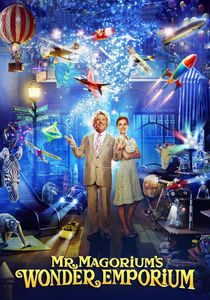
    (On TV, November 2019) I have a soft spot for movies celebrating (however cynically) the wonders of imagination and featuring off-beat characters, and I suppose that this is what Mr. Magorium’s Wonder Emporium has in spades, what with Dustin Hoffman playing the titular Mr. Magorium, who built a fantastic toy shop and is now planning on leaving the Earth. His plan is to pass the mantle over to a young assistant flatly played by Natalie Portman, cute but otherwise unremarkable in a somewhat thankless role. Jason Bateman looks like he’s having slightly more fun as an accountant who loosens up throughout the film. Still, the point of Mr. Magorium’s Wonder Emporium (what a title!) isn’t the plot or the characters as much as it’s the sight gags, magical devices and fantasy wrinkles (such as a building growing sullen) that are perfectly at ease in the universe created for the purposes of the film. Surprisingly enough, this isn’t adapted from a YA book—writer-director Zach Helm thought up the entire thing, and it’s the kind of colourful magical fantasy that can’t really exist just on the page. It’s all a bit childish, of course, but that’s part of the point of Mr. Magorium’s Wonder Emporium —imagination, creativity and fantasy don’t have to belong to kids exclusively. In fact, when adults take them up, it’s renamed as eccentricity … and that’s a message I can support wholeheartedly.

  • F for Fake (1973)

    F for Fake (1973)

    (On Cable TV, November 2019) We could easily rename F for Fake to F for Fascinating and it wouldn’t change much. Abandon any preconception of a standard narrative or documentary film, because from the first few minutes (which feature a suspiciously specific disclaimer that “everything we will tell you in the next hour is factual”), Orson Welles is clearly having fun playing with cinematic grammar, placing himself front-and-centre and messing with expectations. The subject matter, as we gradually discover (Welles doesn’t make it easy) is to talk about four fascinating personalities: Elmyr de Hory (celebrated art faker), Clifford Irving (journalist and de Hory biographer, discovered during filming to have faked an autobiography of Howard Hughes), Howard Hughes (mogul turned mysterious hermit, then far more mysterious than now) and finally Orson Welles himself (no stranger to fakery as a filmmaker and radio broadcaster). F for Fake a feature-length series of impressionistic digressions on fakery leading to a final fifteen minutes that goes somewhere unexpected. This is a film best seen with Wikipedia on hand, though, as it assumes quite a bit about what an early 1970s viewer would know and find interesting. My favourite part of the film is easily Welles’s larger-than-life presence himself, as the film allows him to charm the viewer and even witness as he holds court in a restaurant—if anyone ever wondered how much fun it would be to hang out with later-day Welles at his storytelling best, then wonder no more. Otherwise, there’s quite a bit of fun to see Welles subvert expectation and mislead his audience (as he tells us he’s going to do in the first few minutes). Welles buffs will also come away from the film far better informed about Oja Kodar, something that’s probably essential to understand Welles’s last few years and the tortuous path that The Other Side of the Wind took to its final release. There’s an entire film’s worth of supplementary material to be read about F for Fake, so keep that Wikipedia link close by.

  • The Rocker (2008)

    The Rocker (2008)

    (On TV, November 2019) I wasn’t expecting much from The Rocker — It didn’t exactly make a mark in the decade since its disappointing theatrical release, and Rainn Wilson is (at best!) a very specific comedian. But I wasn’t counting on the power of rock, or specifically a movie taking place in the rock band touring realm, taking on the comfortable tropes of the subgenre and playing with them. A journey to fame that we think may take the entire film ends up being resolved in the first act (thanks to some social media shenanigans that still ring true eleven years later), leaving the film the luxury of heading out on the road to live out the Rockstar lifestyle. (The Rocker does itself no favour by leaning too much on vomit humour.) Rainn Wilson is occasionally annoying but not as much as anticipated, and he’s clearly the wildcard that brings a straighter cast of character together. Otherwise, the film features early roles for Josh Gad and Emma Stone as teenage rock musicians, along with Christina Applegate playing hen mother/love interest. The soundtrack is about as great as what we could have expected from a movie with such a title. I suspect that anyone’s liking for The Rocker will hinge on how susceptible they are to rock band tour comedies and/or Wilson as a comic performer. But I was pleasantly surprised, without going to the extent of claiming it’s a good movie.

  • Mexican Spitfire at Sea (1942)

    Mexican Spitfire at Sea (1942)

    (On Cable TV, November 2019) It’s one thing to have star vehicles, and it’s another to have a series of films tailored to your screen persona. Anyone unfamiliar with Lupe Velez’s brand of comedy as an attractive but stereotypically tempestuous Latina will know everything they need to know from Mexican Spitfire at Sea, the fourth in a seven-film series all featuring Velez and her “Mexican Spitfire” moniker. Here, we’re aboard an ocean liner as our heroine thinks she’s finally getting her honeymoon but instead gets tangled in a mix of social climbing, husband shaming, impersonations and rapid-fire dialogue often punctuated by comic rages from the protagonist. At 72 minutes, Mexican Spitfire at Sea has no time for niceties, and no appetite for subtlety: this is classic community theatre farce material with mistaken identities and misunderstandings powering much of the plot, with the actors mugging for the camera so that we don’t miss a single double take, confusion or lustful thought. The ending is a bit weak, but it actually works quite well if you’re in the mood for that kind of sitcom-level comedy … and it works even better if you like the “Mexican Spitfire” archetype that Velez plays so well. Added attraction may come from the easy-to-digest pace of life aboard an ocean liner (you can cut production costs by going through the same five sets), funny dialogue and a performance from veteran actress Zasu Pitts that’s far funnier than anything she did in Greed. What may limit the appeal of the film is that the series is focused so extensively of a specific screen persona.  I was curious about Velez and sympathetic to that kind of role, but I’m not so sure that I’d watch all seven movies back-to-back. As a small discovery, though, Mexican Spitfire at Sea is just good enough to make me happy.