Month: November 2019

  • Time Out for Rhythm (1941)

    Time Out for Rhythm (1941)

    (On Cable TV, November 2019) One of the certitudes about tracking down lesser-known movies from favourite actors is that the more obscure they get, the less good they are. (Well, usually.)  Time Out for Rhythm will never make anyone’s list of best movies—not in general, not for musicals, not for films of 1941. It’s almost obscure these days, but never mind me—I’m here for Ann Miller, who gets a substantial supporting role here in addition to singing and dancing. Others will focus on the scattering of appearances by The Three Stooges, but they’ve never been my kind of comedians in the first place. The rest of the film is a bit dull: It’s another showbiz comedy set in New York, with talent agents having a falling-out when an opportunistic woman (played by Rosemary Lane) comes between them. The production values are fair, with a highlight being the glow-in the-dark “Boogie Woogie Man” number. Thematically, mentions of a television show are unusual for a film of the early 1940s—While movies of the 1950s obsessed over TV as more and more sets made their way into homes, it was still fancy new technology back in 1941 and having characters speak about the potential of TV shows marks them as forward-looking. Time Out for Rhythm doesn’t hold a candle to many other musicals of the time, but it being a musical, it’s never uninteresting for long: there’s usually a musical number or a comic routine to perk up our interest at regular intervals. As for myself, I got to see Miller tap-dance through a few more good numbers showcasing her, so at least that’s it. I doubt I’ll remember much of the film in a few weeks, though.

  • F- You All: The Uwe Boll Story (2018)

    F- You All: The Uwe Boll Story (2018)

    (On Cable TV, November 2019) It’s still a bit early to definitively state that Uwe Boll will never direct another movie, but even in youthful retirement he leaves behind a distinctive filmography rich in fascinating material. In case you don’t know Boll, let us be clear: His films are terrible, but he was able to make a lot of them (twenty-two of them in ten years) thanks to savvy use of financing opportunities and a casual disregard for quality. For the generation of movie reviewers working between 2004 and 2015, Boll was a punchline until he became the one doing the punching—literally: in 2006, he dared movie reviewers to a boxing match. Some of them, forgetting that Boll had a semi-professional pugilistic background, accepted … and got beaten up. Stories like that are legion about Boll, who easily takes a spot on anyone’s list of pugnacious directors. He exploited tax loopholes; he shot in miserable conditions; he shot first drafts of scripts against the screenwriters’ wishes; he rarely spent more than a few takes before deciding to move on. This documentary’s biggest contribution, besides capturing the insanity of Boll’s career in easily digestible format, is to explain why Boll’s films were so terrible. It’s all about the money, of course. Or, if you want to be more precise, that Boll had a gift for getting money, but as a producer of his own films often sacrificed any artistic ambition in order to further his agenda as a budget-conscious producer. Unusually enough, Boll himself is not always his best advocate in interview segments filmed for this documentary—often, the best insights come from collaborators and friends trying to figure out what they saw or felt on the set. Boll himself is often argumentative, unrepentant, apparently unwilling to provide answers. It makes for good footage, obviously: Boll is a consummate showman in his own way, and he has chosen combativeness as a way of getting attention. Still, anyone looking for definitive answers may have to wait longer: As of the film’s shooting, Boll was still somewhat in the entertainment business, now being a successful Vancouver-area restaurateur. Both the movie and the restaurant world are better for it. Writer-director Sean Patrick Shaul should be proud of having explored the mystique behind the character, even if the answers he gets are tentative at best and not quite supported by the man himself. Anyone who has bemoaned the lack of grander-than-life directors after the passing of Howard Hawks, John Ford, or Joseph Von Sternberg (this being the last time Boll will be compared to those three) should have a look at this documentary—his movies are still not good, but now we have a record of Boll himself.

  • Punchline (1988)

    Punchline (1988)

    (On TV, November 2019) Tom Hanks has been America’s everyman since the late 1990s, but before then he spent a decade playing highly dramatic roles and before then he spent much of the 1980s in straight-up comic films. One of the least known of them must be Punchline, a film I didn’t even know existed before it showed up on my TV schedule. Here, Hanks play a hungry young stand-up comic who meets and develops a crush on a housewife (played by Sally Field) who tries her hand at stand-up. Much of the film is meant as an examination of the lives of comics on and off the stage, pressured into making it big, reassuring family and friends that they’re still sane and trying not to crack under the pressure. It’s not a comedy in the most conventional sense of the word, although we do get to see a few comic routines along the way. (The final routine by Hanks’ character is a killer set, but amazingly enough it doesn’t seem to be transcribed anywhere on the web at the moment.)  I’ve long been fascinated by stand-up comedians, so Punchline had an extra resonance that may not find a grip on other viewers. Still, it’s not a bad movie: it may disappoint those expecting a funnier tone, but it’s quite watchable, and I suspect that some viewers may be just as amazed as I am to find an early Tom Hanks movie they didn’t know about.

  • Dragon: The Bruce Lee Story (1993)

    Dragon: The Bruce Lee Story (1993)

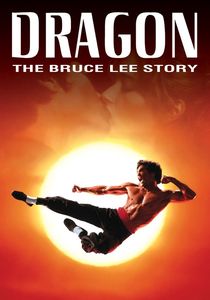
    (On Cable TV, November 2019) The Story of Bruce Lee is so interesting, so dramatic that it would have made little sense for a biopic to follow a strictly factual style. (Leave those to the books, I say!) So it is that director Rob Cohen’s Dragon: The Bruce Lee Story wisely chooses a far more fantastic framework in which to tell us about Bruce Lee, complete with martial-arts fights almost as good as the ones in his films. Going from Hong Kong to the United States and back again, Dragon follows Lee as a young man on the way up (as portrayed quite convincingly by Jason Scott Lee), but elides much of his stardom years in favour of dramatizing the events surrounding his death. As befit the subject, it’s not merely a chronicle of Lee’s life as an occasion to talk—in the early 1990s—about stereotypes, prejudice and the idea of manliness as portrayed by Asian actors. (Which has me wondering if Dragon had any impact on the brief but real influx of Asian talent, themes and techniques in the later half of the 1990s.)  This being a heroic biographical portrait of Bruce Lee, do not expect much distance or critique of the man—this is meant as a celebration rather than a serious biopic. Still, it’s fun—the first fight scene alone is almost comical and the later sequences keep the entertainment factor high. Still, I can’t help but wonder if we may be ripe for another project looking at Lee’s life from a more realistic perspective—and ideally one from filmmakers closer to Lee’s background.

  • Saat po long 2 [Kill Zone 2 aka SPL II: A Time for Consequences] (2015)

    Saat po long 2 [Kill Zone 2 aka SPL II: A Time for Consequences] (2015)

    (On Cable TV, November 2019) I have probably been looking in the wrong places, but it seems to me that it’s been a long time since I’ve been able to see a Hong Kong martial-arts action movie. (Are they even making as many as they once did?)  While Kill Zone 2 isn’t all that great a film, at least it’s good enough to satisfy that specific craving. A sombre story about undercover cops, drugs, and organ harvesting, this is not a fun or funny action movie: it’s generally glum, shot in sombre black-and-blue by director Soi Cheang, and has characters going through histrionics on a predictable arc. It’s unusually gory (something that the organ transplant subplot only heightens) and the script frankly isn’t all that easy to follow. But Kill Zone 2 does get better as soon as the fight sequences begin: Having Tony Jaa as a headliner would be meaningless without being able to take advantage of his physical talents. I’m not sure that it’s all that interesting if you’re not looking for a stereotypical action film, but I was hungering for exactly that, and was more satisfied than not.

  • King Solomon’s Mines (1950)

    King Solomon’s Mines (1950)

    (On Cable TV, November 2019) Anyone watching a 1950s MGM Technicolor adventure film and expecting a sensitive, respectful take on its African setting is not going to have a good time—much like its 1937 film forebearer and 1885 original H Rider Haggard novel, this is a straight-up adventure in the time of colonialism, with buried treasure and hostile natives. (Although this, like the previous film, does add a female character—and an excuse to see Deborah Kerr in the jungle.)  Largely shot on location and meant as a big MGM spectacle, this version of King Solomon’s Mines generally delivers on its premise, even if this premise can be repugnant to modern audiences (I really could have done without the elephant shooting, for one thing). There’s some spark to the relationship between the two lead characters, with Kerr playing opposite Stewart Granger as Allan Quatermain. The nature landscape photography alone can be spectacular. You’ll have to ignore some heavy-duty colonialism along the way, though, especially considering how this version minimizes some of the more heroic African characters. While this King Solomon’s Mines is, as a whole, slightly better than the earlier film version, it’s still not quite satisfying—with the underwhelming ending not helping with the dissatisfaction.

  • King Solomon’s Mines (1937)

    King Solomon’s Mines (1937)

    (On TV, November 2019) As much as the stench of colonialism is strong in this first version of King Solomon’s Mines, it’s actually kind of fascinating to see such an unabashed African adventure at an early stage of cinema. Partially filmed on location, this film rather faithfully adapts H. Rider Haggard’s adventure novel with all the means available to big-budget cinema at the time. The plot elements are all well worn (all the way to natives being impressed at an eclipse, and a volcano-fuelled final escape) but it’s not impossible to suspend exasperation considering the age of the material. Black actor/singer Paul Robeson has an unusually high-profile role here as an exile chieftain coming back to take the throne—he even gets to sing the film’s final moments. Cedric Hardwicke is also compelling at lead adventurer Allan Quartermain, heading deep in Africa to find hidden treasure. There is still a bit of a kick to King Solomon’s Mines —a basic watchability to the result that transcends time and very different assumptions about how to portray Africa on-screen. It could have been much, much worse.

  • My Darling Clementine (1946)

    My Darling Clementine (1946)

    (On TV, November 2019) I’m aware that My Darling Clementine is often praised as a western classic (it even gets a rare “1”—Masterpiece—rating from the influential Mediafilm service), and I’m partially nonplussed by the acclaim. I’m not going to make an argument that it’s a bad movie: with Henry Fonda playing Wyatt Earp in an early take on the O.K. Corral shootout, it’s a John Ford production executed with all of the skill that a big-budget western could muster in the 1940s. Even by Hollywood standards, it’s a very fanciful retelling of history that invents or combines (or kills) historical figures, rearranges the chronology of events and certainly imbues them with virtues or failings that makes the entire thing more accessible as a story. Actually, it goes even further than that: Watching My Darling Clementine, there’s a palpable desire to create a piece of American mythology. A desire fully fulfilled, in that the O.K. Corral shootout has been told and retold in movies even decades later. That, too, plays against My Darling Clementine: To modern viewers weaned on Tombstone, this early take feels unfocused, ham-fisted, and clichéd, bested by its own inheritors. Even at a relatively spry 103 minutes, it feels long, especially as it offers tangential material such as Shakespeare in the Wild West, and strange narrative choices such as building up a surgery sequence and then telling us in the next scene that the sick character (perhaps the most striking of them) has died. These little issues accumulate to the point that My Darling Clementine ends up feeling like a decent but underwhelming western, far from being all all-time classic even in Ford’s filmography, especially when there’s Stagecoach or The Searchers or The Man Who Shot Liberty Valence to pick from.   But now I’m reviewing the reviews rather than the film itself.

  • Made for Each Other (1939)

    Made for Each Other (1939)

    (On TV, November 2019) I’ll watch James Stewart in just about everything he’s done, and the first few minutes of Made for Each Other certainly give us a good example of what was Stewart’s first memorable screen person—that of a romantic lead, eager and competent and sweet and likable at once. As he comes back from a trip to Boston with a new bride, his issues multiply at home and at work. His mom doesn’t like his new wife, his boss doesn’t like that he married someone other than his daughter and with a new baby and a Depression-era pay cut soon following, the romance, initially so charming, ends up turning sour. But if you thought there were two movies here, rest assured that there’s yet another one as the third act: a highly melodramatic conclusion which their baby can only be saved through a daredevil flight to deliver crucial medicine. Everything turns out to be OK, but the final result feels like three different movies crashing into each other: a quirky sweet romance that turns into domestic drama that turns into faintly ludicrous melodrama. Stewart remains good throughout—and having Carole Lombard as the female lead doesn’t hurt either. But Made for Each Other ends up feeling lesser than its parts, not quite managing the tonal shifts that the narrative’s swerves require. It’s still worth a look for the actors and the period atmosphere, but it’s not what it could have been. At least we have another movie showcasing Stewart as a dashing young man.

  • The Perils of Pauline (1947)

    The Perils of Pauline (1947)

    (On TV, November 2019) I too-often record movies without quite being able to explain why, and that can lead to a few surprises later when I do get around to watching them. I’m still not too sure why I recorded The Perils of Pauline, but watching it a year later was like discovering a forgotten present. While it makes no sense to talk about this film in the same breath as Singin’ in the Rain, there are a few points of similitude between the two—it’s a satirical look at Hollywood history in the form of a musical, and it’s surprisingly funny as it recreates the era of the silent comedy. It has plenty of flaws—the pacing is uneven, the script is weak, and the suddenly maudlin ending isn’t all that satisfying … but an extraordinary performance from Betty Hutton compensates for much. Her brassy, high-energy portrayal of an equally noticeable character makes the film quite a bit better than it would have been on the page, although a number of funny sequences also help compensate for the lull in the overall narrative. The Perils of Pauline is in the public domain, meaning that it can be watched from even the film’s Wikipedia page … but the visual quality is disappointing even if the film is entertaining.

  • Dracula aka Horror of Dracula (1958)

    Dracula aka Horror of Dracula (1958)

    (In French, On Cable TV, November 2019) Every myth must be refreshed with new blood at some point, and if I’ve got my history of vampire movies right, the 1958 version of Dracula reinvigorated the Dracula character at just the right moment. Anchored by Christopher Lee, this Dracula updates the character made familiar by Bela Lugosi in the 1931 classic by making him sadder and sexier—clearly leaning into the subtext of the Stoker novel. As a result, modern iconic representations of Dracula tend to pick liberally between both Lee and Lugosi. Not a bad result for what was intended as a low-budget exercise from the legendary Hammer Film Productions. The story is streamlined (perhaps to excess) in order to fit within 90 minutes, lending it an unusually rapid pace for those who are familiar with the original novel. This Dracula’s longevity probably owes much to it being in Technicolor, hence accessible to broader audiences. It does strike me that variations on Stoker’s public-domain novel are now as close to a standard repertory text, fit to be appreciated for its variations from the original text. Curiously, the broadcast French dub that I saw alternated back to the original English—not a bad thing, considering Lee’s wonderful voice.

  • Gokudô daisenso [Yakuza Apocalypse] (2015)

    Gokudô daisenso [Yakuza Apocalypse] (2015)

    (In French, On Cable TV, November 2019) There are weird movies, wild movies, crazy movies and then, farther along that scale, Yakuza Apocalypse. But I’m already overselling it, because for all of the insanity of this Takashi Miike film, it’s often astonishing dull, and amateurish throughout. I may not have liked Miike’s other movies, but they had a polish and a filmmaking competence that this film clearly lacks. Even the wild imagination of the so-called plot (involving—let’s see what someone else made out of the plot on Wikipedia—a Yakuza vampire, a gunslinging priest, melting brains, a man in a frog costume, a bird-man and an axe-wielding kid vampire) is essentially incomprehensible, and curiously full of lulls when there are no lolz. Undisciplined and uncontrolled, it leads to a wet thud of a conclusion. The blender-dizzy mix of plot keywords isn’t backed up by a satisfying execution, and there’s a limit to how many “wow, this is weird” can substitute for basic narrative qualities. I don’t mind surrealism once in a while, but Yakuza Apocalypse is not how to do it.

  • The Pride of the Yankees (1942)

    The Pride of the Yankees (1942)

    (On TV, November 2019) The problem with The Pride of the Yankees isn’t that it’s a bad film, because it is not. The problem is that it is primarily a film with very specific melodramatic elements crossed with a baseball legend, somewhat limiting its appeal to anyone who’s not already a fan. It’s easy to see why the topic matter of Lou Gehrig’s life would appeal to Hollywood—a good baseball player, a likable romance and then a fatal medical condition and a heart-stirring speech at the end. Familiar, melodramatic and certainly a bit overdone by today’s standard—but do remember that by the time the film opened in 1942, Gehrig’s final speech and 1938 death were still fresh in people’s mind. Everyone wanted a eulogy rather than a realistic film, and that’s what they got. Bland everyman Gary Cooper is exactly what was needed for the role, with some support from Teresa Wright, Walter Brennan and none other than Babe Ruth playing himself. The Pride of the Yankees will either feel like a stirring paean to a baseball legend, or a somewhat conventional Hollywood melodrama. Movies are often as much about their audiences than their own subject matter.

  • The Three Musketeers (1948)

    The Three Musketeers (1948)

    (On Cable TV, November 2019) There have been a lot of adaptations of Alexandre Dumas’ The Three Musketeers over the years, so the only way to talk about them is to highlight how they differ from one another. In the case of 1948’s version, the answer is simpler than we think: Gene Kelly. That’s it: Gene Kelly as d’Artagnan, meeting the three musketeers and fighting valiantly against Milady, Countess de Winter (Lana Turner!) for the honour of France. The casting highlights doesn’t stop there, what with Vincent Price as Richelieu and Angela Lansbury as Queen Anne. The swashbuckling is strong in this late-1940s MGM spectacle, and while director George Sidney said he drew inspiration from westerns in staging the sword-fighting cinematography, the presence of Kelly suggests that there’s quite a bit of dancing inspiration in there as well—and Kelly’s skills were uniquely well suited for a non-singing sword-fighting hero. The colour cinematography still pops out today, and the rest of the adventure is handled competently, although perhaps too sedately when not busy with action scenes. Remove the cast and the sword-fighting and the film becomes far more ordinary, but that’s the nature of all versions of The Three Musketeers: we’re there for the swords, the rest is just fancy wrapping. If you want the story, read the book.

  • A Face in the Crowd (1957)

    A Face in the Crowd (1957)

    (On Cable TV, November 2019) The more I dig into 1950s cinema, the more I realize that there was much more to the decade than the epic movies and MGM musicals that often pop up as representative of the time. It’s possible to assemble a very nice corpus of audacious satires and warnings about the nascent medium of television, not merely as a competitor to cinema but also as a force affecting civil society (paralleling 2010s concerns about social media). In 1957 alone, you can take a look at Will Success Spoil Rock Hunter? for a comic take, Sweet Smell of Success for a darker tale of runaway media personalities, or to A Face in the Crowd for a full-bore dystopian vision of a demagogue made unstoppable by the power of media. As amazing as it can seem from 2019’s realization that there’s a significant portion of the American populace that will embrace a tinpot authoritarian for comfort, there’s long been a streak of Hollywood movies warning against the dangers of fascism, and A Face in the Crowd turns out to be a character study of what happens when someone with mean authoritarian instincts can put up a false populist front. Andy Griffith (of all people!) turns in a dark and memorable performance as “Lonesome Rhoades,” a folksy guitar player who is discovered by a radio journalist and takes to radio like a natural. Before long, his folksy manners and willingness to say things that people want to hear propel him to greater and greater success, all the way to a national TV show from New York. But Rhoades is not the person he broadcasts himself to be: egomaniac, womanizer, abuser, he becomes all too aware of his own power and plans for much, much bigger. As the radio journalist contemplates the monster she has created, the question becomes: Can he be stopped? Griffith is wonderfully evil here, as Patricia Neal plays the conscience of the film and Walter Matthau plays a terrific part as a highly cynical writer. (His verbal takedown of Rhoades at the very end of the film is an exceptionally efficient piece of writing allowing the story to end in mid-flight yet reassure us that it’s over.)  As a piece of entertainment, A Face in the Crowd touches upon dark topics with success. But it’s as a media critique that the film becomes more and more relevant each year—the medium may change, but people like Rhoades are adept at exploiting them and had more people heeded the film, the American political leadership may not be in such a sorry state at the moment. I’m not sure that A Face in the Crowd can be called a hidden classic as it regularly gets unearthed and highlighted as being worthy of modern attention—but it’s a great movie and it shows us modern viewers that the 1950s weren’t necessarily the quaint quiet calm period often portrayed to be.