Month: January 2020

  • Le Prix du danger [The Prize of peril] (1983)

    Le Prix du danger [The Prize of peril] (1983)

    (On Cable TV, January 2020) My expectations were pleasantly exceeded by Le Prix du danger, a French 1980s film that, in many ways, anticipates The Running Man and the craze in dangerous reality TV shows. Adapted from a Robert Sheckley short story, it’s about a near-future TV show in which the participants brave death for a sum of money. And I don’t mean “death” in an abstract sense, as five hunters actively participate in the tracking and killing of their prey. The film begins with a big-budget bang as helicopters and a dirigible follow the thrilling conclusion of the third such episode of the series. Then it’s off to the casting and preparation of the fourth episode a month later, a process during which we see the studio executives (including a few morally conflicted ones) as well as the man who will ultimately become the fourth participant. Executed with a bigger budget than you’d expect from an early-1980s French genre film, Le Prix du Danger is occasionally plodding, slightly undercooked and ultimately infuriating by design, but it’s a surprisingly tense piece of work. I definitely prefer it to the more famous The Running Man, largely because anything can (and eventually does) happen in this megastar-less film. The conclusion is depressing but remarkably honest to the film’s tone. Yves Boisset shows some good directing skills (a good budget helps, even if it’s invested in the opening rather than the remainder of the film), while Gérard Lanvin has the necessary charisma to make a likable hero out of the protagonist and Marie-France Pisier is simply lovely as an ultimately corrupt TV executive. Still, Le Prix du Danger remains a little-known surprise from 1983, and it definitely should be a bit better known among genre aficionados, even if the reality-TV satire thing is wearing thin decades later.
  • Broadway Danny Rose (1984)

    Broadway Danny Rose (1984)

    (On Cable TV, January 2020) As a reviewer, I often have issues in discussing Woody Allen movies from the 1980s. They often fall into a good-enough zone that escapes sustained critical discussion. They’re (canonically) not as funny as his earlier 1960s movies, not quite the specific genre or character exercise that his later 1990s+ movies would become, and certainly not (at a few exceptions) as groundbreaking as the 1970s ones. There is, in other words, an evenness to them, even in their quality, that makes it difficult to dissect. (My review of Bullets over Broadway is one of the shortest on this site.) In that context, Broadway Danny Rose, is an ironic story gently told, offering just enough space for Allen to play his usual persona and for Mia Farrow to grab a striking mafia moll role. The framing device has to do with comedians at a New York deli (the New York deli, some argue) telling themselves tales about Danny Rose, and one of them taking up the most defining tale of them all—how perennial loser impresario Danny Rose went through hell for one of his clients and his mistress, only to be dumped by the client. In the grand scheme of Allen movies, Broadway Danny Rose is at once comforting—here’s Allen playing his utmost persona and doing it perfectly—and somewhat atypical, as the heroine is about as far from Allen’s usual intellectuals as it’s possible to be. Shot in black-and-white for artistic reasons that I find uninteresting, the film is also a look at the Manhattan impresario milieu and the incredible length at which they will go to for their clients. Broadway Danny Rose is a bit sad even despite the jokes and it does wrap up to an intriguing whole… a bit like most of Allen’s 1980s films.

  • Millions (2004)

    Millions (2004)

    (On TV, January 2020) There was a Millions-sized hole in my Danny Boyle filmography, but that’s not the only reason I’m glad I have watched it—a modern-day fable involving saints, money and an exuberant filmmaking style, Millions is at once an atypical Boyle and a familiar one. But doesn’t that somehow describe all of Boyle’s filmography? Taking place in an alternate universe where (he laughed bitterly) the British Pound is about to be discontinued for the Euro, this is a story about two boys discovering a suitcase of money and trying to figure out how to use it. The older boy is about conspicuous consumption, but the younger one (our viewpoint character for most of the film) is unusually fascinated by saints and their good work. Materialism and abnegation thus get in a tug-of-war for the entire film, hastened by the impending worthlessness of the money notes and the rather sombre question of where the money comes from… and who wants it back. In typical Boyle fashion, there’s a lot more to it—from a dead mother to a new romance to quirky neighbours to fanciful use of special effects and a rhythm that seldom stops. It all amounts to a surprisingly heartfelt conclusion, which mixes spirituality, irony and generosity. Millions may not be one of Boyle’s better-known films, but it’s perhaps one of his more humane ones, and is well worth the modest effort to track down.

  • At the Circus (1939)

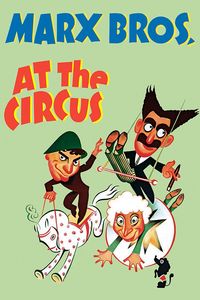
    At the Circus (1939)

    (On Cable TV, January 2020) In the grand arc of the Marx Brothers’ career, their move from Paramount to other studios is often seen as a hinging point—the Paramount pictures were anarchic, reflective of their vaudeville career and are still acknowledged as comedy classics, whereas the longer they worked outside Paramount, the more they became disciplined, comfortable with the medium of film and… duller. (Exception made of their first two movies with MGM, A Night at the Opera and A Day at the Races, combining the best of both approaches.) At the Circus finds them four films removed from Paramount and clearly comfortable with the newer approach. Once again, we have the “at the” film title structure; we have Harpo harping (very well indeed), playing piano and miming his way through physical comedy; we have Chico fast-talking and jesting; we have Groucho singing “Lydia the Tattooed Lady,” quipping furiously and scheming to get money from an oblivious character played by Margaret Dumond; and we have a lead romantic couple singing their love while the Marxes wreak comedic havoc on their surroundings. It’s all the same as their other pictures… except that it’s not as funny. A high-flying finale does leave the film on a stronger note, but much of At the Circus plays like a thinner re-thread of the Marx Brothers’ best movies—still funny, sure, but not as much. Fans will like much of the material (I’m quite fond of Groucho turning to the camera at a risqué moment and wondering, “There must be some way of getting that money without getting in trouble with the Hays Office.”) although newcomers to the Marx Brothers would be better served by their other better movies.

  • Alita: Battle Angel (2019)

    Alita: Battle Angel (2019)

    (On Cable TV, January 2020) For longtime Robert Rodríguez fans, it’s been quite a journey watching him go from the threadbare budgets of El Mariachi to the expansive blockbuster filmmaking of a movie like Alita: Battle Angel. In some ways, however, it was the perfect training: throughout his career, Rodríguez has always squeezed the most out of production values to give the impression of much bigger budgets, and it’s that kind of directorial prowess that is essential to Science Fiction spectacles such as this one. Well, that and a focus on sheer entertainment, which Alita keeps intact. Working from a much-delayed James Cameron adaptation (I’ve heard Alita rumours since the late 1990s, and no wonder technology took a while to catch up to the vision), Rodríguez brings his energy, Latin influences and tight editing to the project. The result is a surprisingly good cyberpunk action movie at the top of the technological sophistication scale. Featuring an android girl taking on a corrupt system, this is an action movie with good intelligible sequences and an editing style that keeps viewers involved in the mayhem. The story does feel familiar (the original manga, after all, is now decades old) and indulges itself into making sure that all characters are connected in some way (again, another manga-compression artifact), but it does move its pieces efficiently and leads to what we expect from a science-fiction spectacular. Rosa Salazar does well in the title role, as a heroine taken apart an improbable number of times. Meanwhile, Christoph Waltz and Mahershala Ali don’t exactly slum it in supporting roles. Robo-fetishists will get their money’s worth here, whereas for everyone else there’s Jennifer Connelly in stockings, garters and bustier. While I wasn’t expecting much, I should have trusted Cameron and Rodríguez (not to mention co-writer Laeta Kalogridis): the film is an interesting, sometimes fun, not necessarily mindless SF action movie—the likes of which we don’t often see enough. Despite my anti-sequel stand, I’m actually annoyed that the disappointing box-office results of the film look as if we’re not going to get the sequels so blatantly set up in the film’s conclusion. Hey, maybe if it does well on the home video market…

  • Sidewalks of New York (1931)

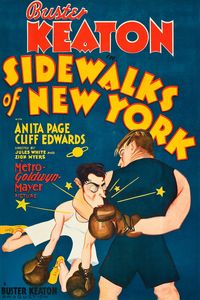
    Sidewalks of New York (1931)

    (On Cable TV, January 2020) History tells us that Sidewalks of New York was Buster Keaton’s most financially successful film, which sounds weird considering that it’s certainly not one that has stood the test of time. At the time, Keaton thought that joining a studio was worth trading off his creative freedom for financial backing and, perhaps more importantly, MGM’s distribution muscle at a time when the industry was quickly transitioning to sound. The film did well, but it would weaken Keaton’s reputation as a comedian along the way. In Sidewalks of New York, we can already see a few strange decisions show up. Playing a rich businessman doesn’t suit the Keaton persona very well, for instance, and the insistence in creating a criminal subplot leads to difficult tonal issues that keep bringing the film farther away from comedy. Still, there are a few interesting things along the way: Keaton’s always a gifted physical comedian, and there are good bits of business with a flower pot, furiously attacking an overcooked turkey, and so on. Plus, there’s the attraction of hearing Keaton speak, which is not the case for many of his best-known films. Sidewalks of New York may not rank as one of Keaton’s finest (even in 1931 alone, I rather prefer Parlor, Bedroom and Bath), but it’s worth a look, especially considering that it’s barely 75 minutes long.

  • Norm of the North (2016)

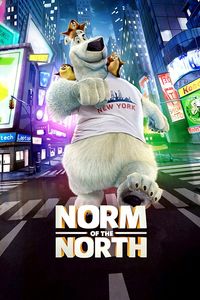
    Norm of the North (2016)

    (In French, Video On-Demand, January 2020) For years, rumours and anguished reports of Norm of the North’s abysmal quality were broadcast to the void. I ignored them, and finally saw what it was about. The rumours are right. Norm of the North, while not entirely unwatchable, is what happens when a film tries to ape everything that worked in other animated movies without having quite the skills, budget, wit or conviction to carry it off. The first problem is visual, and it doesn’t take a long time to realize that this won’t be a top-quality production. But even by the standards of B-grade animation movies, Norm of the North is terrible: the creature designs are grotesque, the animation has little fluidity, the staging is awkward and the set design is both blocky and without texture – director Trevor Wall doesn’t cover himself in glory here. It was released in 2016 but feels as if it’s from 2006. But even if you manage to make your way beyond what is displayed on the screen, the script is perhaps even worse. Characters are introduced and abruptly disappear from the plot, while other characters appear in the third act with nary a bit of foreshadowing. The humour is toilet grade, and usually recycled from much better movies. (The Happy Feet series and Cloudy with a Chance of Meatballs 2 should probably ask for a portion of the gross considering how much they contributed to the plot and character design.) Even things that should work without a hitch, such as using pop songs for montages, are more baffling than effective: the songs instantly date the film and are used without any kind of self-awareness beyond “dance, kids, dance!” Now, to be entirely fair, it is possible to watch Norm of the North and not ask too many questions… but if kids can do this, adults are going to have a much harder time doing so, and that may be Norm of the North’s single biggest failing: being barely palatable to the kids while being near-intolerable to the adults.

  • Le Grand bleu [The Big Blue] (1988)

    Le Grand bleu [The Big Blue] (1988)

    (On TV, January 2020) Early Luc Besson is something very different from what we’d eventually come to expect from the writer-director, and Le Grand Bleu feels more heartfelt than later entries in his filmography. It’s a story about two free divers competing against each other to set a dangerous world record. Jean-Marc Barr is nominally the lead, but most contemporary viewers will focus on Jean Reno’s performance as a brash and competitive diver. Roseanna Arquette is also featured as the love interest of the lead character, although it’s a role dictated by the unabashedly melodramatic script in which death (especially in pursuit of top performance) is seen as something desirable. The film’s visual style is vivid—as per its title, there’s rarely been another movie bathed in so much blue throughout. The ending isn’t meant to be particularly cheerful, although it does play in the film’s juvenile sensibilities. Besson intended to become a marine biologist until an accident in his late teens left him unable to dive again, and it’s this sensibility that makes Le Grand Bleu so interesting—the portrait of divers competing against each other is gripping, and it’s impossible not to notice the care with which the underwater sequences are shot. Compared to later-day Besson, Le Grand Bleu feels more romantic, more restrained, and certainly more personal than the action spectacles for whom he’d later become famous.

  • The Bridges of Madison County (1995)

    The Bridges of Madison County (1995)

    (Video On-Demand, January 2020) As much as I’d like to dismiss The Bridges of Madison County as overcooked romantic pap (and I will–just keep reading), it’s more difficult to do that with the movie than the overwritten, overwrought novel on which it is based. Directed by Clint Eastwood (and upsetting a number of assumptions about Eastwood’s range along the way), this middle-aged romance wisely cuts away much of the characters’ inner dialogue and leaves things to Eastwood’s sparse naturalistic approach. It would have failed without Eastwood and Meryl Streep doing heavy lifting on a mediocre script—indeed, the film gets noticeably worse when the obvious dialogue is handled by the supporting actors. Still, it does get annoying if you’re not part of its intended audience: Easily seen as a wish-fulfillment story in which a handsome worldly stranger comes to town and sweeps a lonely housewife off her feet, The Bridges of Madison County (which I keep misspelling as The Bridges of Madison Square County) strikes a very familiar note, as the female lead must decide between a high-risk new relationship or continuing with her dull husband. (Also see the near-contemporary The Horse Whisperer.) I do have a bit of a moral objection to that kind of plotting, but I haven’t figured out yet whether I’m being overly moralistic à la The End of the Affair in thinking so. Still, it does allow Eastwood to cry (sort of), look dispirited in the rain and for Meryl Streep to use another accent (this time; Italian) for a character that didn’t really need one. There is something a bit cheap and easy and manipulative in the whole thing that leaves me baffled, but then again, I am not the audience for this film. Plus, there’s the added fascination of Eastwood directing a film aimed at a female audience—no matter what, The Bridges of Madison County is always going to stick out in his filmography.

  • Pokémon: Detective Pikachu (2019)

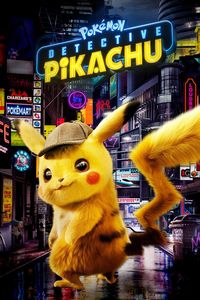
    Pokémon: Detective Pikachu (2019)

    (Cable TV, January 2020) I don’t have much direct experience with Pokémon (I was clearly too old to respond to the craze when it first hit North America in the late 1990s), and that places me in a strange position in trying to evaluate Pokémon: Detective Pikachu. On the one hand, I clearly don’t have enough knowledge to evaluate how well the film reuses the series’ mythology on the big screen. On the other hand, I had quite a good time immersing myself in the imagined world portrayed here in which humans co-exist with fantastic creatures. Showcasing a Science Fiction noir atmosphere is another surefire way to get my interest. The plot itself is very familiar and toned down somewhat to address a younger audience, but fortunately, there’s more than the plot to take in. Namely, we have Ryan Reynolds providing colour commentary as Pikachu, coming closest (as many others have said) to reprising Deadpool for the PG set. Reynold’s irreverent patter does a lot to elevate Detective Pikachu from the usual doldrums of contemporary fantasy movies for kids—the sass and reaction lines are often genuinely funny and add a lot to the result. Once you throw in the numerous special effects that manage to create the reality of the film’s world (and throw in a vertiginous forest-set action sequence), the result is a bit better than expected and more distinctive than many others. Director Rob Letterman keeps a lot of things going and the result is simply fun for the entire family. I’m glad I got my first full-sized introduction to the franchise through Pokémon: Detective Pikachu. By the time the sequel rolls in, I expect my daughter to have schooled me in the finer aspects of the mythology.

  • The Flintstones (1994)

    The Flintstones (1994)

    (Second Viewing, In French, On TV, January 2020) I remember seeing The Flintstones in theatres upon release… in its original English version. The distinction is important because the French-Canadian dub of The Flintstones’ TV series achieved near-legendary status due to its refusal to adopt even the semblance of a mid-Atlantic French accent—it’s pure Québec joual, meaning that generations of French-Canadian kids felt that the series somehow came from not too far away. (Twenty years later, The Simpsons did the same trick.) I was reminded of that distinction all over again while stumbling over a French-Canadian broadcast of The Flintstones movie—I generally prefer to watch films in their original language, but this was almost a welcome exception, as the characters speak with a pronounced Montréal-area accent. Sound aside, there is something magnificent about The Flintstones’s late-analogue-era dedication to recreating the funhouse visual representation of Bedrock. Nearly every single frame of the film is strongly art-directed with custom sets, costumes and gadgets. There is some clunky CGI used here for some of the supporting animal characters (including a surprisingly fluffy big cat), but much of The Flintstones heroically does its best with painted foam and practical effects. The commitment to the visual humour of the original series is admirable, and it almost compensates for a fairly dull family-sitcom story and the outdated social conventions taken straight from the early-1960s TV show. The portrait of the nuclear family that was straight parody in 1960 felt creaky in 1994 and now looks increasingly dumb… but that’s what you get. At least, from an acting talent, John Goodman is picture-perfect as Fred Flintstone. The rest of the casting is… debatable. Halle Berry (as “Sharon Stone”) is a delight to watch but she seems to belong in a different, racier movie. Elizabeth Taylor seems just as misplaced as a prototypical mother-in-law, although she’s good for a few laughs. Elizabeth Perkins is fine as Wilma, Rick Moranis is borderline acceptable as Barney but Rosie O’Donnell continues to mystify new generations of movie reviewers when miscast as Betty. The Flintstones is nowhere near being a good movie, but I can practically guarantee that a twenty-first-century watch (especially for new viewers who have no idea about the original TV show) will be a can’t-stop-looking experience.

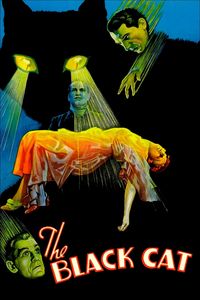
  • The Black Cat (1934)

    The Black Cat (1934)

    (On Cable TV, January 2020) I wish I had a bit more to say about The Black Cat, the first movie that managed to get Béla Lugosi and Boris Karloff as antagonists. It starts as a sympathetic and rather dull film, as newlyweds take a train to eastern Europe—where, as all classic horror movie watchers know, only bad things happen. Out of nowhere, a mysterious man (Lugosi) joins them and says that he’s off to see an old friend. Nobody will be surprised to see that Karloff plays the old friend in question, or that the two men are locked in a mortal struggle. When the couple is forced to stay at the old friend’s home, well, all the bets are off. To be fair, The Black Cat does a lot of mileage on subtlety. As a classic-era horror sound film from Universal, it doesn’t enjoy the notoriety that its contemporaries do—the lack of a distinctively supernatural (and iconic) monster certainly doesn’t help. But, much like the near-contemporary The Phantom of the Opera, it may hold a few more surprises in store than the deeply familiar takes on Frankenstein and Dracula. At the very least, it’s a remarkably short movie (barely 69 minutes), and it’s heavier on atmosphere than one would expect. Perhaps a bit too esoteric for the average moviegoer, The Black Cat is nonetheless an interesting surprise for classic horror movie buffs.

  • Sisters (1972)

    Sisters (1972)

    (On Cable TV, January 2020) The amazing thing about digging deep enough in writer-director Brian de Palma’s filmography to watch Sisters is how much it announces elements of his later career. This is pure uncut de Palms with split screens (justified!), a narratively unusual first act not featuring the protagonist, a shocking first-act twist, mysterious identities, hypnotism and other deviations from pure objective reality. You can map a lot of Sisters’ plot elements to later de Palma movies, starting with its niche as a psychological thriller in which anything not explicitly supernatural can happen no matter how unlikely it can be. (Once you throw hypnotism in a psychological thriller, it’s a clear marker that you shouldn’t expect the rest of the film to make sense.) I was amused to find Margot Kidder playing a French-Canadian character, although Jennifer Salt ends up being the main character once the first act is sorted out. The visual complexity of the film (notably in its use of split screens to see the same thing from opposite perspectives, or the copious amount of audiovisual exposition, or the changing film stocks and techniques) is more contemporary than many films of its era. Sisters doesn’t end particularly well, which limits its appeal and certainly brands it as being from the early-1970s, but it’s fascinating in its own way as an early de Palma work.

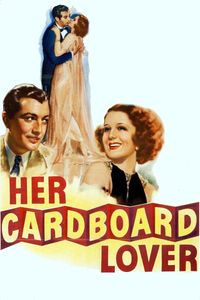
  • Her Cardboard Lover (1942)

    Her Cardboard Lover (1942)

    (On Cable TV, January 2020) Once you’re deep into classic Hollywood movies, you start picking movies for their stars and directors rather than their plot or historical importance. That’s how I ended up watching Her Cardboard Lover, a somewhat forgotten George Cukor film that nonetheless features the ever-cute Norma Shearer playing off George Sanders (in a typically antagonistic role) to the rather likable Robert Taylor. The plot of the film isn’t much to talk about—it’s the old-fashioned formula of one woman using a man to make another jealous. But it’s handled with enough whimsy to make it fun despite the familiarity. Some surprisingly enjoyable dialogue and repartee, especially between Shearer and Taylor, do keep things entertaining during the entire film. The two male leads even get into a very funny fight scene, which is somewhat atypical for the reserved Sanders. We can quibble about the lead female character’s flightiness and her overall romantic suitability when she’s happy to pit two men against each other, but Her Cardboard Special remains a romantic comedy that wraps up nicely—nothing special, but highly enjoyable.

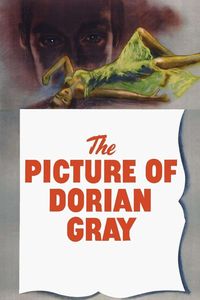
  • The Picture of Dorian Gray (1945)

    The Picture of Dorian Gray (1945)

    (On Cable TV, January 2020) Few things are timeless, but Oscar Wilde’s witty, acerbic dialogue comes close to standing out of time. While all of his bibliography is impressive, The Picture of Dorian Gray still stands among his best-known work given a narrative genre hook that literalizes a metaphor of universal currency. The idea of a portrait that ages while its subject doesn’t is well suited to the medium of film, where screen characters never age even though their actors do. This reflective funhouse mirror is enough to power this 1945 adaptation, which benefits from George Sanders’ snide skills in delivering some of Wilde’s best lines. The story may be familiar, but the execution is rather good. Writer-director Albert Lewin cleverly lets the story play out, but throws in a few shocks by portraying Dorian’s portrait in colour in the middle of a black-and-white film. (The film won an Oscar for cinematography) Wilde’s dialogue is quite good, with enough one-liners here and there to keep everyone happy—it’s a film worth listening to at least once. A very young Angela Lansbury shows up repeatedly crooning “Yellow Little Bird” (charming the first time, a bit annoying the third time). The inclusion of a supernatural explanation is not entirely satisfying, but the rest of The Picture of Dorian Gray happily shrugs off that issue.