Month: January 2020

  • Quality Street (1937)

    Quality Street (1937)

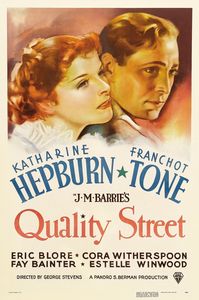
    (On Cable TV, January 2020) One may admire Katharine Hepburn for the incredible longevity of her career, or the steely matrons she played in the latter half of her career, but there’s a place for her cute ingenue roles as well, and that’s what Quality Street delivers in spades. Finding some originality in romantic comedy tropes, the film has Hepburn as a 19th-century-England romantic lead pining for her beau to propose… only to be made speechless when he announces that he’s leaving for the Napoleonic Wars. Ten years pass until his return, at which point she ends up creating a charade posing as her own (fictional) niece for reasons that worked better at a time when unmarried 30-year-old were considered old maids. Many misunderstandings occur until they both get tired of the fiction and take action to get rid of the nonexistent niece in order to keep up appearances. There’s not a whole lot more to the film, but there’s a restrained sense of humour to it all that makes it almost credible despite the ludicrousness of the identity plot. As a costume drama, it hits the necessary high notes with great sets and costumes. While it certainly doesn’t qualify as a great Hepburn film (there’s little here of her famous persona), and she’s not exactly credible as an innocent niece, the film is only 82 minutes long, and it does help round off a career that spanned sixty years. There are better examples of young-Hepburn roles, for sure, but it’s not a bad thing to have a few more of those around.

  • Carol for another Christmas (1964)

    Carol for another Christmas (1964)

    (On Cable TV, January 2020) Calling Carol for another Christmas preachy is not being insulting: it’s being descriptive, and—considering its intentions—even complimentary. It comes to us modern viewers through a fascinating process: Originally produced for television as a Christmastime special, it was the first of a series of TV movies produced by the United Nations to promote the organization’s ideals. As such, it reuses the premise of Charles Dicken’s A Christmas Carol in order to teach its protagonist a lesson. But instead of having Scrooge learn about human kindness in his life, here we have a foreign affairs isolationist learning about the values of dialogue and diplomacy. The ghost of Christmas Past ferries the bodies of dead soldiers and reminds the protagonist to his past visit to Hiroshima. The Ghost of Christmas Present comments on the developed world’s ability to gorge itself while ignoring the hungry and the needy staring at them. Finally, the Ghost of Christmas Future takes us to a post-apocalyptic American town where a demented demagogue (played with relish by Peter Sellers) recites the lead character’s philosophy and remonstrates its idiocy ad absurdum. This last segment gets surprisingly dark (in keeping with the rest of the film, really), and the epilogue isn’t much of a comfort. The preachiness extends to characters spouting statistics and indulging in heated logical combat, as per a rather clever script from Rod Serling. With Joseph L. Mankiewicz at the helm, the film is far better-directed than you’d expect from a 1960s TV movie, further adding to its appeal. Reviews at the time of Carol for another Christmas’ broadcast were sharply divided, with even those who agreed with the message being annoyed at its didactic nature. Then the film disappeared from public view for nearly five decades, until TCM dredged it back up in 2012 for its Christmas special and infrequent broadcasts since then. From a modern perspective, the didactic insistence and preachiness have transmuted into something far more interesting—a time capsule from the cold war that still rings true today, bolstering its message to a degree that 1964 audiences couldn’t guess at. It’s also a fascinating repurposing of the Dickens classic for a purpose that can be re-watched any month of the year, and a collection in intriguing performances from some known actors. (Eva Marie Saint shows up as a WAVE in a short but effective role.) I found it particularly fascinating as part of a look at Peter Sellers’ work, especially with Britt Eckland in a small role. It’s also notable that the film is preachy without being sappy, a partial inversion of the usual takes on the Dickens classic. No matter how you size it, Carol for Another Christmas is a fascinating piece from the archives, and it’s worth a look once, even if it probably won’t make your list of Christmas classics.

  • Jezebel (1938)

    Jezebel (1938)

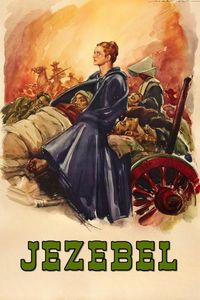
    (On Cable TV, January 2020) It took me a while to get interested in Jezebel—the film does itself no favour with an extended setup that doesn’t get to the topic at hand. Still, it does have Bette Davis as a manipulative Louisiana belle and Peter Fonda as her fiancé… until he has enough of her antics and storms away back to the northeast. There should everyone remain, except for the Yellow Fever to strike 1852 New Orleans, bringing Fonda’s character back into her life and giving her one last chance at redemption. The recreation of New Orleans is sumptuous enough within the limits of 1930s filmmaking, and the portrait of a time when duels were seen as perfectly acceptable is alien enough. By the end of the film, however, it all clicks together even if it ends on a strikingly inconclusive note. There is at the very least Davis (who’s always at her best when she’s playing morally ambiguous characters) and Fonda, as stalwart as ever. Costumes and sets are fine enough to send us back in time, and that’s about the best that the film could aim for.  I do wish Jezebel’s first half had been more gripping—I had to start the film three times before getting into it. But now that I’ve seen it, I’m happy I did.

  • Wo de wai xing nu you [My Alien Girlfriend] (2017)

    Wo de wai xing nu you [My Alien Girlfriend] (2017)

    (On TV, January 2020) With a title like My Alien Girlfriend, one shouldn’t expect a finely tuned exploration of love across species as much as a silly romantic comedy, albeit with a shape-shifting love interest. The premise, as bluntly stated as it can be through an animated sequence, has an alien presence visiting Earth and looking for love, but being forced to take over different bodies every three days. In walks our protagonist, a lonely young man working as a veterinarian. Through an unconvincing plot device having to do with a thrown glass of water and no one noticing a piece of jewelry going into the water, our young man is pursued by our shape-changing alien. The comic premise is rich, and by the time our likable alien takes over the bodies of an older woman, a young girl or the protagonist’s best friend, My Alien Girlfriend makes the most out of it. (I was a bit surprised to see the film acknowledge homosexuality, albeit never without a punchline.) Of course, romance isn’t quite enough for the screenwriter—there has to be a mad scientist chasing down the alien with armed goons in order to make it more suspenseful. It concludes on a semi-optimistic note, although I still can’t see how they’re going to make it work. The filmmaking here from director Ding Yajun is unobtrusive and the plot thread is broad enough to be accessible. The standout performance here is from Yuen Qiu (best known to western audiences as the landlady from Kung-Fu Hustle) as the veterinarian clinic’s owner, not shy about her feelings for the protagonist. My Alien Girlfriend all makes for a nice comedy with just enough Science Fiction elements to justify its fantasy. It should be better known in the west—I can’t even find a listing for it on IMDB. [March 2025: One has been added in the past five years, but it’s still barebones]

  • Xanadu (1980)

    Xanadu (1980)

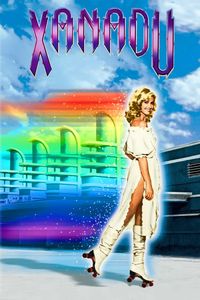
    (On TV, January 2020) There is an infamous place in movie history for Xanadu, often disregarded as one of the worst musicals of all time. That’s an exaggeration, but there’s no denying that Xanadu remains a strikingly weird experience to undergo. Updating a 1940s film plot to the disco era, this is an attempt to make a musical focused on roller-skates, disco and pinball machines. It stars no less an unlikely couple as Olivia Newton-John and legend Gene Kelly in his last feature-film role. (They do share a scene and a few dance moves.) The plot is near-incomprehensible for reasons best explained by a chaotic production process that left dangling a few narrative threads of earlier script drafts. The result is immediately recognizable at being from 1980 (plus or minus two years), far more dated than the earlier musicals that inspired it. The staging isn’t particularly inspired, but the music—wow, the music! Olivia Newton-John and her signature disco sound don’t do much for me, but the other half of the soundtrack is from Jeff Lynne’s Electric Light Orchestra, and those remain timeless songs. (Indeed, at least three of them made for the movie have gone on to become minor ELO hits.) There is something this close to delirium watching Gene Kelly in circa-1980 montages, trying out clothing and being subject to the blunt optical effects of the era. The film was cutting edge then and is now highly stylized in its use of disco visual references. Up to a certain level, Xanadu escapes mere considerations of being good or bad—it’s an experience, and I can now proudly say that I have seen it.

  • Porky’s Revenge (1985)

    Porky’s Revenge (1985)

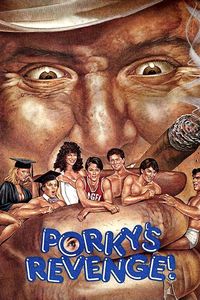
    (In French, On Cable TV, January 2020) After a detour in socially redeemable comedy in the second film, the Porky’s series goes back to its raunchy sex-comedy roots in Porky’s Revenge. Porky himself is back, and so are the generally plotless sex pranks that make up the bulk of the first film. Clearly an attempt to right the course of the series after the somewhat off-brand second volume, Porky’s Revenge is nonetheless dumber for the attempt. Once again, the two most notable actors are Dan Monahan, playing series humiliation target “Peewee,” and Kaki Hunter as the sole female member of the main group. Much of the hijinks are instantly forgettable—there’s nudity, but not that many laughs. This being said, the decapitation of Porky’s casino boat by a bridge at the climax does offer a spectacular bit of physical comedy. It doesn’t quite redeem Porky’s Revenge, although it’s roughly of the same atmosphere and quality than the original, which is what sequels usually aim for.

  • A.I. Rising (2018)

    A.I. Rising (2018)

    (On Cable TV, January 2020) As A.I. Rising begins and you’re settling down for a generic low-budget Science Fiction movie, the first few minutes suggest quite a different path, as a brooding man is sent on a long starship voyage to Alpha Centauri and is offered a female android companion to take care of his needs along the way. Faster than you can say, “Hey, this feels like the setup for a softcore pornographic movie,” in walks in… ex-adult film star Stoya, ready to shed clothes at the drop of a plot point. Which she does, as the film ruminates at length on notions of sentience, consent and the nature of heterosexual relationships in-between tastefully shot sex sequences. A.I. Rising far too dour and meditative to be arousing, but it’s certainly far more explicit than you’d expect from even a cable TV SF movie playing at 9 PM. Alas, while it would have been more fun as a sex romp, it’s far more interested in what it has to say about sex and relationships. Of course, this takes us in tricky territory. It’s all too easy for the screenwriter to have somewhat unusual ideas on the nature of those relationships, and to be overly glum about it all. If you’re expecting a happy ending, then you haven’t been paying attention to the constant grumblings about control and struggle. It doesn’t help that the film is more interested in pessimistic mumblings than scientific verisimilitude, and that its dialogue doesn’t quite flow. There are plenty of technical details that don’t make sense (including a tomb-like ship with far more space than required for even a lone human and his android/control.), and I suppose that there is a language fluency challenge at play given that the film comes from Serbia. (I also have issues with the supposed intelligence of the protagonist, who doesn’t seem to figure out even the most basic parameters of his situation.) Fortunately, A.I. Rising does become less explicit and more interesting in its latter half, as the protagonist gets the autonomous partner that he wants and every complication that comes with it. The film finally takes the time required to better develop its thesis about relationships and becomes better for it. Stoya’s skills as an actress are also more noticeable during that last half, as she doesn’t have to act as an android any more. It all leads to a surprisingly sweet and romantic ending somewhat at odds with the rest of the film, but welcome nonetheless. There are far too many rough edges and suspicious tangents to A.I. Rising to make it particularly good and the film does itself no favour by going for self-conscious pretentiousness, but it still ends up being a more provocative film than most of the other low-budget four-actor Science Fiction movies floating abound Cable TV channels. I would be careful in recommending it to anyone, but robo-fetishists who enjoyed Ex Machina will find that it develops many similar ideas—more roughly, but still meaningfully.

  • Porky’s II: The Next Day (1983)

    Porky’s II: The Next Day (1983)

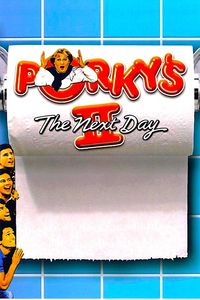
    (In French, On Cable TV, January 2020) Considering that the original Porky’s is one of the best-known sex comedies of the early 1980s (a somewhat amusing Canadian contribution to movie history, and the second of director Bob Clark’s three main claims to fame in-between launching the slasher genre with Black Christmas and directing the very different A Christmas Story), it makes sense that sequel Porky’s II would begin the very next day, with the gang of friends still teasing “Peewee” about his sex life. Much of the first half of the film is in more or less the same vein of sex humiliation comedy, with plenty of nudity and compromising positions. But as the movie advances, the early scenes featuring the characters playing in Shakespeare’s plays (!) lead to the development of a more ambitious plot taking aim at the local preachers and politicians, all revealed to be hypocritical racists with a side order of lusting after underage girls. The amount of nudity also goes down as the film advances, to the point of a third act that is gross and vulgar (with series MVP Kaki Hunter delivering an extended takedown of a sleazy politician in a very public place) but plays nudity for laughs rather than titillation. The mixture between taking aim at racists and hypocrites doesn’t entirely blend very well with the sex farce of the series, but it does make Porky’s II: The Next Day more interesting for any 1980s completists watching the series.

  • Blown Away (1994)

    Blown Away (1994)

    (Second Viewing, In French, On TV, January 2020) Back in 1994, there were many comparisons made between Speed and Blown Away, most of them to the second film’s disadvantage. The pairing wasn’t arbitrary: here were, after all, a pair of movies talking about a mad bomber targeting protagonists in picturesque American cities. Most reviewers felt that Speed fully indulged in the craziness of its premise, while Blown Away was too dour and, crucially, disarmed its bombs when, in the words of Speed’s script, “A bomb is made to explode. That’s its meaning. Its purpose. Your life is empty because you spend it trying to stop the bomb from becoming.” Having seen both at the time (Blown Away at a drive-in theatre, if I remember correctly), I definitely agreed: Blow Away was too dull, too serious about itself, especially in comparison to Speed, which remains one of the all-time greatest action movies. A second take on Blown Away twenty-five years later is more generous, but not by much: Absent unfair comparisons with Speed, Blown Away is a good-enough thriller—conventional but with a few good moments, although with too many odd missteps along the way to be fully satisfying. Jeff Bridges does well as the protagonist, although the film’s troubles start at the opening scene as it mines the murky fractious nature of the Irish Troubles for backstory and uncomfortable character motivations. (He does get a few scenes playing opposite his father Lloyd Bridges.) Tommy Lee Jones is far more enjoyable hamming it up as a crazy villain, although it’s worth noting that his character’s various eccentricities run dramatically at odds with the more serious tone of the rest of the film. This issue pops up again and again throughout Blown Away: A crazy idea creating tone problems when placed against the darker underpinning of the story. It tries to be both a hard-edged thriller but can’t resist the pull of an overblown action scene or funny moment. Forest Whitaker hangs at the edge of the plot as another bomb specialist with personal animosities with the lead—he’s an unconventional choice for the role, but the adversarial relationship between the two characters works well. Finally, Boston plays the fourth-biggest role in Blown Away, as the script gives up a highlight tour of some of the city’s tourist attractions. As someone who has visited Boston more often than any other American city (perhaps even combined) since the mid-1990s, I really enjoyed seeing big action sequences set in places I’ve seen a few times—with a particular affection for the explosive Trinity Church sequence. Blown Away does exemplify a kind of thriller that we frequently saw in the 1990s and less since then—it’s pretty much the same exact “killer psycho fixates on protagonist, kills his friends and colleagues, etc.” plot although with bombs. Still, it doesn’t quite understand how to have a consistent tone and exploit the elements it has at its disposal. A common critique of 1994 remains just as valid today and tells much: Here is a film with a climax in which an orchestra plays the 1812 overture… and it doesn’t even bother synchronizing the music with the climactic explosion.
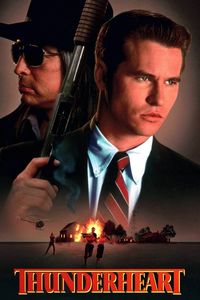
  • Thunderheart (1992)

    Thunderheart (1992)

    (In French, On Cable TV, January 2020) On the one hand, there’s something admirable in seeing Thunderheart tackle the deplorable state of native reserves in the United States by setting a murder mystery within its borders. Our way into this setting is done through the dispatch of an FBI agent of mixed ethnicity (Val Kilmer, who is also of mixed ethnicity) but no cultural affiliation to native causes. As he gradually investigates the murder, he also gains an appreciation for his own origins. Standard Hollywood character development, but handled well, especially within the context of an unvarnished depiction of reserve living in the early 1990s—not that things have changed very much since then. Director Michael Apted makes effective use of helicopter-mounted cameras to give a good sense of space, action and the neighbouring landscapes—an essential when setting a film in the Badlands. While Kilmer ably headlines, the highlight here is once again Graham Greene as a local agent. Still, this could have been a better film: Thunderheart remains very much the story of a non-native protagonist exploring “the other,” and not a story told from within the native community. As revelatory as it could be in the early 1990s, it does feel limited today at a time when movies increasingly reflect diverse voices from their own perspectives. I liked it, but I can see how we’ve gone a bit beyond that.

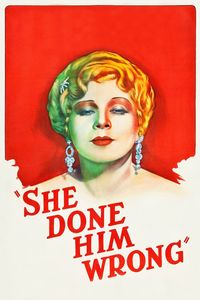
  • She Done Him Wrong (1933)

    She Done Him Wrong (1933)

    (On Cable TV, January 2020) There are many things that are simply wrong about She Done Him Wrong if you take a look at it from a conventional perspective. The script’s pacing is lopsided, with nearly nothing happening for a while, only for the movie to rush through murders and revelations in its last third. In many ways, this 69-minute-long film feels like the first two acts of a longer movie, as it spends so much time setting up a situation that is quickly defused without going further in plotting. Even worse is how the lead character has all the spotlights (narrative and literal) aimed at her—prior to her entrance, characters keep talking about how wonderful she is, her entrance practically comes with a fanfare, and she spends the rest of the film cutting down other characters with withering bon mots followed by a repetitive moue. In other hands, this would have been a laughably bad movie, forgotten in the fog of time. But here’s the thing: This isn’t just any lead actress—this is Mae West, and she wrote much of the script, adapting her own theatrical showpiece. She Done Him Wrong was deliberately planned to be a celebration of her sex appeal, and sold as such: everyone involved in this film in 1933, filmmakers and audience alike, knew what they were there for. As legend has it, they may have gone too far: She Done Him Wrong was a key justification for the enforcement of the Hays Code that would emotionally stunt American cinema for decades and clamp down hard on the kind of sexually liberated character that was Mae West’s stock-in-trade. West herself is an interesting case study in sex appeal: While her appearance is nothing special, things are different when considering her attitude and quips, several of whom would still have HR departments apoplectic if used in a corporate setting. The film is built around her (yes, Cary Grant plays the hero here—but let’s not pretend that the film is about him) and still acts effectively as a primer for contemporary audiences as to what Mae West was all about. She Done Him Wrong is far more interesting as a monument than a movie… even though you may have to power through much of the film’s weaker moments to get to its finest ones.

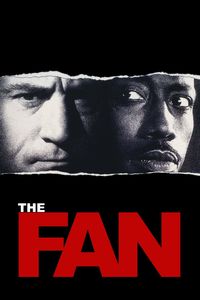
  • The Fan (1996)

    The Fan (1996)

    (In French, On Cable TV, January 2020) I’ve written elsewhere about the spate of good mid-1990s thrillers, but there were a lot of not-so-good ones too, and The Fan definitely qualifies as one of those, although not necessarily a bad one. Considering that the film features Robert de Niro, Wesley Snipes, a young Benicio del Toro and a non-annoying early turn from John Leguizamo, this may be more a case of inflated expectations than anything else. Still, the troubles start at the script level, which chooses to follow a deranged San Francisco sports fan as he begins stalking a baseball star, then violently murdering perceived opponents. While mid-1990s audiences may have found this implausible (well, maybe not), the age of social media has uncovered plenty of deranged fans with weapon fetishes and difficult personal relationships who turn to violence for affirmation—it’s a pathetic choice for a viewpoint character, and the execution does nothing to make it any more interesting. To see de Niro in the lead role is a waste of talent when his usual screen persona by the mid-1990s was closer to mob boss than crazy cuckoo à la Taxi Driver. Coming from director Tony Scott, it’s no surprise if The Fan’s execution is bombastic, filled with dated music video stylistic tics and an aggressive rock soundtrack. The ending doesn’t manage to elevate the material, and leaves viewers with an undiluted sour and unpleasant feeling.

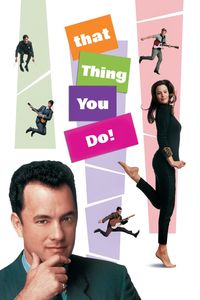
  • That Thing You Do! (1996)

    That Thing You Do! (1996)

    (On TV, January 2020) I have a surprisingly soft spot for band movies—basically, anything having to do with the rise and fall of music groups. The Commitments ranks high on my list of favourite films, I unaccountably liked Bohemian Rhapsody despite knowing better and no amount of familiarity will keep me away from musical biopics. With his directorial debut That Thing You Do!, Tom Hanks goes straight for comforting familiarity in charting the unlikely path of a one-hit wonder musical band (called, knowingly enough, “The One-ders”) during the mid-1960s. The period recreation is solid, and so is the formula followed by the film: As our teenage protagonists are plucked from obscurity by a catchy up-tempo take on their song, we’re also driven across America from Pennsylvania to California. The screenwriting is deceptively straightforward, going right to the heart of the formula and never letting go. The performances are just as good as they need to be, with Tom Hanks hovering in the background as a record executive, Liv Tyler in a likable supporting role, and a longer list of cameos than is worth listing here. Musically, it helps a lot that That Thing You Do! can depend on actors with the ability to convincingly play instruments, and sports an insanely catchy tune. (In one of the film’s best touches, this one-hit wonder band almost always plays that one hit, meaning that the audience gets tired of it within the span of the film just as the audiences do in the film’s reality.) There are plenty of references here to mid-1960s pop culture—I caught some of the obvious movie-related ones, such as the wink to the “beach party” series, but there’s a lot more for those who know the period. This captivating historical recreation more than supports the rest of the film and the result is a solid hit for Hanks-the-Director, and a highly enjoyable film in its own right.

  • Grumpy Old Men (1993)

    Grumpy Old Men (1993)

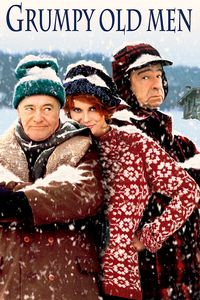
    (In French, On Cable TV, January 2020) As its stars age past retirement, Hollywood also developed its subgenre of victory-lap movies—one last chance for actors with recognizable screen persona to strut their stuff once more, and run on memories of past performances. Grumpy Old Men is a classic example of the form: It once again features Jack Lemmon and Walter Matthau as a bickering pair of lifelong elderly friends in wintry Minnesota, with none other than Ann-Margret looking amazing as the middle-aged temptress driving a further wedge between them. (It’s acceptable to have mixed feelings about this trio—While it’s rare and welcome to have a female romantic interest older than 30, there was still a 16-to-21 years difference between Ann-Margret—aged 52 at the time of the film’s release—and the Matthau/Lemmon duo—aged 73 and 68 at the film’s release.) Still, the point of the film isn’t to add thirty years to the usual Hollywood age difference, but to allow Lemmon and Matthau one more chance (which ended up being four more chances) to bicker on-screen decades after The Odd Couple. Anyone watching the film for the marquee names certainly knows what they’ll get: biting repartee and petty pranks are what keep those two characters bonded, and it’s not a September-November romance that’s going to get between them. It’s a romantic comedy, after all, and it even has a B-couple made up of the protagonist’s children. (Ann-Margret looks better than Darryl Hannah, but it’s a close thing.) There’s an adequate mixture of jokes, romance, jokes about romance and a bit of heart-driven drama toward the end to put everything in perspective. The ending fake-out won’t fool anyone. In those movies, the biggest measure of success isn’t about the plotting complexity or the quality of the filmmaking but whether the stars got a chance to remind audiences of what made them famous. On that criterion, Grumpy Old Men achieves its objective: Ann-Margret looks fantastic with red hair (at least this time nobody thinks it’s a natural red), Matthau is grumpy, Lemmon is funny and anyone even remotely familiar with 1960s cinema has also been driven once more around the lap.

  • Ilsa: She Wolf of the SS (1975)

    Ilsa: She Wolf of the SS (1975)

    (In French, On Cable TV, January 2020) Sigh. I suppose that I knew what I was going to get. Ilsa: She Wolf of the SS is infamous for having popularized the baffling Nazi Exploitation subgenre combining gore and nudity. Sadly, it’s a Canadian film and it spawned three sequels (the first of which I saw before the original, further establishing what I was going to see) and remains a standard reference for trash cinema buffs. Much like the wider torture-porn horror genre, I have a hard time understanding the appeal of such movies, and Ilsa: She Wolf of the SS remains its exemplar. The first thirty seconds are not bad, as we’re shown a buxom blonde (series protagonist Dyanne Thorne) having sex and then taking a shower. So far so good… but then the coercion becomes apparent (she’s the warden of a concentration/prison camp; he’s a prisoner) and then the film moves on to castration… The rest of the film is an unrelenting ordeal of nudity, gore, sexual abuse and torture. The Nazi camp setting becomes a plot permission to portray terrible atrocities, and seldom has so much nudity been so less arousing. By the first ten minutes, you will be contemplating existential questions such as: Why does this film exist? Who in their right mind would make this or watch this? What am I doing? In a charitable mood and with the ever-worse example of Ilsa, Harem Keeper of the Oil Sheiks in mind, I will recognize exactly three qualities to the movie: 1. Ilsa is a terrific character in her depravity and while the film is difficult to watch as it is, it would have been unbearable had that character been played by a man, which leads me to: 2. There is an unnerving sense of masculine fear running through the movie (which starts with castration) that, while common to exploitation movies and subservient to thrilling its audience, is still interesting to contemplate (the sequel would remove some of that female agency) even though: 3. There is an actual plot here and an all-out final rebellion that restores some sense of order to things (the sequel would have far fewer excuses and a more perfunctory ending.). But none of those actually make Ilsa: She Wolf of the SS worth a look except for strong-stomached film historians—it’s certainly not arousing, fun, thought-provoking, uplifting or any adjective we associate with worthwhile cinema.