Month: February 2020

  • Scarlett Street (1945)

    Scarlett Street (1945)

    (On Cable TV, February 2020) I do like Scarlett Street quite a bit, but I have a feeling I would have liked it even more if I had seen it not so shortly after 1944’s The Woman in the Window, of which it’s practically a remake with the same director, stars and themes. Here too, Edward G. Robinson plays a middle-aged man whose artistic impulses lead him to meet a dangerous woman (again; Joan Bennett) who asks him for a murderous favour that eventually takes everything from him. But if you’re not aware of The Woman in the Window, then Scarlett Street does play a bit better. It’s a steady slide from one slightly greedy action to a worse one, and things just keep escalating for our poor protagonist, who thought he could just indulge himself without anyone knowing. The hand of fate weighs heavily, and director Fritz Lang films it all in shadowy style. One thing that Scarlett Street does better than its predecessor, however, is not blink at the last moment—in true noir fashion, there’s no waking up from the nightmare that comes from corruption. You’d be hard-pressed to find many better early noirs, and both Robinson and Bennett are used to great effect here. I’m nearly sure that seeing this again in a few years, without first watching its predecessor, will make it even more effective.
  • Lili (1953)

    Lili (1953)

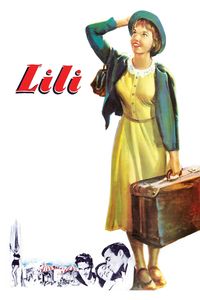
    (On Cable TV, February 2020) The comparison points between Lili and other hit movies of previous years underline that this was a follow-up film trying to capitalize on many of the same crowd-pleasing elements without quite having what it takes to pull it off. Itemizing the obvious similarities: MGM musical, picturesque French setting, Leslie Caron in the lead, and a big fantasy ballet number in the last third of the film. Yup; some studio executives saw Gigi or An American in Paris and thought they could do more of the same. It’s hard to fault their thinking—Lili did good business and was nominated for a surprising number of Academy Awards. Let’s remember that this was at a time when MGM could not do wrong. Unfortunately, it hasn’t aged so well: Mel Ferrer is good, but no substitute as a singer/dancer for someone like Gene Kelly, and Caron can’t quite sustain the entire weight of the film on her shoulders. Worse yet is the feeling that this is a rethread, a very deliberate attempt to capture past glory. The puppet motif seems a bit too self-satisfied, and the musical aspect of the film is underwhelming—there aren’t many songs, and they’re not particularly catchy. From a twenty-first century perspective, the idea of a thirtysomething man puppeteering a suicidal sixteen-year-old character into a relationship is far creepier than the puppets themselves. Even if Lili is not bad per se (it even features Zsa Zsa Gabor, if that’s your thing), it’s only worth a shrug when placed alongside the other musicals that inspired it.

  • Flying Down to Rio (1933)

    Flying Down to Rio (1933)

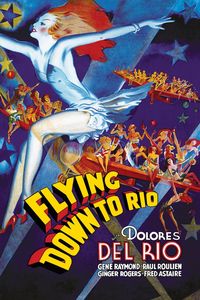
    (On Cable TV, February 2020) Everyone’s got to start somewhere, but for any viewer since 1934 it’s still a bit strange to see Fred Astaire in a supporting role in his first feature film Flying Down to Rio. It wasn’t his first feature film, but only by a technicality: A month earlier, Astaire showed up on screens for a single scene (playing himself) in Dancing Lady. Considering that there wasn’t anything to play in the earlier film, you can consider his supporting character role in Flying Down to Rio to be his first movie role as an actor—and more significantly, the first of his legendary pairings with Ginger Rogers. Any Astaire fan can clearly see that Hollywood didn’t know what to do with him yet—being relegated to a romantic subplot is something, but the way the camera captures his dancing (full frame but not full body, often obscured by others and relegated to the background, clearly not commanding the screen like he would in later films) is somewhat atypical for him. Still, Flying Down to Rio’s breezy fun still makes up for the less-than-reverent place given to Astaire: as a slightly naughty Pre-Code musical comedy that can escape to the exotic atmosphere of Rio de Janeiro, the film often feels significantly more risqué than the rest of Astaire’s career—the “Just a Gigolo” number is amusing, and his later films would most definitely not feature a dark-haired beauty lead actress in a two-piece bikini. One more thing distinguishes this early effort from Astaire’s later romantic-cad persona—his character shows up as a fiancé rather than going through the persistent-suitor routine… and I count this as an improvement of sorts. Aside from Astaire, Flying Down to Rio has a few other assets: the lead couple’s romantic adventures are entertaining, lead actress Dolores Del Rio is underused, Etta Moren is lovely as “the colored singer” (this is a direct quote from the credits) and the film ends on a very high note with an early special-effects showcase featuring a line of dancers on planes flying high above Rio. Still, the film’s most convincing asset here remains Astaire, who makes the most out of a secondary role and clearly shows his chemistry with Rogers. No wonder that by the following year, The Gay Divorcee would launch a long series of classic Astaire films, with or without Rogers at his side.

  • Car Wash (1976)

    Car Wash (1976)

    (On TV, February 2020) Instantly dated yet curiously timeless, Car Wash is the kind of comedy that takes you back to a day in mid-1970s Los Angeles to hang out with a bunch of eccentric characters clustered around a… car wash. It’s very literally a day-in-the-life film, as it follows an ensemble cast from morning to evening as they wash cars, play out their own dramas, meet interesting clients, and josh each other like employees in the trenches do. The soundtrack is really good (having an earworm of a theme song certainly helps), and while much of the cast is made of now-unknowns, the exceptions are certainly remarkable: seeing George Carlin, Richard Pryor and the Pointer Sisters in the same film is certainly worth it—and fortunately, this is exactly the kind of film that deserves the video credits it has at the end. Car Wash is not a film of big ideas (although there’s a recurring theme of class solidarity that punctuates it all) but of small moments, and that’s quite meaningful by itself. The sense of ersatz community is very strong here. Part of the reason why the film has aged very well, despite taking up things like a largely black cast and a flamboyant homosexual character, is that it’s written in such a way that everyone comes across in a sympathetic fashion, even if they’re marginalized. (And for all of us Joel Shumacher skeptics, he’s the one responsible for the script.) The sympathy-for-the-underdog thing supports a great atmosphere, good comic gags and moments that are occasionally silly but still meaningful and heartfelt. Car Wash is both a film that could only have come from 1970s Hollywood, and a film that has aged far better than many of its contemporaries. Comedy, respect, meaning—you can always go far with those three elements.

  • Skippy (1931)

    Skippy (1931)

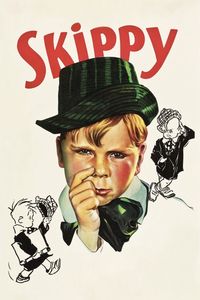
    (On Cable TV, February 2020) In the early days of the Academy Awards, being “Oscar nominated” didn’t quite mean the same thing as today. Being in its infancy as an art form, a popular entertainment medium and an awards show, the Oscars merrily nominated comedies for Best Picture, nine-year-olds for Best Actor (Jackie Cooper) and handed Best Director statuettes to someone who would go on to direct silly Martin/Lewis and Elvis Presley comedies. Yup, that’s Skippy for you—a broad crown-pleaser waiting at the bottom of the “Oscar nominees” list. Considering that it focuses on street urchins and dogs, it’s as old-fashioned as it is blatant in its intention to appeal to the popcorn crowds. (Wait, was popcorn a movie theatre staple back in 1931?) It’s pleasant enough as such—adapted from a then-popular comic strip, it’s relatively innocuous and today’s marketing geniuses would squarely market it as a family film. But if you’re looking for substance… there isn’t much of it. Director Norman Taurog got notice for wrangling a big cast of kids and dogs, which would be admirable if it wasn’t for the most noteworthy anecdote about Skippy’s production being about the director pretending to shoot the lead kid’s dog in order to get him crying on camera. Harrumph. I guess that’s why people go to great lengths to watch Oscar-nominated films—expand your horizons, and try to understand what they were thinking back then.

  • Here Comes the Waves (1944)

    Here Comes the Waves (1944)

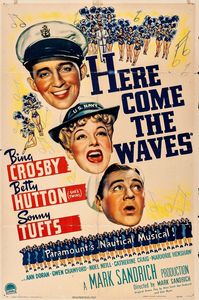
    (On TV, February 2020) I’m not sure you could build a more representative film of 1944 than Here Comes the Waves if you tried. Let’s see—World War II propaganda film exploring a small branch of the US armed forces and delivering a morale boost? Check. Workmanlike plot being used as scaffolding to the musical numbers the film is really concerned about? Check. Featuring no less than the uber-crooner of the era Bing Crosby? Definitely check. Launched a song that became a minor standard of American culture to this day? Also check, with “Ac-Cent-Tchu-Ate the Positive.” I’m not saying there weren’t better movies in 1944 (there were!), but that as a blend of propaganda boost and musical comedies, Here Comes the Waves is a slick, professional example of what Hollywood was up to at the time. It also works a bit harder at it than some of its contemporaries—sure, having Bing Crosby play a singer isn’t exactly asking much, but having Bettie Hutton play the roles of twin sisters is a bit of showmanship—and she does rather well at it. It’s all kind of cute whenever no one is singing (although the sexism is… there), and it’s usually better when it gets into the musical number. Why isn’t it better known, then? Well, there’s the vexing blackface bit right in the middle of the movie. Also, the fact that the third act loses steam—but mostly the blackface. (And what musical number comes with the blackface? You guessed it—“Ac-Cent-Tchu-Ate the Positive.”) In that too, I suppose, Here Comes the Waves is also an exemplar of 1944 Hollywood.

  • Annabelle Comes Home (2019)

    Annabelle Comes Home (2019)

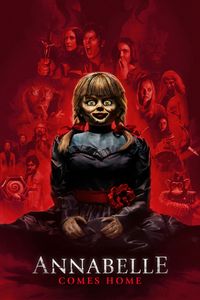
    (On Cable TV, February 2020) From its featureless opening scenes onward, Annabelle Comes Home is a dull stretch of a watch. I’d mutter something about this being a fall from grace for The Conjuring series, except for the obviousness that great movies leading to increasingly uninteresting sequels and spinoffs is what counts as normal in the horror genre. Amazingly enough, this remains a sequel-to-a-prequel-to-a-spinoff-to-a-sequel-to-an-adaptation-of-a-so-called-real-story. (Considering its callbacks to The Conjuring, Anabelle Comes Home is a derivative project that really wants you to remember the first film.) Vera Farmiga and Patrick Wilson have extended supporting roles as bookends here, but much of the spotlight goes to the babysitter who’s stuck with the Warrens’ daughter and an evil doll trying to possess the both of them (along with a crew of nasties just to make this even more chaotic). To be fair, there’s a decent degree of polish to the 1970s recreation, Gary Dauberman’s workmanlike direction and the rather good cinematography—for all of its faults, Annabelle Comes Home isn’t a cheap straight-to-DVD sequel. But fair execution doesn’t really mitigate the derivative nature of the script, the uninspired jump scares or the feeling that we’re really trampling down whatever that was interesting about The Conjuring in the first place. Annabelle Comes Home strikes me as the kind of film meant to be seen three or four years after you’ve seen the original—long enough to want some of the same things, but distanced enough to not be compared with its predecessor too closely.

  • The Talk of the Town (1942)

    The Talk of the Town (1942)

    (On Cable TV, February 2020) Heavier on the romance and lighter on the comedy, The Talk of the Town nonetheless remains a Cary Grant all-spectacular. The premise is archetypical enough, with an escape criminal finding refuge in the same cottage as a lawyer and the woman they both lust over. With Grant, Jean Arthur and Ronald Colman as the three points of the triangle, things quickly heat up. Grant remains utterly charming in the film’s mixture of laughs, suspense and romance—you would think that Colman would have trouble keeping up, but he does quite well in his inglorious role as the romantic rival. Worth noting: the jazzy opening sequence that crams a first act’s worth of exposition in a few minutes’ worth of spinning newspaper montages. Amazingly enough, the ending wasn’t decided until test screenings picked one romantic winner over the other. There are a few pacing issues, as well as some rough transitions from one tone to another, but The Talk of the Town remains a very satisfying blend of different things, with Grand, Colman and Arthur being equally enjoyable throughout it all.

  • Batman: Return of the Caped Crusaders (2016)

    Batman: Return of the Caped Crusaders (2016)

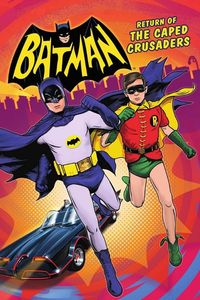
    (On TV, February 2020) One amusing quirk of Batman’s decades-long history is not only the variety of interpretations of the characters according to the obsessions of their era, but the relationship the franchise has had with those earlier portrayals. The grimdark Batman of the 1980s and 1990s would barely acknowledge the wildly different interpretations of the 1960s, whereas corporate overseers of the 2010s seemed positively eager to showcase the Adam West Batman alongside the others. (But not in the same movies—that would be weird.) That, I guess, is how we end up with the Batman ’66 comic books and the animated Batman: Return of the Caped Crusaders. Produced just in time to celebrate the fiftieth anniversary of that Batman era and record West’s voice alongside Burt Ward (as Robin) and Julie Newmar (as Catwoman), it’s a conscious homage that generally succeeds. Being able to rely on animation and original voices is a clever way to revive that Batman era, and being able to self-consciously write in a campy tone is just purr-fect. There’s a fun blend of upbeat earnestness, conscious homage and competent filmmaking here that works really well. It’s a welcome counterpoint to many more downbeat takes on the Batman mythos, and that’s why I wouldn’t count on Return of the Caped Crusaders remaining an only-once revival of that specific era.

  • The Russians Are Coming the Russians Are Coming (1966)

    The Russians Are Coming the Russians Are Coming (1966)

    (On TV, February 2020) I’m always baffled when acclaimed films fail to meet their own hype, and I really would not have expected a broad humanist comedy to be so… dull? But the case of The Russians Are Coming the Russians Are Coming may be unique as well—a comedy directed by Norman Jewison, it was an attempt to find common humanity with the then-fearsome Soviets. Half a century and the end of the Cold War later, it’s not quite as striking or relevant. What played like gangbusters and won critics over in 1966 feels either obvious or hopelessly dated by 2020. Oh, it’s still amusing (the premise of a Soviet sub running aground in New England and its crew “invading” a small village remains high-concept), but I’m not sure I cracked a single laugh during the entire film. Since a lot of the jokes revolve around the same idea, the film quickly becomes repetitive. Some elements still work just right: Alan Arkin (in his big-screen debut) has plenty of his youthful energy as a Russian, while notables such as Carl Reiner, Eva Marie Saint and Brian Keith are featured ensemble players. I don’t usually have trouble putting myself into the mindset of a specific era, but that proved more difficult than usual in The Russians Are Coming the Russians Are Coming—absent the era’s specific quirks, it feels hollow and underwhelming.

  • The Private Lives of Elizabeth & Essex (1939)

    The Private Lives of Elizabeth & Essex (1939)

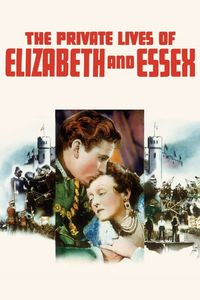
    (On Cable TV, February 2020) Historical costume dramas aren’t to everyone’s taste, but there’s something to be said in the case of The Private Lives of Elizabeth & Essex for an engaging cast. Bette Davis as Elizabeth I? Solid. Having her surrounded by Errol Flynn, Olivia de Havilland, and Vincent Price? Now that’s interesting. Directed by Michael Curtiz, the film becomes more compelling than most equivalents in large part due to Davis’s steely performance and some deliberate choices to make the story more dramatic and accessible. Technical credentials are quite good, considering that this was a Technicolor production and Warner Brothers was willing to go all-out on the spectacle. It’s not so much about Elizabethan England than about 1930s Hollywood studio conventions, and that’s perhaps for the best. The Private Lives of Elizabeth & Essex remains a costume drama, but a click one, and more interesting than most.

  • This Gun for Hire (1942)

    This Gun for Hire (1942)

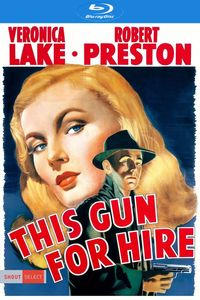
    (On Cable TV, February 2020) There are many things to learn about This Gun for Hire: Veronica Lake is a timeless beauty, film noir was in good shape as early as 1942, war profiteering is evil, hitmen could be developed characters even in the 1940s, and it’s never a good idea to pay a hired killer with fake money. Put all of those things in a bag with Alan Ladd and you’ve got a pretty good suspense thriller. Ladd and Lake would go on to make several more movies together (alas, her time in the sun was far too brief) and the film would become part of the film noir subgenre increasingly popular after World War II. As a narrative, This Gun for Hire is a mixture of unlikely character decisions, surprisingly sophisticated character moments and several thrilling scenes strung together. It all works rather well, although one can see that the combined appeal of Ladd and Lake (with her famously alluring peekaboo hairstyle) clearly raises the result above its script weight. Being early noir, This Gun for Hire is also not quite yet burdened by the tropes of the subgenre, so that’s also quite interesting by itself. Have a look, have fun and then go see the other Ladd/Lake movies.

  • The Little Foxes (1941)

    The Little Foxes (1941)

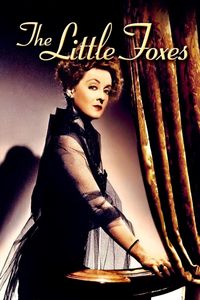
    (On Cable TV, February 2020) If you want to understand why Bette Davis is still acclaimed even decades after her heyday, you can take a look at, well, nearly her entire body of work — but The Litte Foxes serves as an exemplar. Going far past ingenue roles, she here plays a deliciously evil schemer intent on riches without ethical concerns. It’s a remarkable and yet typical kind of role for her, and it hints at the force of character she displayed throughout her career and in the famously troubled making of this specific movie, to tell studio heads and directors that she would not compromise on playing a despicable character. She is by far the best thing about The Little Foxes, an overwrought drama with a solid core that nonetheless drags on quite awhile before finding its footing well into the third act. The various shenanigans played by Davis’s character eventually become deadly, as her intentions are clear and so are the lengths to which she will go to in order to get what she wants. In many ways, The Little Foxes is also an exemplar of a specific kind of circa-1941 cinema—the rich literary/theatrical adaptation, brought to the big screen by a small salaried army of talented craftsmen and taking a poke (within the confines of the Production Code) at a dark odd corner of American society filled with well-mannered psychopaths and greedy arrivistes. But it took someone with Bette Davis to make audiences believe in it.

  • The Lion in Winter (1968)

    The Lion in Winter (1968)

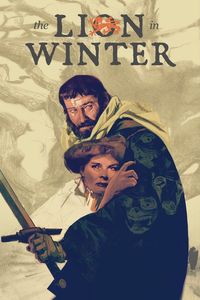
    (On Cable TV, February 2020) Film historians and Katharine Hepburn fans can agree on one thing: She became a much better actress as she aged—from a cute funny ingenue in the 1930s, she switched to a matronly appearance throughout the 1940s and became increasingly adept at dramatic roles throughout the 1950s. The Lion in Winter is, in many ways, the apogee of her acting talents. (Significantly, she won her third Best Actress Academy Award for this film.) The film itself seems designed to let actors display how capable they could be—it’s a complex story of court politics and family intrigue set against the Henry II era (1183) and the kind of film that actors and the Academy both love. Casting-wise, there are highlights from several generations here—Hepburn, obviously, but also Peter O’Toole as Henry II, and much more modern notables as Anthony Hopkins (in his first big movie role) and Timothy Dalton. (This is one handy movie in any Six Degrees of Kevin Bacon game, as you can use it to skip from the 2020s to the 1930s quite easily.) As for its impact, well, it’s all quite more interesting than its Dark Ages setting would suggest—I suspect that anyone who was fascinated by Game of Thrones’ exploration of the perils of hereditary succession will also enjoy this one. It has aged, though: in filmmaking techniques, the 1960s feel increasingly artificial, and some of the values of the time have been imposed on the 1183 setting in not-so-elegant fashion. But that does add a layer of interest that wasn’t in the film when it was first released. At least Hepburn is timeless.

  • Soy Cuba [I Am Cuba] (1964)

    Soy Cuba [I Am Cuba] (1964)

    (On Cable TV, February 2020) There’s a reason why I am Cuba shows up on lists of movies with great cinematography—even today, it’s hard not to be impressed by some of the camera work on display here, even if the film itself is a blunt piece of Soviet-produced anti-American propaganda. A co-production between the USSR and Cuba, it’s a set of four connected stories showing the factors leading to and through the Cuban revolution of 1959. The script can be arbitrary, blunt and grotesque at times—the Batista-era American-run casino is portrayed as a malevolent force perverting the locals, and the “Americans” in the film all speak with exaggerated bombastic accents that feel like a parody. But it does have the merit of presenting the Cuban side of the events. As with all movies designed to whip up revolutionary fervour, it’s not subtle about sacrificing its characters to the cause—and keep in mind that this film was released merely five years after the events. But I Am Cuba is not a film to take in narratively—it’s far more interesting to watch it for the moment-to-moment decisions taken by director Mikhail Kalatozov as he comes up with insane camera movements, unusual ways to portray familiar material and emerging from the water, passing through buildings or going down several storeys as part of continuous long shots. It’s all quite amazing enough to make anyone wonder, “how did they do that?”—my favourite shot has the camera dropping down several metres to follow someone going from a casino rooftop to a pool on a lower plane. There’s an additional interest in considering that this piece of pure cinema essentially disappeared for thirty years: Never shown in the United States for obvious reasons and quickly forgotten in the USSR for being insufficiently supportive of the two regimes. It took until the 1990s, after the fall of the Soviet Union, until it was rediscovered, restored (thank you Martin Scorsese) and broadcast to a wider audience. Today, film buffs can feast on I Am Cuba as a fascinating historical artifact, and as a virtuoso display of film technique.