Month: February 2020

  • The Chapman Report (1962)

    The Chapman Report (1962)

    (On Cable TV, February 2020) Expectations are a dangerous thing, especially when we’ve been conditioned by later movies to assume a certain style or tone given plot summaries. Considering the spate of 1960s sex comedies exploring the loosened mores of mainstream America, you would be more than forgiven for thinking that The Chapman Report, revolving as it does around academics researching the sexual habits of average Americans, would be a silly farce. Something light and perhaps naughty, if dozens of later movies are any guide. But light and naughty are exactly what it is not: This is an early-1960s movie that clearly shows signs of being stuck in the 1950s—from the opening few minutes, it’s clear that this will be an earnest drama about characters coping with sexual permissiveness and how it can ruin their lives. As our sex researchers become entangled with their volunteer subjects, the heavy relationship drama becomes increasingly suffocating. Even on those terms, it becomes long, turgid and so incredibly dull that I had to make a conscious effort to remember why I had recorded it—because it’s from director George Cukor, far better known for his Classic Hollywood lighthearted comedies. But 1960s Cukor wasn’t as nimble at 1930s Cukor—his growing misanthropy is reflected in the high-contrast colour cinematography, with entire character’s clothing disappearing in the deep blacks of the background. It’s essential to remind ourselves that The Chapman Report was daringly made for an audience still tittering uncomfortably over the Kinsey Report on human sexuality (obviously the inspiration for the film)—it’s almost inevitable that the film would become abnormally boring to today’s far more sophisticated audiences. It certainly doesn’t help that the film is far more analytical than emotional, putting an atmosphere of dishonesty over something that could have been animated by honest emotions. (There are far more restrained movies from the Hays Code that are more heartfelt than this one, and much of it has to do with real emotions being used rather than couching it in quasi-legal dramatic analysis.) Ah well—I didn’t expect all Cukor movies to be worth my time, but The Chapman Report is particularly disappointing.
  • Thoroughly Modern Millie (1967)

    Thoroughly Modern Millie (1967)

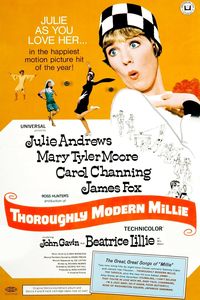
    (On Cable TV, February 2020) Common wisdom has it that the 1960s were terrible years for the movie musical, but I don’t quite agree with that—the overly serious 1970s were far worse, and there are plenty of enjoyable 1960s musicals to be watched now… even if the box-office receipts at the time were less than the studios expected. Thoroughly Modern Millie is a particularly fun and weird take on the genre. It’s a sixties-style musical set in the 1920s, with a flapper protagonist played by Julie Andrews. (I’m not a big fan of Andrews, and was particularly amused to find that the opening makeover number makes her less attractive and closer to her persona at each step.) Despite my own reservations about Andrews (legend has it that Mary Tyler Moore was intended to be the film’s lead until Andrews signed up, at which point the film was recentred around her and made into a musical), the result is a fun farce with inventive musical numbers. I quite liked the xylophone dancing in “Jazz Baby,” or the entire “Tapioca” number, which best showcases the exuberant filmmaking of the movie. Going well beyond musical numbers, there are flashy scene transitions through irises in/out, title cards to tell us what the heroine thinks as she looks at the audience and a lot of practical comic effects (such as an apple deflating). The twice-stylized 1960s execution and 1920s setting make for a doubly interesting viewing experience. As a farce, it’s probably a bit too long for its own good at more than two hours and a half (weariness sets in the second half), and the easy Asian stereotypes have not aged well at all. Still, it’s cute and fun most of the time—I would have preferred Mary Tyler Moore than the androgynous Andrews as a heroine (while keeping Stockard Channing as the film’s MVP), but Thoroughly Modern Millie remains a fun farce, amply earning a spot on a list of good 1960s musicals.

  • Soapdish (1991)

    Soapdish (1991)

    (In French, On Cable TV, February 2020) I wasn’t expecting much of Soapdish, a comedy revolving around the world of daytime soap operas. But much to my surprise, the film proved far more interesting than I expected, and got a few good laughs out of me. Sally Fields does well as an aging actress obsessed by her age, and convinced that the staff of the show is working against her. As it turns out, she’s not wrong—everyone around her despises her diva behaviour, and the showrunner sets a plan in motion to get her to quit. This goes through an old ex-flame of hers, a washed-up actor (Kevin Kline, hilarious) rescued from the tragedy of overacting in dinner theatre. Robert Downey Jr. is not exactly the best choice as the showrunner (at least not compared to his later persona) but he does get a few of the movie’s best lines, often delivered halfway to the camera at the end of his scenes. Whoopi Goldberg also gets a few choice lines (although, checking the quotes of the film, I realize that Soapdish is far funnier in English than the French dub). For someone my age, seeing Leeza Gibbons show up as herself is a welcome sight, almost outdone by Teri Hatcher as a self-aware sexpot. Hollywood does love to talk about itself, and using soaps as a satirical playground does offer it some plausible deniability. The script does occasionally teeter between comedy and drama, but much of the drama eventually reveals itself to be a mere setup for further comedy. The big third-act twist is a lot of fun, and it speaks to the success of the film that I didn’t bother anticipating it despite ample evidence pointing to its nature. The score is very catchy, with Latin influence and a main melody fit for humming. The one thing that hasn’t aged all that well is one late-movie transphobic joke—to be clear, having a character revealed as a transsexual (or transvestite—the film isn’t too clear about that and that’s an issue in itself) is not necessarily a problem: but having characters react as if it’s the worst thing in the world is what feels so terrible. Still, the rest of the film is far funnier than I would have expected, and Soapdish will score high on the rewatch desirability index.

  • Silverado (1985)

    Silverado (1985)

    (In French, On Cable TV, February 2020) By now, even the tiny number of Westerns that I’ve seen (compared to the entire corpus) is enough to last me a lifetime, or at least establish clear eras in Hollywood Westerns. There’s the innocent period (until 1939’s Stagecoach) where Westerns were cheap and easy to shoot in Hollywood’s backyard. There’s the heroic period (1940s–1950s), which shaped the myths of the genre, followed by the revisionist period (1960s–1970s), which did everything it could to question the heroic era of Westerns. By the 1980s, however, anything could happen in those now-rare Western films—movies that either celebrated or condemned the genre. Silverado, thirty seconds in, clearly announces its filiation to a more classical idea of westerns, although one that consciously exploits the iconography of the heroic period. As the opening shootout of the film ends and our protagonist opens the door of the dark cabin in which it took place, the camera crosses the threshold and the image expands to the limits of the widescreen frame to take in a gorgeous look at the American west in its most iconic glory. The credit sequence follows the protagonist by framing him against picture-perfect western backdrops and sets the tone for a film that reconstructs a fun kind of western, filled with good and bad guys shooting it out over cattle rights and revenge over past transgressions. Writer-director Lawrence Kasdan clearly wants to have a blast doing this film, and so Silverado never lets an occasion go to feature power chords, striking images and self-aware dialogue—or all three, such as when Danny Glover’s character holds up two rifles and says, “This oughta do.” Silverado manages to walk a fine line in recreating classic westerns with gusto yet without falling into the excesses that many imitators would adopt—it’s got action but few obviously over-the-top scenes; it doesn’t take itself too seriously without being a parody; and it finds an entertaining balance between drama and action. The story is very familiar, but it’s really a vehicle for Kasdan to show off that he could direct a straight-up western, and that works well enough. Special mention should be made of the ensemble cast, which features many actors what would become much bigger a few years later: Kevin Kline is a perfect example of civility in an uncivilized world (only topped by an unrecognizably bearded John Cleese as a merciless sheriff), Linda Hunt is a welcome bit of eccentricity, Jeff Goldblum pops up a few times, and a then-unknown Kevin Costner is a revelation here as a cocky gunslinger. Silverado ends up being a pleasant surprise: an unrepentant western not interested in critiquing the genre as much as in playing according to its rules. In many ways (including the gorgeous cinematography), it does feel like a more modern 1990s film. But no matter when it’s from, it’s still quite a bit of fun to watch today.

  • Henry: Portrait of a Serial Killer (1986)

    Henry: Portrait of a Serial Killer (1986)

    (In French, On TV, February 2020) Some movies are gritty, but Henry: Portrait of a Serial Killer is grimy. Shot with an ultra-low budget, it certainly looks like it, with terrible cinematography, a handful of actors, and a sordid subject matter overcompensating for a multitude of other issues. Michael Rooker shows up at the titular Henry, who—as announced—spends the movie killing people. If you squint, you may pretend that this is a character study — but really, it’s not much more than an exploitation film with an appetite for gore. I’ll give it something, though: the atmosphere of the movie, being this close to cinema-verité, can often be unnerving. Henry is painted as such an irremediable monster that everyone in the film can be (and becomes) a target. It doesn’t make for a pleasant viewing experience, but it’s more effective than most of the horror movies out there that play safely with familiar genre elements. I still don’t like Henry: Portrait of a Serial Killer and would gladly never see it again, but it gets quite a bit of mileage out of limited means—for better or for worse.

  • Ma (2019)

    Ma (2019)

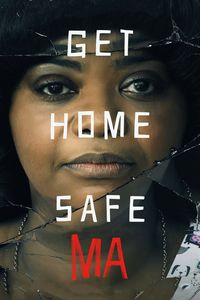
    (On Cable TV, February 2020) I’m happy that Octavia Spencer can have a career in which she can play a murderous woman-child who goes psycho on a bunch of teenagers, but on the other hand… Ma is thin gruel for a talented actress, even if she just wants to have some fun once in a while. While there are a few interesting elements in this story about a middle-aged woman befriending and then stalking teenage protagonists, Ma is the kind of movie that comes and goes without leaving much of a trace. It’s a Blumhouse special, meaning high profit margins on a high-concept but ultimately familiar premise. Competently made but often too timid for its own sake (although I do like the relatively upbeat finale over the rumoured original script), Ma is too often too bland for its own good. The great antagonist meets barely sketched-in protagonists and the Midwest small-town horror atmosphere doesn’t bring anything new. While I’m not that happy about the attempts to explain the roots of the antagonist’s madness, even I have to admit that the film would be poorer and less meaningful without it. Still, this is a lower-end horror movie and it feels like it. Ma will do the job is this is the kind of thing you’re looking for, and it’s a surprisingly good turn to show off Spencer’s range, but otherwise there are far better horror movies out there.