Month: May 2020

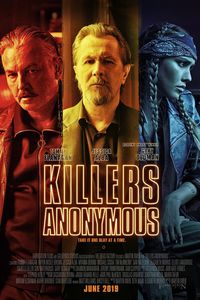
  • Killers Anonymous (2019)

    Killers Anonymous (2019)

    (On Cable TV, May 2020) The failure state of an assassin movie is that, in the end, it’s still a movie about people killing people. You can try to dress it up as righteous killings, or slather it in dark comedy, or try to show the personal toll it takes, but in the end… still people killing people. And yet Killers Anonymous, in its ineptness, manages to become so thoroughly repugnant that it almost creates a new category of failure of its own. Everything starts with writer-director Martin Owen, apparently so enamoured of killers as characters that he has them sit down in a support group. Except that it’s not so much a group to help them stop killing as to encourage them to do so. Further twists quickly pile up in a bewildering fashion, taking us to spy thriller territory and then back. So many tropes are piled up on top of each other that the entire thing collapses in a pile of nonsense. But it gets worse, as all of Killers Anonymous is handled with such a pervasive sense of amorality (killers: so cool right now!) that the viewer is liable to feel completely detached from all of it. It certainly doesn’t help that the characters are so abrasive, unlikable, unrelatable and not much worth caring for—the only character for whom I had some sympathy was MyAnna Buring’s Jo, and I strongly suspect that too much of this had to do with her looking cute in a bob haircut and round glasses. The film is so audience-unfriendly that by the time a character is unceremoniously brought into the story by a series of long shots and the audience is asked to care whether she dies or not, we’re done playing along. The directorial flourishes feel more annoying than effective, reflecting my overall mood about the film. Here’s something worth keeping in mind: There have been at least two recent films (Hotel Artemis and Bad Times at the El Royale) with similar stylish presentation of several killers in an isolated place, and both of them were easily better than Killers Anonymous. See it if you don’t believe me, but you will regret it.

  • Joker (2019)

    Joker (2019)

    (On Cable TV, May 2020) Even a few days after watching Joker, I’m still not sure about what I think of it. There were times where I thought it was a 1970s cosplay; others when I was seriously wondering why it was even related to the Batman universe; yet others when I was ready to dismiss the film as playing awkwardly with elements it didn’t know what to do with. But then there were other moments where I appreciated what it was trying to do. The links with the Batman mythos became more interesting late in the film, and the recreation of the period atmosphere was rather well-done. There’s an interesting provocative intent here in tracking how a mental illness can become a wider social movement, although I think that the film ultimately fumbles the ball in this area. Joaquin Phoenix does turn in an impressive performance, grimy and off-putting. Saying that the film is inspired by Scorsese isn’t much of a recommendation given how I don’t exactly worship either Taxi Driver or The King of Comedy. But it does give Robert de Niro one of his most interesting roles since, what, Silver Linings Playbook? Zazie Beetz is also in the film, although the nature of her character is a bit predictable and weakens the film. As an elseworld story from the Batman mythos, it does an admirable job of bringing the universe into a more realistic appearance, although I’m left wondering if Joker would have been free to do something even more daring had it been wholly original—I’m thinking specifically about how the film abruptly seems to pull its punches after scenes of social unrest that could and should have been pushed to their logical conclusion. But that point may be moot, considering that there’s no way that a 1970s study in mental illness would have received a budget so large had it not been tied to one of the most successful superhero franchises of all time. What we’re left with, then, is bits and pieces of a great movie, some iconic imagery (which isn’t all that easy in a media-saturated universe) and great performances. But there are just as many bits of pieces holding the film back: a refusal to go to the end of its ideas, excessive violence and fuzziness about what it’s about. In other words, I don’t have an easy and pat opinion or rating about Joker: it’s still all over the place for me, and it may take some time before I grow comfortable with it… if I ever do.

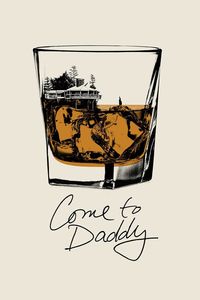
  • Come to Daddy (2019)

    Come to Daddy (2019)

    (On Cable TV, May 2020) Black comedy thrillers are always a gamble—fall on the right side of the audience’s expectations, and they’ll love you for life. Fall on the bad side and, well, audiences won’t be happy just not caring about a film—they will take pleasure in hating it. Come to Daddy did not fall on my right side. The biggest problem comes early—I disliked the protagonist on sight, and hated him even more over time. There’s nothing wrong with Elijah Wood’s performance in the lead role here—it’s just that his character is written to be pathetic, and made up to look like an insufferable hipster. But protagonist sympathy is key in a thriller—if the audience isn’t on their side, then nothing else matters. As Come to Daddy’s twists and turns accumulate, they increasingly look like meaningless fillips: For an exploitation movie built on surprises and shocking violence, it all becomes empty nonsense. I’m pretty sure that with another character (or maybe just a different haircut), I would have liked Come to Daddy a lot more. But right now? No way.

  • Harpoon (2019)

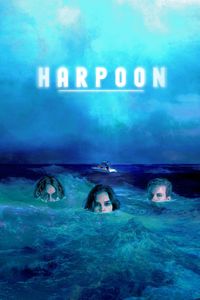
    Harpoon (2019)

    (On Cable TV, May 2020) Lean, mean and single-mindedly built for thrills, the nasty little comic dark thriller Harpoon does a lot with little. For most of its 82 minutes, it focuses on the drama-rich premise of three friends going at each other (verbally, emotionally, physically) on a small broken-down boat in the ocean far away from everything else. The three already being on bad terms before the film even begins, it just keeps getting worse throughout the film. An omniscient narrator guides us through the twists and turns and reversals of fates and a mean (but well-deserved) sting at the end. If nothing else, writer-director Rob Grant is clearly aware of the kind of dark-humour horror film he’s making, and seldom misses an opportunity to twist the knife. It’s a type of approach that won’t work equally well for everyone, though—while Harpoon is ghoulishly entertaining, viewers shouldn’t be surprised at how much they hate all three characters by the time it ends.

  • My Sassy Girl (2008)

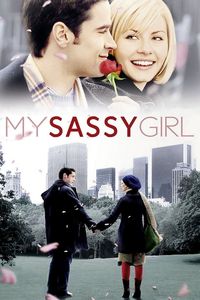
    My Sassy Girl (2008)

    (In French, On TV, May 2020) Surprisingly enough, I had seen the original South Korean version of My Sassy Girl before seeing the American remake. But fear not, fans of the original: there are plenty of things to say about the New York City-based one without getting into comparisons with the Seoul-based one. As it turns out… it’s not a very good romantic comedy. Boy meets unstable girl, girl puts boy through incredible hardship, girl leaves boy, boy mourns for a year, explanations are given, girl comes back, a happy ending. Not particularly flavourful, it’s both melodramatic and not melodramatic enough, and almost instantly forgettable except for the truly awful bit. And that awful bit is that despite acknowledging the troublesome aspects of dating a toxic personality, the film still pretends that it’s romantic. Never mind the gratuitous abuse, physical violence, unpredictable personality, sabotage of personal goals and abrupt ghosting—this is all supposed to be truuue looove and destiny. Yeah. Note to self—run away if this DVD is on the shelves of any potential romantic partner, or at least ask for an explanation. Otherwise, eh—Director Yann Samuell shows some ambition, but sometimes comes across as trying too hard. Meanwhile, both lead actors (Elisah Cuthbert and Jesse Bradford) have seen their own personal star power dim considerably in the past twelve years—I’m not saying that the film is at fault, but I will point out that this makes it less and less likely for any new fan of theirs to seek out the film. So it is that there’s a fair chance that My Sassy Girl, US remix, will be quite thoroughly forgotten in the next few years if it’s not already. Which is just as well, considering the warped perspective it has to offer on romantic relationships.

  • Jindua [My love] (2017)

    Jindua [My love] (2017)

    (On TV, May 2020) Indian romance Jindua landed on my DVR because I was intrigued by the TV Guide logline talking about an Indian film taking place in Calgary. The result doesn’t disappoint in that regard—the very first shot of the actual film is a Canadian maple leaf, and the first scene takes place at a citizenship ceremony. As the film flashbacks, we understand that the film is a romantic triangle in which an illegal Indian immigrant in Canada is offered a choice: marry an aspiring rock star and get citizenship, or get departed back to India to be with his true girlfriend. He doesn’t make the right choice, and much of the film’s second half is spent trying to untangle the results. It’s all quite likable and heartwarming, but the reason why Canadians may want to take a look at this film is how it treats the national myth of immigration from the other side, filled with doubts and tough choices. As a binational film about binational characters, it has a complex relationship with citizenship—The film’s centrepiece sequence, as far as I’m concerned, takes place at a Canadian citizenship ceremony, and it doesn’t go anything like Canadian proponents of immigration would like it to go… but the character finally makes the right choice. (And I’d support him—only become Canadian if you really want to be Canadian.) Otherwise, well, it’s really cool to see a Bollywood romantic comedy play over very Canadian backdrops, from the suburbs of Calgary to the Albertan national parks. Navaniat Singh shows some directorial flair here even when the film is being as melodramatic as possible, and the use of drones as a cinematographic tool works well. Jimmy Sheirgill is pretty good in the lead role, but I, as could be expected, only had eyes for the superb Neeru Bajwa and Sargun Mehta at the other ends of that romantic triangle. I’m not saying it’s a great film—it’s weird to see a full music video (Jinhua = “oh my love”) shoved awkwardly in the opening minutes, complete with on-screen credits listing who has worked on the music video. I’m also not that happy with the ending, even if I recognize that this is an Indian rather than a Canadian film, and the plot pretty much painted itself in a corner by that time, with only one easy (and nationalistic) way out. Still, this reverse look at Canadian immigration is provocative, and not necessarily opposed to Canada—immigration is a choice, and not always the right one.

  • Vanishing Point (1971)

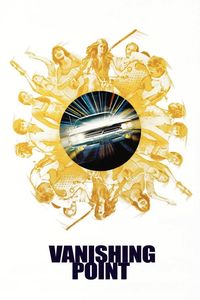
    Vanishing Point (1971)

    (On Cable TV, May 2020) One of the most confounding legacies of 1970s cinema is the not-inconsiderable number of films that play like very entertaining crowd-pleasers—only to end on an abrupt downer conclusion, usually through the death of the protagonist. Add Vanishing Point to that list because if most of the film is an exciting series of car stunts and high-speed chase sequences, it also aims for something else by having existential flashbacks detailing the lone protagonist’s backstory, strange interludes that feel like dream sequences, and ending on a downbeat note as the protagonist is finally beaten by The Man. The countercultural themes weigh heavily on the film—not only through its speeding protagonist becoming a hero to many, but through the intervention of various characters exemplifying the spirit of whoever was aligned against The Man back then. What’s weird about this approach, as seen from anywhere more recent than 1977, is how one sabotages the other. There are some very good muscle-car stunts in Vanishing Point, but they’re nearly impossible to enjoy anticipating what’s in store later in the film—the very nature of the counterculture sucks the fun out of everything. The film has acquired cult-movie status since its release—and clearly influenced bits and pieces of many things, including many of the car-chase films of the late 1970s and early 1980s. But here’s the thing: those later imitators understood that the conclusion is the punchline to the fun—not its repudiation. [January 2023: It makes for an ideal double bill with Dirty Mary, Crazy Larry.]

  • Pegasus vs Chimera (2017)

    Pegasus vs Chimera (2017)

    (On Cable TV, May 2020) As a male who gazes, I can tell you that one of the worst things about the male gaze from a practitioner’s perspective is the avalanche of terrible stuff that you have to endure in order to see what you really want to gaze at. Take, hah, Pegasus vs Chimera. It’s an absolutely terrible fantasy film that weakly regurgitates genre clichés through some of the worst possible execution. It’s a blender mix of fantasy tropes badly imagined and severely limited by bargain-basement production values. It has it all, and by all I mean: weak script, incompetent direction, substandard acting, dull music, cheap sets, unconvincing costumed and uninteresting visuals. Think about any single aspect of filmmaking, and this film underperforms at it. The actors are so uniformly terrible (Mimi Kuzyk, in particular) that anyone will have to blame director John Bradshaw for such a shoddy job. But I was expecting all of this. Pegasus vs Chimera is, after all, a Showcase original TV movie with CanCon credentials (i.e.: shot in Canada using a Canadian crew, thus qualifying for minimum Canadian content requirements for cable TV channels) and those don’t usually fly high. So, there’s the question: Why did I start and persist in watching this? Three words: Rae Dawn Chong, one of the loveliest icons of the 1980s. I wanted to see how she was doing these days, and she doesn’t disappoint: she looks fantastic, and her acting is marginally better than most of the actors. But was it really worth the aggravation of the rest of Pegasus vs Chimera? Those who criticize the male gaze are all missing one thing: the truly dumb stuff that we would be doing if we were not gazing.

  • Maximum Overdrive (1986)

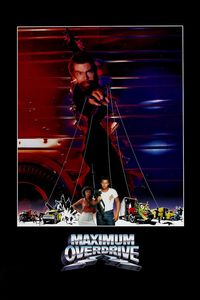
    Maximum Overdrive (1986)

    (On Cable TV, May 2020) I remember watching bits and pieces of Maximum Overdrive as a young teenager and being disgusted by it. (That soda-dispensing machine and bulldozer killing little leaguers—ugh!) Fortunately, a second look at the film as a middle-aged reviewer is far more positive. If nothing else, I’m far more jaded now, and I can recognize that this horror film written and directed by Stephen King is very playful in the way it mixes an impossible premise with the dark humour typical of genre horror and overblown set pieces designed to make viewers roll their eyes. It’s certainly not a perfect film, and maybe not even a good film. As a director, King does a serviceable job at best, and the script isn’t fully cooked: the opening bridge sequence, for instance, doesn’t have any plot links with the rest of Maximum Overdrive, and is sandwiched between another introduction sequence and the introduction of our protagonists. The premise is still remarkably dumb, but the impossibility of what’s happening is very much part of the fun. Fortunately, the film does find its groove once its characters are stuck in a North Carolina service station by roving trucks intent on subjugating them. The sense of atmosphere is pretty good, and there are some spectacular heavy iron special effects. (The irony is that the film is big on heavy metal, both as a threat from the machines and through the AC/DC soundtrack.) Alas, the finale leaves the truck stop just long enough to lose a lot of energy. Emilio Estevez makes for a likable protagonist (Also of note—a live-action performance from Yeardley Smith, who voices Lisa Simpson in The Simpsons.). Still, Maximum Overdrive definitely has some entertainment value even with its shortcomings—it does remain a bit of a unique sell, though. If you’re not already attuned to the very specific brand of genre horror humour… maybe wait until you are.

  • The Pink Panther Strikes Again (1976)

    The Pink Panther Strikes Again (1976)

    (On Cable TV, May 2020) Hey, there’s no accounting for taste, and that’s how I can say both that I don’t care all that much about the Peter Sellers-focused Pink Panther series and that I like The Pink Panther Strikes Again better than the others. There’s no good reason for this. I’m not even watching them in order, nor in any rapid succession. But there’s something I like in this instalment’s shift to a slightly different, more grandiose scope. As the film begins, Inspecteur Clouseau once again angers his nemesis Dreyfus, and—having driven him completely insane—leads Dreyfus to get a scientist to create a world-threatening weapon. Thus, being closer to James Bond parody (complete with warring self-defeating assassins) than anything else in the series so far, The Pink Panther Strikes Again feels a bit fresher. Director Blake Edwards’ penchant for big comic physical set-pieces is indulged, and there’s enough space in-between those bits for Sellers to overindulge in weird accents and mugging for the camera. Meanwhile, Lesley-Anne Down doesn’t have enough to do. It’s not that good, but not that bad either, and it’s relatively watchable even if some of the series conventions (such as Clouseau getting a new girl every movie) are definitely annoying. Eh—I’ve seen worse than The Pink Panther Strikes Again, especially in other Pink Panther instalments.

  • The Gumball Rally (1976)

    The Gumball Rally (1976)

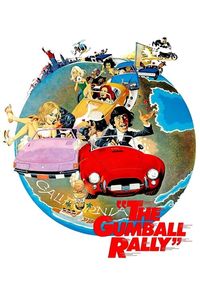
    (On Cable TV, May 2020) As an unlikely but steadfast enthusiast of car racing movies, films like The Gumball Rally make me happy in ways that short-circuit my usual approach as a film reviewer. It’s clearly not the only racing-across-America movie: It was inspired by the true-life Cannonball Baker Sea-to-Shining-Sea Memorial Trophy Dash organized by Brock Yates in the 1970s, an event that also inspired Cannonball (also 1976), as well as the three-film series launched by the “authorized” adaptation Cannonball Run (1979). (Clearly, that “55 MP/H speed limit” thing clearly had American drivers riled up in the 1970s.) It’s not the most polished of them—Cannonball Run, under the direction of Hal Needham, clearly had better stunts and production values. But The Gumball Rally may be the most purely fun of them—not necessarily in matter of straight-up humour, but in its loose amiable celebration of eccentric characters driving fast and crashing hard. It’s a goofy comedy with plenty of stunts, although mid-1970s action filmmaking being what it was, it doesn’t have the degree of polish associated with newer racing films. A large cast of characters adds to the fun, especially in how they are juggled with some aplomb through coincidences that keep them interacting from one coast to another. Acting-wise, the film boasts of an early appearance by Gary Busey, the wonderful Colleen Camp and a hilarious Raul Julia playing a womanizing Italian driver. The mid-1970s atmosphere is quite amazing even when the film has a few lulls. Still, The Gumball Rally is a fun watch. I want more. Hollywood, make a modern version of this right now. [October 2024: In retrospect, it’s hilarious to note that it’s in May 2020, more or less when I was watching the film, that a Cannonball Run record run was completed, taking advantage of roads left empty during the pandemic lockdowns to achieve a coast-to-coast record of 25 hours and 39 minutes at an average speed of 180 km/h. That record is still standing and is not expected to be beaten any time soon.]

  • Appleseed Alpha (2014)

    Appleseed Alpha (2014)

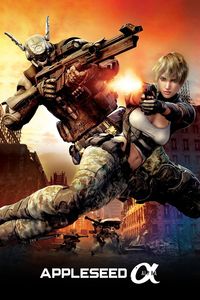
    (In French, On TV, May 2020) My expectations going into Appleseed Alpha were not all that high—I would have settled for a typical 2010s Japanese CGI production and I suppose I got exactly that. I have dim memories of the original manga, but not dim enough to realize that this take on the series is wildly different, taking place in (and around) a post-apocalyptic New York indulging in the most convenient clichés of the genre, with cyberpunk elements thrown willy-nilly in a bleak landscape, except with electricity, a working subway system, fantastic orc-like creatures and many other things that clearly don’t make this a work of serious Science Fiction. The buxom heroine being squeezed in a chest-and-midriff-highlighting outfit doesn’t help any further in taking the film any more seriously. The images are superb, sometimes almost photorealistic—but the animation, as good as it usually is, does have curious shortcomings at times, probably due to budgeting issues as if a few corners were cut. At least the film ends on a bit of a high note, what with a spectacular assault on a massive mobile fortress that helps make up for a lacklustre second act and meandering story. It’s not much, but then again, it’s got enough going for it to make the viewing worthwhile if you’re partial to CGI Science Fiction movies, no matter how little sense they make.

  • Ringu 2 [The Ring 2] (1999)

    Ringu 2 [The Ring 2] (1999)

    (In French, On Cable TV, May 2020) Considering that I am one of those strange people who think that the American remake of The Ring is better than the Japanese original Ringu, you may safely disregard my opinions about its sequel Ringu 2. But here goes anyway: There are two giant traps in which horror movie sequels can fall, and Ringu 2 manages to hit both of them at once. The first is to redo the first film with a bigger budget; the second one is to expand the mythology, provide answers, add backstory and generally make a mess out of the simplicity that worked so well in the original. Combining the two means that re-threading the first film’s scares is not original, while what’s original is not that scary. Ringu 2 is not without some merit, but it’s ungainly, off-key and just plain insipid when it tries to weld its own additional ideas on the framework built by Ringu—like a rickety addition to an elegant building. Now, director Hideo Nakata does have a rough understanding about how to build a horror sequence, and that instinct probably saves Ringu 2 from an even worse assessment—but the result still isn’t particularly good, no matter whether you’re watching this on its own, or as a follow-up to one of the most highly regarded Japanese horror films of the 1990s.

  • Razorback (1984)

    Razorback (1984)

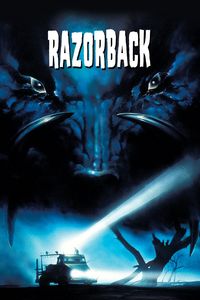
    (In French, On Cable TV, May 2020) As far as premises go, “A giant pig kills people,” can be either ridiculous or promising, but Razorback’s competent visual style ensures that the result isn’t that laughable. This killer boar horror is bolstered by a bit of human nastiness, but it’s the atmosphere more than the plot that makes this film work. Director Russell Mulcahy (who would go on to direct Highlander) and his cinematographer capture some great images of the Australian Outback to make it all look better through a strong sense of place. What’s not so good is the messy, unfocused and ordinary script, the bland actors and some of the special effects. Still, the direction is the reason to watch the film—it’s apparent from the first few shots that this creature feature is something a bit more visually ambitious than average. This doesn’t necessarily mean that Razorback is a recommendation, but there are certainly far worse choices out there if you’re stuck watching a 1980s horror film.

  • 47 Meters Down (2017)

    47 Meters Down (2017)

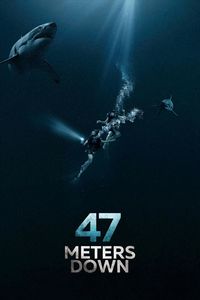
    (In French, On TV, May 2020) Another entry in the surprisingly robust “young Americans go vacationing south of the border, make a questionable decision; terrible things ensue” subgenre, 47 Meters Down is occasionally well made, occasionally infuriating, occasionally surprising and occasionally dumb. If that sounds like an average low-budget thriller, then you’d be right: This time, two sisters are trapped deep below sea level in a cage surrounded by great white sharks. Writer-director Johannes Roberts can manage some great underwater footage, but the blue shark menace gets repetitive after a while. While a bit too technically well executed to be bad, 47 Meters Down can be dull at times. The bait-and-switch ending will not make everyone happy considering that it undoes quite a bit of the film. [October 2024: …and has since become an annoyingly pervasive cliché of the survival subgenre.] Still, the execution of the film shows some promise, and Roberts may end up doing something truly interesting one of these days.