Month: May 2020

  • Bad Ass (2012)

    Bad Ass (2012)

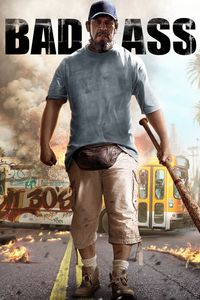
    (On TV, May 2020) After a few parody films, writer-director Craig Moss gets more ambitious and tries his hand at a low-budget action film starring Danny Trejo as an older man who beat up a few people and becomes a viral sensation. (It’s adapted from a then-viral video, now almost forgotten.) Then the less interesting part of the film begins as he tries to solve the murder of a dear friend. As a straight-to-video action thriller, Bad Ass just about delivers the goods: An interesting trio headlines the film (Trejo, Charles S. Dutton and—briefly—Ron Perlman) but there isn’t much in the script to give them anything interesting to do. It’s an exploitation film that plays it straight, with the only distinction being that it’s an elderly veteran going on a rampage of revenge than some other kind of action hero. Trejo isn’t bad in the lead performance, which is fortunate considering that the entire film depends on it. An expensive-looking bus chase audaciously reuses footage from the climax of Red Heat. That’s worth a few chuckles by itself, which is unfortunately just as much as the rest of the film combined. An unobjectionable but unremarkable evening-filler, Bad Ass is going to have the exact same lifespan of an Internet meme.

  • Diary of the Dead (2007)

    Diary of the Dead (2007)

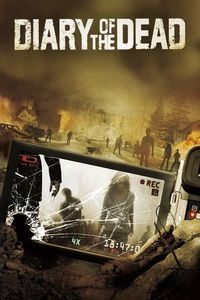
    (In French, On Cable TV, May 2020) To reuse a quote, directors can either retire as geniuses, or work long enough to be seen as derivative hacks. So it is that while George A. Romero pretty much co-invented the modern zombie film in (whew) 1968’s Night of the Living Dead, forty years later he was stuck following the found-footage craze for Diary of the Dead. The story is intensely familiar, as the dead rise and start snacking on the living. In this film, the living are film students filming everything that’s happening, and they’re not that different (nor smarter) than countless other sacrificial groups of characters in other zombie movies. Diary of the Dead falls into the same traps than other found-footage films—the weird camera placement, surprisingly good angles and lighting and inexplicable determination to keep shooting no matter what. Romero throws in some philosophy, humour and nihilism, but much of the film plays in the same way as countless straight-to-video found-footage zombie films. While it’s better executed than most of them, Romero is here outclassed and eclipsed by so many imitators that even above-average Diary of the Dead feels dull.

  • The Strange Love of Martha Ivers (1946)

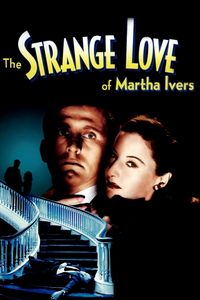
    The Strange Love of Martha Ivers (1946)

    (On Cable TV, May 2020) Film noir classic The Strange Love of Martha Ivers may not be all that iconic, but it has enough great things in it to warrant a look for fans of the genre. For one thing, it sports Grande Dame Barbara Stanwyck playing the kind of superpowered character she did best. Then the casting gets surprising: Kirk Douglas (in his film debut) playing her weak and easily cowed husband, then Van Heflin as a street-smart punk whose arrival on the scene creates danger—for he is the third holder of a secret that could have a devastating impact on the two other characters. There’s more, and quite a bit of murderous melodrama along the way, but the film (as with its score) builds up to a grandiose ending. It’s pretty good—although film noir fans will say that it doesn’t have enough noir concision to be a classic. True, but also besides the point: By the standards of mid-1940 Hollywood melodrama, The Strange Love of Martha Ivers is competent and absorbing. See it for Stanwyck, for Douglas or for Heflin, but it’s worth a look.

    (Second Viewing, On Cable TV, September 2021) It’s really interesting to revisit The Strange Love of Matha Ivers after tearing through Barbara Stanwyck and Van Helfin’s filmographies, because their on-screen antagonistic romance is the highlight of the film. It felt like a decent-enough film noir upon first viewing, but re-watching it with particular attention to Stanwyck’s performance as a femme fatale, and Heflin’s unusually muscular turn as a man who easily dominates every room he’s in (often roughly) is a different experience. As is, for that matter, seeing Kirk Douglas’ first film role as a meek, ineffectual, rather loathsome supporting character. The other highlight is the aggressive score, which shows no shame in highlighting the action with bold musical accents every time the characters butt heads – which is often. There are a few subplots and a prologue starring the characters as kids, but the film is most fascinating when Heflin and Stanwyck figuratively dance warily around each other, sometimes kissing, sometimes trying to kill each other. A fine noir melodrama, it’s easy to see why The Strange Love of Matha Ivers continues to earn such acclaim – and even more so if you’re a fan of both lead actors.

  • Take This Waltz (2011)

    Take This Waltz (2011)

    (On TV, May 2020) Things aren’t simple in Take This Waltz, a romantic drama written and directed by good-actress-turned-great-director Sarah Polley: It’s about a young woman who thirsts for a new beau over her comfortable husband of five years, and the subtle tapestry of feelings that go along with that impulse. Is it an empowerment tale, a break-up story, an examination of irresponsible intrusive thoughts, or maybe all of these stories? I have my own take, but Polley doesn’t make it easy, considering her empathy for everyone, wise or foolish. A surprisingly strong cast gives Polley plenty of material — and offers known actors a chance to stretch a bit, with Michelle Williams playing confusion, Seth Rogen comfort, Luke Kirby excitement and Sarah Silverman… well, Sarah Silverman plays a blend of comic relief, amazing screwups and then righteous reason. This is a film that affirmed that Polley’s 2006 directorial debut Away from Her was not a fluke, and the film has its share of stylistic coups. Take This Waltz is surprisingly watchable despite being a film about building infidelity—and it’s a shame that Polley hasn’t returned behind the camera much since then.

  • The Heat: A Kitchen (R)evolution (2018)

    The Heat: A Kitchen (R)evolution (2018)

    (On TV, May 2020) Like a progressive demonstration, documentary film The Heat: A Kitchen (R)evolution carries a lot of different placards, fancy slogans, contradictory messages, a chip on its shoulder and overflowing causes. If the result bubbles all over the place, it does have some energy. Everyone has something they’d like to fix in the world of food services, and The Heat is initially overwhelmed by trying to accommodate all of those socially progressive issues. Fortunately, it does settle into a more comfortable rhythm once the main thesis of the film becomes clearer: The problem in the kitchen is the glorified macho-chef attitude that translates with verbal abuse, hazing and misogyny. The documentary focuses on eight female chefs, making much out of the divide between home cooking (dominated by women) and professional cuisine (dominated by men) and how they’re all trying to bring more equality but also more respect back in restaurant kitchens. It’s not always perfect— Writer-director-producer Maya Gallus veers close to misandry at times (with the self-satisfied underdog smirk knowing that this kind of discrimination is socially acceptable) and its focus on seeing most things through one lens can wear thin at times. Furthermore, the film cooks itself in a corner when it tries to tell audiences that the kitchen world isn’t as macho as it purports to it, while giving us plenty of anecdotes that it is, in fact, as rowdy as portrayed. Ah well—if nothing else, The Heat is an (other) interesting dive into the kitchen behind respectable restaurants, pointing out how an imperfect culture can be changed for the better. It goes well with the flood of other food-related documentaries out there, and it gives voice to other people than the usual celebrity interviewees.

  • Five Graves to Cairo (1943)

    Five Graves to Cairo (1943)

    (On TV, May 2020) While not perfect, Five Graves to Cairo is a very capable WW2 adventure tale put together during WW2 itself. A Billy Wilder film featuring Erich von Stroheim as Rommel, it blends real-world events with pulpish mysteries and thrills to produce something perfectly watchable even today. There are secrets to discover and a tension-filled plotline, even if it does meander at times and the ending takes just a bit too long to resolve. Amusingly, this film has a war-wide scope… and a setting limited to a hotel. It would make a splendid double feature with Sahara. In Wilder’s hand, the timeless Five Graves to Cairo is more than wartime propaganda.

  • Margaret Atwood: A Word after a Word after a Word is Power (2019)

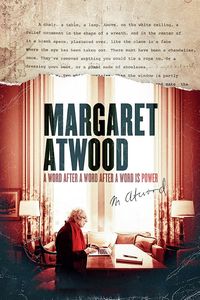
    Margaret Atwood: A Word after a Word after a Word is Power (2019)

    (On TV, May 2020) Ask any literate Canadian, and they will tell you: Margaret Atwood is a national treasure, so precious that we’re going to preserve her for centuries in special places (libraries, that is). Accordingly, we had to have a documentary about her life and career, although it’s kind of gobsmacking to see much of Margaret Atwood: A Word after a Word after a Word is Power filtered through the success of The Handmaid’s Tale TV show as a kind of social proof. Still, it’s hagiography that gives a lot of space to Atwood, and deservedly so given how she can be witty, smart, funny, honest and compelling all at once. A generous use of archival photos and material bulks up the film, along with celebrity testimonies and Atwood herself going through her current career. Quite ironically, it shows Atwood as a feminist/speculative writer, which is a nice (and not shameful) turn considering some of her previous declarations, now recanted, about how she wasn’t really a Science Fiction writer. (She is an SF writer, just not a “genre” SF writer—she was, as not reported in this documentary, a voracious Science Fiction reader when younger.) Is it completely uncritical of its subject? Obviously. Is Margaret Atwood: A Word after a Word after a Word is Power still worth watching? Of course, because Atwood is as close to a beloved public intellectual as Canada has produced recently.

  • Invitation to the Dance (1956)

    Invitation to the Dance (1956)

    (On Cable TV, May 2020) In many ways, you could call Invitation to the Dance the apex of writer-director-star Gene Kelly’s preoccupation with modernizing ballet for movie audiences. It’s an amazingly artistic endeavour—a full-length movie in which three separate stories are told entirely through dance, without dialogue. (Four years went by between its first shooting day and its release—the product simply baffled the MGM executives.) It does get better and better as it goes along—the first segment is a bit dull, but the second is wittier with a stylized contemporary circular tale, while the third has an extended number in which Kelly dances with animated characters. The special effects are rough, but still impressive. Tamara Toumanova and Belita are particularly striking in the middle segment. While avant-garde musical Invitation to the Dance can get tiresome when watched in a single sitting (for best results, try the segments on three separate days) but still very impressive and a significant career achievement for Kelly.

  • From Beyond (1986)

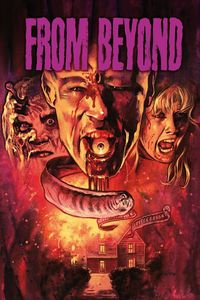
    From Beyond (1986)

    (On Cable TV, May 2020) I should like—no, I should love From Beyond. In theory, it’s everything I like best about 1980s horror films—off-the-wall premise, Lovecraftian plot elements, wild use of practical effects and makeup, go-for-broke weirdness, over-the-top melodrama, nudity, a sense of fun bigger than the gore, Stuart Gordon directing, Brian Yuzna writing, Jeffrey Combs starring, multidimensional terror and body horror packaged as one, some comedy, some science fiction. If I had to put together my ideal fictional 1980s horror film, it would look a lot like From Beyond. And yet, the result just isn’t where it should be. The pacing is off, the horror seems almost too restrained, and it doesn’t quite seem funny enough for the material. I mean—I still enjoyed From Beyond (it does get admirably gloopy toward the end, not bloody), it’s just that it didn’t feel as if it made the most out of its ambitions. Still, it’s rather over-the-top fun if that’s your thing—and it is my thing.

    (Second Viewing, In French, On Cable TV, February 2021) It hasn’t been that long since I first saw From Beyond, but my willingness to see it a second time has as much to do with it being caught on my DVR as it has with an underappreciated facet of 1980s horror films. The more I watch some of the wilder horror films of the decade, the more I’m struck by how, even limited by practical effects, those movies weren’t afraid to go for pure inspired madness. In From Beyond, we have a wild concoction of body horror, science-fictional nonsense, slimy gloopy creatures, nudity, gore, mutated horrors, dark comedy and explosions and I have to wonder — Have I been watching the wrong movies, or has this streak of utter madness disappeared from the current horror corpus? Why aren’t we using CGI to have some more of that fun? I’m not generally an advocate for gore, but gore is the least of what made films such as From Beyond (or Reanimator, or Evil Dead, or Braindead, or…) — it’s rather the goofy sense of fun with horror/SF tropes, the generous heaping of nudity and humour, the demented scientists and likable protagonists. I feel as if the latest crop of horror films is either far too serious for its own good, unadventurous in its use of special effects despite near-infinite capabilities, and just plain boring in how it simply goes back to the same sources of inspiration. Maybe those films exist and they’ll re-emerge as cult classics in a few years. But there’s a reason why From Beyond and its close equivalents have aged so well for horror fans: in many ways, they’re simply not making them like that any more.
  • Purple Rain (1984)

    Purple Rain (1984)

    (On Cable TV, May 2020) While Purple Rain was, upon release, much criticized as a vehicle for Prince’s egomania, it’s now best appreciated as a showcase for his distinctive purple-tinged aesthetics. Obviously, this is a film with terrific music, taking up the space left by the self-indulgent storytelling. Just witness the spectacular opening sequence, scored to the infectious fun of “Let’s Go Crazy.” The rest is never quite as good, but while most movies would never recover from starting at such a high point, this one just keeps going deeper into Prince’s eccentricity, with a high-camp result that sports sound effects and visuals to highlight its melodramatic moments. The charges of this being a self-indulgent film are a bit strange—if you’re going to go the autobiographical self-congratulatory route, would you pick an abrasive persona with severe romantic and domestic problems? This is where a bit of Hollywood fiction would have helped. At least, visually it’s very stylish. The clothing does get a bit ridiculous at times—would this what you’d wear on a date, at the pond or just returning home? But no matter—the overall acting is not particularly refined, but it would be hard to notice in a film where everything is heightened. Appolonia Kotero looks really good. Amusingly, the closed captioning of the song lyrics adopts Prince’s idiosyncratic spelling (2, u). Purple Rain is an immensely flawed star vehicle, but not in the ways that count: it remains a wonderful showcase for Prince, and the music hits hard.

  • Batoru rowaiaru II: Chinkonka [Battle Royale II: Requiem] (2003)

    Batoru rowaiaru II: Chinkonka [Battle Royale II: Requiem] (2003)

    (In French, On Cable TV, May 2020) I’m really not the biggest fan of the first Battle Royale movie, but even I have to admit that it did have a clear narrative tension, which is sorely absent from its sequel Battle Royale II: Requiem. Not that it’s the only thing missing from this disappointing follow-up: taking the contrivances of the first film to another level, this sequel only makes sense in the mind of its screenwriters obsessed with criticizing post-9/11 America. The plot (about high schoolers equipped with explosive collars, bonded in pairs and sent to kill a terrorist before Americans bomb his island hideout) couldn’t be less convincing if it worked overtime, and the characterization is sorely missing. The anti-American message of the film quickly wears thin (and I say this as someone who lived, aghast, though 2001–2003) and the action never manages to create the level of tension seen in the first film. It’s all rather dull, repetitive, uninvolving and useless. Considering all of what’s happening in this film, the return to the battle royale concept, along with its overlong briefing sequence, completely undermines its theme. The “provocative” message is ham-fisted, ill-thought-through, and completely uninspiring as an alternative to American imperialism. Even fans of the first Battle Royale will not like this one.

  • The Hill (1965)

    The Hill (1965)

    (On Cable TV, May 2020) Now here’s something as merciless as it’s interesting—a WW2 film in which the heroes are British soldiers and the villain is… the British Army. Taking place at a military prison camp in which punishment is delivered to break the prisoners, The Hill is a film that goes against undeserved authority, against military leadership, against the idea that armies are all perfectly aligned against the enemy. Sean Connery stars as one of five new prisoners introduced to the titular Hill—a massive stack of rock and sand used to torture prisoners under the blazing Saharan sun. Our protagonist can’t stand the abuse inflicted by the camp’s leader, but fighting back is tricky in a military context. It’s all crisply directed by Sidney Lumet, who ably portrays the unrelenting heat and the claustrophobia of having nowhere to go. The opening cleanly establishes the area, and the ending is substantially bleaker than expected. Connery is very, very good here, consciously shedding his James Bond image in an attempt to avoid typecasting. Be sure to turn on the subtitles, as some of the dialogue is difficult to hear. More a prison film than a war movie, The Hill is nonetheless a successful drama.

  • Paradise Hills (2019)

    Paradise Hills (2019)

    (On Cable TV, May 2020) There is something bold, and yet fuzzily vague about Paradise Hills that prevents it from being a much better film. Clearly, the incredible polish of the film’s eerie visuals can’t be argued against—the Alice in Wonderland-inspired set design of the film is exceptional (if increasingly repetitive—probably due to budget), and director Alice Waddington does a pretty good job at presenting an off-kilter fantastic premise. It’s in the substance that Paradise Hills falters. The plot device of young girls in a mysterious futuristic boarding school is close to a cliché by now, and genre-savvy viewers will immediately suspect something along the lines of an organ-harvesting farm. (That’s not the answer, but it’s not too far either.) Knowing that there’s something lurking under the surface makes much of the film’s first half fastidious to watch—sure, there are great images, but when are we going beyond the appearances? Alas, the second half doesn’t turn out to be much better—the overall purpose for the re-education boarding school is lame (or rather, it only makes sense in Paradise Hills’s self-righteous misandry, along with the gleefully murderous ending) and the ending belongs to the apparently acceptable “it’s okay to kill as long as the victims are men,” school of thought. The set design and costumes are terrific, but the worldbuilding is a mess—there are bigger hints not only that this is fantasy rather than science fiction, but also that the world outside the school is not really ours, raising all sorts of questions about what’s the intended level of fantasy here. Fortunately, the cast is good, and used appropriately: Milla Jovovich in particular is great as the headmistress, making good use both of her persona, but also of her age. Paradise Hills definitely outstays its welcome by its second half: the answers to the mysteries are disappointing, the ideological excesses of the story become obvious, the hermetic visuals lose their newness and the thorns sequence seems thrown in for atmosphere rather than consistency. (In other words, it’s useless.) Still, it’s not that bad—better than average for that kind of lower-budgeted Science Fictional film, and one that has higher ambitions than usual.

  • James vs. His Future Self (2019)

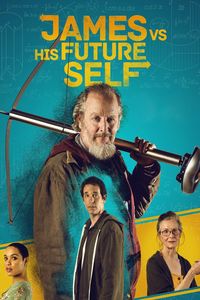
    James vs. His Future Self (2019)

    (On Cable TV, May 2020) Oh my. Am I witnessing the birth of a new science fiction genre? James vs. His Future Self is the third or fourth Canadian Science Fiction film in recent memory to have been filmed in Sudbury. Let me coin the movement: Sudburypunk. I kid, but only a little—Sudbury has slowly become a bit of a destination for filmmakers eager to showcase Northern Ontario landscapes while still being able to count on a metropolitan area as a home base. The city has varied shooting locations, including the futuristic Science North complex, and isn’t too far away from Toronto. James vs. His Future Self is exactly the kind of low-budget science fiction film that can benefit from a bit of Sudbury care. It’s a likable SF comedy about a man getting lessons from his future self coming back in time to save his younger self. Among many strengths, it can boast of likable actors, a gorgeous love interest (Cleopatra Coleman, always terrific), sometimes hilariously profane dialogue, and a self-aware script that delights in upsetting expectations throughout. Over its running time, James vs. His Future Self went from holding my interest to earning my sympathy for the characters. Frances Conroy is particularly good as the off-kilter science matriarch—and let’s not forget Jonas Chernick and Daniel Stern sharing the same role. It’s all blatantly, charmingly Canadian—Sudbury’s Science North is even explicitly featured as itself. For a silly comedy, James vs. His Future Self does tackle heavy themes of themes of self-contradictions, actualization and personal evolution. The final scene is not unexpected, yet surprisingly poignant. If that’s how Sudburypunk is going to go, let me subscribe to whatever else is going to come out of it.

  • Ready or Not (2019)

    Ready or Not (2019)

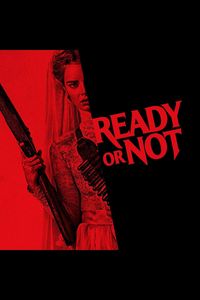
    (On Cable TV, May 2020) While I’m no fan of gory horror in general, I’m quite willing to make exceptions when the film is actually good. Or fun. Or interesting. Ready or Not ends up being all three, and for several good reasons. It’s a kill-the-rich satire, an anti-matrimonial fable, an intense horror film, a funny self-aware genre piece and a terrific showcase for Samara Weaving. The plot has to do with a mysterious rich-family curse that leads them to hunt and sacrifice newcomers to the family through a game of hide-and-seek. Which means that within minutes, our heroine is running inside a vast manor in a wedding dress, trying her best to remain undetected until sunrise. It doesn’t quite work out that way, of course—the set-pieces escalate in intensity with some very welcome comic relief along the way. Nicky Guadagni is a hoot as a mad troll doll, while Andie MacDowell is suitably leathery as the matriarch. It’s all superbly directed by Matt Bettinelli-Olpin and Tyler Gillett of “Radio Silence” fame. What takes Ready or Not one notch above the usual horror film is a sense of nuance, internal strife and a strong presence of the supernatural, remixed in a way we haven’t seen before. It’s gory and profane, but not unreasonably so given the overall atmosphere of the film. It toys expertly with the audience, knowing what they’ve seen before. As for myself, I did a complete 180 on Ready or Not, from a reluctant viewer of the opening to gleeful enthusiasm at the over-the-top finale. Can we spare a moment of mourning for the maids? The theme song is a powerful earworm.