Month: July 2020

  • Chissà perché… capitano tutte a me [Everything Happens to Me] (1980)

    Chissà perché… capitano tutte a me [Everything Happens to Me] (1980)

    (In French, On Cable TV, July 2020) Bud Spencer comedies could get a bit out there, and Everything Happens to Me is at the outer end of what he could get away with: It’s a silly kid’s comedy in which Spencer shares screentime with a young boy playing an extraterrestrial. If the beginning feels unusually rich in plot and efficient in characterization, it’s because it’s a sequel to another movie. Spencer is his usual charismatic teddy-bear self in acting as a protector to the boy and getting into comic action scrapes throughout the film’s herky-jerky plot. It’s all clearly meant to be a succession of set-pieces at the expense of believability—and the low-budget production values don’t help at all. It does get less fun, as the film moves away from broad real-world comedy to more science-fictional content, which cannot be sustained by the budget or the tone of the film. Still, Everything Happens to Me can be fun if your expectations are low, although the film does rely on Spencer’s considerable likability.

  • Dolan’s Cadillac (2009)

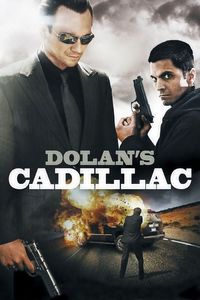
    Dolan’s Cadillac (2009)

    (On Cable TV, July 2020) Surprisingly enough, Dolan’s Cadillac is a faithful adaptation of a Stephen King story, in which a grieving man plans an elaborate revenge scheme that culminates in a tense standoff on a deserted road. The premise is fine, the third-act concept is intriguing (if overdrawn—just bulldoze the dirt on top and call it a day) and Christian Slater has a chance to chew scenery by the mouthful as the villain. Curiously, the Canadian prairies stand-in for a Nevada/California highway. (The film being a Canadian production, it’s a frequent rerun on Canadian cable channels even a decade later.) Where Dolan’s Cadillac falters is in trying too hard with its dialogues and direction—even by neo-noir standards, Slater’s dialogue is unnecessarily verbose and the protagonist’s narration isn’t much better. Some cuts would have done wonders here—the best lines would have been even better without the surrounding clutter, and even Slater’s magnificent monologues would have been more memorable with a bit of culling. Still, Dolan’s Cadillac is a fun little film, and a nice change of pace in seeing King go from northeastern settings to the American southwest. (Although there are plenty of such examples in his oeuvre, from The Regulators to The Stand.)

  • Jeux interdits [Forbidden Games] (1952)

    Jeux interdits [Forbidden Games] (1952)

    (YouTube streaming, July 2020) Kids and war movies make an excellent combination if you’re reaching for posterity, and if this sounds flippant to you, it’s probably because I’m overdosing on the notion at the moment after seeing Come and See, Grave of the Fireflies and such in close proximity. French film Jeux Interdits takes the trope in a slightly different direction (being much heavier on kids than on the war), and operates on a slower, duller, arguably funnier gear. The story has to do with a war orphan being adopted and befriending their boy, then both of them turning to strange hobbies (from pet burial to religious artifact thievery) to pass the time. War almost becomes incidental along the way, as we associate closely with the limited view of the child protagonist (one of them played by Brigitte Fossey, who would have a career in French cinema as an adult). Much of the film’s power comes with opposing things that we know as observers, versus what the children don’t realize. Alas, the ending reasserts reality in a profoundly sad way—especially after the mild humour of much of the film. Perhaps a bit too hard-hitting for some, Jeux interdits is not light entertainment—steel yourself.

  • Footloose (2011)

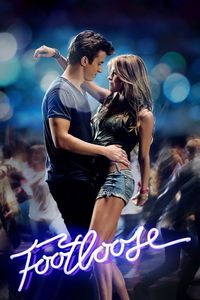
    Footloose (2011)

    (On TV, July 2020) Remaking Footloose for another generation isn’t necessarily the worst idea in the world, but it’s not the best either: While the original has Kevin Bacon and Kenny Loggins’ irresistible song, it’s fun but not necessarily good. There was then an opportunity here for 2010s filmmaking to catch up. Whether it did is very much up to the beholder’s eye… or maybe generation. There are very few narrative differences between the two films, with barely a touch-up job made between the two. Craig Brewer’s direction, on the other hand, is a clear step up from the original—more visually stylish, certainly more energetic, but sometimes a bit too much so: the quick-cutting during the dance sequences, in particular, doesn’t give room for the dancers to show their stuff, and bring to mind a music video more than a movie musical. The acting is not bad, but it depends on who you compare it: Kenny Wormald is fine but no Kevin Bacon in the lead role, while Miles Teller is pretty good as comic relief, Dennis Quaid does well in an ingrate role, and in-between Andie MacDowell and Ziah Colon I really can’t complain about the film’s sex appeal. If you’re going by precedent, you could argue that the original had some freshness that the remake mechanistically copies—and that the 2011 film is even more detached from the 1950s-style plotline than the 1984 version was. But the remake is still easy to watch: The dance numbers pop, the small-town energy isn’t bad, and it plays like a cover version. I suspect that those who encounter the 2011 film first may have a harder time going back to the 1984 one.

  • The Fury (1978)

    The Fury (1978)

    (In French, On Cable TV, July 2020) As someone whose skepticism came of age at a time when parapsychology still had a semi-scientific veneer of plausibility, it actually gives me great pleasure to be able to watch films such as The Fury and wonder at the dated psi-power nonsense contained therein. It’s not necessarily a condemnation of the material itself—it takes a director with a flair for the crazy, such as Brian de Palma, to give full force to the kind of wackiness that the material requires, and at its best The Fury is a rollercoaster ride of special effects, crazy ideas, unrestrained plotting and over-the-top performances. The plot has to do with a CIA agent (Kirk Douglas!) using a young girl with psychic powers to find his missing son from the clutches as an evil ex-colleague (John Cassavetes), but don’t worry about the plot when the film is one set-piece after another, ending up with exceptionally violent imagery by the end of the film. It’s all handled in typically over-the-top fashion by late-1970s Brian de Palma. It would be a splendid double feature with Firestarter or Scanners for reasons too obvious to explain. Frankly, The Fury is crazy in good ways, and even more enjoyable now that parapsychology has been relegated to a proven heap of nonsense.

  • Anthropocene: The Human Epoch (2018)

    Anthropocene: The Human Epoch (2018)

    (On Cable TV, July 2020) Don’t watch Anthropocene: The Human Epoch if you want to feel any better about the human species’ mindless ant-like appetite for consumption. A striking visual collage of various places around the world where humans are altering—nay, terraforming—the natural landscape, this is a film meant to surprise and sadden. Among the film’s biggest asset is some great footage, made even better by the shock of discovering those faraway places where the landscape itself is being altered in unrecognizable ways. The copious use of drone footage is an asset — “what am I looking at?” is a frequent question for viewers, leading to amazing answers. It does fit with the Koyaanisqatsi-inspired genre of visual documentaries, even with its voiceover (usually a dispassionate enunciation of depressing statistics) and far fewer lyrical moments. It’s definitely worth a look, but it is made for people who already understand that environmental issues are important. There’s a bit of hope at the end… but not that much.

    (Second viewing, On Cable TV, October 2021) It probably doesn’t bode all that well for Anthropocene: The Human Epoch that I didn’t remember seeing it in the first place—it’s only in rewatching the film that many of its striking images got me thinking (and confirming) that I had, in fact, seen it once already. But I wasn’t coming to the film at the same angle for this second viewing—this was the third in my self-imposed viewing program of documentaries by Jennifer Baichwal and Edward Burtynsky, here jointed by Nicholas de Pencier. Having seen the progression of their technique from Manufactured Landscapes to Waterways and now Anthropocene, I was far better primed to appreciate the result. The visual splendour of the film is even more striking this time around, using drone photography to truly show the magnitude of the images shown here. The theme is familiar (perhaps too familiar, contributing to my memory lapse) but the execution is terrific. Here are awe-inspiring examples of how humans are transforming the planet to suit it to our needs—from a colossal open-air coal mine in Germany to lithium drying pools to forest razing to vast dumps of industrial waste. Not that this is a new thing for humans, as the vertiginous pullback of the Carrera marble open mine made clear. I’m also a bit less bothered by the environmental message here—in fact, some of the images had me feel a weird sense of special pride for what humans can do when enough of them throw themselves at a specific problem—and if we are able to shape the planet to our specifications in the name of resource extraction and waste, can we do the same to ensure our survival? In other words, Anthropocene is worth a second look.

  • The Executioners (2018)

    The Executioners (2018)

    (On Cable TV, July 2020) An ugly movie both in content and in presentation, The Executioners scratches the bottom of the barrel when it comes to inspiration: four women in an isolated house, three men invading the house, sexual assault, rape and vengeance. If you think you’ve seen this before, it’s because you have—this specific plot has been in use for decades now. Not that writer-director Giorgio Serafini does much with it: his work is amateurish and thus complements the terrible acting from the entire cast. While the film would like you to believe it has a few twists in store, that’s not really true nor does it raise the level of the film: the idea of victims taking revenge on their aggressors is not a twist, and the film’s preposterous closing moments make a mockery of everything else. (Serafini’s idea of “foreshadowing” is having a character call out the ending in the first ten minutes.) None of it makes a difference given the drawn-out middle section in which the female characters are put through a horrifying ordeal—this is a male-gaze exploitation film and none of it is redeemed through execution. The low-budget visual polish of the film is unconvincing, and the staging doesn’t make sense either. I’m not sure there’s anything worth salvaging from The Executioners—even the “clever” ending fails in roughly five different ways the more you think about it. There’s an evergreen audience for exploitation films, but even they are likely to be disappointed by this one.

  • Dragonheart Vengeance (2020)

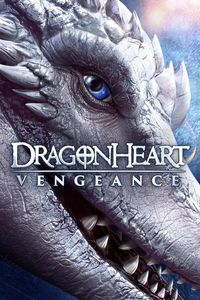
    Dragonheart Vengeance (2020)

    (On Cable TV, July 2020) No one will blame you for not knowing that Dragonheart Vengeance is the fifth movie in the Dragonheart series, considering that all sequels to the theatrical film have been released straight-to-video. By this point, they’re less sequels than shared-universe entries. Unfortunately, that doesn’t mean much: the script is sparse, yet filled with very familiar fantasy elements (an orphan, a dragon, a quest for vengeance) thrown together without much conviction. Director Ivan Silvestrini’s work is made worse by a visibly limited budget that barely allows the film to exist in its chosen epic fantasy subgenre: the special effects are disappointing, the storytelling is dull and the production values rely more on the viewer’s indulgence than anything else. If you feel that Dragonheart Vengeance is dull just by reading its logline (“Lukas, a young farmer whose family is killed by savage raiders in the countryside, sets out on an epic quest for revenge, forming an unlikely trio with a majestic dragon and a swashbuckling, sword-fighting mercenary, Darius.”), then you won’t be any happier with the final product. Rachel Weisz voices the dragon, but wisely doesn’t appear on screen. Good for her—I hope she enjoyed the paycheque, and she won’t have to worry too much about any bad reviews because I can guarantee you that we will all forget Dragonheart Vengeance’s existence within a few weeks.

  • Nuts (1987)

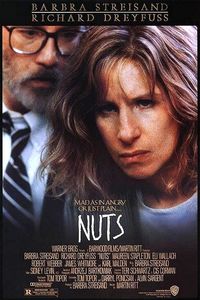
    Nuts (1987)

    (In French, On TV, July 2020) Either I saw Nuts before (likely!) or the plot points are now commonplace, because I had a strong impression of déjà vu while watching this courtroom thriller. Featuring Barbra Streisand as a quick-to-anger high-class prostitute who is accused of murder, much of the film consists in determining whether she is apt to go on trial. Perhaps its biggest assets are the two headliners: Streisand is watchable no matter the circumstances, and Richard Dreyfus was seemingly everywhere at the time that Nuts was shot and his performance shows why. (On the other hand, having Leslie Neilsen in one of his last dramatic roles as an abusive john definitely doesn’t play as well to later generations used to his comic roles.) There are a few good moments here and there (although the big “click” in the lawyer’s head definitely felt predictable and formulaic), but Nuts doesn’t have a clear focus on what it’s trying to do. For one thing, it plays with the question of craziness or not, but in flashbacks it seems all too ready to reassure the audience that there is no question there. Troublingly, the morality of the film revolves around Streisand’s protagonist, because it insists that she’s a good person even though the way she behaves would not be tolerated in any family, workplace or friendship. I wonder how much the passing of years has exposed the weaknesses of the film, since much of the stuff here seems fairly familiar: contemporary reviews called Nuts daring, whereas it feels more like a movie of the week now.

  • Peckinpah Suite (2019)

    Peckinpah Suite (2019)

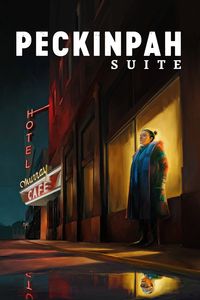
    (On Cable TV, July 2020) If you’re looking for an overview of Peckinpah’s movies and career, documentary Peckinpah Suite is not the ideal film. It’s best approached by Peckinpah fans who want to know more about a specific moment in his life—namely, the period during which he retired from Hollywood and went to the small Montana town of Livingston to stay at the Murray Hotel (in a room since renamed the “Peckinpah Suite”) and then a mountain cabin. The viewpoint character here is Peckinpah’s daughter, who travels to Livingston in an attempt to retrace her father’s steps and reconnect with his memory. The pretext is thin (the site’s suite has been remodeled to cover the director’s bullet holes, and his cabin has changed owners a few times—what can possibly remain of Peckinpah?) but it’s not a bad excuse to hear about Peckinpah from his estranged daughter. It ends with a semi-elegiac overview of Peckinpah’s death. Visually, the documentary does feature good visual material, especially in its use of drone footage for sweeping overhead shots featuring the natural beauty of Montana. While it provides some interview footage and an overview of Peckinpah’s influence (through interviews with local film students), Peckinpah’s Suite belongs to “for the fans” category rather than a standalone piece.

  • Ford v Ferrari (2019)

    Ford v Ferrari (2019)

    (On Cable TV, July 2020) I’m not a car guy in real life, but I can play one when I go to the movies. It sure helps that Ford v Ferrari is so enjoyable—even if you don’t like the idea of a film focused on Ford’s drive to win the 1966 Le Mans race, there’s still quite a bit to appreciate in the clash of oversized personalities inherent in this kind of quest. Matt Damon (who looks better as he ages and gets heavier) is his usual dependable self as none other than the legendary car designer Carroll Shelby, while Christian Bale turns in another great character performance as the abrasive overconfident driver Ken Miles. Great special effects put us in the middle of the action, which leads to credible race sequences. There is some suspicious irony in having audience cheer for Ford (of all companies!), although it does play with this by having us cheer for individuals within Ford overcoming the corporate interests. Still, Ford v Ferrari remains a breezy good movie, fun until the sobering end when the real facts catch up to the dramatization.

  • Juste la fin du monde [It’s Only the End of the World] (2016)

    Juste la fin du monde [It’s Only the End of the World] (2016)

    (On Cable TV, July 2020) Families imploding is a traditional topic matter for theatrical pieces, and Xavier Dolan’s Juste la fin du monde follows in the footsteps of such great pieces as Osage County in revealing a progressively dysfunctional group of people. Alas, Dolan puts too much trust in the original theatrical material in his film adaptation because it comes across badly and over-stylized. The syncopated dialogue, the overly aggressive characters and the glum subject matter are from the play and they may have been better left there, because they come across as artificial. Then there are the other things that torpedo the film. The constant close-ups of the characters’ faces approach a near-parodic rhythm during the initial introduction scene, and the universality of French-European accents in a story clearly set in French Canada is weird enough to be disorienting. I do like Marion Cotillard, Léa Seydoux and Vincent Kassel a lot, but they have unbelievable characters here, with Cassel’s character being a simply unbelievable cauldron of constant fury—even the characters get tired of him. Juste la fin du monde plays in caricatures and, by the end, seems almost entirely meaningless. There are the usual Dolan thematic obsessions—gay protagonist, mother-son relationships, blunt use of pop music and difficult topic matter—but they seem mishandled and ultimately don’t lead anywhere.

  • Tom à la ferme [Tom at the farm] (2013)

    Tom à la ferme [Tom at the farm] (2013)

    (On Cable TV, July 2020) Amazingly enough, there are still a few people out there that hold that genre fiction is “easier” than straight drama—that anything with crime, fantasy or extrapolation is somehow less respectable than strictly mimetic realism. That kind of attitude often leads to spectacular misfires when those creators finally deign to try their hands at those “lesser” forms of creation, as they clearly don’t understand what makes genres tick. Most of my go-to examples are from literature (and science-fiction literature at that), but I was reminded of those misfires in tackling Tom à la ferme, which feels a lot like a thriller in which the writer can’t be bothered to thrill. It’s a good thing that I’ve seen other better Xavier Dolan movies before this one, because it feels like an indulgent semi-parody. As a gay protagonist (check) goes back to rural Québec to meet his dead boyfriends’ mom (check) to the sounds of insistent pop music (check), we also meet the dead boyfriend’s brother, who’s also gay (check) and unusually violent (check). I don’t recall slow motion (not check), but there are enough sustained shots of the protagonist’s face against a variety of backgrounds that it actually makes more sense to learn that Dolan plays the protagonist and writes and directs himself. But my biggest issue with Tom à la ferme is that it builds the antagonist to fearsome levels but doesn’t actually go through any payoff—the characters run away, they find evidence that the bad person did a bad thing and the credits roll—if you want a damming illustration of the film’s lack of climax, try reading the Wikipedia plot summary cold: it’s accurate, intensely anticlimactic and it clearly illustrates the film’s inability to conclude. While the film does have its dramatically intense moments, they don’t really lead anywhere. There’s a genre bait-and-switch here, and I don’t like it. Fortunately, Dolan has done much better elsewhere.

  • Bad Girls (1994)

    Bad Girls (1994)

    (In French, On Cable TV, July 2020) There were a surprising number of revisionist westerns in the 1990s, each one poking and prodding at various aspects of the classic Hollywood western tradition. The male domination of the genre is clearly the thing that Bad Girls wants to discuss, but there had to be a better way of doing it. With Madeleine Stowe, Mary Stuart Masterson, Drew Barrymore and Andie MacDowell, Bad Girls attempts to upend the usual western clichés by making the prostitutes the heroines of their own stories, taking revenge over bad men. It’s not a bad premise, but the way the film goes about it feels subservient to a male gaze in its execution. (Not to mention rape as a near-omnipresent plot device.) Our heroines are often scantily clad, going for titillation as much as empowerment. It really does not help that the film is executed flatly, with little in terms of wit and grace in the dialogue and situations. Director Walter Scott seems content to play with the images of the genre without doing anything much with them. Even in presenting women as western heroines, the film errs in caricatures. I still think that the premise holds a lot of potential, and I am a bit surprised that a quick search for “feminist western” doesn’t reveal any well-known successors. But Bad Girls doesn’t set much of an example—it simply doesn’t know what to do with its potential, and wastes almost all of it along the way.

  • The Death & Life of John F. Donovan (2018)

    The Death & Life of John F. Donovan (2018)

    (On Cable TV, July 2020) Expectations ran high about French-Canadian wunderkind Xavier Dolan’s English-language debut The Death & Life of John F. Donovan, especially considering the calibre of the Hollywood cast that joined the project. But it doesn’t take all that much time to realize that the whole thing is a misfire. Emotionally fake and yet self-satisfied with itself, it features characters doing either implausible things (such as having an eleven-year-old being pen pal with a troubled star actor) or being amazed at their own actions when they’re fairly standard stuff (i.e.: a journalist being seduced by a rather humdrum story). The film quickly undermines its own internal coherence, as it mixes a framing device with two other previous plotlines, except that the framing device can’t even be aware of much of the previous timelines—it’s a bit of a mess and it rings hollow the way that other similar pretentious movies as The Goldfinch also did. The Death & Life of John F. Donovan is slick all right—and you don’t have to look all that deeply to spot Dolan’s usual cinematographic tics or thematic obsessions. I’m always lenient toward movies that take a poke at celebrity and filmmaking, but even considering that, The Death & Life of John F. Donovan is a disappointment, taking itself far too seriously from the title onward.