Month: July 2020

  • Mommy (2014)

    Mommy (2014)

    (In French, On Cable TV, July 2020) Any look at Xavier Dolan’s filmography has Mommy near the top of his critical notices and while the film is flawed, it does have some undeniable strengths. After a clumsy opening text that could have been handled in two or three lines of dialogue, we’re off to the races: A mother/son relationship (in keeping with Dolan’s obsessions) featuring a deeply aggressive young man kicked out of a specialized school and coming home to make life hell for his mom. If you’re looking for a nice, fun, comforting film, this isn’t it: there are a few scenes here that are excruciating to watch, and Mommy makes a bold bet in making a main character out of an irremediably despicable young man. The conclusion is forgone, and the way to get there is just as difficult. Dolan’s artistic choices are sometimes questionable—such as filming in 1 × 1 aspect ratio and justifying it as “intimate” when generations of filmmakers have presented domestic dramas in more standard formats. Anne Dorval is terrific as the titular mommy, while Antoine Olivier Pilon is perhaps too good as the hateful son. Also remarkable is Patrick Huard in a markedly more serious and less admirable role as usual. Mommy is certainly not easy to watch nor perfect, but there are a handful of scenes with tremendous dramatic intensity, and it’s executed better than usual.

  • “Crocodile” Dundee II (1988)

    “Crocodile” Dundee II (1988)

    (In French, On TV, July 2020) If you have a box office hit with a good premise, the best and easiest way to make more money out of it is to deliver another slight variation. Since the main attraction of the Crocodile Dundee series is both Dundee’s character and his fearless reactions at being out of his element, sequel Crocodile Dundee II keeps the character but inverts the structure: While the film begins in Manhattan to show more of Dundee’s antics in the urban jungle, familiar criminal plot mechanics soon bring the action back to the Australian outback, with Dundee playing with deadly opponents on his home turf. The result does feel a bit more Hollywoodish than the original—a bigger budget polishing the rough edges of the original Australian production, with an interest in reaching a bigger, less indulgent audience. The criminal plot is perfunctory, just expansive enough to bring the protagonist in contact with deserving targets all the way home. The point of Crocodile Dundee II remains Dundee’s character, and that does carry over the film. The result is not bad, and neither is the series star Paul Hogan, but it doesn’t reach for sophistication and does feel like much of the same.

  • Camping sauvage (2004)

    Camping sauvage (2004)

    (In French, On TV, July 2020) French-Canadian cinema has a decent tradition of going for big crowd-pleasing comedies, and Camping Sauvage is clearly set in this tradition, helped along by input from a number of the defunct but not forgotten Rock et Belles Oreilles comedy troupe—Yves Pelletier and Guy A. Lepage showing up in key roles, André Ducharme helping write the script and fan-favourite Sylvie Moreau playing the lead female role. The premise isn’t meant to be high art, as a Montréal financial high-flyer witnesses a criminal act by a mob figure and is immediately sent packing in a witness protection program until the trial. Which means being given a new lowest-of-the-low identity working in a camping establishment, with a biker gang headquarters right across the street and a policeman contact more interested in romantic jealousy than professionalism. Camping sauvage is slickly directed by most standards, although the humour is very French-Canadian in patois and cultural reference. Still, it’s a pretty good time—pair it with De Père en Fils (either the original or the sequel) for similar material.

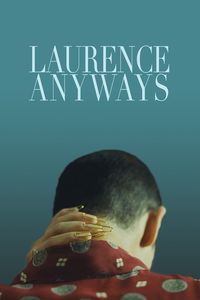
  • Laurence Anyways (2012)

    Laurence Anyways (2012)

    (In French, On Cable TV, July 2020) Amazingly enough for a self-professed Canadian cinephile, I had managed to avoid watching any of wunderkind Xavier Dolan’s movies until now. Fortunately, here are CanCon requirements flying to the rescue, with a national movie cable channel broadcasting no less than five of his films for Canada Day. First up, one of his earliest: Laurence Anyways, arguably his critical breakthrough. From the evidence presented by that film, it’s easy to see what the fuss about Dolan is about: a difficult topic treated with panache and sensitivity, as a transgender woman has romantic issues with a longtime partner after her transition. The director’s work is made obvious through flourishes such as extended montages set to blunt-force pop music, slow-motion shots and clear shifts in tone and rhythm—it’s showy work, but it clearly shows fluency with the tools of the trade. The actors do good work (especially Melvil Poupaud, in a dual-gender role, and Suzanne Clément as the long-suffering girlfriend) and the result clearly exceeded my moderate expectations considering the film’s intimate, non-genre premise. The quebecicity of the film is zigzagged through the protagonist’s mid-Atlantic accent. Still, despite my overall good impression of the result, Laurence Anyways can sometimes be a bit too much, as the two-plus-hour running time isn’t fully deserved—simply avoiding the slow motion would significantly improve the film’s running time.

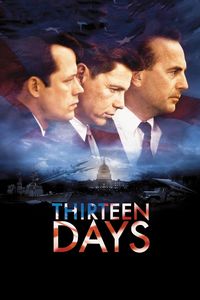
  • Thirteen Days (2000)

    Thirteen Days (2000)

    (In French, On Cable TV, July 2020) As I watched Thirteen Days, I was struck not so much by the familiar story of the Cuban Missile Crisis of 1962, but by how any movie that sets out to explore a presidency’s response to a crisis will be instantly measured against the administration in place. As of mid-2020, with more than 125,000 Americans dead from a global pandemic, an impeached (but not convicted) president, an incompetent administration and a current of urban unrest lingering from protests worsened by the federal response, this is the kind of film to twice underline how important it is to have capable leadership in place when things go wrong. It is very much a heroic presentation of the crisis, as seen by a protagonist close to JFK. Thirteen Days does manage to find creating ways to pump up its action quotient, most notably by going to the forefront of the not-quite-conflict in following reconnaissance jet pilots are they get potshots while surveying the Cuban countryside. There are touches of techno-thriller tropes in the way the film spans the chain of command from the president to the pilots, and slightly fetishizes the technology of the time. Political brinksmanship also comes into play as the president’s people try to figure out how to de-escalate the situation with the Russians. Thanks to the professional work from director Roger Donaldson, the film moves at the briskest pace it can afford while still offering a nicely package summary of the action—within the usual Hollywood indulgences, most notably in what the lead character does or knows. Kevin Costner plays that protagonist well, while Bruce Greenwood succeeds in the tough assignment of playing John F. Kennedy. The portrayal of the events is credible, playing into our preconceived notions of serious men in shirtsleeves, looking at documentation late in the night and bouncing ideas off each other to try to resolve the crisis. Of course, this is far more poignant now in 2020 than it would have been in 2015 or (hopefully) in 2021: the current president has proven more competent in creating crises than dealing with existing ones—he will be a blot on the presidency, and we can only be thankful that he will be replaced with good people in charge.

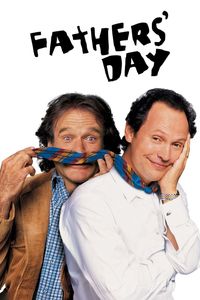
  • Fathers’ Day (1997)

    Fathers’ Day (1997)

    (In French, On Cable TV, July 2020) Some movies are about as forgettable as their titles, and so it is that Fathers’ Day is about as generic as its titular holiday. The premise does have a bit of interest to it, as a woman separately manipulates two ex-suitors into believing that they have a hitherto unknown son… and that he needs to be found. It wouldn’t be nearly as funny if the two men didn’t meet and share notes at some point, which does happen once the action gets underway. Of course, such material needs strong comic actors, and so perhaps the one thing that most people will remember from the film is that it’s Billy Crystal facing down Robin Williams as two very different father figures. The generic Hollywood comedy star vehicle approach means that the script leaves many opportunities for Crystal and Williams to mug at the camera and do what they do best. Williams is his usual hyperactive polymorphous persona as a dramatic drama teacher, while Crystal gets to punch an unusually large number of people in the face in a lawyer’s role. The picaresque adventure takes them on the road across California to find out what happened to their son, taking us from scenes shot in Los Angeles, San Francisco and Reno (at least one of those cities doubling for Sacramento) along the way. Much of the film is very generic once you get past the lead actors, although seeing late-1990s Julia Louis-Dreyfus is fun, and the atmosphere (specifically the overwhelming music) is starting to date the film as a period piece. I didn’t hate Fathers’ Day as much as some other reviewers did, but neither did I find it all that compelling.