Month: October 2020

  • Bride of Re-Animator (1990)

    Bride of Re-Animator (1990)

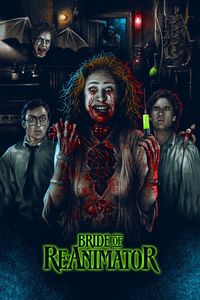
    (In French, On Cable TV, October 2020) While Bride of Re-Animator does build up to a suitably high-energy finale, it does take a lot of time to get to the Bride of Frankenstein reprise: Much of the film is spent getting the pieces in the correct order, even flying off the face of the logic established by the first film or its aftermath. Held together once again by the over-the-top performance of Jeffrey Combs as mad scientist Herbert West, Bride of Re-Animator does idle a lot of the time, only going for broke in its last half-hour with gory effects, grotesque creatures and a heart-ripping finale. It’s certainly a letdown from the first film, even if it clearly plays in the same playground with a bit more technical polish. The not-that-serious tone does help a lot in not entirely dismissing the result—if you’re even remotely interested in comic(ish) gory horror, Bride of Re-Animator is going to be good enough even though it’s clearly a second-tier effort despite some late-film energy.

  • Mountaintop Motel Massacre (1983)

    Mountaintop Motel Massacre (1983)

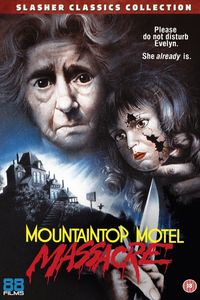
    (In French, On Cable TV, October 2020) Sometimes, I wonder if everyone and their dogs were filming slasher movies in the early 1980s—there are so many of them, with such slight variations, that viewers at the time must have been sick of them in short order—no wonder the genre deservedly went into severe eclipse after a few years. Mountaintop Motel Massacre is not fondly remembered as an exemplar of the genre and even a casual look will quickly reveal why: Uninspired direction blandly executed a script filled with slight variations on slasher clichés. The killer is a crazy middle-aged woman (that’s not even a secret), the setting is a dilapidated rural motel and the weapon is a sickle. That’s all you really need to know—the rest is just kills, kills, kills, as boring as they are devoid of meaning, theme or narrative meaning. So dull, so incredibly dull.

  • Return of the Living Dead III (1993)

    Return of the Living Dead III (1993)

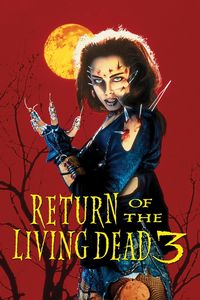
    (In French, On Cable TV, October 2020) My movie selection is eclectic and far more dependent on TV schedules than you’d think, and if I had my choice, I’m not sure that I’d go through the Return of the Living Dead series in ante-chronological order: After seeing the first, I skipped over to the fourth and just now watched the third. Although, considering the reputation of the series as getting worse and worse, maybe that watching order makes more sense: Whet your appetite with a solid first film, then go to the bottom and work your way back up. Return of the Living Dead III is certainly a step up from its disconnected follow-up Necropolis: It even approaches Hellraiser body horror territory at times by following two teenagers, as one of them is brought back from the dead and discovers that the only way to avoid succumbing to zombie urges is to practise extreme masochism. What’s not there, however, is the humour of the first instalment: this third entry is increasingly grim, and the final act of the film gets darker and approaches Day of the Dead levels of nihilism. That final act feels contrived, especially as the film could have ended minutes earlier with an equally powerful last shot—but no, it just keeps going in darker and more frustrating territory the longer it goes on, renewing with hackneyed weaponization clichés and terrible operational procedures that could have been left elsewhere—although the zombie cyborg thing is not bad. Under director Brian Yuzna’s supervision, Return of the Living Dead III is a blend of intriguing elements sometimes used effectively, and sometimes in ways that are too reminiscent of other zombie films. Melinda Clarke is not bad as the teenager who eventually becomes a vision of masochistic fetichism, but far more care has been spent on the gory special effects. Fans of the subgenre will find something in here to like, but I just miss the comic tone of the series’ first film. Although, come to think of it, I still have the second instalment to watch.

  • Justice League vs. the Fatal Five (2019)

    Justice League vs. the Fatal Five (2019)

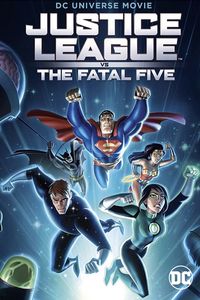
    (On TV, October 2020) At this point, I’m watching the DC animated movies with a very specific perspective: I’m not a completionist nor a big fan of the DC universe, so I don’t really care about the overall details of the universe, nor the specifics of the rather dull fights that feel contractually obligated throughout the films. I have a better time watching the films for their quieter moments: the relationship between the characters or the themes that emerge from the instalments once in a while. For Justice League vs. the Fatal Five, this means that the best bits are some dialogue snippets early in the film, as the main plot is being put together, the overall theme of dealing with mental illness, and a glimpse at the far future of the DC universe thanks to time-travel shenanigans. There’s some surprisingly compelling material here about characters reacting to PTSD and mental health issues, with a few good character moments for familiar characters such as Batman and Superman. Still, my interest in the film dwindled throughout its extended third act, as one meaningless fight after another takes the place of the dialogue and character building. But that’s more or less par for the course whenever we’re dealing with the animated DC universe: The good material is front-loaded, and by the time the fights start, you can fast-forward to the expected conclusion.

  • Cult of Chucky (2017)

    Cult of Chucky (2017)

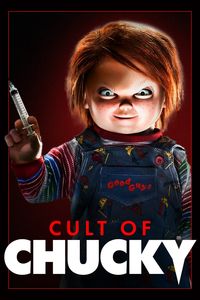
    (On TV, October 2020) I really wasn’t expecting much from Cult of Chucky considering the bland return to form of the previous Curse of Chucky, but this seventh instalment ends up recapturing some of the inspired lunacy of the previous films’ best moments. The tone is given early on, as a now-adult victim of the killer doll’s mass-murder sprees is revealed to keep the head alive… for torture. Bringing back bits and pieces of nearly ever single instalments so far (at least as much as I can remember from scattered viewings of the series), this Cult of Chucky is pleasantly over-the-top throughout, but goes fully crazy (in a good way) for the last thirty minutes of the film: By the end, the rules of the series are completely upended and the film sets itself up for even further instalments in traditional nihilistic fashion. (Although, as of 2019, the series seems to have rebooted.) The various gory sequences are sufficiently over-the-top that they have no relationship to reality, making them a bit easier to take. I still don’t like the series, and my tolerance of Cult of Chucky only goes so far, but this seventh instalment goes to surprisingly new places and ends up more entertaining than expected—perhaps only second to the metafictional comedy of Seed of Chucky.

  • Dans la brume (2018)

    Dans la brume (2018)

    (On TV, October 2020) I briefly interacted with director Daniel Roby prior to the release of his debut film La peau blanche back in 2003 (I coded the first iteration of the film’s web site) and we shared a common friend for a decade afterward, so I was favourably predisposed to see what he’d been up to recently, and that turns out to be the high-concept decently-budgeted French disaster film Dans la brume. The film’s first Big Idea is to have toxic gas emerging from the underground to blanket Paris with a thick multi-storey blanket of toxic fog, forcing two of our three main characters to find refuge in the top-floor apartment of their building. The third main character, in Dans la brume’s second Big Idea, is a teenager with a chronic health condition living in a hermetically-sealed bubble that periodically needs to be attended to during the resulting power outage. The main elements having been introduced, the script then goes on to further complicate the situation: ever step forward, such as getting out of the apartment, is accompanied by a step back—some of them frustratingly arbitrary. Still, there’s an interesting blend of thriller and science-fiction thinking at play here, with some horror thrown in late in the script in time for an ironic finale that is foreshadowed long before. There’s an eerie chill to the sequences in which the rooftops of Paris emerge from the toxic mist, or when the characters venture in the fog itself. Dans la brume is more gripping than expected, and while I have my concerns about the mean-spiritedness of the last act, the result is a striking piece of genre entertainment.

  • From Dusk Till Dawn 3: The Hangman’s Daughter (1999)

    From Dusk Till Dawn 3: The Hangman’s Daughter (1999)

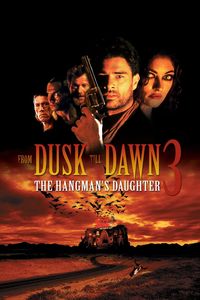
    (On Cable TV, October 2020) Filmed nearly concurrently with From Dusk Till Dawn 2: Texas Blood Money, From Dusk Till Dawn 3: The Hangman’s Daughter takes an opposite route in going back in time to deliver a prequel. Far closer in structure to the first film than the second, this prequel goes back to the late 1800s to feature none other than writer Ambrose Bierce heading to meet Pancho Villa and encountering a few other characters along the way, converging over the familiar dive bar that forms the nexus of the series. It all culminates into a nicely historical version of that concluding shot, except that we’re expecting it this time around. The point of the film is the concluding half-hour’s worth of gore effects as the characters battle vampires in the Aztec ruins underneath the bar, but there’s some additional ambition in featuring a historical character like Bierce and adapting his cynicism to the setting of the story—Michael Parks nicely drawls though Bierce’s convoluted speech patterns and sardonic outlook, and The Hangman’s Daughter wouldn’t be nearly as interesting without him. (Robert Rodríguez contributed to the story.) The film does have a few other highlights: Danny Trejo makes his usual cameo, Temuera Morrison is reliably good in a small role as the Hangman, and Ara Celi does look nice as the titular daughter. The film is clearly aimed at audiences looking for more of that grindhouse exploitation feel. Others may criticize how the cinematography is yellow-tinged, the story meanders in its first hour, and some moments could have been streamlined. But if you’re looking for a slightly more ambitious take on the same find of western/vampire hybrid of the original, The Hangman’s Daughter isn’t too bad.

  • Flower Drum Song (1961)

    Flower Drum Song (1961)

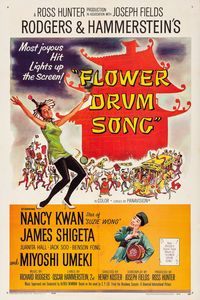
    (On Cable TV, October 2020) In racial sensitivity terms, I expected the worst from 1961 musical romantic comedy Flower Drum Song, but was surprised at how much of it still holds up decently today. Oh, it’s certainly not immune to criticism: Its central love triangle inelegantly recreates some Asian stereotypes, the characters are sometimes written in blunt archetypes and the fantasy portrait of San Francisco’s Chinatown is in unrealistic Technicolor. But considering that even sixty years later, it’s still one of the rare Hollywood movies featuring a mostly Asian cast (albeit of mixed nationalities) with male Asian romantic leads, it’s not a bad idea to look at the positive. It does feature racialized characters defined by their own personality traits, with a minimum of condescension, and they all have agency to pursue their own choices. While I may have issues with the film’s length, the way it presents the immigrant experience with far too many references to white-American cultural makers, or the uneven nature of its musical content, it still leaves a striking impression. If I’m less enthusiastic about the film, it’s largely because it’s from a Rodgers and Hammerstein musical, and I don’t particularly like these kinds of musicals as much as others. Still, there are good moments: Nancy Kwan is great (despite being dubbed) in “I Enjoy Being a Girl,” there is a rather dazzling mixture of musical elements in “Chop Suey” (despite lyrics that I find questionable), and “Gliding Through My Memoree” is a truly amusing bit of countercultural appropriation. Still, much of the film’s interest is in the ethnic details rather than the increasingly tedious romantic hijinks that end up forming the film’s last third. But overall, the film remains a high point of Hollywood openness to the Asian-American community—and one that, sadly, would remain as such for decades: considering the fuss that attracted 2018’s Crazy Rich Asians, there’s still quite a bit of work to do there.

  • Overdrive (2017)

    Overdrive (2017)

    (In French, On TV, October 2020) I’m a very good audience for car-centric action movies, and since we only get a Fast and the Furious instalment every other year, I have to bid my time with something in the meantime. Something, in this case, is Overdrive, and it’s not much of a stretch to call it a Fast and Furious derivative: Written by the screenwriters who have worked on the series (albeit on 2 Fast 2 Furious, easily the worst of the bunch), this film takes us to Marseilles, where a team of half-brothers specialize in stealing expensive cars for rich people. The plot gets underway when they are caught in the cross-fire between two very rich men: Agreeing to steal cars from one to the other, their scheme quickly becomes more complex with moves and counter-moves that all pay off in the last third of the film. Scott Eastwood stars in the film (making extra funnier the constant references to his character’s father), along with the always-attractive Ana de Armas and Freddie Thorp in a role meant for comic relief. Still, the stars here are the cars to be stolen, and the various action sequences that pepper the narrative. Ably directed by Antonio Negret from a production put together by notables such as Pierre Morel (of Taken fame), this is a lower-budgeted but still entertaining attempt at showing fast cars zipping by. The climactic sequence is set on the twisty roads near Marseille and includes some good moments along the way. Still, it’s not much compared to the best examples of the genre: Overdrive struggles with middling actors, bland dialogue, extremely familiar narrative engines and a tendency to fall in love with the cars it managed to bring on set. But if you’re looking for a decent-enough car thriller, this is better than many other examples: it’s entertaining enough to be worth a quiet unassuming look.

  • From Dusk Till Dawn 2: Texas Blood Money (1999)

    From Dusk Till Dawn 2: Texas Blood Money (1999)

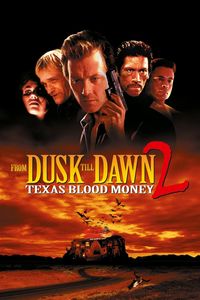
    (On Cable TV, October 2020) Considering that much of what was great about the first From Dusk Till Dawn was its out-of-nowhere genre twist midway through, it’s almost a given that any follow-up will not be able to get that impact, yet From Dusk Till Dawn 2: Texas Blood Money does keep the pretence running a bit too long. After a meaningless prologue (featuring Bruce Campbell and Tiffani Thiessen), the film spends too much time assembling its band of criminals going after a bank heist before derailing the plan with the sudden intrusion of the good old vampire bar. Danny Trejo has a small role to keep up appearances, then we’re off to the bloody stuff. While the film’s level of interest fluctuates throughout, it does work itself to an interesting climax during the robbery itself, as our protagonist (a rather likable Robert Patrick) finds himself stuck between robbing vampires and opposing police forces in an isolated Mexican bank. The numerous vampire gore gags that follow are the reason why the film is worth a look for fans of the first instalment, and it’s where director Scott Spiegel seems to have the most fun as well. It doesn’t make Texas Blood Money a good movie (and I can think of many ways, most of them incompatible with the film’s low-budget, which would have made the result more interesting) but at best it’s an entertaining watch for those who want just a little bit more of the series’ modern western approach to the vampire myth.

  • Filière 13 (2010)

    Filière 13 (2010)

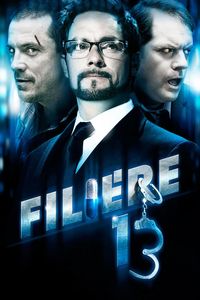
    (On TV, October 2020) French-Canadian cinema has an addiction to cop comedies, explained by their relatively low costs, high audience appeal and ease of execution when many French-Canadian actors have a comedy background. There’s usually one every year or so, which is a lot considering that barely a dozen French-Canadian movies ever get high-profile releases. Just have the characters run around Montréal in goofy situations interspaced with stunts or gunplay and you’ve got enough to get audiences in theatres. But not all of them are equally successful, and Filière 13 is a far cry from such successes as Bon Cop Bad Cop or De Père en Flic: While helmed by veteran actor Patrick Huard, this mixture of police action and comedy feels like an awkward mashup rather than a truly satisfying hybrid. The issues start with the script, which can’t quite figure out what story it’s telling: the film starts by showing us three policemen with serious mental health issues (headaches, heartache, and panic attacks), then sidelines two of them in a meaningless stakeout, while the third one gets increasingly stalkerish in his behaviour toward his ex-wife. But everything feels like a subplot until the stakeout characters go for full police overreach and fixate their sights on a white-collar criminal—at which point the real plot of the film kicks in midway through –and even then, in ways that aren’t fully satisfying: The cowboy cop trope is overused to the point of making us care less and less about the characters skirting the edge of sociopathic behaviour. Whatever effective treatment of mental health issues is sidelined in favour of reprehensible behaviour and strikingly unpleasant comic set-pieces: there’s a homophobic sequence here that would have been offensive and out-of-touch even a decade earlier, and the comedic aspect of it (which could have worked in other circumstances) is made worse by what is supposed to be a serious character’s reaction to it. Women don’t get plum roles in Filière 13, with nearly all of them being portrayed as sources of conflicts, and the remaining one played by Anik Jean, being cute to the point of unbelievability. Still, the men don’t do any better: Claude Legault, Guillaume Lemay-Thivierge and Paul Doucet have intriguing characters that are then completely steamrolled by the script. Even André Sauvé (no relation) is a bit of a drawback as a psychologist written so broadly as to be unlikable. In other words, Filière 13 seems to ape a better movie’s building blocks without quite knowing how to put them together—in doing so, it actively manages to do worse than following the usual formula. It’s no wonder it sank without a trace: there have been much better examples of the form before and after.

  • Curse of Chucky (2013)

    Curse of Chucky (2013)

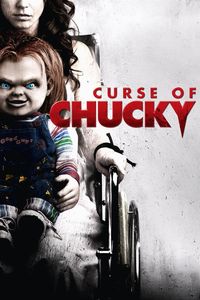
    (On TV, October 2020) Whatever progress Seed of Chucky may have made in transforming the series in a satirical self-aware comedy/horror hybrid is almost completely gone in Curse of Chucky, which goes back to the schlock horror roots of the series and loses a lot of interest along the way. This time around, Chucky finds a way to get into the life of a disabled woman, her mother, sister and niece—the results aren’t pretty, and they’re almost entirely without self-conscious irony. We’re left with just a standard-issue slasher with 2010s technical polish. Only a late-movie cameo by Jennifer Tilly ties it all back together, but it’s too late by then: Chucky’s insufferable quips have done enough damage (misogyny doesn’t help), and the throwback to the straight-up horror is more repetitive than amusing. But you can’t even blame this shift in the direction of the franchise being taken over by lesser creative talents: writer-director Don Mancini is once again at the helm of Curse of Chucky, so he presumably knows where he wants to go here—creative fatigue may be to blame given, well, where do you go after six instalments of a premise that’s not exactly expansive? Visually, there are a few interesting things about this instalment: the opening credit sequence isn’t bad, and there are a few other findings here and there. It also takes a surprisingly long time for the plot to actually start, and the epilogue is protracted far too long. But even those distinctions are not quite enough to make Curse of Chucky more than a perfunctory instalment in a minor franchise—it doesn’t have the gonzo weirdness of its immediate predecessor, which is what was most interesting about it. But then again—maybe getting away from Seed of Chucky enabled the previous film to offer a series conclusion on its own terms.

  • Extra Ordinary (2019)

    Extra Ordinary (2019)

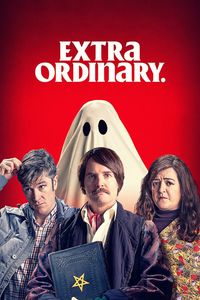
    (On Cable TV, October 2020) My expectations ran low in watching Extra Ordinary: Seven months in these pandemic times, the tap of high-budget Hollywood movies has been turned off even on cable channels such as Canada’s Crave, and what’s being shown instead of blockbusters is a mixture of smaller-budgeted, foreign or Canadian efforts. You can never completely guess what you’re going to get, although I appreciate the exposure to smaller, more daring movies. Fortunately, it doesn’t take much more than a few minutes for Extra Ordinary to establish its unique tone. Set in a small Irish town, it features a homely woman still feeling guilt over the death of her father, a renowned psychic investigator. Eschewing any funny paranormal business despite unusual aptitudes, she tries to focus on being a driving instructor… until a handsome man steps into her car and asks for help in getting rid of his deceased wife’s intrusive ghost. Further trouble comes brewing when a local one-hit wonder musician makes a deal with the devil for his next album, and starts looking at virgins to sacrifice. The plot is not that funny, and that’s because much of Extra Ordinary’s initial moments are spent building a universe of small haunted garbage cans, ghosts leaving messages saying, “YOU MUST PAY… THE CAR TAX,” or hauntings trying their best to even get the attention of the living. Aside from the occasional explosion, the comedy here starts out gently, with a good-nature looniness that gradually evolves into crazier and coarser material—by the end of the film, we’ve reached the logical and raunchy end point of the “can’t sacrifice her if she’s not a virgin,” train of thought without the film having lost its good-natured whimsy. It’s really a pleasant surprise, and much of the credit goes to the writer-director pair Mike Ahern and Enda Loughman, as well as Maeve Higgins as the sweet centre of the story. (Barry Ward is also good in a role that eventually requires a bit of rapid character-switching.) The special effects are numerous and used effectively, while the film often makes effective use of pseudo-archival footage as a narrative device. Extra Ordinary flies by at 94 minutes, and ramps up effectively from silly small-town psychic to a demonic portal to hell climax. It’s quite a nice surprise, and a very good genre effort that explores semi-fresh territory with irreverent humour.
  • The Call of the Wild (2020)

    The Call of the Wild (2020)

    (On Cable TV, October 2020) I did not expect an adaptation of Jack London’s classic novel of Gold Rush adventure to pack in so much CGI, but once you commit to full CGI in order to get pixel-perfect performances out of your animal characters, you might as well commit to what’s nearly a fully animated film. Not even heading over to the Yukon for location shooting, The Call of the Wild updates London’s story to include pulse-pounding special effects showcases, a dog that looks completely generated by computer, and a script tuned to modern sensibilities. It does sound awful to say that the dogs don’t feel real, and that’s true—but it would be selling the movie short to stop at that, because what you do gain from this trickery is a movie that moves quickly and has precise control over its visuals. Directed by animation film veteran Chris Sanders, the film does find its best moments in very real and human performances: Harrison Ford as a hermit that comes to care again about the world through his dog, but also Omar Sy as a French-Canadian postal worker and a welcome appearance by the striking Care Gee. Still, it’s an adventure story, and an episodic one at that—the overall dramatic arc is for the dog protagonist to free himself from humans, and that’s the point of it. I probably would care a bit more if I was a dog person, but even as it is, I had a good-enough time with The Call of the Wild. It’s far from a perfect film and it does struggle in trying to define its audience, but it moves quickly at times, and can be worth a look if only for the not-quite-perfect visual effects.

  • Twelve aka Charm City Kings (2020)

    Twelve aka Charm City Kings (2020)

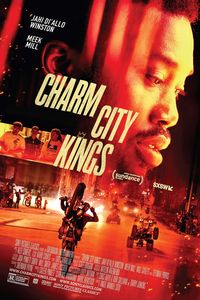
    (On Cable TV, October 2020) In many ways, Charm City Kings is a very familiar story about a young man from disadvantaged circumstances measuring the easy pickings from a life of crime versus the harder payoffs of going straight. There’s been plenty of similar films, such as A Bronx Story or Boyz n the Hood. This one distinguishes itself early on with some motorcycle stunting, as it introduces us to a black boy whose brother was killed in a police raid and who idolizes his motorcycle skills. Getting a motorcycle is the ultimate goal—everything else will follow. Torn between the influences of a friendly police officer and that of a local hoodlum, our protagonist has to decide what path he’s going to take. Cue romantic subplot, overwhelmed single mom, dubious friends and so on. It’s a familiar story, sure, but executed with some deftness—the motorcycle elements make some moments move faster than comparable films. The rest is executed well enough, although my empathy for the protagonist fell off a cliff at some point after a spectacularly dumb decision—if he’s going to rush into trouble after so many warnings, why should I care about what happens to him? Consequently, the ending wasn’t as satisfying as I would have hoped for—I simply wasn’t rooting for him, and thought that he’d revert to crime at the slightest opportunity. But Charm City Kings is still not a bad film—there’s some joy in seeing new young talents brought together to produce a result like this, and the more voices taking a look at America from other perspectives the better.