Month: January 2021

  • Lover Come Back (1961)

    Lover Come Back (1961)

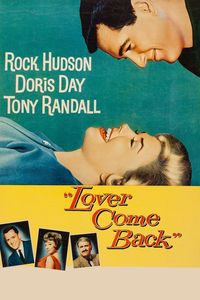
    (On Cable TV, January 2021) For such an iconic screen couple, it’s interesting to realize that Doris Day and Rock Hudson only played in three movies together. As luck and DVR scheduling would have it, I ended up seeing all three in a matter of months, with Lover Come Back being the middle instalment sandwiched between Pillow Talk (1959) and Send Me No Flower (1964). All three films feature Tony Randall in a supporting role, mismatched personalities and plenty of lies, deceptions and dirty tricks to keep things interesting until the big romantic finale. In Lover Come Back, we see both of them as competing advertising executives—she’s a workhorse, whereas he’s a showman with dodgy morals. When the conflict between them escalates, he dons a beard and glasses and (of course!) passes himself as someone else, a member of an illustrious family whose achievements grow ever more numerous and outlandish the longer he talks. It’s really not meant to be serious at all—it’s absurd, funny and naughty in the way the most progressive comedies of the early 1960s could be (which is to say rather charmingly coy by today’s standards). There are plenty of good jokes and funny moments, most notably in seeing Hudson and Randall go to Canada to face off with a moose and grow big beards. You can have objections to how Hudson deceives his way into a romantic relationship but (deep breath) those were the things that were funny at the time—but don’t spend too much time on the rather offensive ending, which should have been rewritten on the spot. Despite this noticeable problem offered as part of a conclusion, Lover Come Back is still fun, especially when it goes on a satirical riff about the advertising industry or goes through the execution of its carefully crafted comic set pieces. I still prefer Pillow Talk, but Lover Come Back has its moments—as long as you don’t think too much about its other moments.
  • When a Stranger Calls (1979)

    When a Stranger Calls (1979)

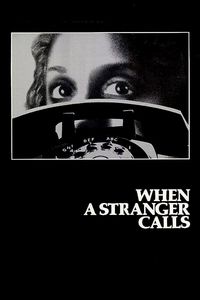
    (On Cable TV, January 2021) I couldn’t help myself from pointing at the screen with a grin and going yeaaah as When a Stranger Calls, twenty minutes in, drops its iconic line: “We’ve traced the call… it’s coming from inside the house.”  That’s pretty much everything anyone remembers about the film, and yet there’s still more than an hour to go. Unsurprisingly, the rest of it doesn’t match the merciless terror of those first twenty minutes, as a gratuitously psychotic murderer kills kids and terrorizes their babysitter. What happens after the iconic line isn’t as well remembered: even the 2006 remake dispensed with it, choosing instead to expand the initial 20 minutes to feature length. But as the story picks up seven years later, our escaped psycho is at it again, going back to terrorize the same babysitter… after some more mayhem along the way. But no one would blame you for stopping watching after the classic opening segment—the rest of When a Stranger Calls is far more routine, although Carol Kane does well as a terrorized grown-up, and Charles Durning is intense as a former policeman who has sworn to stop the psychopath. Otherwise, the film is very much in tone with other late-1970s horror films living in the shadow of New Hollywood—it’s dark, grimy and ugly, filled with period fashion and perhaps a bit more respectable for assuming its nature rather than trying to be an overly glossy take on the material. Perhaps the best thing about When a Stranger Calls for modern audiences is how, after the famous line is uttered and the opening act tumbles to a violent climax, we’re completely in the dark as to what will happen next.

  • Small Town Girl (1953)

    Small Town Girl (1953)

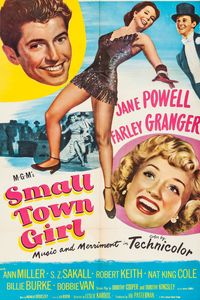
    (On Cable TV, January 2021) The best movie musicals of the 1950s manage to combine an interesting premise with great individual set-pieces, and while Small Town Girl isn’t much more than a second-tier MGM musical, you can clearly see how one feeds into the other to create something remarkably entertaining. Of course, I’m twice-biased in saying so: Ann Miller is one of my favourite stars of that period, and the film provides her with both a meaty role as a romantic antagonist and a pair of good dance numbers. Furthermore, I’ve been curious about the “Take Me to Broadway” hopping dance that opens That’s Entertainment II for a while, and this is the film it comes from. The premise is not that bad, especially when measured against so many of the Broadway musicals of the time: Here, a rich young man eloping with his fiancée (Miller) is caught speeding through a small town, and the local judge orders him to remain detained in the town jail for thirty days. Attempts to lighten the sentence are (relatively) successful, and so from his vantage point on the main square, he becomes part of the town’s day-to-day life to the point of falling for the judge’s daughter and having serious second thoughts about his fiancée. (Which is just as well, since she’s a shallow fortune chaser who starts making plans with another man while he’s inside. Just so there’s not discomfort with the plot.)  There are other attractions as well — Bobby Van is magnificent in the exhausting “Street Dance” in which he hops around town, S. Z. Sakall turns in a great supporting role, and an uncredited Busby Berkeley provides choreography. Small Town Girl is not meant to be particularly deep or spectacular—this was clearly a B-grade effort for MGM—but it works more often than not, and offers further proof that in its heyday, the movie musical could be perfectly entertaining even when it wasn’t at its best.

  • You’re Bacon Me Crazy (2020)

    You’re Bacon Me Crazy (2020)

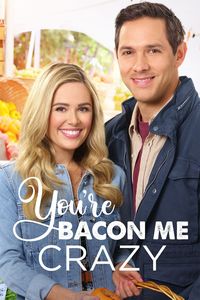
    (On TV, January 2021) I’m not a natural part of the Hallmark movie audience, but I’m willing to give their romantic comedies a chance from time to time if the title and the premise strike me as amusing. Even if I wasn’t, well, how can you resist a title like You’re Bacon me Crazy? The premise, obviously enough, has to do with the owners of two Portland food trucks falling in love while they are rivals in a culinary competition. Hallmark movies are not exactly known for hard-hitting realism, and that’s their entire raison d’être. Why quibble about the unlikeliness of a glass flower vase and cooking books carefully arranged inside a food truck’s cooking area? Why even mention how a potted plant’s pot seamlessly disappears between two shots of the plan being potted? It’s set in Portland but shot in Vancouver… all right, enough. Frankly, there’s a place for the kind of intensely predictable everything-ends-well filmmaking that is You’re Bacon Me Crazy. It’s perhaps the closest we can now get to the exuberant joy of classic Hollywood romantic comedies. Very little in the film is left to chance, from the homely-cute looks of the heroine (Natalie Hall, unthreatening to female audiences) to the blandness of the hero (Michael Rady, idem), the quirky supporting characters (including the fun Brenda Crichlow) or the schematic nature of the plot (which even includes a dumb five-minute interlude where someone says something to the other and it’s badly received and it doesn’t matter because the next scene has the friend explaining why it wasn’t so bad and they make up in the scene after that). The real fun is in the supporting background details of a food truck heroine, the foodie content, the wild recipes and quasi-clever material here and there. Never mind the obvious dialogue, utilitarian filmmaking or stiff acting: it’s not that kind of movie. You’re Bacon Me Crazy deal in comfort (it actually says, “The ingredient is… love”), and there’s nothing really wrong with that… as long as there are other kinds of movies out there.

  • You Should Have Left (2020)

    You Should Have Left (2020)

    (On Cable TV, January 2021) A common affliction of horror-movie plotting throughout the ages has always been to double down on the weird stuff while not caring how it fits into the overall logic of the premise. The best horror films usually have rules and stick to them—anything else quickly becomes “anything and everything,” sucking away audience involvement. You Should Have Left does have an interesting premise—a man with a dark past being attracted to a house that means to make him pay for his sins—and that it does manage to create a creepy atmosphere along the way. But it’s when it can’t be bothered to stick to its own internal logic that it falls flat on its face. Much of the third act, for instance, is predicated upon a plot development that simply isn’t credible (a doting mother abandoning her child in a scary place with the man with which she’s having an argument), no matter how you try to spin it. Some of the superfluous scares actually damage the film—the sequence in which the protagonist measures a room as being bigger on the inside than the outside reminds us bitterly that there probably will never be a movie adaptation of House of Leaves, yet brings nothing more to the film. The conclusion casually throws up time travel as a minor thrill without really working through the consequences of it. This lack of rigour added to the very “psychological thriller” crutch of blurring the subjective reality with the objective one and, frankly, nothing in the film ever makes us care about what’s happening. It’s too bad, really: A visibly older Kevin Bacon (young hair, old neck!) does fine in the conflicted lead role, while I’m very slowly but steadily warming up to Amanda Seyfried as the years go by. Writer-Director David Koepp should know better than this, though—he’s made other good movies before, and even good horror movies at that. Maybe working from Daniel Kehlmann’s novella proves to be more of a hindrance than an asset this time around, though.

  • Pogey Beach (2019)

    Pogey Beach (2019)

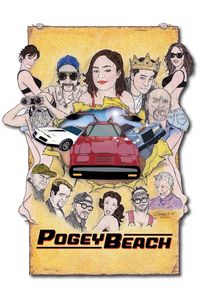
    (On Cable TV, January 2021) Considering that much of movie Canada seems to take place either in Montréal or Toronto (with a third-place finish for Vancouver), it’s refreshing for Pogey Beach to head eastward—not just to the Maritimes, but to Prince Edward Island itself, the beautiful but often neglected smallest province that almost never makes any national headline. But there’s a catch, a really big catch, as suggested by the title: “Pogey” is Canadian slang for unemployment benefits, and Pogey Beach plays up an affectionate caricature of Islanders living off government largesse in an economically depressed region, correctly answering unemployment questionnaires with a mantra (“No, no, no, yes, no”) and spending their days drinking and flirting on the titular beach. When a pair of hilariously caricatured father-and-daughter Torontonians arrive with dreams of providing gainful employment to the region, they quickly learn better. She is seduced by the lifestyle and soon becomes an even more ardent pogey moocher; meanwhile, he hires a retired “pogey narc” to infiltrate the beach and gather evidence to send them all to… Pogey Jail. (Really a fish packing line.)  In the vein of “Shameless” and the Maritime comedy classic series “Trailer Park Boys,” Pogey Beach is a funhouse reflection of a world in which mooching from government is an admirable lifestyle, and the big enemy is Service Canada with its reasonable expectations of fair work for money. The script is rife with too-obvious dialogue, crude scene construction, slapdash characters and excessive profanity, but that’s not actually a bad thing considering how off-the-wall Pogey Beach presents itself. The comedy’s not bad even in its worst excesses, and the film presents a Maritimer’s satire on the Maritimes (writer-director-producer Jeremy Larter is a PEI native)—the regional expressions run so thick that even the film’s closed captioning gives up on understanding it at times. Adapted from a web series, Pogey Beach carries some of that hermetic vibe of a cult classic—but the payoff is a fully realized comic vision that dares viewers to keep up with its insanity. Considering how much it commits to its premise, perhaps the worst thing one can say about Pogey Beach is that its cinematography suffers from its limited budget—no one is going to use it as a visual showcase for PEI, and there are times when just a little bit more effort (in framing characters against available light, in working out better staging) would have led to a more pleasant film to watch. Although pleasantness really isn’t the point here.

  • By the Sea (2015)

    By the Sea (2015)

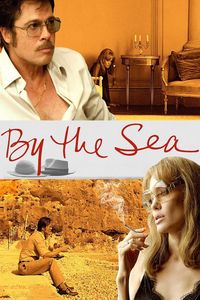
    (In French, On TV, January 2021) I’m not sure what fans of the Angelina Jolie/Brad Pitt celebrity couple expected from their passion project By the Sea—probably not the glum look at a married pair working through some deep-seated issues, probably not the amount of voyeurism and nudity in the film; and almost certainly not its tone, pacing and cinematography aping Mediterranean arthouse films from decades past. The thin storyline has Jolie and Pitt as a married couple on the rocks going to a seaside French resort in an attempt to reconnect. They eventually become close to another younger couple occupying the room next to them, with a handy hole in the wall providing them with a full-coverage look at what they do in their room. The protagonists aren’t particularly admirable nor likable: the first half of the film is told from his viewpoint as a dried-up novelist barely tolerating a withdrawn wife; the second film is told from her perspective as an unstable former dancer unsuccessfully trying to reach a distant husband. It’s all artistic, dramatic and with far more nudity than you’d expect from a 2015 American film (although not a 1980s French or Italian film), but those same qualities also make the film a lengthy sit. Stretching a simple plot over 132 very long minutes, By the Sea takes too long to get going and, thus offers far too many opportunities to its audience to grow weary, then derisive of the results. There’s an echo of Who’s Afraid of Virginia Wolf? here in terms of a superstar couple working out marital tensions on-screen, but By the Sea has little of the breathtaking wit of the Taylor/Burton vehicle. Writer/director Jolie Pitt (as she bills herself here) is not a bad director within her chosen mode of filmmaking, but she delivers a trying, sometimes exasperating film—the frigid critical and commercial reaction may have had as much to do with a simple mismatch between expectations and product. Who’s willing to bet that By the Sea would have been far better received from a lesser-known filmmaker?

  • Tekken (2010)

    Tekken (2010)

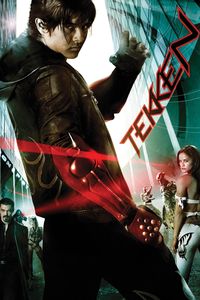
    (In French, On TV, January 2021) I know, I know—I should not have gone in a movie adaptation of a fighting game and expected more than, well, the fighting sequences. But even with those expectations, Tekken remains irritating—a mixture of lazy Science Fictional worldbuilding (or rather set-dressing), coupled with ugly cinematography, dull characters, a by-the-numbers plot and a repetitive nature. No, it’s not good. Despite the efforts of the martial artists and stuntmen involved, it’s not even good by the standards of fighting movies by having nothing beyond the fights. Every match looks the same, set in a dark arena with the requisite post-apocalyptic grimy neon highlights. The film is intensely repetitive and can’t be bothered to have interesting characters (let alone going beyond the crudest clichés). It’s hard to do anything sophisticated from a fight’em up foundation, but still—couldn’t they find anything better? If the film has a saving grace, it’s in the fighting performance of the actors involved (notably lead Jon Foo)—there are some decent moves there. Unfortunately, it’s shot in a way that invites derision from aping the worst action movies of the 2000s. Ah well—it’s ten years later, and Tekken is now playing in dubbed French in the middle of the night on a channel known for getting cheap stuff to fill in the gaps in their scheduling. I really shouldn’t have expected anything better. But I’m glad I can now strike this one off the list and never see it again.

  • Wendy Williams: The Movie (2021)

    Wendy Williams: The Movie (2021)

    (On TV, January 2021) I watched quite a bit of Wendy Williams’ show for a few years when I was married (“How you doin’?”), and her oversized personality is enough to make Wendy Williams: The Movie sound like an interesting topic. Even casual Williams fans know quite a bit about her struggles—candid honesty has been one of her trademarks for a long time, and the biography illuminates what we’ve known or suspected. Everyone should note that this Lifetime biography is practically a Williams vanity project: Produced by her own production company and presenting the story as explicitly narrated by Williams (who closes the film by appearing on-screen to talk to the viewers), the film presents Williams as being right even when she’s behaving badly or being done dirty: Body issues from childhood spurred on by her parents; a date rape that leaves her more determined than even to forge her own way ahead; cocaine addition kicked in an instant after realizing it didn’t do much for her; the discovery of her husband’s double life that gives her the excuse to behave like the spurned heroine of her own movie… it’s also a film made for Williams fans, with very little second-guessing allowed. Even a cursory recall of Williams’ various controversies (Despite her intelligence, Williams has said a lot of outrageous stuff over the years and some of it was incredibly stupid) is enough to remind us that a lot goes unsaid or unaddressed in this “tell-all” biofiction. Ciera Payton gets plenty of praise for playing Williams despite not looking all that much like her—but then who else does?—while director Darren Grant gets things moving within the confines of a TV movie’s budget and time constraints. The narrative is too raw on the drugs, rape and betrayal side to qualify as fluff entertainment, but viewers are going to be reminded from beginning to end that this is Wendy Williams as seen by Wendy Williams, which may not always be the most interesting angle.

  • Ship Ahoy (1942)

    Ship Ahoy (1942)

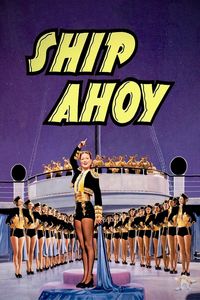
    (On Cable TV, January 2021) The combination of Eleanor Powell’s tap-dancing talents and Red Skelton’s rubber-faced comedy must have been an irresistible commercial prospect in the early 1940s, and Ship Ahoy mostly delivers on that promise, with a few extras on top. The best of those, to me, has to be Virginia O’Brien in a strong supporting comic role, her deadpan singing being limited to one sequence. (But what a sequence: A romantic ditty first performed straight by a young Frank Sinatra, reprised with heartfelt romantic humour by Skelton, and then mercilessly skewed by O’Brien’s usual flat singing and sarcastic interjections: “Wow!”)  Surprisingly enough, Skelton keeps a lid on his worst tendencies, even conforming to the demands of a romantic lead role (as a hypochondriac writer) rather than overindulge in comic showboating. The plot itself gets ingenious at times, with Powell’s character being duped into taking a piece of high technology out of the mainland states to the benefit of foreigners, being kidnapped, then alerting US agents by tap-dancing Morse code. One more highlight is a substantial performance by legendary big-band leader Tommy Dorsey and his orchestra as the source of many of the film’s musical numbers. While I’ll agree with those who point out that Ship Ahoy is a lesser effort than the second Powell/Skelton collaboration I Dood It (a Skelton catchphrase that you can hear as a line of dialogue here), there are enough bits and pieces here and there to make it great fun to watch—I never get enough of O’Brien anyway, and this film does let her do more than just a novelty song.

  • Piranha (1978)

    Piranha (1978)

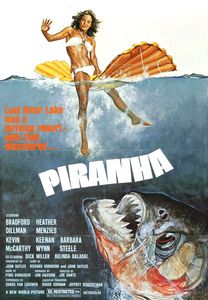
    (In French, On Cable TV, January 2021) In retrospect, I really shouldn’t be surprised that the original 1978 Piranha reminded me so much of its detestable 2010s remake. Isn’t that the point of it? But there’s a crucial difference in how the original, for all of its terribly dated visuals, muddy cinematography and primitive special effects, actually benefits from its limitations. Not feeling forced to show everyone being graphically dismembered, this film does have the sometimes-amusing spirit of a classic monster movie, with the horror being tolerable rather than ultraviolent. It only barely qualifies as a horror/comedy considering how often women and children are the targets of the hungry piranhas. Director Joe Dante directs a John Sayles script with some skill, and the results of both filmmakers’ efforts are apparent: the justification for the monstrous piranhas is hallway witty, while the direction steadily cribs from 1970s disaster films and, most obviously, 1975’s Jaws. Alas, Piranha does remain a bloodbath of a monster film, so my liking for the result remains limited—but it’s a bit better than I expected.

  • The Gunfighter (1950)

    The Gunfighter (1950)

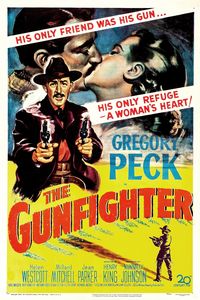
    (On Cable TV, January 2021) I don’t particularly like westerns, but the specific sub-genre that had to do with the end of the wild west always has me intrigued—it’s as close to an original take on deliberate colonization as American cinema gets, and I find those issues to be more inherently interesting than the typical desperadoes-on-their-horses too often seen. 1950’s The Gunfighter, in some ways, can be seen as a precursor to a wave of revisionist westerns that would build on the clichés of the genre. Here we have a familiar figure—the fastest hand in the west—treated in a more realistic fashion: the trouble with being known as the top dog is that others will target you to make their own reputation, and there’s no end to that except, well, being shot by the newest and fastest kid in town. Gregory Peck stars as the titular gunslinger, portraying him as a man who’s tired of being at the top and is looking for a way out. The film dangles a quiet retirement in front of him, but we know it won’t be so simple, and the elegiac ending has hints of inevitability that almost puts The Gunfighter alongside film noir themes. Unfortunately, the film does not have the snappy rhythm than its 85 minutes and almost real-time chronology would suggest—some of the plot screws could have been tightened. But it’s an interesting western that heralds many similar end-of-an-era films—including the superior The Shootist—and survives a modern viewing better than many of its contemporaries.

  • Brute Force (1947)

    Brute Force (1947)

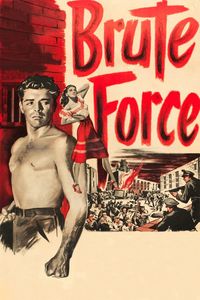
    (On Cable TV, January 2021) If you’re looking for a midway point between prison movies of the 1930s and film noir of the 1950s, Brute Force fits the bill. Directed by Joe Dassin (who would become a noir auteur before his Blacklist-forced exile to Europe) and clearly playing rougher than movies from the previous decade, the film continues to codify tropes of the subgenre. Prisoners that aren’t that bad; a sadistic warden who’s worse than the prisoners (to the point of machine-gunning them with relish) and a daring escape plan that, in noir tradition, is doomed to failure. The ending moments of Brute Force are unusually harrowing and nihilistic for a film of that time—everyone is doomed to failure, and even the women outside the prison have their share of responsibility in leading their men to crime. Burt Lancaster shows up as the lead character in one of his first screen appearances, but the standout performer here is no less than Hume Cronyn, whose sadistic and violent prison warden character here completely undoes a screen persona with decades of meek appearances. All in all, Brute Force is a bit of a surprise—as brutal as its title promised, and occasionally a gripping piece of suspense and action.

  • Beach Party (1963)

    Beach Party (1963)

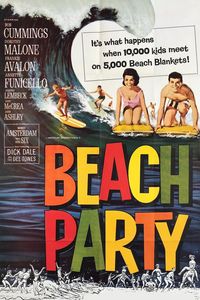
    (On Cable TV, January 2021) While Gidget may have sparked interest, it’s Beach Party that formally launched the “Beach Party” movie subgenre of the 1960s, featuring Frankie Avalon and Annette Funicello in a series of seven films that spawned about twice as many imitators. This first instalment, as usual, doesn’t quite have the formula nailed down: While most of the recurring players are there, while the tone is very similar, there’s some narrative weirdness in spending so much time on an academic character (played by Bob Cummings) studying teenage mating habits—with a beard so thick and out-of-place that it’s fated to come off at some point. It’s a character that exemplifies how dumb movies portray smart people, but the caricature is very much in line with the absurdist comedy style of the film, with some fourth-wall breaks along the way. It’s all in good fun—even Vincent Price joins in with a special cameo that heralds more to come in the series—although the musical numbers are a bit weaker than in the follow-ups. The key to the series is probably found in the unobjectionable material featured here—some flesh but no nudity, some inept bikers but no real threat, some tension but no breakups. Plus, an academic who learns better from the teenagers.

  • Queen Christina (1933)

    Queen Christina (1933)

    (On Cable TV, January 2021) Famously unamusing Greta Garbo stars in Sweden-set costume drama Queen Christina, going for a bit of gender-bending drama, as she is somehow temporarily mistaken for a man when she goes incognito in a humble inn. The mistaken gender bit doesn’t last long, as she ends up in bed with a dashing Spanish suitor who ends up being a diplomatic enjoy to the court she presides. Garbo has an unusually contemporary character, espousing antiwar sentiments and a constant push for her people’s well-being. Which only complicates the third act, as she has to choose between love or country. Queen Christina is intermittently interesting—Garbo is a legend, but her appeal was very specific and under her influence the film quickly heads to tragic romance, complete with a stoic ending shot. The film certainly doesn’t stick to history—the real Queen Christina was indeed progressive, but uninterested in marrying. It’s widely hailed as one of Garbo’s most striking performances, and the role is clearly tailored to her. Of course, that means that how to feel about the film will be tied to your own appreciation of Garbo…