Month: January 2021

  • Manon des sources (1986)

    Manon des sources (1986)

    (On Cable TV, January 2021) If you were left bewildered and heartbroken by the tragic tale of French drama Jean de Florette, keep in mind that it was only the first part of a whole completed by Manon des sources—both movies being shot as a single super-production with the approval of a French government eager to bolster its national history through glossy motion pictures. This second half of the story (adapted from a novel by the renowned Marcel Pagnol) picks up half a generation later, as the young Manon (who, in the earlier film, saw her father’s life being destroyed by the schemes of two local farmers) attains adulthood and sets out to avenge past offences. As with the previous film, there’s a strong cinematographic quality to Provence as shot in yellow, green and brown: the scenery is magnificent in its semi-arid quality, and we feel as much as we understand the importance of the local water supply. But it’s narratively that Manon des sources provides most satisfaction: After spending three hours of total time cranking up the pressure of unpunished injustice, the last hour of the film goes from revelations to punishment in several cycles, giving the last words to Yves Montand in a great last performance. The ending does pile up so many revelations and twists that it defies plausibility, but since much of the film takes place in solidly melodramatic territory, this isn’t as inappropriate nor as ineffective as you’d think. Montand is typically great in what feels like an archetypical role, but Daniel Auteuil also does well, and Emmanuelle Béart aptly replaces Gérard Depardieu. By the end of the film, my opinion of both movies had increased significantly from the first moments of the first film: it wraps up with a nice bow and a tragic flourish. Jean de Florette and Manon des sources are landmarks of 1980s French cinema for a good reason.
  • The Girl from Mexico (1939)

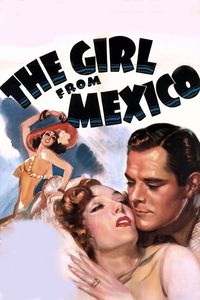
    The Girl from Mexico (1939)

    (On Cable TV, January 2021) It’s interesting to go back to The Girl from Mexico after watching a handful of the titles in the Mexican Spitfire series that followed. As the origin tale of the series, it’s often markedly different from the formula that evolved in later instalments. For one thing, there isn’t quite as much emphasis on Lupe Velez: As a way to introduce white-American audiences to an unfamiliar ethnic character, this first instalment places a lot of emphasis on Donald Woods as the young white male photogenic protagonist who brings the “Mexican Spitfire” to America, only to be seduced by her wild ways. In the grand scope of the series, his is largely a transitory character: his narrative purpose fulfilled, the character gradually recedes in the background of the ongoing series, to the point of being played by two other different actors in the span of five years. What is most visibly absent from this first episode are the dual roles later played by Leon Errol: While his “Uncle Matt” is definitely present as a supporting role, much of the film introduces the close friendship he has with Velez’s hot-tempered character, and sets up the complicity that would come to the forefront during the rest of the series. Errol’s alter ego “Lord Epping” is entirely absent from this first film, which clearly sets it apart from the overuse of the impersonation plot device common to all other instalments. The result, when considered as its own film, is counter-intuitive: While The Girl from Mexico does work well as its own standalone film, it’s more evenly paced than its predecessors and, in some ways, more forgettable as well: the comic set-pieces aren’t as striking as some of the later movies, but it doesn’t rely on the increasingly repetitive formula of the series either. On the other hand, Velez is just as attractive and funny as later instalments (albeit perhaps less practised—I don’t think she was comfortable enough here for set-pieces such as the “Mexican wildcat” scene of the markedly inferior Mexican Spitfire Sees a Ghost, for instance). It goes without saying that it’s an essential film for anyone who likes Velez or the later Mexican Spitfire series—although I’d have trouble recommending more than three of the seven subsequent films, so clearly do they repeat more or less the same jokes all over again.

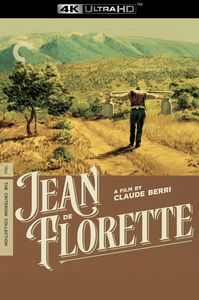
  • Jean de Florette (1986)

    Jean de Florette (1986)

    (On TV, January 2021) If you want to talk about the big guns of 1980s French cinema, Jean de Florette imposes itself as a must-see: As the first half of a massive project (along with sequel Manon des sources) going back to early-20th-century Provence as a backdrop to a melodramatic tale of deception and revenge, it features lush cinematography, big stars and the approval of the French establishment. Adapted from a book written by no less than Académie Française member Marcel Pagnol, it seemingly spares no expenses going back in time to a small village where water is a scarce commodity. Gérard Depardieu stars as a family man coming back to his deceased mother’s farm with big plans to raise rabbits. But that plan depends on having access to water, and as luck would have it, the locals have other plans: Distrustful of the educated, optimistic outsider, two of them conspire to hide an invaluable spring on his farm. The legendary Yves Montand capstones an illustrious career as the antagonist, with some able assistance from Daniel Auteuil as a co-conspirator. Spending two hours watching a likable protagonist’s plans being thwarted by the small-mindedness of rural locals may not be anyone’s idea of a good time, but there’s a compelling quality to the narrative; the pacing is faster than you’d expect and the film is meant to be seen as the depressing Part One of a larger work preparing for the release offered by Manon des sources. Depardieu, Montand and Auteuil each provide exceptional performances in their own way, and the setting provides the rest. Shot in a yellow/green palette punctuated by brown, it’s often a spectacular film even when abstracting the narrative. Historically, the film fits in a national strategy of exploring France’s past through movies, and it’s hard to imagine a better depiction of that time and place. (Even if, to French-Canadian ears, the accents often play as a caricature of a certain kind of Frenchman—Montand is particularly ripe for imitation.)  I was honestly surprised by Jean de Florette—I watched it out of obligation, and ended up enjoying it. (But I’m writing this after the far more engaging Manon des sources, so keep the necessity of watching both in mind.)

  • The King of Staten Island (2020)

    The King of Staten Island (2020)

    (On Cable TV, January 2021) The very nature of comedies about unlikable people growing up is that you first have to spend some time with them prior to their learning any better. Thus, the initial hurdle with The King of Staten Island is caring enough to delve deep into the life of its protagonist, a 24-year-old Staten Island resident only too content to drift aimlessly through life, haunted by the death of his father, daydreaming about becoming a tattoo artist despite insufficient skills, and content to smoke life away with friends in dimly lit basements. It’s not much of an inspiring character, especially when he decides that it’s a good idea to tattoo a nine-year-old on the beach. But that sets in motion a number of events that, in the end, make him a better person. The film does take an additional quality once you notice that it’s directed by Judd Apatow—The King of Staten Island does feel slightly more mature than his previous films: it’s still about adult slackers, but it doesn’t go for the gross humour of its predecessors, nor the sometimes-strange pacing decisions of films such as Funny People. In other words, Apatow himself may be growing up—and while the result may not be as outright funny as previous movies, nor as distinctive, Apatow may find a way forward as a smaller-scale indie director. He’s certainly able to get good performances: Marisa Tomei is aging well in appropriate roles as the film’s most familiar name, but the film is Pete Davidson’s show, as he stars and co-wrote the semi-autobiographical script. The result is not initially all that interesting, but it improves as it goes on, and ends up settling for a perfectly acceptable tale of maturity.

  • The Long, Long Trailer (1954)

    The Long, Long Trailer (1954)

    (On Cable TV, January 2021) Anyone would be forgiven for thinking that The Long, Long Trailer is an “I Love Lucy” movie spinoff—after all, it does star both Lucille Ball and Desi Arnaz as a married couple getting into all sorts of comic situations as they travel around the country with a travel trailer, and it was released ran in the middle of their TV show’s run. But as close as it may appear, it’s its own separate thing—a way for MGM to showcase Ball and Arnaz in colour against picturesque American tourist destinations. Ball being Ball, the physical comedy is top-notch even when it’s predictable—the sequence in which she’s trying to cook inside a movie trailer was inevitable but still a lot of fun to watch. As far as the narrative goes, The Long, Long Trailer often feels like a collection of episodes inspired by a writer’s experience in the 1950s RV lifestyle, from the eye-watering complications of the initial purchase to the sense of aimlessness that not having a fixed address can create. (Indeed, even circa 2020, I can testify that one retirement course recommendation remains “Don’t sell your house to buy an RV!”)  The narrative cohesion is provided by the marital strife between the leads, culminating in a quick conclusion (made longer by a framing device) that perfunctorily ends the film on a happy but not necessarily believable note, as all of the tension factors are still present. Still, the fun of The Long, Long Trailer remains—filmed in colour (although not in bright Technicolor), it offers a look at a specific recreational form of American touring as of the mid-1950s and the performances of the leads are good enough to capture what was special about them.

  • Les compères [ComDads] (1983)

    Les compères [ComDads] (1983)

    (On TV, January 2021) A few minutes into Les compères, the premise seemed familiar. A quick search confirmed my doubts: this was the original French film on which the mid-1990s Billy Crystal/Robin William vehicle Fathers’ Day was based. The starting point is distinctive enough to be noticeable: After her son goes missing, a woman separately contacts two ex-lovers with a plausible chronological claim to their paternity, and asks them to investigate. But the narrative fun begins when the two meet and realize the trick played on them. It all becomes a vehicle for comic actors, and the French version arguably does better than the American remake in using its headliners: Here we have Pierre Richard in his usual gaffe-prone neurotic persona, paired for the second time with Gérard Depardieu (younger and thinner than we’ve grown used to), who here plays a macho journalist. The rest of the film is almost immaterial—of course they’ll find it, and, of course, the point of it all is Richard and Depardieu sparring. The nature of Les compères as a vehicle means that there’s some repetitiousness to the proceedings, but that only counts as a problem if you’re not entirely happy with the two leads. Otherwise, you get what’s on the tin: Richard goofing up, Depardieu rolling his eyes and just enough plot to give us a feature-length comedy based on that interaction.

  • La chèvre [Knock on Wood aka The Goat] (1981)

    La chèvre [Knock on Wood aka The Goat] (1981)

    (On TV, January 2021) French comedian Pierre Richard makes good use of his circa-1980s awkward persona in La chèvre, playing a gaffe-prone bad luck magnet asked to track down the daughter of a French politician gone missing in Mexico. We’re clearly not far from Le Grand Blond movies here (the characters are named the same and act the same yet otherwise aren’t supposed to be the same—call it an added comic flourish) but the added wrinkle at the time was pairing him with a relatively younger and definitely thinner Gérard Depardieu as a glum private detective reluctantly tagging along. Much of the comic nature of the film has to do with Richard getting into absurdly unlikely trouble and Depardieu groaning. Of course, the narrative has the comically stupid character figuring things before his more traditional partner, all the way to the unlikely goal of their partnership. La chèvre is a crowd-pleaser that succeeds at its comic goals—If you like Richard’s screen persona at the time, it’s built on his comic skills, and the addition of Depardieu provides a straight man to heighten the unlikely nature of the trouble he gets himself into (something that’s missing from many of Richard’s solo efforts). The pairing proved to be so effective that it was repeated twice more, albeit not quite so successfully. While La chèvre can’t escape a certain number of stereotypes by sending Frenchmen in Mexico, it’s not hard to watch, and it ends on a somewhat good note.