Month: March 2021

  • Double Wedding (1937)

    Double Wedding (1937)

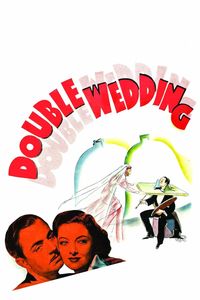
    (On Cable TV, March 2021) By 1937, both William Powell and Myrna Loy were seasoned Hollywood veterans: they were familiar with making movies, familiar with their personas, and familiar enough with each other to play off a mixture of comfort and looking for something slightly different. So it is that, in Double Wedding, Powell plays a bohemian bon vivant living in a mobile home in order to avoid being tied down to anything or anyone. Opposite him, we have Loy as a controlling business owner. They meet and clash over their respective advice to her sister, who’s being courted by an unimpressive young man and can’t quite decide whether to marry him. Double Wedding certainly enjoys playing with classic romantic comedy tropes: there are few surprises along the way here, but it’s a delight to see the two actors delivering exactly what’s expected to them — and a climactic conclusion that ends with the promised double wedding. Behind the scenes, the film wasn’t such a happy experience — Powell’s fiancé Jean Harlow died during shooting, and his grief was shared by Loy, who was a friend of the couple. Accordingly, the mood on the set was sombre — it’s a wonder that little of it appears on-screen. Still, notwithstanding the off-screen drama, the film itself is a perfectly serviceable illustration of what magic Powell and Loy could do together — him taking his debonair persona in a bohemian direction, her carrying her self-assurance in an ice-queen kind of role. Double Wedding is good without being great, but it’s already great when it features those two leads.
  • Book of Blood (2009)

    Book of Blood (2009)

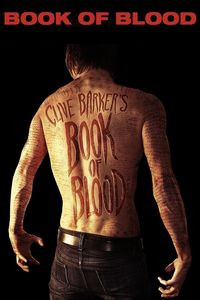
    (In French, On Cable TV, March 2021) Films adapted from Clive Barker’s stories are not assured of greatness, and so there’s a meta-textual suspense element to a film daring to tackle Barker’s celebrated Book of Blood series: Will it do justice to it? As it turns out, writer-director John Harrison’s Book of Blood is nowhere near perfect, but it just about inches its way across the “not bad” finishing line. Substantially more stylish and moodier than other comparable horror films, it does delve into Barker’s usual mixture of body mutilation, violent eroticism, free-flowing blood and supernatural scares. After what seems like a lengthy set-up, the film finally gets going in its last twenty minutes or so, finally unlocking the post-mortem horror that it’s been building toward. A few of the film’s main ideas don’t make sense: the scars and inscriptions “telling the story of the dead” are not quite convincingly executed on-screen, and the film does overreach by going both for exploitative gore and for uplifting afterlife expiation at once. Still, as far as tone and execution are concerned, there have been some much, much worse movies to come out of Barker’s work and Book of Blood is intermittently interesting from time to time. It’s not a big success, but it’s better than many similar movies and that’s already not too bad.

  • Once a Thief (1965)

    Once a Thief (1965)

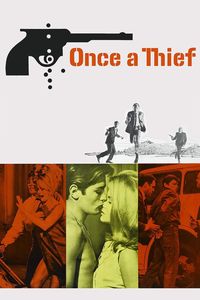
    (On Cable TV, March 2021) There’s a hit-and-miss quality to Once a Thief that steadily brings the film close to a good movie, then retreats and repeats. It does set itself an impossible high bar with a very modern-feeling opening sequence blending a great jazz piece with a robbery sequence. It soon settles for a much less flashy drama — the story of an immigrant (none other than Alain Delon!) trying to forget his past criminal life in order to settle down with his son and wife (none other than Ann-Margret!) but keeps getting dragged back into the criminal life. If you’re going to talk about a cast, this film has a pretty good one, with other roles played by Jack Palance and personal favourite Van Heflin. Ann-Margret’s red mane is wasted in the film’s black-and-white cinematography, but she gets quite a showcase for dramatic intensity with wild hair and screaming sequences. While Once a Thief came too late to be considered a classic film noir, it does have the advantage of its late production date: it’s socially conscious to a degree that would have been unusual in the 1940s and 1950s, concerned as it is about the immigrant experience and the way marginalized people are punished beyond fair retribution. The ending is quite harsh even by the standards of the genre, which paradoxically makes Once a Thief age better than its contemporaries.

  • Crisis (1950)

    Crisis (1950)

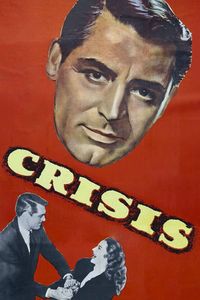
    (On Cable TV, March 2021) Cary Grant steps away from romantic comedies to a thriller in Crisis, a film in which he plays a surgeon coerced into performing a life-saving operation on a South American dictator. Grant is impeccable as usual, but even he can’t quite slip into a role absent most of his strengths as an actor. Still, it’s not an uninteresting film — the buildup to the main narrative is not bad, what with a rich American and his wife getting dragged into their holiday destination’s politics without their consent, and then being forced to operate. There’s a strong medical ethics drama forced on the protagonist, as even an imperceptible slip of the fingers could change the course of an entire country — alas, the film doesn’t quite fulfill this premise, as other events prevent an honest resolution to this dilemma. Still, there’s some tension to the proceedings, especially in the increasingly thornier second act. This is not Grant at his finest, but it does feature him in a style close to his Hitchcock thrillers and dispensing with most of the acting tricks in his usual repertoire.   As such, and considering that most of the film generally holds up reasonably well, Crisis remains a good pick for seasoned Grant fans, if only to see him tackle something slightly different, and dispense with most of what made him such a fan favourite.

  • Promise Her Anything (1966)

    Promise Her Anything (1966)

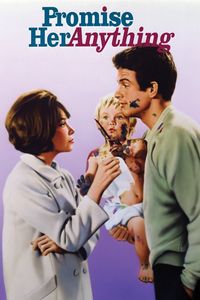
    (On Cable TV, March 2021) I suppose that “a romantic comedy written by the author of The Exorcist” is not the best way to sell Promise Her Anything, so try something like “Warren Beatty plays a Greenwich Village nudie film director who is stuck babysitting the toddler son of a love interest played by Leslie Caron.”  There! Much better—although not that appealing. Infused with the very particular atmosphere of a 1960s sex comedy but saddled with some messy romantic comedy complications, this is a film that doesn’t quite know where it’s going, and certainly can’t hit a mark that it doesn’t know exists. If you’re in the business of selling romantic fantasy, you’re also responsible for selling a simplification of life. Once we’re deep in the female lead picking husbands, one of her picks being a kid-hating paediatrician and the other making adult movies while the kid is watching… well, that’s not exactly reassuring at all. (Even the “adult film” portion is toned down, as per 1960s comedies, to nothing worse than swimwear.) Beatty is stuck in a light comedy not suitable for his talents, and the same can also be said for Caron, although she does get to wear an amazing body-hugging white lace two-piece outfit that’s easily more alluring than the half-naked girls showing up in the naughty films. It’s all acceptable if you’re in a forgiving mood, but it’s not in any way exceptional even when you compare it to other 1960s sex comedies. It either doesn’t try or try too hard, and as a result it settles for nothing much. Promise Her Anything is slightly interesting if you’re looking to catalogue the evolution of film comedy in the 1960s, but by the point it becomes relevant, you’ve already seen all the better ones.

  • Meat the Future (2020)

    Meat the Future (2020)

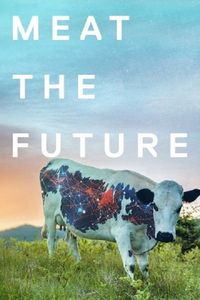
    (On TV, March 2021) If you want a better future, there aren’t very many better areas of research than cultured meat — the very real process through which we can grow meat in factories, without mass animal breeding. Even speaking as a proud omnivore who worked dozens of summers on a family farm and deeply understands the way animals are transformed into meat, you’d have to be willfully blind not to understand the appeal of mass cultured meat: lower costs, far smaller ecological footprint and near-eradication of animal slaughter. (I’m not that receptive to the idea of farming as being inherently cruel, but modern factory farming is nothing like the bucolic family farm I grew up on.)  Once economies of scale are realized, once customers get used to the idea of cultured meat, once chefs and nutritionists get their hands on what’s possible with cultured meat, it’s going to be here to stay — and the cheap meat it’s going to replace will not be mourned. Meat the Future shows the technology at the end of its proof-of-concept stage: possible and edible but before its mass commodisation. It’s still a time when basic elements of the future are being discussed — as per the debate between calling it “clean meat” moving on to the more neutral “cultured meat.”  Quite a bit of time is spent humanizing the various people working toward the acceptance of cultured meat for their own reasons — most notably Dr. Uma Valeti, whose values as a child raised in India prove essential to his drive as CEO of Memphis Meat. There’s a bit of sausage being made (if you’ll pardon the expression) in seeing how policy is created in Washington, with near-caricatures of meat industry lobbyists opposing cultured meat to protect entrenched interests. Despite a topic matter that could make a few viewers squeamish (hopefully they never get a look at what’s going on inside modern factory farms), writer-director-producer Liz Marshall’s Meat the Future is among the most optimistic films I’ve seen in a while — It’s clear-eyed about the promise and challenges of cultured meat, and it does a great job at presenting the topic in an interesting manner. Frankly, it made me a bit hungry.

  • Too Big to Fail (2011)

    Too Big to Fail (2011)

    (On Cable TV, March 2021) I have a great deal of admiration for films like Too Big to Fail, which attempts to tell the abstract story of a financial system on the brink of collapse and somehow manages to make it interesting, gripping and human. Fictionalizing the events of the 2008 financial crisis, it’s a film that features a dizzying ensemble cast of known actors playing bite-sized parts, showing up for mere moments in order to deliver some pieces of exposition. The script is admirable in how it boils down complex ideas and esoteric notions into short punchy scenes, making the final result fit in substantially less than two hours. Director Curtis Hanson somehow keeps it all intelligible, even as characters come in and out of frame, with helpful subtitles to tell us who they are playing. William Hurt plays the film’s designated hero, Treasury Secretary Henry Paulson, as a man inheriting a problem of historical proportions, and trying to find unthinkable ways to save the system from blowing up. It’s all surprisingly witty, tense and even admirable in how various schemes are put together in an attempt to control a system that few understand. The flip-side of the film, of course, is that it makes heroes out of situations where there was a lot of blame to go around — unlike The Big Short, it’s not really interested in assigning blame, working itself up in righteous anger or examining the opportunity cost of a situation where “the system” was saved but no one important was punished. (Meanwhile, homeowners and lower-level employees…)  It’s a film that’s partly about capitalism back-patting itself for how it has captured the regulatory and legislative process: there’s probably a really smart and venomous progressive critique of Too Big to Fail out there that I haven’t yet read, and it’s just as valid a take. Until then, I can’t help but be half-amazed at how much stuff the film manages to fit in 98 minutes, whether it’s featuring the character of Nancy Pelosi, portraying ultra-high-level conversations, having a glimpse at how international policy is made, brainstorming with the bright kids providing assistance or the personal toll that crises take on even Very Serious People. It’s all playing on a very different registry than most films, and perhaps for that alone Too Big to Fail is a truly fascinating piece of work.

  • King of Kings (1961)

    King of Kings (1961)

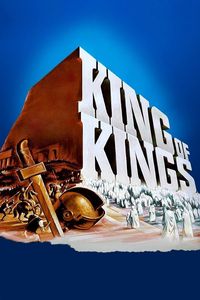
    (In French, On Cable TV, March 2021) I’m not sure there’s anything really interesting to say about King of Kings. One of the last big epics of the wave that began in the 1950s, it tackles perhaps the biggest story in the Western canon—The Passion of the Christ—and gives it the maximalist treatment that blockbuster films went for at the time. It’s melodramatic, unsubtle, garishly dependent on Technicolor and almost exactly what we can imagine from hearing “The Passion of the Christ as filmed in 1960.”  I’m almost sure I watched the film a few times while attending Catholic grade school, and as a result I’m almost disarmed as a reviewer in trying to find anything else to add about the film. It’s an Easter Weekend film staple for a reason — despite relying on acclaimed director Nicholas Ray, it’s one of the most basic takes on its topic, and by the same token one of the most innocuous. I’ll take Jesus Christ Superstar over King of Kings most days of the week, but I can’t deny that it’s one straightforward take on an incredibly familiar story.

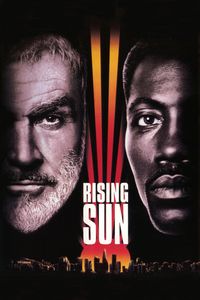
  • Rising Sun (1993)

    Rising Sun (1993)

    (In French, On Cable TV, March 2021) There are movies worth a look because they are not good, original, timeless or kind-hearted. Rising Sun is one of those. Adapted from a typically hysterical Michael Crichton novel published the previous year, it shamelessly exploits the anti-Japanese rhetoric of the time, at a point where Americans were convinced that the Japan Inc. juggernaut was unstoppable — that it would gobble up companies, dominate manufacturing, steal secrets, control politics and make Washington regret that unfortunate Hiroshima/Nagasaki business. There’s an instructive history lesson in watching Rising Sun’s characters ponder the inscrutable yet all-powerful ways the Japanese are poised to rule, and the reality of what happened later on — enough to make you look twice at any similar prediction made today. But so it goes — Rising Sun is, from its first moments onward, a film made to fan fears. Made in the form of a buddy crime thriller, it features an incredibly American cop (Wesley Snipes, not yet full of himself) paired with a veteran ex-cop (late-career Sean Connery in a rather good interpretation of a bad role) with a deep knowledge of Japanese culture and norms. Connery plays the voice of authority here, confidently instructing us in how exactly the Japanese escape American norms and laws in their all-conquering path. It all feels ridiculous thirty years later, but the point it — many people believed it, and believed it for a long time. The rest of the film is slightly better once it lays off the xenophobia and embraces its familiar nature as a buddy-cop techno-thriller: in keeping with its source novel, Rising Sun peeks at some of the gee-whiz technology of the time (such as real-time surveillance video editing) and occasionally scores a few better moments when it focuses on suspense sequences rather than anti-Japanese racism. (It feebly attempts to distance itself from racism by featuring “good” Japanese characters and a Caucasian villain… but nobody’s fooled.)  Tia Carrere and Steve Buscemi have short appearances. By itself it’s not a very good film — its xenophobia is embarrassing, and so is the way it’s integral to the plot. But the way the film has aged poorly (That other Michael Crichton film of 1993 was… Jurassic Park) should be a hard-hitting lesson to all — racism is bad for all sorts of reasons, one of the longest-lasting of them being how it just makes you look stupid to later generations.

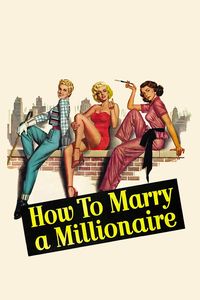
  • How to Marry a Millionaire (1953)

    How to Marry a Millionaire (1953)

    (On DVD, March 2021) There are many, many reasons why How to Marry a Millionaire is a reprehensible film by today’s sensibilities (and perhaps even to the sensibilities of its time), but just as many reasons as to why it doesn’t really matter. The powerhouse cast is a good chunk of it: with Lauren Bacall, Marilyn Monroe and Betty Grable playing three women with devious schemes to snag themselves a rich husband (at a time when millionaire meant real money — roughly 10 times as much), the film is a snapshot of early-1950s sex symbols. Bacall is magnificent as the brainiest of the bunch, renting an apartment from a tax-evading millionaire and selling off the furnishings to meet her operational costs. Betty Grable may no longer have the cachet that she did at the time, but she’s also a lot of fun as the energetic Loco. Meanwhile, well — I’ve never been that big of a Monroe fan, but she’s in her best element here in a comedic role, and seeing her spend much of the film wearing cat eye glasses (leading to a very funny scene of mutual myopic flirting) is enough to make me marginally more interested. The other actor worth noting is William Powell, turning in one of his last suave performances as (what else?) a debonair multimillionaire targeted by one of the women. The gold-digging aspect would be far less amusing had it featured in a worse film. Here, however, the script is good enough and the characters are likable enough to overcome any ethical concerns we may have. Romance, in the end, triumphs —and Powell plays the character with enough disposable income to make all inconveniences go away as an amusing trifle. Shot in what would become the classic 1950s widescreen Technicolor sheen, How to Marry a Millionaire is bolstered by great vignettes of New York City, excellent individual scenes, winning performances, and a lighthearted tone that still works very well today. It remains a delight.

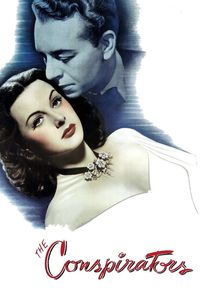
  • The Conspirators (1944)

    The Conspirators (1944)

    (On Cable TV, March 2021) I’m not sure why it took me so long to discover this, but Warner Brothers turned out a slew of Casablanca-light movies in the mid-1940s. Most of them took place in Europe, dealt with a combination of often-fictionalized European politics and romance, often featured Nazis as villains, and Casablanca performers as players. The Peter Lorre/Sydney Greenstreet duo alone is a good way to identify the half-dozen films in that sub-sub-sub-genre, and here they are indeed in The Conspirators, a film that sticks far closer to Casablanca than the other films in the same vein. Here, the Lorre/Greenstreet pairing is supplemented by Paul Heinreid and the beautiful Hedy Lamarr as members of a Portuguese anti-Nazi resistance group trying to root out a traitor among them. It’s all fairly familiar stuff, but the cast knows what it’s doing, and so does the Warner Brothers apparatus surrounding them. Lamarr is close to her most glamorous here, and the Greenstreet/Lorre combo is a known quantity as well. Churned out quickly to take advantage of topical events and the American public’s appetite for anti-Nazi material, The Conspirators is, in some ways, an ordinary wartime thriller, but the combination of some above-average elements does make the result more interesting even when it’s clearly trying to repeat a much-better film.

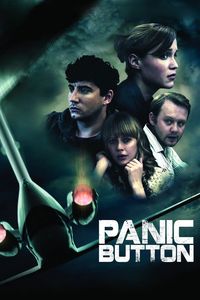
  • Panic Button (2011)

    Panic Button (2011)

    (In French, On Cable TV, March 2021) Once, just once, I’d like to see a horror spoof in which the evildoers, having uncovered our characters’ innermost secrets thanks to elaborate hacking shenanigans, would despair at the humdrum life that most of us live. No ghastly secrets, no hidden identities, no criminal past, and barely any sordid perversions to be found in Internet search histories. Alas, this is not the world the characters in Panic Button live in, as four British social media users find themselves aboard a private plane flying to their prize vacation. But there’s a lot being kept secret, as a round of “innocent” questions asked by a hidden interviewer reveals that everyone has an implausible number of secrets to hide. And we’re not talking dull secrets either — we’re talking the kind worth killing for, which (this being a horror film) happens very quickly. As the body count goes up and the number of characters goes down, the film more or less goes where you expect an airplane thriller to do (down), with an added epilogue to make it all creepier. Developed on a low budget with a handful of actors and limited sets, Panic Button does quite a bit with what it has, but seen ten years later, does begin to suffer from topical novelty. As we leave the first troll presidency in the back view mirror, cautionary tales of social media run amuck are not just mainstream: they’re getting dull. The hysteric execution does the film no favour either, as the mechanics of its plot get more and more implausible by the minute. I do have some admiration for thrillers taking place almost entirely within the confines of an airplane—there have been some gems in the subgenre—but Panic Button feels a bit too ordinary and on-the-nose to be entirely fun or interesting. Kudos to writer/director Chris Crow for making much out of so little, but ten years later Panic Button seem to be heavy on button-pushing and thin on actual panic.

  • Broadway to Hollywood (1933)

    Broadway to Hollywood (1933)

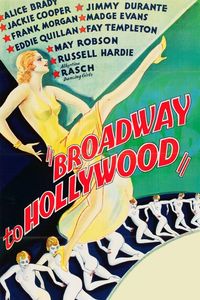
    (On Cable TV, March 2021) One of the defining aspects of the first decade of Hollywood musicals (which could only start after the invention of sound cinema) is how closely they were synonymous with Broadway. In reaching for readymade inspiration, the musicals reached out and grabbed talent, shows, attitudes and best practices from New York’s stage culture. You can see these fingerprints everywhere in 1930s musicals, from shows being adapted to the big screen, to performers jumping from stage to screen, to avowed subject matter revolving around Broadway—and not merely the ever-popular story of “putting on a show.”  Broadway to Hollywood isn’t much of a film, but more interesting when set against this broad 1930s movement. Tracking the story of three generations of theatrical performers as the family trade moves (all together now) from Broadway to Hollywood, it’s a drama more than a musical. Much of the initial narrative has to do with vaudeville losing its lustre and then being truly hammered by early cinema. The last act finds itself in the mansions of Hollywood, with the elderly protagonists having harsh words for what Hollywood has done to their grandsons. Much of the narrative is executed in melodramatic mode—albeit occasionally very satisfying melodrama, as proven by a climactic shove down an armchair—but the most intriguing aspect of the film is in showing, from a very close historical perspective, how American mass entertainment evolved over a lifetime, setting the stage for a cultural landscape far more familiar to us. Broadway to Hollywood has an equally interesting production history — largely shot in 1929 and 1930 in three separate musical streams, shelved when early-early musicals crashed at the box office, reshot and polished off as melodrama in 1933 when a more mature form of musicals once again became hits… the topic becomes the film. There are a few marquee names in here, with most of the contemporary attention going to an incredibly young Mickey Rooney (12!), a puzzling one-scene wonder from Jimmy Durante and a solid turn from Jackie Cooper — although if you want to talk performances, Frank Morgan and Alice Brady are the glue that holds a sometime-disjointed film together as they play the older performers. Broadway to Hollywood is not a completely successful film, but it is fascinating and it does offer a glimpse at a period where the American cultural landscape changed very quickly.

  • The Cleansing Hour (2019)

    The Cleansing Hour (2019)

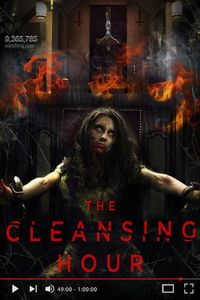
    (In French, On Cable TV, March 2021) As far as low-budget, few-locations horror films go, The Cleansing Hour is a bit better than most. The premise is charmingly 2019ish — what with its protagonists being involved in a webcast series of “live exorcisms” that are really staged events meant to sell merchandise. (Those sequences are accompanied by a chorus of far-too-authentic comments running in the bottom-left of the screen, complete with contemporary memes.)  The deception having being quickly made clear to us viewers, the fun begins when the latest of those fake exorcisms features the lead character’s fiancée, and she starts behaving in supernatural ways. Clearly, we’ve gone from fakery to real demonic possession, and a bunch of fakers are about to get schooled. Don’t worry — the absurdly hyped-up webcasting angle (reaching passional viewers worldwide!) and a subplot involving a young guest of the White House eventually play into the over-the-top climax. The Cleansing Hour is not that good, but neither is it dull or terrible, which is not a bad result for a low-budget effort largely distributed through streaming platforms. There are enough twists and turns in the film’s execution to keep things interesting even if most of it takes place in a dimly-lit recording area with a handful of characters. As far as possession stories, it doesn’t break a lot of new ground, and often relies on dubious plotting crutches (such as someone going crazy at the thought that his fiancé would have slept with his best friend years before they became a couple) and a menagerie of past traumatic experiences to keep its characters defined. Still, when it comes to horror films, writer-director Damien LeVeck’s The Cleansing Hour is a little bit better than most and that’s all it really needs to stick in mind a little bit longer.

  • The Passionate Friends (1949)

    The Passionate Friends (1949)

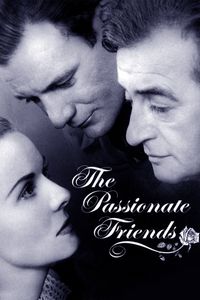
    (On Cable TV, March 2021) It sometimes boggles my mind that David Lean, the acknowledged master of the British epic film who eventually became synonymous with expansive, widescreen adventures largely shot on location and tackling ambitious topics (Lawrence of Arabia, The Bridge on the River Kwai, Doctor Zhivago, etc.), had his start on much smaller, far more intimate romances — Including a simple tale of an affair in 1945’s Brief Encounter, and a love-triangle special with The Passionate Friends. The story of a woman who rekindles an old affair through happenstance despite being married to a banker (admittedly a dull one), it’s the kind of stiff-upper-lip British romance that helps perpetuate all sorts of national stereotypes. It’s almost insufferably dull whenever the adulterous lovers are involved in their insufferable should-we-or-shouldn’t-we, but our interest rises sharply whenever her banker husband becomes involved — and decides that he won’t tolerate any hanky-panky. Still, The Passionate Friends is about as far away from epic filmmaking as you can be, with most of the action taking place in quiet rooms and smouldering restraint. It’s not bad, but it does feel longer than its 95 minutes. The last act somewhat redeems the considerable investment you have to make at the onset, but it feels a bit too much like a chore for little payoff.