Month: March 2021

  • Angels in the Outfield (1951)

    Angels in the Outfield (1951)

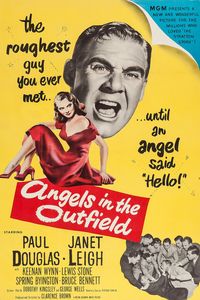
    (On Cable TV, March 2021) Anyone seriously thinking about how baseball is often presented as America’s religion has to watch Angels in the Outfield at least once, if only to experience the delightfully earnest lunacy of a film that explicitly links the two. The story of an abusive baseball team manager who comes to hear angels speak, the film eventually shifts gears when an 8-year-old girl begins seeing the angels on the field helping out the team. Heavenly intervention eventually leads to (what else?) winning the pennant, raising all sorts of thorny issues about divine morality and vulgar sports fandom. The contrast between the sublime and the ridiculous would have been witty, but there’s little ironic detachment exhibited here — Angels in the Outfield clearly and obviously equates godly intervention with the right team winning, and while this was probably heartwarming to the film’s target audience (it was reportedly Eisenhower’s favourite film), it feels like a mash-up of absurdities to anyone who’s not already living within the insanity of America’s twin obsessions. Thematic weirdness aside, the film does have a few moments of charm — the overweight, middle-aged protagonist is played by Paul Douglas in an earnest performance, with the film playing audio tricks around his dialogue so that no swearing could be heard during the actual swearing. Janet Leigh plays a journalist who brings the little girl’s visions to the masses, and Bing Crosby shows up briefly as a co-owner of the Pittsburgh Pirates (which was true at the time). The tone of Angels in the Outfield is very much in line with the reverential treatment that other later baseball movies have adopted as default (Field of Dreams, The Natural), lending a supernatural aspect to the game. As said — it probably works for some… and will feel utterly baffling to anyone outside America’s borders.
  • Jesus Christ Superstar (1973)

    Jesus Christ Superstar (1973)

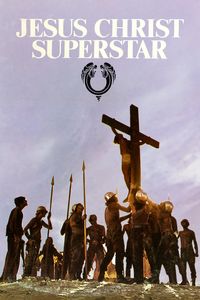
    (On TV, March 2021) I was frankly surprised to like Jesus Christ Superstar as much as I did. For one thing, I’ve never been a good Sunday School student — I attended Catholic Schools because those were the only game in small Francophone Eastern-Ontario towns where I grew up, but my knowledge of the bible remains more one of rote memorization. For another thing, perhaps more importantly, I usually despise 1970s musicals: it’s a lost decade filled with depressing productions with bad music, dispiriting sequences and very little of the charm that you could find in even the most average examples of the genre in previous decades. But if Jesus Christ Superstar has a secret weapon, it’s Andrew Lloyd Weber’s rock opera music. There are some really catchy numbers here (my favourite being “What’s the Buzz?”) and this rocking take on Jesus’ last day isn’t sacrilegious as much as it’s exhilarating. I note with some amusement that religious authorities were not amused when the film was released… but fast-forward to 2021 and you’ve got a specialized religious channel playing this as an Easter week special… and padding a 106-minute film to a 180-minute time slot by cramming advertisements between every single musical number. It’s easy to see, however, why the film would be warmly accepted: it’s clearly an attempt to bring religion to the youthful audiences of the 1970s; it portrays Jesus in an uncommonly humane way; and even in its fizzy presentation, it remains reasonably faithful to the Bible. Non-religious audiences will also find more conventional cinematographic qualities to the result:  Thanks to chameleonic director Norman Jewison, its stylish presentation remains a draw even now. The framing device is a delight, Carl Anderson is quite good as Judas (to the point of sometimes challenging who’s the protagonist of the film), Yvonne Elliman is a striking beauty as Mary Magdalene and the pacing of the film is significantly more dynamic than expected, especially if your closest equivalents are films such as King of Kings or The Last Temptation of Christ — after all, even Catholic School renegades such as myself can tell you the story from A(rrest) to Z(urrection) even if Jesus Christ Superstar stops well before the truly unpleasant parts. A pleasant surprise, then — and one of the strongest musicals of the decade as far as I’m concerned.

  • Frankenstein General Hospital (1988)

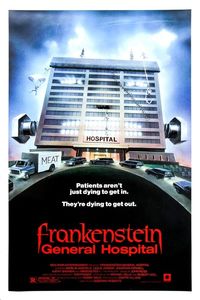
    Frankenstein General Hospital (1988)

    (In French, On Cable TV, March 2021) Public domain monsters are meant to be re-used in ways that their long-dead creators couldn’t possibly have imagined, so let’s not mourn Mary Shelley’s creation being featured a silly horror-themed hospital comedy. From the first few moments (cultivating the black-and-white aesthetics of Frankenstein’s lab, even in a modern colour film), it’s obvious that Frankenstein General Hospital is swinging wildly for every joke that comes to its mind, even if they’re not exactly the wittiest. Oh, there are a few moments here and there — combining the blind man and the little girl that the monster encounters is fun enough, but the nods to the mythos are not meant to be profound nor all pervasive. This modern-day “sequel” sees one of the Doctor’s descendants replicating his ancestor’s experiments in the sub-basement of a hospital by taking body parts from unwillingly deceased patients. It doesn’t take a long time for the overacting, the overly broad humour and the uneven jokes (many of them running gags) to strike. Frankenstein General Hospital is clearly meant to be a dumb comedy, but it loses something by simply trying too hard — the mugging occasionally becomes obnoxious, and the danger of a running gag is that if it doesn’t work the first few times, you’re stuck with it for the rest of the film. Fortunately, the last half is better than the first, once the humour gets less obnoxious and the pieces are all in play — including the monster. The lack of wit occasionally plays in the film’s favour — at least for a segment of the audience: I will always appreciate any sequence of enthusiastic sudden toplessness (this time featuring Katie Caple in an elevator), but naughty slapstick is not necessarily a broad crowd-pleaser. At least it’s a step up from the basement gags that populate the rest of the film. If you try hard enough, you can find a few elements of interest — a dominatrix psychologist (Kathy Shower), a hideously more effective joke past 2013 (“Boston Marathon special”—I thought it was an addition from contemporary dubbing, but no—it’s from the original 1988 script). Frankenstein General Hospital is not good, but it’s almost enjoyable in a low-grade try-hard way, with one bonus point or two if you’d rather see nudity than nihilistic horror.

  • The Prisoner of Second Avenue (1975)

    The Prisoner of Second Avenue (1975)

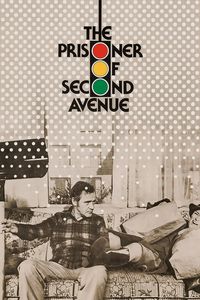
    (On TV, March 2021) An exasperated Jack Lemmon was, for decades, one of cinemas most reliable comic engine and The Prisoner of Second Avenue is ample proof of that… even if it’s substantially darker than many other comedies in his filmography. A tale of mid-1970s alienation told with sarcasm, it’s about a man who starts the film as a comfortable middle-aged man, then experiences one indignity after another until he snaps and spends much of the film flouting social conventions even as further indignities accumulate. Adapted from a Neil Simon play, it does feature some wonderful dialogue and clever character work — plus there’s a telling reflection of the way Manhattan must have felt in the mid-1970s, with garbage strikes, petty crime, friction between neighbours and constant noise weighing down on its citizens. (I encourage a themed double-feature with the original The Out-of-Towners for more of Lemmon’s exasperation in the streets of New York City.)  Anne Bancroft provides a lot of support as the put-upon wife developing her own crankiness along the way, and Sylvester Stallone pops up in a small funny role. A few factors, however, do take The Prisoner of Second Avenue out of the top tier of Lemmon comedies. For one thing, it’s not quite always played for laughs — the comedy can be dark at times. For another, tales of middle-class urban alienation have been a staple since well before the mid-1970s, and this one is not always distinctive enough to leave a mark. Still, it’s a solid film and one that does get Lemmon the chance to run through some of his most comfortable material.

  • Only the Lonely (1991)

    Only the Lonely (1991)

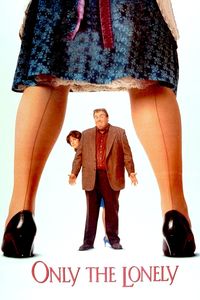
    (On TV, March 2021) In the John Candy filmography, Only the Lonely remains a bit of an oddball. Eschewing the typical slapstick comedy starring Candy as an idiot who eventually does well, this romantic comedy takes its cues from the classic Marty in presenting Candy as a gentle but single policeman with a domineering mother who finally gets a chance at a romance with a shy girl… if only his mother stopped interfering. Candy avoids most of the slapstick here, in service of a more heartfelt and vulnerable character. It’s very much a film about an urban neighbourhood and the people that live in it: neighbours, shops and community events. In this context, Ally Sheedy makes for a rather adorable love interest, albeit one whose main role for much of the film is to absorb a terrifying amount of nastiness and scorn from the protagonist’s mom (a detestable Maureen O’Hara) until she snaps and precipitates the climax of the film. Written and directed by Chris Columbus (but produced by John Hughes), it’s never a surprising film (we all know where it’s going, and that’s part of the charm) but it’s reasonably well-made even when it’s almost completely unmemorable. But Candy is at his likable best, and Only the Lonely runs a long, long time on that strength. All the way to the happy ending, in fact, anything else would have been a betrayal.

  • The FBI Story (1959)

    The FBI Story (1959)

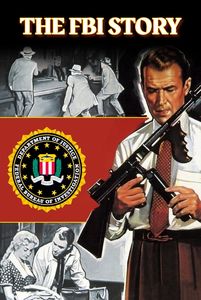
    (On Cable TV, March 2021) National propaganda can take many forms, including a grandfatherly James Stewart narrating the officially approved story of the American national police force. So it is that The F.B.I. Story is one more Hollywoodian take on the FBI (also see the classic G Men), approved by FBI director J. Edgar Hoover himself. From the opening moment, we understand that it’s at least entertaining propaganda: As Stewart begins with the procedural details of how an airplane bomber (itself a then-new and disturbing concept) was caught through meticulous investigation, it sets up The FBI Story as a tale of how an organization can do no wrong. Stewart then plays an agent over the first few decades of the organization’s history, first in imposing some discipline over a lax and scattered organization, then in tackling progressively more difficult cases. In-passing, we get a look at the gallery of rogues that captured the American imagination from the 1930s to the 1950s —Ku Klux Klan, mobsters, Nazis and communists. Vera Miles plays the protagonist’s wife, providing enough domestic incidents to tie the episodic structure of the film together. It’s charming in an intensely paternalistic way — clearly outlining the FBI as a good, even infallible force for order, and their opponents as enemies of the state. (One wonders how the film would have been less amusing had it been completed even a decade later.)  Stewart is often too old to play his role, but he is Stewart and, as such, almost unassailable as the lead voice in the film. Some of the vignettes do represent a revealing look at episodes of American history, even as heavily fictionalized as they are — there’s something about its unspoken racist assumptions (just wait until it talks about Native Americans) that present history filtered through 1950s mainstream attitudes, and the dissonance with modern values can often be arresting. Despite its heavy-handed moral patronization, The FBI Story nonetheless remains a curiously involving film: the script can often be wryly funny, and Stewart’s charm does patch up a lot of issues. It certainly makes for a fascinating case study in media literacy, or how entertainment can serve the state’s interest in hyping its police as essential, righteous and all-powerful.

  • Possessor (2020)

    Possessor (2020)

    (On Cable TV, March 2021) Fiction genres are tricky in that they can be as much about content than tone. Science Fiction, for instance, can be about “stories in the future,” but SF can also be about a way to tell a story, with unspoken but strong conventions as to which kind of approach is forbidden. Along those lines, it’s interesting to see something like Possessor pop up, telling us a familiar story of jacked-in assassins taking over other people’s bodies, but doing so in a way that owes a lot more to gory body horror than traditional SF. It’s almost too easy to point out that it’s from Brandon “Son of David” Cronenberg — but with his filmography so far, younger Cronenberg seems to be tackling topics very similar to the earlier films of his father. Possessor is kin to his earlier Antiviral in being put together in a way that’s deliberately off-putting to viewers. A mixture of gore, blood, violent imagery, unpleasant topics, droning soundtrack and actors put in unglamorous makeup, it’s a familiar story told in unfamiliar ways, with a mean attitude and an unforgiving finale. Never mind the assassination plot having to do with a corporate takeover: the core of the film is in the way the lead character is manipulated in getting rid of anything tying her back to humanity. It’s both unpleasant to watch (you’ve never seen Andrea Riseborough look so awful, or Jennifer Jason Lee playing such a falsely-frumpy middle manager, or Tuppence Middleton being put through such a wringer) and unnerving in how it goes from one uncomfortable set-piece to another. The body-snatching assassin thing is almost a common trope, but few other films have consciously looked into the anti-heroic, anti-power-fantasy flip-side of such things. The toll of the job is immense, and the film goes in a very different, almost decidedly noir nihilism in solving the conflict. I’m not sure I’m ever going to see Possessor again, but I’m not at all indifferent to the result.

  • Welcome to Sudden Death (2020)

    Welcome to Sudden Death (2020)

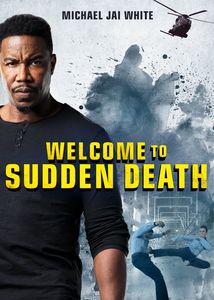
    (On Cable TV, March 2021) No one, really, no one was clamouring for a sequel to the Jean-Claude van Damme thriller Sudden Death, but here we are: A 2020-vintage update called Welcome to Sudden Death, featuring an ex-special operative battling terrorists during a big-league basketball game. Michael Jai White plays the van Damme role: a tough family guy, trying to save the arena crowd but being especially concerned by his two kids caught in the area. While the bare bones of the plot are solid in those Die Hard-in-an-arena ways, we can’t necessarily say the same about the execution — odd misguided attempts at humour permeate a film that’s not particularly funny (much of it revolving around two ill-conceived comic characters) and could use some gravitas to sell the tension. The dialogue is not refined, and the functional direction doesn’t really help. There are a few better moments (I defy anyone not to cackle at a CGI-enhanced shot where the hero shoves a body above his head and on a shelf behind him) and a few engaging performers (Sabryn Rock, for instance) but much of the film plays along the same beats as other low-budgeted action movies. There’s some irony in having the sport changed from hockey to basketball when the film is being visibly filmed in Winnipeg’s hockey-centric downtown arena. The amount of violence is a touch too gory for this kind of film. It’s movies such as Welcome to Sudden Death that can make anyone realize how many movies are products made to specifications, to fill production slots for precise genre expectations. Most movies manage to rise above this reality, but this one rips the illusion.

  • Deep Blue Sea 3 (2020)

    Deep Blue Sea 3 (2020)

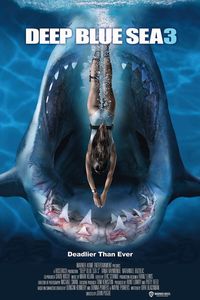
    (On Cable TV, March 2021) As much as I have some fondness for the original Deep Blue Sea, I really wasn’t impressed by its long-delayed sequel. Fortunately, Deep Blue Sea 3 finds a bit of a middle ground: it’s not a good film, but it avoids most of the pitfalls of terrible low-budget sequels. “Low budget,” these days, does give you a bit more than it used to — thanks to CGI and international tax breaks, filmmakers can now create impressive settings (such as this instalment’s small flooded island), feature aggressive creatures and shoot digitally in a way that lowers production costs for better image quality. In other words, Deep Blue Sea 3 often gives the impression of being a more ambitious film. (The underwater sequences, notably, look expensive.)  The plot links with the second film are there but not essential — all you need to know is that there are smart sharks out there, and they consider our characters as snacks. There’s some thematic content about climate change and corporate money corrupting science, but soon enough we’re back in shark-chomping mode, enlivened by the small flooded town setting in which the action takes place. Having better-developed characters than usual for those movies helps a bit: Tania Raymonde makes for an attractive heroine, but the ensemble cast nearly all gets a good scene or two — to the point where we’re actually sorry to see most of them go, unlike some monster movies where you just wish for all of them to die. Deep Blue Sea 3 is not a great movie, but it’s watchable, even entertaining — which, compared to other works in the genre, is not a bad result at all.

  • Tremors: Shrieker Island (2020)

    Tremors: Shrieker Island (2020)

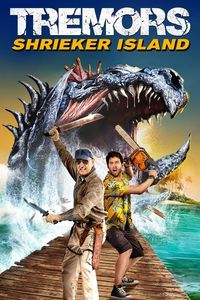
    (On Cable TV, March 2021) While it is a truth universally acknowledged that the first Tremors is an all-time monster horror/comedy, few will disagree that its sequels were terrible. Expectations for Shrieker Island were accordingly low… which may serve to explain why this seventh entry is actually… not too bad? Of course, we’re still grading on a curve here: “not too bad” may be as modest as holding our attention for the running time and have a few set-pieces along the way. Here, the film seems to take its cues from Kong Island by moving the production to Thailand and then pumping up the creatures to skyscraper height. Michael Gross is back as series protagonist Burt Gummer, and he’s actually one of the best parts of the film — taken out of retirement to investigate creatures on a tropical island with rich game hunters. Time will tell if Shrieker Island ends up being as concluding an instalment as it’s meant to be, but to its credit, the film plays that moment absolutely straight, as if there would never be another movie. The CGI-fuelled action beats are limited by a budget, but generally allow for some acceptable action sequences, and the amount of worldbuilding around Grummer’s status as a monster-hunting legend is not bad. It doesn’t make Shrieker Island any more than a monster film, but it’s not unwatchable, and that’s roughly all we’re asking for.

  • At Home in Mitford (2017)

    At Home in Mitford (2017)

    (On TV, March 2021) How much do I like Andie MacDowell? Apparently well enough to look forward to stereotypical Hallmark TV romantic comedy At Home in Mitford, the kind in which a successful career professional comes back to her childhood small town and goes through the whole romantic-triangle experience. (But not too much lest moral complexity intrude.)  The narrative is familiar—but, as usual, the fun is in the nuts and bolts: MacDowell (magnificent in her late fifties) plays a divorced children’s book writer who goes back to a small town to find inspiration and sell her uncle’s house. Of course, romance walks in under the guise of the local episcopalian priest, who inspires her again, takes care of a boy left without family, is a friend to dogs and in all aspects outshines the real estate agent who would otherwise be the other romantic suitor. The small-town atmosphere of this kind of film is portrayed with enough unrealistic nostalgia to be charming, and no serious problems show up on the way to the ending. It’s interesting that the film plays both of its leads (she in her late fifties, he in his late forties) as at least 10–20 years younger — they have concerns and past histories more typical of late-thirtysomething folks rather than the more interesting romance that people their age would otherwise have. But that’s part of the strong fantasy of those kinds of films — perhaps the only surprise is that it doesn’t take place at Christmas. Is At Home in Mitford a good film? No! Absolutely not! It’s terrible! But it’s comforting, unchallenging and deliberately as innocuous as possible. I am somewhat amused that the most vicious IMDB reviews are from readers of the novel on which the film is based — apparently, it’s got it all wrong.

  • Reckless (1935)

    Reckless (1935)

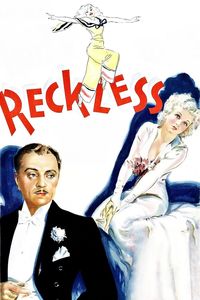
    (On Cable TV, March 2021) Discussing Hollywood’s refusal to acknowledge the Depression is probably not best tackled in discussing slight drama Reckless, but watching the film in all of its rich-person melodrama leads to thinking about the lifestyle that much of Hollywood presented as normal during that decade’s movies. Offering escapism to a cash-strapped nation, Hollywood spent far much more time talking about the problems of the Manhattan upper-class than the working people, and that was somehow completely acceptable. So it is that Reckless features famous signers, oil billionaires, regrettable marriage, sudden suicide, public scorn and musical numbers — in other words, nothing like life. It definitely feels artificial, and the charm of stars Jean Harlow and William Powell (who were a real-life couple at the time) doesn’t do much to save the results — both of them were far better used in comic vehicles rather than overwrought dramas such as this one, and as a result Reckless feels like a joyless production, another studio product with very little heart to it. The star-power does make the film more interesting, but only just.

  • Quatermass 2 (1957)

    Quatermass 2 (1957)

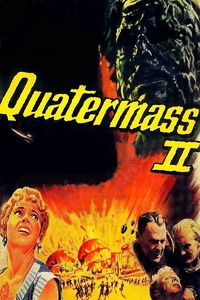
    (In French, On Cable TV, March 2021) You wouldn’t necessarily expect a 1950s British movie based on a TV show to be still interesting, but the Quatermass series remains remarkable for how it reaches for a more intellectual kind of filmed Science Fiction than its contemporaries, creating a more credible backdrop for adventures that played off familiar tropes in better-than-average fashion. So it is that Quatermass 2 contemplates a somewhat typical alien invasion (and possession) story, but one that’s handled with more dexterity and subtlety than many of its contemporaries or, indeed, later examples of the form. It’s executed in stereotypically British fashion, all the way to the stoic attitude, political details and mild-mannered details, and that’s what makes it fun even today. Production values are adequate, although (as one may expect) the black-and-white cinematography and middle-grade special effects ensure some distance. Still, I was more pleasantly surprised than disappointed by the results. Quatermass 2 is the second Quatermass film I’ve seen (I seem to be going backwards in seeing them) and I’m starting to understand why the series is so appreciated in some circles. In fact, now I’m beginning to wonder why there hasn’t been a more modern take on it.

  • Tarnished Angel (1938)

    Tarnished Angel (1938)

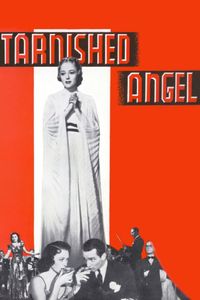
    (On Cable TV, March 2021) Tracking down an interesting actor’s filmography can take you places you don’t necessarily expect, and that’s how recording a day’s worth of Ann Miller movies can land you in the middle of Tarnished Angel, a 1930s crime drama lambasting religious swindlers. The story begins in Manhattan, in a nightclub where the entertainment (including a young Ann Miller, playing the sidekick) is scared off by a police raid. Unwilling to subject themselves to such further shenanigans, the protagonist (Sally Eilers) flees town and eventually decides on a new career: religious faith-healer shows, helped by “cripple artists” and some showbiz flim-flammery. This is not meant to be a particularly dramatic film—even the most suspenseful moments are handled in a broad audience-friendly way—but there’s some substance underneath the plotting. Watching the film for Ann Miller is not particularly rewarding, but then again—she was at the beginning of her career here, playing in supporting roles that didn’t account for much cumulative screen time. At least she gets to open the film strong with a good singing number before fading into the background as the third wheel in the protagonist’s entourage. There’s a quick conclusion that upends the idea of the charlatan, but much of the film’s best moments are spent dealing with an unscrupulous heroine amazed by the success of her own racket. Tarnished Angel is watchable, even intermittently fascinating in its depiction of 1930s faith healers, but not exactly an enduring classic.

  • Sherlock Gnomes (2018)

    Sherlock Gnomes (2018)

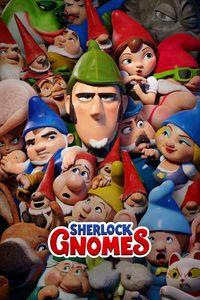
    (On TV, March 2021) It takes a special kind of twisted inspiration to make a Sherlock film with garden gnome characters, but considering that Sherlock Gnomes is a sequel to Gnomeo and Juliet, inspired lunacy is expected. Moving from small-town England to London to accommodate its premise, Sherlock Gnomes reuses (some) of the previous film’s characters as a way to spin off its own Sherlock Holmes parody, investigating a mystery and confronting an antagonist along the way. It’s not exactly a top-notch animated film, but it’s pleasant and funny enough to watch. There’s a bit of Elton John magic to the soundtrack, and some of the jokes as the film gets into some Sherlockian minutiae can be somewhat amusing. (Mary J. Blige as Irene? Yes, that works.)  As weird as the side-step into action/mystery can be, it does position Sherlock Gnomes as being sufficiently different from its predecessor to avoid the impression of the same thing repeated too closely. It’s still very much playing in the idiom of late-2010s animated films (songs, jokes, action sequences), but it’s a strong formula, and one quite resistant to missteps.