Month: March 2021

  • Midnight Lace (1960)

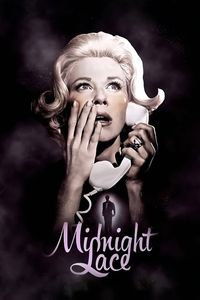
    Midnight Lace (1960)

    (On Cable TV, March 2021) If you’re looking for the least Doris-Dayish film ever made by Doris Day, you probably don’t have to look much farther away than Midnight Lace. In some ways, it’s an incredibly familiar kind of movie: one where the beautiful lead actress is threatened by a mysterious man, and has to face both incredulity and betrayal in order to resolve the threat to herself. But here’s the thing: here, the damsel in distress is played by Doris Day, whose filmography does not include any other thriller of the kind. (Yes, she played in Hitchcock movies, but her role in The Man Who Knew Too Much really wasn’t in the same category.)  If you’re in a mood to hear Day screaming and whimpering in fear (a disturbing idea in its own right), this is the film for you, as her mysterious assailant employs everything in his power to frighten her beyond reason. The plot won’t be particularly original for anyone who’s seen more than two of those thrillers — the red herrings get a lot of work here to distract us from the fairly obvious conclusion. Still, it’s a change of pace: I doubt that the film would be nearly as remembered today if it had starred someone other than Day in the lead role — although seeing Rex Harrison as her husband and a secondary role for an elderly Myrna Loy aren’t to be discounted as bonus features. Day herself didn’t like the experience of shooting the film, in which she had a bit of an on-set breakdown — she never starred in another thriller again.
  • Ma Rainey’s Black Bottom (2020)

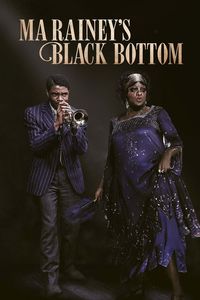
    Ma Rainey’s Black Bottom (2020)

    (Netflix Streaming, March 2021) You’re not mistaken if you detect an atmosphere of theatricality to Ma Rainey’s Black Bottom — after all, the film is an adaptation of one play in August Wilson’s Century Cycle, the same cycle that includes Fences. This time, Denzel Washington produces the film, which revolves around a contentious recording session by a 1920s (fictional) black jazz band and their (real) headliner Ma Rainey. The strong space/time unity of the film manifests itself by the characters arriving at the recording studio, where they’ll spend most of a day scratching vinyl in-between Rainey’s surliness, her stuttering nephew, the trumpeter’s aggressivity, greed-fuelled white studio owners and the laid-back veteran musicians making up the rest of the main cast. Given the slow, sure, dialogue-heavy pacing of Ma Rainey’s Black Bottom, it’s no surprise if some of the film’s most enjoyable moments consist in hanging with musicians on a job, just doing their things and talking about this or that. The minutia of music-making is given a solid period patina with credible historical details. As the final ironic shot drives home, the racial component of the film’s setting is never too far away. Paradoxically, Ma Rainey’s Black Bottom becomes less interesting when it reminds itself that it has to have a plot. By the violent climax, everyone feels bad about it all. Nonetheless, the way to get there is often a delight, with carefully written dialogue allowing the actors to show themselves at their best. Viola Davis—garishly made-up in diva garb—is a force of nature as a singer who’s just had enough of any nonsense. Meanwhile, Chadwick Boseman gets one last good role as a musician looking for a fight. While the result may not be particularly spectacular, there’s a lot to like here, and it’s a solid first entry in what is supposed to be nine films to be made from Wilson’s Century Cycle, complementing the already-existing Fences. I’m already looking forward to the rest of it.

  • Love Me or Leave Me (1955)

    Love Me or Leave Me (1955)

    (On Cable TV, March 2021) For seasoned movie fans, there’s an interesting meta-movie aspect in seeing two performers with strong screen presences go head-to-head in a single film, especially if they play roles reasonably close to their personas. Much of the fun in Love Me or Leave Me isn’t as much in the inspired-by-a-real-event story of a nightclub singer becoming married to a gangster, but seeing Doris Day, in singing mode, having to compose with James Cagney in full mob boss splendour. While the result is unquestionably a jukebox musical playing from Ruth Etting’s discography, Day gets closer to Cagney’s register than the reverse: the tone is dramatic, and Cagney’s character’s abusive behaviour appears harsh in a 1950s musical. There’s some additional interest in seeing Love Me or Leave Me portray the 1930s — or mostly failing to represent the 1930s while carrying itself like a 1950s musical. Still, seeing Day carry herself as a victim of spousal abuse is more sobering than other musicals at the time. The result is an interesting blend of elements — generally successful, but obviously pulled in two different directions at the same time.

  • Boarding School (2018)

    Boarding School (2018)

    (In French, On Cable TV, March 2021) If horror movies have taught me anything, it’s that boarding schools are where terrible things happen and that we should never willingly go to one. Boarding School merely repeats that obvious lesson, albeit with a few extra complications. Our protagonist is a 12-year-old boy who gets sent to boarding school to learn alongside other misfits — and much of the film is waiting out the twists and complications, of which there are many if few do much more than add other dead bodies to the final count. Like a surprising number of recent low-budget horror films, director Boaz Yakin’s Boarding School does look good — and the slow burn of the plot means that the film is far more often effective as a mood piece than an out-and-out horror film. Unfortunately, it also plays with too many ill-fitting pieces to make the result anything but a half-satisfying blend of genre elements. The intention to deliver a sympathetic statement about misfits is blurred by their deaths, and the film is (thankfully) unwilling to commit itself to a classical genre piece. The result is far less interesting than it should have been, but it does distinguish itself from many other duller horror movies. Boarding School probably would have been better with half the ideas and twice the pacing.

  • Mank (2020)

    Mank (2020)

    (Netflix Streaming, March 2021) For all of the times when I felt excluded by a favourite director getting interested in some esoteric topics far away from mine, here is the exact opposite: David Fincher going full out on an examination of 1930s Hollywood, through a dramatization of Herman Mankiewicz’s work on the script that would become Citizen Kane. Written from a script authored by Fincher’s father, Mank is a film that goes back ninety years to show, in fantastic black-and-white, the tumultuous Hollywood experience of a writer too clever for his own good — a member of MGM’s screenwriting team who gets involved in state politics, who hobnobs with Hollywood royalty, who challenges and alienates nearly everyone he gets in contact with. Mankiewicz was a larger-than-life personality — consciously abrasive, ferociously talented, witty but also prone to obsessive behaviour and all-consuming alcoholism. Through him, we get a tour of the Hollywood machine from 1934 to 1940 in short vignettes that ring remarkably true to those who know the era. Thanks to Fincher’s legendary attention to detail, we know that even the silhouetted one-line characters are meant to be real historical characters, and you can recognize several of them just by their headshots. As for the lead character himself, his terrific lines are delivered by none other than Gary Oldman — clearly twenty years too old to play the fortysomething Mankiewicz, but clearly relishing the material as a cantankerous screenwriter dealing with a blank page. It’s a great deal of fun, but I’m saying so with a few years’ worth of interest in 1930s Hollywood and an increasingly encyclopedic understanding of who was who at the time. I don’t particularly agree with some of the dramatizations used here (I’m one of those traditionalists who think that Orson Welles equally shaped Citizen Kane’s script) but I like that Fincher has turned his energies to this project for years and that we got a wonderful look at the early days of the Dream Factory as a result. Yes, Mank is long and talky and occasionally too dramatic (such as the scene where Mankiewicz gets cast out of Hearst House) but I still liked it quite a bit. For all of the times when a film doesn’t play to my interest, here’s one that does, and I’m going to appreciate the results.

  • Underplayed (2020)

    Underplayed (2020)

    (On Cable TV, March 2021) It’s impossible to be against Underplayed’s intention, which is to highlight the underrepresentation of women in the current electronic music scene. I take it as granted that more diversity is better, I can affirm without a doubt that the EDM scene is heavily male-dominated, and the remarkable change in representation in film over the past few years is an eloquent demonstration of what happens when more diverse people get to create and broadcast art that reflects them. But why did director Stacey Lee’s Underplayed itself have to be so incredibly conventional? If you’re even slightly aware of issues regarding female underrepresentation in various fields, you can probably outline the topics that the documentary will approach in monotonous order. There’s the wage gap, there’s the LGBT angle, there’s the racial aspect, there’s the problem of tokenism, there’s the difficulty in linking work with family life… it all feels well worn, working from an established template and each interviewee making obvious points. I had hopes that the music would save the film—electronic music is one of my jams, so to speak—unfortunately, the highlights are few: much of the soundtrack is disappointing, similar and low-key. The film does much better once it focuses on its interviewees’ individual stories: Most of them are likable, have interesting journeys and telling examples. But when the film goes back to its blunt-force retelling of obvious points, it once again becomes the formulaic progressive screed that has the power to annoy even those who support its theory. The analytical component is barely anecdotal, and the historical context is incredibly selective—Wendy Carlos is justly mentioned as a pioneer of electronic music, but (unless I’m not remembering this correctly), there’s nothing about her influence as a transgender pioneer. And so on, and so forth — at times, it felt as if Underplayed was so incredibly self-convinced about the righteousness of its topic that it didn’t lay out the proper groundwork to be a film worth watching by those who agreed with it. (Let alone anyone who didn’t.)  By the end of it, I had a list of artists to listen to that was more interesting than the film itself.

  • Sands of the Kalahari (1965)

    Sands of the Kalahari (1965)

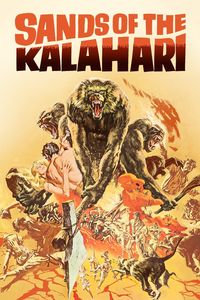
    (On TV, March 2021) Eerily similar in its first few minutes to The Flight of the Phoenix (also released that same year), Sands of the Kalahari also starts with a small passenger-plane crash in the desert, with a motley group of survivors trying to figure out what to do. But unlike the engineering-minded crew of the Phoenix, the survivors here are somewhat more vicious: One of them has clear intentions of getting rid of the other male survivors so that he can end up with the sole female. There are also killer baboons lurking around, and they add quite a bit to the film’s atmosphere of nihilistic exhaustion even when the humans are better at assaulting each other than nature is. Even couched in survival terms, this is really not an uplifting film — it manages to place a revenge climax at the end of a man-against-nature film, and the result is really not glossy nor pretty. In some ways, Sands of the Kalahari was a film slightly ahead of its time — it portends the gloominess of 1970s cinema, breaking from comforting Hollywood clichés. It’s clear from the making of the film that writer-producer-director Cy Endfield was going for a deliberately harsh and unnerving experience, blurring the lines between civilization and survival, with individual greed threatening collective survival. Even the setting is bleak, avoiding the stereotypical sand dunes for barren rocks and just enough wildlife to be even more dangerous. Even the nominal hero of the story (bringing back help after exiling himself from the group) does something terrible right before leaving the group — and such bitter ironies are part of what makes this film feel five or ten years more modern than its production date.

  • The Funhouse (1981)

    The Funhouse (1981)

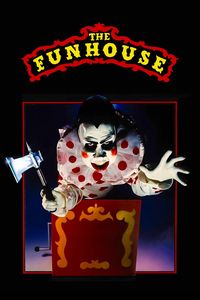
    (In French, On Cable TV, March 2021) At long last, it finally comes together. Twenty years ago, I read a Dean Koontz book called The Funhouse, and now that I’ve seen the film, I can track how Koontz’s novelization, published before the film came out, remains almost more famous as a Koontz novel than a movie tie-in. While the film is helmed by horror legend Tobe Hooper in a style somewhat reminiscent to his earlier Texas Chainsaw Massacre (most notably the reuse of deformity in deep-America horror context, or am I jumbling the Chainsaw Massacre sequels together?) that makes the result a cut above the usual slasher films of the era, by modern standard it’s a humdrum horror film that sticks close to the codes of the genre. The monster-in-a-fair motif is familiar, and not even a better-than-average execution can quite make it shine. What I remember of the novel is substantially more detailed than the film — a surprisingly common occurrence once real genre writers get to work on a novelization (Also see: Asimov’s Fantastic Voyage and Card’s The Abyss). As for The Funhouse itself, it’s just interesting enough to be worth a watch today if you’re a horror fan (something that’s not necessarily true of the glut of horror films in the early 1980s), and a slightly better-than-median entry in the Hooper filmography. Otherwise, though, there isn’t anything spectacular to see here.

  • A Bullet for Joey (1955)

    A Bullet for Joey (1955)

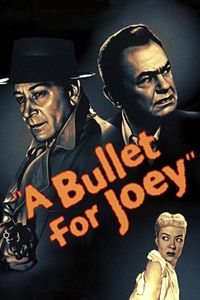
    (On Cable TV, March 2021) You would think that the single biggest reaction to a film titled A Bullet for Joey would be “Who is Joey and why does he deserve a bullet?”, but after watching the film, the first thing that comes to mind is “Wow… Edward G. Robinson as a French-Canadian policeman?”  A cold war thriller chiefly concerned with communists kidnapping a nuclear physicist, it brings Robinson as “RCMP Inspector Raoul Leduc” (A French-Canadian name is there’s one, despite Robinson making no effort at playing French Canadian) tracking down the miscreants and saving the west from a crucial brain drain. As a Canadian, the film is probably far more interesting than to American viewers, especially as it’s largely set in Montréal without actually showing anything distinct about Montréal — it might as well be any other Midwestern American city so little does it take advantage of what makes Montréal such a unique place. But if you keep to the script’s guns-and-girls portion, the film becomes an average genre entry, a bit dull on the sides and not really worth any sustained attention. Robinson plays opposite George Raft as a criminal manipulated into helping the communists, and the much more interesting Audrey Totter as a better-written love interest. There are a few shocks along the way (the best, or worst, being what happens to a shy sweet secretary who becomes a pawn in the larger game), but otherwise A Bullet for Joey is a routine film with noirish overtones and some occasionally decent dialogue. Canadian fans will get more out of pointing and chuckling at the film’s “Hollywood, Canada” setting.

  • The Iron Petticoat (1956)

    The Iron Petticoat (1956)

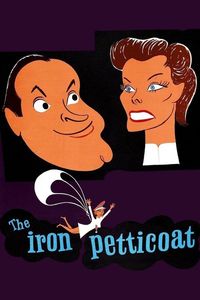
    (On Cable TV, March 2021) As far as unusual screen couplings go, Katharine Hepburn and Bob Hope is about as interesting as it comes. Stuck in a film where she plays a cold-hearted Soviet defector and he plays an American officer tasked with keeping tabs on her (and letting her discover the hedonistic joys of the west), their clashing style makes about half of the result’s entertainment factor. The inspiration from Ninotchka is obvious (both the equally similar Jet Pilot and Silk Stockings would be released the next year), especially in the way she is portrayed as a humourless automaton-like product of a caricatural Soviet regime. The production history of the film was… tumultuous, with the original script being a Hepburn vehicle pairing her with someone like Cary Grant. When Hope came onboard, the script was rewritten to suit his broad comic style (incidentally making him the lead, at her expense), and the finished film feels as if Hepburn is a stranger in her own film, trying to keep up with Hope’s constant mugging and wisecracking. To be fair, a lot of it is actually funny — the quips work and seeing Hepburn stuck in a straighter-than-straight role is amusing in itself. (As a romance, though? Eh.)  The Cold War comedy atmosphere is almost charming at this point and the film would make a splendid double-bill with Silk Stockings, even if it pales in comparison. In narrative terms, The Iron Petticoat does the strict minimum to get the characters to a happy ending — the film’s strongest point comes in the earlier dialogue rather than the wrapping-up of the tale. A must-see for fans of Hepburn, the result is fascinatingly uneven and almost a case study of what happens when two mismatched leads are stuck in the same project.

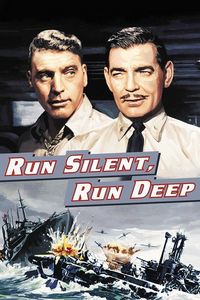
  • Run Silent Run Deep (1958)

    Run Silent Run Deep (1958)

    (On Cable TV, March 2021) There were a lot of submarine movies made during the 1940s and 1950s, and it’s perfectly understandable if they tend to blur together. But that’s not the case with Run Silent Run Deep, a superior example of the form that never forgets that the point of submarine movies is people under pressure. The casting already makes the film distinctive: With none other than Clark Gable and Burt Lancaster in the lead roles, the film already feels more substantial. It gets better as both men play to their strengths, Gable as the revenge-obsessed commander fending off Lancaster as the ambitious second-in-command. Infighting is good for drama until everyone turns their guns (or rather torpedoes) to the true enemy in time for a thrilling third act. Rather good special effects help sell the illusion: the explosions are particularly satisfying. Thanks to director Robert Wise, the immersion of WW2 submarine life is convincing, and the film eventually has a tragic heft that helps further separate it from other similar WW2 dramas. There’s a straight line from Run Silent Run Deep to later examples like Crimson Tide, but the point is that it’s a film that just works — it’s engrossing and it doesn’t let up until the end.

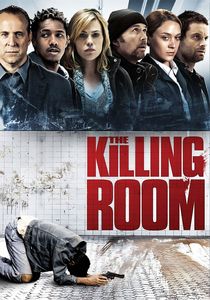
  • The Killing Room (2009)

    The Killing Room (2009)

    (In French, On Cable TV, March 2021) It’s amazing how much a little perspective can put things in their place. Twelve years later, we’re barely starting to process the awfulness of the Bush administration and how America had to overcome the post-traumatic stress disorder of 9/11 (and then Afghanistan, and then Irak). Looking back at the socially conscious entertainment from this period at a slight distance can be revelatory — the paranoia against the government at the time was at an all-time high, and since then, the latest Republican president has done much to destroy any notion of an all-powerful, all-capable administration capable of doing anything more complex than not tripping over itself. This brings us to The Killing Room insofar as this is a psychological thriller that could only have been born in the post-Bush era. It starts with mystery, as strangers are assembled in a room and then quickly faced with a life-and-death situation as a doctor explains to them the parameters of the test they’re about to undergo… and then shoots one of them in the head. The rest is the kind of locked-room paranoid thriller that we’ve seen everywhere from Cube, Exam, The Belko Experiment and other examples of killer-psychological test horror movies. It’s mildly intriguing up until the time when it becomes ludicrous — specifically, by the time the film builds a preposterous narrative saying that these tests are being conducted en masse to find dedicated killers for the government. There are so many wrong things in that statement that it’s hard to know where to begin (and the film does itself no favours by referencing the MK-ULTRA program) — this is a clear case where the film should have avoided clearing up the mystery justifying what it really wanted to do: crank up a low-budget thriller exorcising that era’s paranoia. Narrative nonsense aside, the film is not badly executed: thanks to director Jonathan Liebesman (who did far higher-budget films afterwards) and a cast that somehow brings together players as familiar as Chloé Sevigny, Timothy Hutton, Clea DuVall and Peter Stormare, the film assumes its clinical griminess and delivers what it intends. A shame about the escalating stupidity of the justification, but so it goes. Nowadays, of course, the film is more interesting as a reflection of where America was at psychologically at the end of Bush’s second mandate — not in great shape, and terrified of what an ultra-competent government could do to them.

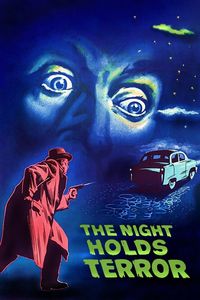
  • The Night Holds Terror (1955)

    The Night Holds Terror (1955)

    (On Cable TV, March 2021) To find interesting movies in Hollywood history, it pays off to get away from the classics and take a look at the B-grade material that was also produced at the time. Forced to work without the lavish budget of bigger productions, those second-rate filmmakers had to be inventive and stick closer to reality than the lavish spectacles that headlined theatres. So it is that The Night Holds Terror does a few really interesting things. For one, it tackled a home-invasion premise that seems to belong to later decades rather than the image we hold of the mid-1950s. For another, writer-director-producer Andrew L. Stone uses a lot of practical location shooting as a substitute for studio sets, managing along the way to portray a sense of realism that also feels ahead of its time. Thirdly, it goes into its story with a procedural mindset, using narration and plenty of exposition footage to show us policemen using then-high technology to close the net around the criminals. Speaking of which — the most likable of those hoodlums is played by John Cassavetes, years before striking out on his own as a director. Adapted from a real story to such a degree that the criminals sued the production company (which led to a courtroom hearing where the victim punched one of criminals in the face), The Night Holds Terror does feel a bit more immediate and more contemporary than similar films of the era.

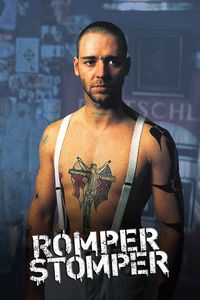
  • Romper Stomper (1992)

    Romper Stomper (1992)

    (On Cable TV, March 2021) Much of Russell Crowe’s rise to fame was fuelled by his performance in Romper Stomper, and it’s easy to see what impressed critics and the industry at the time. The story of a criminal skinhead gang in Melbourne, it features an already-magnetic Crowe as an ill-fated gang leader. The brutality of the film starts early with vicious violence against immigrants, and the film is hardest to take in its first act, as it delights in presenting an alarmist portrait of urban violence that seems content to shock the suburban viewers without necessarily digging into its characters. But that does come later, as a young woman (a rich man’s daughter, controlled and abused by him) meets the gang and precipitates their downfall. By the end of the film, we’re in merciless character drama, as the flaws of the characters inevitably destroy them. It’s certainly not a cheery film, and writer-director Geoffrey Wright is not interested in glorifying the skinhead lifestyle: they’re shown as dumb brutes incapable of living in society without ultimately doing harm to themselves. Still, Crowe is fascinating here—finding whatever he can work with in his character to make him accessible to viewers. The result can be hard to watch, but it does have some merit, especially for those interested in pre-fame Crowe.

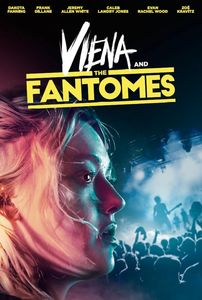
  • Viena and the Fantomes (2020)

    Viena and the Fantomes (2020)

    (On Cable TV, March 2021) What a terrible movie. I’m not kidding. Viena and the Fantomes is just an unpleasant, useless and ugly movie throughout. I wasn’t expecting much, but I was definitely expecting something better from a 1980s drama featuring a roadie travelling cross-country with a punk band. I would have liked a period atmosphere, some good music, likable characters, some kind of compelling narrative and elements of a touring drama… you know: the basics. Instead, what we have here is a film shot in grainy monotones featuring lifeless (or unlikable) characters engaged in meaningless melodrama. There’s barely any music nor plot nor atmosphere. It may be realistic in that I imagine tour life being as grimy and dirty and dispiriting as this, but that’s not why I watch movies. The cast features known names (in-between Caleb Landry Jones, Evan Rachel Wood and Dakota Fanning), but they’re not used very well: I was watching largely for Zoë Kravitz, but she barely shows up. The only way this film is impressive is in seeing how it wastes nearly everything it has at its disposal. You would think that a love triangle set against a 1980s touring punk band would be far more interesting, but instead you get interminable shots of a moody young woman being depressed in a trailer in the desert. (I’m not exaggerating by much.)  Writer-director Gerardo Naranjo can’t be bothered to demonstrate even basic storytelling or directing competency, leaving the entire result floating without anchors or hooks to draw viewers in. The film’s production history reportedly stretched over six years, but from what’s on-screen I’m dubious that anything could have been salvaged at any point: there’s such a lack of content throughout the entire running time. In most rock band dramas, there’s usually a thirty-second moment where the band wakes up from the previous night’s party with a hangover, everything is awful and they all realize how they have to mend their ways in time for a happy ending. In many ways, Viena and the Fantomes is that thirty seconds stretched over 96 minutes, but without the fun partying or the happy ending.