Month: March 2021

  • The Pretty One (2013)

    The Pretty One (2013)

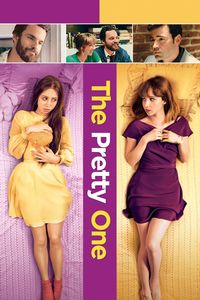
    (In French, On TV, March 2021) Strange plotting things start to happen when you use twins as a plot device. In the case of The Pretty One, it means being able to treat a quasi science-fictional device in a realistic fashion, as a young woman takes over her dead twin sister’s life after a case of meticulously engineered identity confusion. Zoe Kazan carries the film on her shoulders in the dual lead role, both as the unpleasant outgoing glamorous career-driven Audrey, and the likable shy frumpy homebound Laurel. Invading some else’s life is easier when you look exactly like her, but it’s not easy, and much of the film plays along the lines of a classic thesis/antithesis/synthesis structure, as our introverted heroine learns to take the best parts of her sister’s life in order to improve her own. Jake Johnson does well as the romantic interest, with Ron Livingstone providing one of his usual handsome schmucks. Still, the film always goes back to Kazan in a challenging dual role, not simply playing different parts for a chunk of the film, but also playing someone playing a part and reacting to various strong emotions along the way. It’s all handled with some restraint and glossy cinematography by writer-director Jenée LaMarque, and the result is a minor but very enjoyable film that stays nicely grounded despite a premise that is more often found in genre fiction.
  • Step Up 2: The Streets (2008)

    Step Up 2: The Streets (2008)

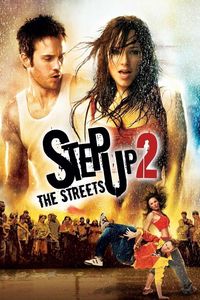
    (In French, On TV, March 2021) It’s been a wild ride through the Step Up series, as I (let’s check my notes) onboarded on the third in theatres in 2010, waited eight years before seeing the first, then followed it up every six months by the fifth, then the fourth and finally the second film. Whew. In retrospect, the second film is the one that shaped the series — we may talk about Fast Five as a major pivot point in its series, but Step Up 2: The Streets extended the romantic comedy aspect of the first film into the dance musical extravaganza of the next few instalments and codified both the style and the recurring characters. Even from a narrative perspective, the film almost begins anew — Chaning Tatum shows up briefly in an early scene to bring the lead character into the fold and then disappears. Suddenly, with director John M. Chu taking ownership, the street aesthetics of the series become more pronounced, the mood lightens up, Adam Stevani makes his introduction as the compelling “Moose” (never the lead, but always invaluable as supporting actor), and the series moves toward intricately choreographed spectacle, setting the tone for the next movies. Don’t tell anyone, dear Internet, but (looks around carefully and whispers) I dearly love this series. It’s the closest recent American cinema ever came to recapturing the undiluted joie de vivre that was previously found in the best of Classic Hollywood musicals. The blend of dancing, music and vivid cinematography takes advantage of all facets of movies as an art form, and the result is impossible to watch without a smile. Never mind the perfunctory plot — the fun of Step Up 2: The Streets is in the dance set-pieces all the way to a rain-drenched street demo as a climactic sequence (an idea so good that it was reprised in the next film in the series, where it was also a showcase). The cast of characters is quirky enough to be interesting, and the film has the good sense not to talk too long on the way to the next dance sequence. It’s all kinetic and fun, with great beats and even better choreography. I suspect that one of the reasons it took me so long to watch all five films is that, now that I’m done, I feel sad: The series stopped in 2014 (save for a Chinese spinoff in 2019), and there isn’t even a tidy box set available for fans. Too bad — I’d be first in line to get a copy.

  • The Uncanny (1977)

    The Uncanny (1977)

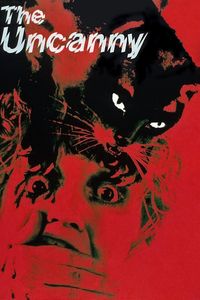
    (In French, On Cable TV, March 2021) I suppose that if you look long enough, you’ll find horror movies on every imaginable topic. The Uncanny brings us closer to the fullest understanding of this axiom by featuring no less than three stories about the evil of cats, and a framing device to hang it all together. A late-1970s Montréal-based English-Canadian production, it’s clearly made on a small budget and technically rough around the edges. Fortunately, there’s a bit of a story to go with it. The framing device, as we eventually discover, has to do with a publisher meeting the author of a manuscript documenting how cats are the evil force controlling the world — and the three stories are meant to illustrate the thesis. In the first one, cats take revenge upon their mistress’s murderer. In the second, a young girl avenges her cat’s disappearance through witchcraft. In the third, a cat takes revenge on a Classic Hollywood actor for murdering her mistress. By the time we get back to the framing device, cats are ready to kill in order to protect their secret, and they’re theatrical enough to wait until their target is walking down picturesque stairs). You get the idea: cats and revenge are this film’s main themes, with a budget that doesn’t quite allow more than two or three sets per story. While well-known names such as Peter Cushing and Donald Pleasence show up briefly, the main attractions here are the short stories. If they don’t quite work, just wait a few minutes and there will be another. The pacing is not that good — nearly every story has its lulls, especially when it’s obvious how they’re going to end. Still, as a concept, it’s cute, and French-Canadian viewers may be surprised to recognize some old-school actors and actresses in minor roles.

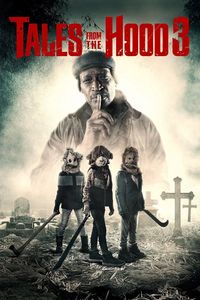
  • Tales from the Hood 3 (2020)

    Tales from the Hood 3 (2020)

    (On Cable TV, March 2021) This is my first exposure to the Tales from The Hood series, and I should probably have a look at the previous volumes. A black-themed horror anthology, it’s heavy on supernatural revenge stories, starting and ending with a framing device (“The Mouths of Babes and Demons”) that sees the would-be aggressor punished. “Ruby Gates” starts things off with a tale of fiery eviction and just-as-demonic comeuppance. “The Bunker” features an unrepentant white racist, but is a two-minute joke stretched over five minutes — striking in concept, but a bit too long for maximum impact. I liked “Operatic” a bit better than the other segments, with a story of schemers getting schemed pumped up with musical history and life-sucking creatures. “Dope Kicks” best showcases that the film was shot in Winnipeg, although its main idea is once again supernatural retribution. Tales from the Hood 3 isn’t all that memorable, but it’s a horror anthology that remains watchable throughout, and showcases a bit of diversity in the horror landscape. Writers-directors Rusty Cundieff and Darin Scott do well here, although their creative ideas may want to get away from straight-up revenge fantasies once in a while.

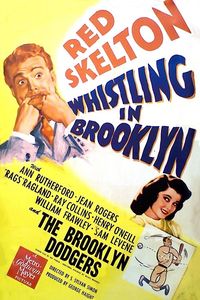
  • Whistling in Brooklyn (1943)

    Whistling in Brooklyn (1943)

    (On Cable TV, March 2021) Considering that Red Skelton stars in Whistling in Brooklyn, it’s a fair bet that the result is going to be a silly comedy. It’s, in fact, the third in a trilogy of movies featuring Skelton as the “radio criminologist” Wally “the Fox” Benton — and I haven’t seen any of the other ones. This familiarity with the character may serve to explain the unusually fast-paced opening, as audiences at the time would have been quite aware of Skelton’s character. (Not that this was Skelton’s sole brush with that kind of role — Benton feels a lot like his crime-writer character in the previous year’s Ship Ahoy.)  Here, Benton comes to be suspected of being a serial killer. Multiple complications ensue, especially when he gets in a cross-fire between the police and the real serial killer. There are a surprising number of non-comic suspense sequences here, although Skelton’s usual brand of humour eventually wins the day. An extended sequence takes place in a baseball stadium, starring then-celebrities. Whistling in Brooklyn is not a great or even a good movie, but if you’re a good public for Skelton’s humour and can tolerate an hour and a half of silly crime comedy, then it will do just the trick.

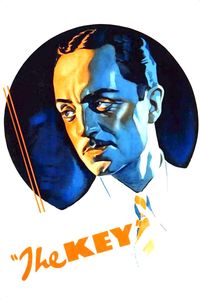
  • The Key (1934)

    The Key (1934)

    (On Cable TV, March 2021) Not every film featuring a favourite actor is a success, and while I have a problem being overly critical of The Key given that it stars William Powell, the result is just a bit too ordinary to be worth much more than a few scattered notes. Here, Powell sheds a bit of his screen persona in service of a more serious melodrama, as he plays a British officer sent to Dublin in the 1920s. Never mind the action potential in this situation, because The Key is more interested in raising the stakes by putting the protagonist in contact with an old flame, now married to another British officer. As the complications pile up, they force the protagonist to confront his old lover and (predictably) fall on his sword for her happiness. Powell is not bad as a stiff upper-lipped Brit (surely I wasn’t the only one who laboured under the misapprehension that he was originally from the United Kingdom?) but The Key is not a film that takes advantage of his talent for comedy or dry wit — it feels like the kind of role many other actors would have played, and in the middle of an unremarkable film that would be forgotten today if it wasn’t for Powell in the lead role.

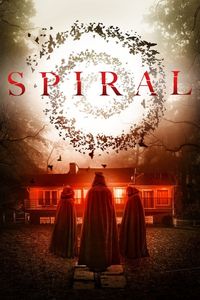
  • Spiral (2019)

    Spiral (2019)

    (On Cable TV, March 2021) I was bamboozled by the TV guide! The Spiral described as playing as a cable premiere was the 2021 horror film follow-up to the Saw series featuring Chris Rock and Samuel L. Jackson, but this Spiral is a 2019 low-budget Canadian horror film featuring a same-sex couple confronted with supernatural fear and loathing in their new house. It didn’t take me a long time to figure out that this was in no way a Saw series film, but still: not what I was expecting. At first, once the bamboozling abated, I thought the film I was watching had some potential — using the alienation of a same-sex couple in 1990s small-town setting is an effective melding of theme and narrative, and the low-budget of the film wasn’t much of an obstacle in the kind of slow-burning style the film was going for. But as Spiral advanced, I found myself less and less happy with the results. While the visual polish of Kurtis David Harder’s direction remains high, the story gets increasingly worse, with inexplicable character decisions, bemusing plotting, on-the-nose dialogue and increasingly senseless characterization. Spiral trivialized its plotting by giving too much space to dream sequences (making it harder than necessary to keep track) and ended on a needlessly gruesome scene that did not do justice to its slow build. (In addition to butchering the film’s most sympathetic character, and I don’t use that verb lightly.)  While the intentions of the film are at the right place, the execution gets increasingly wobbly as it goes on, and the result does not manage to meet the expectations set by Spiral’s first half. Too bad — there’s clearly something interesting here, but it’s just not executed properly.

  • Cover Girl (1944)

    Cover Girl (1944)

    (On Cable TV, March 2021) Just as I thought I had seen all of Gene Kelly’s better musicals, here is Cover Girl to reassure me that I’d missed at least one. A good musical by most standards, Cover Girl was singled out by at least one film historian as the first in an illustrious series of musicals in which the plot was advanced during the songs, and the first collaboration between Gene Kelly and Stanley Donen. It’s also one of Kelly’s first efforts at choreographing his own dance numbers, and a film that hones in the typical self-aware style of Classic Hollywood musicals with wit and humour. Rita Hayworth shares the screen with Kelly, a pairing that works surprisingly well. The dance numbers are varied and well-executed, with a decent amount of visual innovation throughout the film. Surprisingly enough, it’s not an MGM musical — Kelly was loaned to Columbia (for their first colour musical) on the promise that he’d be able to stage the film’s numbers, but MGM definitely took notes when the film was a box-office success. Latter MGM/Freed films would come much closer to the example set by Cover Girl, and the result was an extraordinary string of timeless musicals. As for Cover Girl itself, it’s good — not great, but interesting enough in its own right that it’ll charm musical fans. Oh, and there are plenty of cover girls to gawk at, so the title is not misleading advertising.

  • Stand and Deliver (1988)

    Stand and Deliver (1988)

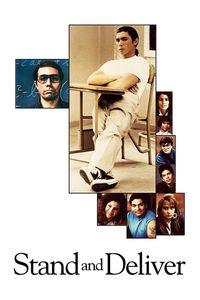
    (On Cable TV, March 2021) Inspiring-teacher stories are well worn by now, but I suspect that they may not have been so common at the time that Stand and Deliver came out in 1988. Considering the rather large corpus that followed in the same genre in the early 1990s, it’s interesting to go to this earlier example in its rough effectiveness. Filmed with a low budget and plenty of noble intentions, it’s a film that tells the story of a teacher who accepts to teach mathematics in a challenging neighbourhood, where the students are almost entirely uninterested in the course load and plenty of non-academic obstacles threaten their grades. In other words — more or less the same story. But what sets Stand and Deliver apart, even today, is an unusual refusal to make its protagonist glamorous — As played by Edward James Olmos, protagonist Jaime Escalante is a balding, meek, even silly looking. But following the real-life Escalante, Olmos shows that there’s more than one way to tech effectively: He manages to get his students onboard while avoiding the too-familiar strong-arm tactics of lesser movies, and eventually leads his students to great academic success. (Although not in the single year the film portrays!)  Stand and Deliver is familiar and likable at once, with plenty of charm even today — and the added dimension of it being an early example of Latino-made filmmaking is inspiring in itself.

  • A Lovely Way to Die (1968)

    A Lovely Way to Die (1968)

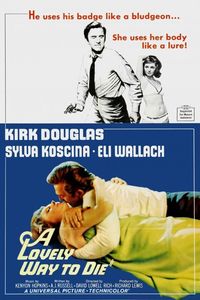
    (On Cable TV, March 2021) As much as I enjoy discovering the past classics of cinema, sometimes there’s no substitute for the kind of downmarket low-brow genre picture that more clearly reflects the quirks of its time than the timeless classics. Which brings us to A Lovely Way to Die, a slightly-trashy neo-noir swingin’ detective film best qualified as obscure. Whatever claim to an enduring legacy it has is solely in the casting: With none other than Kirk Douglas playing the lead character, the film automatically becomes more interesting. It doesn’t take much more than a few moments into the film, with its bombastic musical score and depiction of Douglas as a manly late-1960s renegade police detective, to realize what kind of film we’re getting — a type of film that would mutate in blaxploitation, but clearly belongs to its time. Dimpled-jawed Douglas plays the protagonist exactly like he should: without subtlety and with reactionary zeal, anticipating Eastwood’s Dirty Harry by two years. The plot is a murky concoction of matrimonial murder gussied up in tough-guy detective thriller, with Douglas smouldering so intensely that none of the female characters can resist him for long. Mostly shot in a vast mansion, the film does make its way to a courtroom in time for the third act. Douglas is a delight here, but maybe not for the right reasons — seeing a progressive icon like him play a reactionary tough cop who quits the force after bristling at criticism of his brutal methods is amusing, and having him being roughly twenty years too old for the part is additional material for hilarity. A Lovely Way to Die itself is average, but it’s the late-1960s quirks that make it special.

  • The Devil Makes Three (1952)

    The Devil Makes Three (1952)

    (On Cable TV, March 2021) Even when not singing and dancing, Gene Kelly was blessed with considerable charm as an actor, and his presence in The Devil Makes Three transforms what could have been an unremarkable postwar genre picture. Here he plays an American aviator who returns to Germany (during his annual Christmas vacations!) to meet again with a family that saved him during the War. Shot on location to take advantage of tax breaks, the film makes good use of wintertime German landscapes to tell a story of postwar black-market shenanigans and neo-Nazis. One sequence of historical interest is the climax, shot in the ruins of Hitler’s house right before it was demolished. In strictly entertainment terms, The Devil Makes Three is merely average: Kelly is very likable, co-star Pier Angeli is cute enough, the genre elements are deployed effectively, but the result somehow fails to ignite much interest. Still, it’s a good illustration of Kelly-the-Actor’s strengths, and a decent-enough period piece set in the murky Postwar period away from Berlin.

  • Spenser Confidential (2020)

    Spenser Confidential (2020)

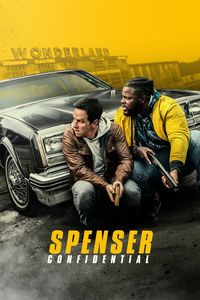
    (Netflix Streaming, March 2021) I wasn’t in the most forgiving mood during the first thirty minutes of Spenser Confidential. As someone who has read over twenty of Robert B. Parker’s “Spenser” novels back in the 2000s, my expectations were simple: I wanted a screen adaptation of Spenser, Private Investigator of little words and considerable attitude. In my mind, Spenser looks a lot like Parker himself — a bit squat and portly, with a magnificent moustache and flashes of devious inspiration. In other words, nothing like Mark Walhberg. But as the film advanced and made it clear that it only kept the Boston-area setting and character names of Spenser, wingman Hawk and dog Pearl, a quick look at Wikiepdia confirmed that I’d missed out on quite a bit in the past decade — most notably that following Parker’s death in 2010, writer Ace Atkins rebooted the Spenser series to (sigh) a younger, sexier version, and it’s that Spenser who was adapted to the screen. (I shouldn’t be too annoyed — after all, the original Spenser was previously adapted to the screen though a three-season TV show and two separate series of TV movies.)  But enough of that neepery — Considered on its own terms, how is Spenser Confidential? Well, it’s clearly designed as a launching pad for a series of Wahlberg vehicles— here we have Spenser as an ex-police officer who went to prison for hitting a (corrupt) officer whose savagely beaten body is found the day following Spenser’s release. Taking an interest in the widow and child of another slain officer in a connected affair, Spenser adjusts to civilian life, makes friends with the imposing Hawk, navigates a tumultuous romance with his ex-girlfriend, and investigates his own origin story. It takes place in Boston but stays in the working areas of the city, with director Peter Berg showcasing his easy rapport with Wahlberg in their fifth collaboration to date. Still, there’s no denying that the film almost runs on autopilot, with few surprises along the way and a strictly utilitarian approach to its material. There are a few scenes here that could be cut with no sense of loss — most notably a dogfighting sequence that serves no perceptible purpose other than making the film longer. Spenser Confidential is agreeable enough—the kind of film you leave playing but don’t have to watch all that closely—but it’s nothing special. Which, to think of it, does feel a lot like the overall goal of the original Spenser novel — expect that Parker’s formula was more interesting at its core than this adaptation.

  • Little Nellie Kelly (1940)

    Little Nellie Kelly (1940)

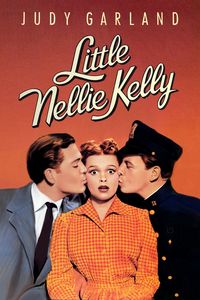
    (On Cable TV, March 2021) While Little Nellie Kelly isn’t much of a film on its own terms, it becomes more interesting in context. It’s one of the early films from MGM’s famed “Freed Unit” that eventually led to some of the best musicals in Hollywood history — and you can hear here a version of “Singin’ in the Rain” sung by none other than a youthful Judy Garland. Garland herself plays an Irish young woman who emigrates to America to follow her husband, but dies along the way — and Garland then returns to play her first character’s daughter. Filled to the brim with Irish idioms (is there anything more Hollywoodish than an Irish beat cop?), it’s adapted from an even older 1922 George M. Cohan Broadway play. As such, it’s not exactly a story told in subtleties — what with killing off a character and time-skipping ahead to her daughter, it’s generous with the “American Immigrant Experience,” the power of love over all other things, and (obviously) some song-and-dance to make everything go down easier. Garland here transitions from youth roles to more adult ones (though she would slip back with Meet Me in Saint-Louis), even if the 18-year-old actress was already acting ten years older with her ruinous lifestyle. Still, little of that was reflected on-screen as she played the role of an innocent felled by tragedy, and then an offspring trying to succeed despite obstacles — she’s young and pretty and lively. Considering this, you can see why Little Nellie Kelly is far more interesting as an early prototype of other, better movies.

  • The Last Time I Saw Paris (1954)

    The Last Time I Saw Paris (1954)

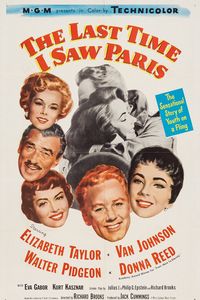
    (On Cable TV, March 2021) At some point, I’ll have to dig deeper into the quasi-magical link between Hollywood and Paris. More than any other non-Anglophone European Capital (even Rome, which became an adjunct Hollywood for a time!), Paris shows up at an amazing frequency in the classic Hollywood imagination — a city where American GIs could return to after the war, a place of a thousand romances and a town where art reigned supreme. As the title suggests, The Last Time I Saw Paris fully plays into these stereotypes as backdrop for a thoroughly 1950s melodrama. Here we have a WW2 journalist turning to novel-writing as he takes in la belle vie, but things can’t be happy for too long as oil money, adultery and death-by-pneumonia strike our characters. It’s all wild and woolly and unrealistic to the Nth degree and that’s part of the film’s charm. Even if you don’t like the result, you can at least feast upon a young and vivacious Elizabeth Taylor, easily stealing the film from would-be lead Van Johnson, Walter Pidgeon and Donna Reed—plus a very young Roger Moore as an adulterous suitor. The Paris backdrop is used as effectively as it could for studio-shot films of the era, but we’re still very much in an American fantasy of Paris. The Last Time I Saw Paris is not an uninteresting film, but it’s probably now best appreciated on a semi-ironic register in considering anything aside from Taylor’s presence.

  • Welt am Draht [World on a Wire] (1973)

    (On Cable TV, March 2021) Now here’s a fascinating find — I used to fancy myself a Science-Fiction buff (considering that I was reviewing SF movies professionally), but even I was surprised to learn of World on a Wire’s existence as a proto-cyberpunk film dealing with ideas of simulated characters breaking out of their computerized existence. Better yet: It’s adapted from Daniel F. Galouye’s novel Simulatron-3, which also led to the 1999 American film The Thirteenth Floor. Digging deeper in the film’s production history (how could I have missed such a film??), things became a bit clearer: Broadcast on German TV in 1973 as a two-part miniseries, the film remained mostly inaccessible to English-language audiences until restored edition showings in 2010 and then a Criterion edition in 2012, a year after I started losing touch with the SF field. Still, it does remain a major find — directed by film legend Rainer Werner Fassbinder (his only SF work), the film is clearly a methodical, intellectual piece of work: It’s all about ideas and characters, shot with an overabundance of chrome, mirrors and glass. There’s an intention here to deal with futuristic topics that would only slide in the mainstream twenty-five years later, and the cinematography (despite obvious TV-schedule limitations) clearly goes for something deliberate. Of course, we’re grading on a historical scale when it comes to discussing ideas — for the film’s interminable 204-minute running time, it spends a lot of energy setting up a now-obvious revelation (“We’re living in a simulation!”) in time for the cliffhanger ending of the first episode. It’s not a story told efficiently — there are numerous useless digressions that an experienced editor could have cut out (but probably didn’t due to contractual length obligations) and the moment-by-moment pacing of the film is severely lacking. Dozens of other Science Fiction movies and miniseries have done much, much better than World on a Wire in terms of pacing, efficiency, ideas and effectiveness — but you can draw a straight line from World on a Wire to Westworld, and 1973 is remarkably early to be talking about computer simulations of real humans. I suspect that there’s an entire dimension to the film that I don’t get, not quite knowing what was normal in 1973 Germany — it may be that the film is filled with clever deviations from then-reality that I’m ill-equipped to grasp. I’ll also admit that the leisurely running time and laborious presentation of its ideas can be exasperating at times. Still, I count the result as essential viewing for anyone interested in the history of SF cinema — especially if you’re already very familiar with its later heirs.