Author: Christian Sauvé

  • Sunrise at Campobello (1960)

    Sunrise at Campobello (1960)

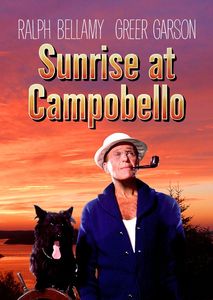
    (On Cable TV, April 2021) You can’t always predict your own reactions to a film, and my weirdly idiosyncratic hostility to Sunrise at Campobello proves it. On paper, it looks like the kind of inner-baseball political drama that I should enjoy — the origin story of future-President Franklin Delano Roosevelt, following his sudden paralysis. All of this is assorted with a look at his family, friends and political allies all the way to a triumphant podium appearance on his way to his nomination as presidential candidate. Considering that FDR ranks highly on my list of most admired presidents, I should have loved this. In practice, however, it only took a few minutes for the film to grate on my nerves. From the irritating tones of Greer Garson as Eleanor Roosevelt (another historical figure I admire in the abstract, but proves to be annoying in the flesh) to the self-satisfied family life of privileged white New England neo-aristocrats, Sunrise at Campobello started out on a very bad note that it never really recovered from. The artificial nature of circa-1960 filmmaking did not help, as this intimate drama feels stuck in this weird overblown Hollywood aesthetics it did not need. Oh, it’s not as if there’s nothing worth noticing in the rest of the film: Ralph Bellamy is fine as FDR, Hume Cronyn is a bit of a highlight as a sarcastic counsellor, the political shenanigans eventually take their place in the film, and the suspense builds up to a good conclusion. It does get better by the last act — even Greer’s characterization is meant to make her less grating. Historically, the film is also noteworthy for being more forthright than before about FDR’s medical condition, which was famously downplayed and unreported before and during his presidency. Still, I’m left curiously annoyed by the result — not being American is part of it (although, dear Americans, you really should elect people like FDR more often) but perhaps simply starting off on the wrong foot is enough. We all know how some films play differently from how they’re described on paper, and Sunrise at Campobello is a splendid example of it.
  • The Sandpiper (1965)

    The Sandpiper (1965)

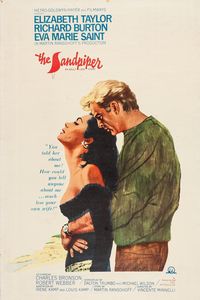
    (On Cable TV, April 2021) As far as I can determine, The Sandpiper is an average drama whose claim to fame comes from the on-screen romance between then-megastars Richard Burton and Elizabeth Taylor. As a drawing card, it’s not inconsiderable. They weren’t known as one of the most famous couples of the 1960s for no reason — both were sex symbols, box-office draws, and their union came from affairs leading to considerable tabloid gossip. They also co-starred in eleven films at various stages of their ten-plus-two years of marriage. The Sandpiper is the third of their pictures, the first one they shot as a married couple and very much focused on adultery — one can imagine how well that sold back then. Filmed in colour, largely on location in Big Sur, it features Burton as a strait-laced headmaster and Taylor as a free-spirited artist. You can guess where this is going, although the conclusion is suitably wistful. Decades later, and taking in the Taylor/Burton romance in its totality, there’s no denying that The Sandpiper has since lost much of the appeal it must have had at the time. We’re left with a well-executed romantic drama — nothing too exciting, but interesting in its own way for people who respond to such stories.

  • Castle Freak (1995)

    Castle Freak (1995)

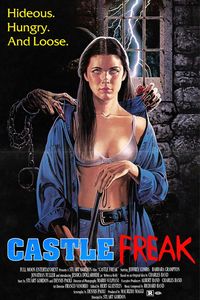
    (In French, On Cable TV, April 2021) The story behind Castle Freak is unlikely enough to be amazing: When cult-horror director Stuart (Reanimator) Gordon noticed a “Castle Freak” poster (for an unproduced film) in shlockmaster Charles Band’s office, he quickly negotiated a half-million-dollar budget and an agreement that the final result would contain both a castle and a freak. In return, he got what many filmmakers would kill for: complete creative control within those constraints. The result is, well, low-budget but not completely awful: As an American family moves to a castle they just inherited, they certainly don’t expect the murderous creature lurking in the dungeons. There are added layers of psychological and genealogical complexity in the final script, and while the result doesn’t fly particularly high, it is interesting more in a Stuart Gordon way than a Charles Band way. There’s clearly something there trying to escape the confines of its budget. Gordon stalwart Jeffrey Combs plays the male lead role, perhaps courting cult approval more than the film actually deserves. Castle Freak does have its share of obvious problems, including a far too gory scene that should have been toned down to fit with the rest of the film. There are lulls, needless complications, and a premise that arguably runs out of gas well before the film’s 95 minutes are up. Still, it’s not quite as bad as feared, largely due to Gordon’s attitude at managing even a micro-budget. Fun fact: the castle in which the film was shot was actually owned by Band himself. No, I don’t know how a low-budget horror producer can afford a castle. I suspect that’s another amazing story by itself.

  • A Perfect Plan (2020)

    A Perfect Plan (2020)

    (On Cable TV, April 2021) In discussing so-called bad movies, it’s often useful to distinguish the difference between the actual quality of the film and how strongly we feel about this lack of quality. The first factor can be surprisingly objective — you can perform the anatomy of a sequence and point out how it’s flatly directed, badly written, transparently badly acted or hampered by substandard technical means and decisions. In discussing A Perfect Plan, for instance, you’d feel obliged to talk about actors being unable to maximize the potential of their characters, the script that mishandles its own best ideas, the lackadaisical direction, the stilted dialogue, the weird structure, the plot contrivances, and so on and so on. But then there’s the subjective aspect of my reaction to those flaws, and the truth is that I still liked A Perfect Plan quite a bit. Shot in Hamilton, ON (!) and visibly hampered by a limited budget, it does have several flashes of fun peppered through it, as the script seems almost gleeful to play with genre elements, as Hamilton’s cinematic potential is presented, as the actors tackle well-worn genre archetypes and as the conclusion does everything it can to make sure we get a happy ending. It’s also a pure genre entertainment piece, unburdened by any overt attempt to tackle broader themes. (At a time when many low-budget Canadian films feel obliged to wave their identity credentials, this almost counts as refreshing.)  I think that writer-director Jesse Ikeman can do much better now that he’s got experience helming a film and being aware of his strengths — I’d certainly like to see A Perfect Plan’s energy applied to a better script and a bigger budget. It’s not that good of a film, but I liked it more than I expected.

  • Judy & Punch (2019)

    Judy & Punch (2019)

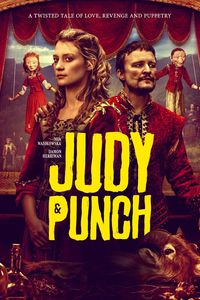
    (On Cable TV, April 2021) I wasn’t all that fond of writer-director Mirrah Foulkes’s Judy & Punch, and half of it has to do with ignorance, and the other half with mood. The ignorance part first: While I know the Punch & Judy puppet show is an integral part of mainstream Anglo-Saxon culture, I was never exposed to those at an impressionable age, nor did I find much to like when I was finally made aware of it. As a result, an entire film built on a feminist subversion of the puppet show conventions is largely lost on me. The other half of my lack of enthusiasm for the result is plainly a matter of mood — I simply wasn’t in a mood for black comedy featuring the death of a baby and the violent dismemberment of its antagonist by the protagonist. While there are nice odd touches of humour in the opening moments of Judy & Punch, I stopped caring shortly afterwards, and stopped liking not much later. Neither Mia Wasikowska nor Damon Herriman impress much in the lead roles. Some films are like that — no matter how well they’re made, they just don’t work on specific people at specific times.

  • Story of G.I. Joe (1945)

    Story of G.I. Joe (1945)

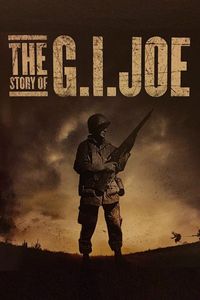
    (On Cable TV, April 2021) You could be forgiven for assuming, from the opening credits, that Story of G.I. Joe is going to be focused on Pulitzer-winning American journalist Ernie Pyle, who famously reported while embedded in WW2 campaigns in Tunisia and Italy. The film contains narration inspired (or copied) from Pyle’s columns and was filmed as Pyle was reporting from the Pacific Front. (Pyle, who was involved in the film’s production, was killed on Okinawa two months before the film premiered.)  But when you get into the film, you eventually notice that Pyle’s character ends up a supporting character reporting the actions of the company he’s with, and so Story of G.I. Joe indeed becomes the story of the grunts working the frontlines. Robert Mitchum gets a first great role as an officer who provides material for the reporter’s columns, easily (and by design) outshining the less flamboyant Burgess Meredith playing Pyle. Entirely produced during WW2, the film ends up being a convincing portrayal of ground troops during the campaigns of Tunisia and Italy. It does have some added interest in having a journalist act as a narrator (one who finds out, in the field, that he won the Pulitzer), giving an additional dimension to what could have been another war movie.

  • Tender Mercies (1983)

    Tender Mercies (1983)

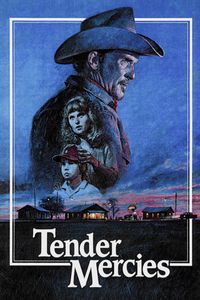
    (On Cable TV, April 2021) There’s an entire swath of movies I don’t like, and Tender Mercies is squarely in the middle of them: Slow-paced realistic dramas that are heavy on personal recriminations, atmosphere and sadness. Much of the film is focused on a middle-aged alcoholic who used to have a career as a country singer, but finds himself hitting rock-bottom in the middle of Texas. The narrative describes his slow way back up, thanks to God, the love of a good woman and other things found in country songs. It’s not the kind of film I willingly watch unless there’s a reason for it, and that reason here was the film’s nomination for a Best Picture Academy Award. Still, I’d be churlish not to recognize a few things worth noticing. First off would be Robert Duvall’s performance, as he sports an unusual beard and plays off-persona with a sad-sack role (albeit with dignity). The other thing is the all-encompassing Texan atmosphere, with only yellow plain and blue skies to see anywhere you look around. It’s quite an immersive film at times, and it’s an atmosphere that weighs heavily on the slow-moving plot as well, underscoring people stuck in place despite a horizon of possibilities. Otherwise, Tender Mercies is the kind of film that will make more audiences happy and others bored out of their skulls. But then again, take a look at what did win the Best Picture Oscar in 1983: Terms of Endearment. What should have won if I had my way? The Right Stuff, of course.

  • Beware! The Blob (1972)

    Beware! The Blob (1972)

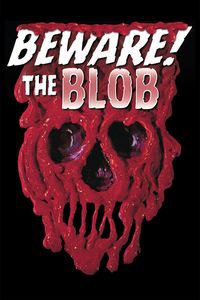
    (On Cable TV, April 2021) Some actors turned director reach for profound artistic statements, or create the conditions required for other actors to perform at the best. Then there’s Larry Hagman (star of TV shows Dallas and I Dream of Jeannie), whose sole film directing credit (in addition to many TV show episodes) is the B-grade monster movie sequel Beware! The Blob. It’s far from being an honour, although he presumably enjoyed the incongruous humour of it all. This sequel to the classic Steve MacQueen monster feature begins explicitly from the conclusion of the first film, as a pipeline worker brings back a mysterious sample from the Arctic. Soon enough, a fly, a cat and a wife are missing, absorbed into the ever-expanding blob. It just gets worse from there, both in-story and on-screen. Production values are low, narrative coherency is hazy and compulsive watchability is practically non-existent. It is a pure low-budget monster feature, and it achieves its objectives. Despite the cheapness of the production, there are actually some good moments to the direction, as characterized by unusual camera angles. But there’s really nothing remotely essential about Beware! The Blob at the exception of Hagman directing — it’s all bland and forgettable, neither funny nor horrifying.

  • The Spanish Main (1945)

    The Spanish Main (1945)

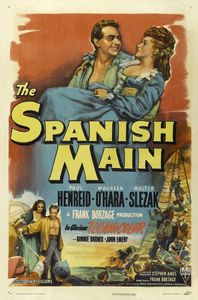
    (On Cable TV, April 2021) Ah, pirate movies: For a long time in Hollywood, seeing one of them meant that you’d seen half of them. They’d have a capable hero, a good person forced in service of a pirate until he became the pirate, largely to have the allure of piratical protagonists without, well, being as repellent as a real pirate. Adventures on the high seas would follow: ship battles, sword fights, swinging for the rigging, capturing the corrupt governor, navigating through a storm, but especially romancing a reluctant beauty, progressively seducing her through good deeds and fearless action. In this context, The Spanish Main is no outlier. Perhaps its most distinctive trait is the unusual casting of Paul Heinreid (not normally known as a swashbuckling hero) in the lead role. Oh, there are other niceties as well: Maureen O’Hara is wonderful as the heroine, especially when the colour cinematography does justice to her red hair. Some of the action sequences are thrilling. The dialogue is not bad. In other words, you get what you expect from a pirate adventure in seeing The Spanish Main. Where the film doesn’t do as well is in distinguishing itself from similar films — it’s an average example of the form, without the extra flourish of other better-known examples. But that’s already not bad (and have I mentioned O’Hara?), especially if you know what you’re getting yourself into.

  • Won’t You Be My Neighbor? (2018)

    Won’t You Be My Neighbor? (2018)

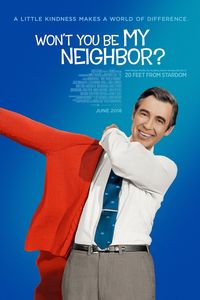
    (On TV, April 2021) I was very, very late in understanding the accomplishments of Fred Rogers as a kid’s TV host. Much of it is due to the fact that I didn’t speak much English when I was in Mr. Rogers’ target audience. Obviously, I became aware of his saintlike reputation over the years, but it wasn’t until a year or two ago that I actually watched a rerun of the show and was astonished at how… calm and gentle it was. I happened to catch the Tom Hanks biopic a few months ago, but it’s only now that I sat down to watch the documentary Won’t You Be My Neighbor?, exploring Roger’s life, accomplishments, and entire philosophy. Using interviews, show footage and some animated segments featuring Daniel Tiger (explicitly presented as an alter ego for Rogers), this is a documentary that starts from the same question as the Hanks docufiction: Was Mr. Rogers for real? Was he as benevolent and kind-hearted as his reputation made him out to be? As the documentary eventually points out, this seems to be difficult for people to accept — we’d rather believe that he was a Navy SEAL who swore off killing than accept that such a genuinely nice person could exist, incidentally suggesting that we are not as nice as we could be. One of the most intriguing aspects of the film is how it tracks the strong association between Rogers’ approach and his own faith—an ordained minister, Rogers sometimes referred to his show as a ministry, and it’s not rare for the documentary to use spiritual or religious language in describing his actions—anyone calling him a saint, for instance, because the modern vernacular does not have other words descriptive enough. Won’t You Be My Neighbor? does fully engage with the notions of absolute goodness, and as time goes by, I suspect that its 2018 release date will weigh more and more heavily as a reminder of where it came from, two years into a nakedly malevolent American presidency that had viewers struggling to accept how someone without moral qualities could be voted into the highest office of the land. In this light, the example of Mr. Rogers becomes essential. Rogers was kind because he operated from a set of core principles: respect the child, protect the child and be honest with the child. Some of the show footage is gobsmacking in its forthrightness — who would now even dare discuss political assassinations on a kid’s show? What makes a lot of adults very uncomfortable, however, is when Rogers used this same basic honesty on adults — essentially treating adults the way he’d like kids to be treated, and the effect was usually disarming (even against prickly US senators). Won’t You Be My Neighbor? does poke and prod at the legend, but the worst it can find about Rogers is a childhood of being bullied, a bit of dissociation with his puppets, and an increasing righteousness as he became older — not exactly anything embarrassing, nor out-of-character for his public persona. Asked if Mr. Rogers was the real thing, all interviewers agreed that he was. Clips of people criticizing Rogers without even understanding what he was trying to do reflect badly on the criticizers (and may induce some outrage in viewers). But where Won’t You Be My Neighbor? further distinguishes itself from other standard biopics is in its willingness to try using some of Mr. Rogers’ humanity on its interviewees and audience: the film ends on an incredibly poignant note as, in countering despair about the lack of kindness, interviewees are asked to spend one silent minute thinking about kind people who helped them become who they are. Tears well up, the silence holds and the sequence ends with many interviewees thanking director Morgan Neville for the moment. It’s an incredible finish to an exceptional film about an extraordinary man. Yes, Mr. Rogers was exactly who he appeared to be. Yes, he was better than most of us. Yes, we can do better in aspiring to be like him.

  • Somebody Up There Likes Me (1956)

    Somebody Up There Likes Me (1956)

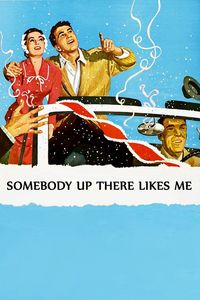
    (On Cable TV, April 2021) I don’t generally like boxing movies, but there are plenty of exceptions, and Somebody Up There Likes Me is one of them. Based on the life of middleweight legend Rocky Graziano, it’s a film that greatly benefits from early Paul Newman’s streak for rebellious yet somehow likable characters. It’s also a film that, while clearly boxing-centric, has most of its dramatic action take place outside the ring, offering a well-rounded portrait of the lead character. Newman plays Graziano (in a star-making turn) with uneducated roughness but a great deal of charm even if his early life is one of teenage delinquency, troubles within the army and defiant attitude. Things start turning around for him when he discovers an aptitude for boxing and meets his future wife (a good turn from Pier Angeli). Newman is surprisingly good at the physical part of the role — he convincingly plays the boxer and channels the rebelliousness into physical aggression. But more than that is the film’s balancing of personal life and professional life (that is, boxing), all the way to a surprisingly dramatic third act that doesn’t solely depend on the outcome of a big match. In other words, there’s more than boxing in Somebody Up There Likes Me to keep even non-boxing fans happy.

  • Rasputin and the Empress (1932)

    Rasputin and the Empress (1932)

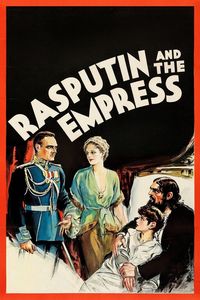
    (On Cable TV, April 2021) There are films that are a lot more fun to read about than to watch, and Rasputin and the Empress comes close to earning that distinction. As an early-sound-era depiction of Rasputin’s reign of terror over Russia, it’s suitably melodramatic but, in the end, the narrative feels dull and meandering on its way to a somewhat more gripping ending. The technical credentials are about as good as they get for the time, what with the film being a prestige MGM production — excellent sets and costumes, but with the limitations of early-sound-era filmmaking limiting the camera movements. For film fans, this has the distinction of featuring three members of the Barrymore family in the same film, although it’s clear that Lionel Barrymore is the one having the most fun playing Rasputin. There wouldn’t be much more to say about Rasputin and the Empress itself — it’s a decent costume drama, but not much more. When you start reading about the film, however, the making of it and what happened after its release become far more interesting as an illustration of Hollywood’s growing pains than what was shown on-screen. For one thing, there’s the rushed production of the film, which went forward with an unfinished script and a screenwriter who only agreed to work on it when threatened by Ethel Barrymore breaking things in his bungalow. Then there’s the monstrous ego of the three Barrymores, including Ethel coming back to the big screen at 53 due to financial woes, not having experience working on a sound film, and being concerned about how the camera would portray her. Finally, there are the lawsuits that followed Rasputin and the Empress’s release: MGM got sued by two Russian families for including a historically inaccurate rape scene, leading to expensive fines, the shelving of the film for decades, and the addition of the now-standard “all characters are fictional” disclaimer in films going forward. Now that’s a making-of that almost deserves its own movie.

  • The Secret of Santa Vittoria (1969)

    The Secret of Santa Vittoria (1969)

    (On Cable TV, April 2021) In a film universe of recycled premises, it’s always interesting to find something that has not (yet) been overused, yet remains reasonably accessible. In The Secret of Santa Vittoria, we find ourselves in Post-Mussolini WW2 Italy, in a small village patiently awaiting the arrival of allied troops. Except that… the Nazis have taken a keen interest in the town’s well-known wine, and they arrive in town with the intention of confiscating the entire stock. Except that… the villagers are not idiots, and have taken steps to hide four fifths of the reserve. Except that… the Nazis are not idiots either and have noticed the accounting discrepancy. The stage is thus set for a battle of will between the eccentric new mayor (Anthony Quinn) and the ice-cold Nazi commander (Hardy Krüger). There are many complications, some of them sentimental. Directed by Stanley Kramer and constrained by the tone of the novel from which it’s adapted, the comedy of the film is curiously restrained, sometimes veering into wartime drama with real dangerous stakes. Still, the biggest attraction of the film is probably the setting — the producers worked hard to find a picturesque WW2-style Italian town in the late 1960s, and the proof of their success is found on the screen, with a rather good sense of place and the town fountain acting as a central showpiece for much of the action. You can see how The Secret of Santa Vittoria could have been much funnier if it had tried, but it had something else in mind and it’s hard to argue with the results.

  • I Am MLK Jr. (2018)

    I Am MLK Jr. (2018)

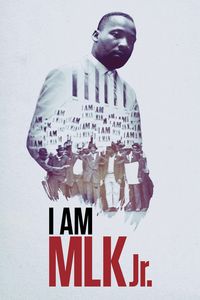
    (On Cable TV, April 2021) After establishing its identity as a biographical series focused on deceased figures in the world of entertainment, Network Entertainment’s “I Am” series takes a political turn by focusing on Martin Luther King Jr., whose assassination in 1968 marked yet another trauma for a shell-shocked nation. Now, there are two ways to talk about MLK Jr.: The first one is the way he’s discussed in K-12 textbooks, as an admirable apostle of racial tolerance who was on the frontlines of the Civil Rights movement and became a martyr for it. It’s a portrait that mythologizes him without quite delving into a full portrayal. The other way to talk about MLK Jr. is considerably riskier. It’s one that talks about his problems, his doubts, his womanizing, his later turn toward class issues as a superset of racial issues and his opposition to the Vietnam War. Those are the facets of the man that are far less lauded by both sides of the American political spectrum on MLK day. Talking about him in a more even-handed fashion is also incredibly risky considering the iconic status he has since attained — even mild criticism can be seen as providing comfort to the racist elements. But even those who think MLK was a beacon of light (as I do) benefit from a broad critical examination of his life — the very thing that made him an icon comes from the entirety of his character. To its credit, I Am MLK Jr. does go there, at least halfway. You won’t hear much about his womanizing, but you do hear about his periods of self-doubt and the benefits he would have gained from therapy… if he had been comfortable enough to go to therapy. (As the film reminds us, MLK was an enemy of the state at the time, and there was considerable fear that any therapist would have been turned against him by the FBI.)  MLK’s eventual turn to class issues is given fair mention, though, as was the growing backlash against him in the late 1960s by those who weren’t pleased that the class structures of America were being challenged. (I expect this aspect of MLK’s work to be gradually re-popularized over the next few years as class issues get a fairer discussion.)  The rest of the documentary, as narrated by various friends and admirers, doubles as a primer on the civil rights movement. Unusually stylish for an “I Am” series entry, this film makes copious use of churches — nearly every interviewee is filmed in a pastoral setting, and the film features a few hymns performed specifically for the film. Notable interviewees include the always-insightful Van Jones, Civil Rights icon John Lewis, actor Nick Cannon, Al Sharpton, and many others. While other films and documentaries have tackled MLK and the events surrounding him, I am MLK offers a decent summary, and one that does not solely present him as an icon. I can think of a few ways in which it could have been better, but it’s already quite admirable as it is.

  • Vivre sa vie: Film en douze tableaux [My Life to Live aka It’s My Life] (1962)

    Vivre sa vie: Film en douze tableaux [My Life to Live aka It’s My Life] (1962)

    (Criterion Streaming, April 2021) At this point in my exploration of Nouvelle Vague cinema, I’m content to just let the movies wash over me, not trying too hard to find meaning or satisfaction in my film education. In Jean-Luc Godard’s halfway experimental Vivre sa Vie, we’re stuck with a young woman as her dreams of stardom as she leaves her husband and child to become an actress and, when that doesn’t pan out, gradually turn toward prostitution. Even before its gratuitously violent ending, Vivre sa vie is not meant to be an uplifting film — the protagonist’s descent through desperation is portrayed clinically, as she methodically has to abandon her dreams and, even then, has trouble surviving. Anna Karina (then Godard’s wife) is often impassible, as much of the film plays in her head. As a narrative, it doesn’t do much hand-holding — we’re left to infer much of the plot from clues and one showpiece sequence after another. There are intertitles, unconventional editing, jump cuts, deliberately artificial sets, an explicit shout-out to Jules et Jim, and what I’d call cinematic humour so dry as to be undistinguishable from style. This is a film of moments more than sustained storytelling: One montage scene tells us more than we’ve ever wanted to know about the legalities and practices of early-1960s prostitution in Paris. Another has Karina dancing around a pool table to the delight of viewers and disinterest of the characters sharing the room with her. One last highlight is a lengthy conversation between the protagonist and an older man on philosophical topics. Then there’s the hilariously violent scene that takes the film and (not without a bit of earlier foreshadowing, mind you) shoves it brutally into the crime genre, sparing no one. It’s going to linger in memory for sure, and it clearly shows Godard’s preoccupations in between other career landmarks, such as À bout de souffle and Le Mépris. Good? Bad? Who cares — it’s Godard.