Author: Christian Sauvé

  • The Fly (1986)

    The Fly (1986)

    (On TV, June 2013) As amazing at it may seem, I had actually forgotten that The Fly was directed by David Cronenberg.  Don’t worry, though: within moments, it all came rushing back… as did the memories of being utterly terrified by bits of the film at age 12.  Seen from the perspective of an adult, The Fly isn’t as terrifying at a purely visual level.  It is, however, quite a bit more insidious about its body horror and the gradual devolution of its character into a mindless beast.  Jeff Goldblum can still look upon this as one of his most defining performances as the mutating scientist, while Geena Davis strikes just the right notes as a journalist who finds herself with a lot more grief than she expected chasing a good story.  What really doesn’t work so well is John Getz’s character arc going from creepy ex-boyfriend to shotgun-wielding saviour.  Cronenberg’s craft means that the film still, more than twenty-five years later, works quite well despite analog effects and sometimes-torpid pacing.  The Fly is worth a look, and not just as part of Cronenberg’s filmography.

  • Barton Fink (1991)

    Barton Fink (1991)

    (On TV, June 2013) Barton Fink’s reputation as a mystifying piece of cinema precedes it by years, and after watching the film I’m no wiser than anyone else in trying to explain what I’ve just seen.  It starts simply enough, as a New York playwright moves to Los Angeles to write scripts for Hollywood.  The initial satire of the industry can be amusing at times.  But then the film moves in another direction entirely with a run-down hotel, a threatening next-door neighbor, a brutal murder, more symbolism than anyone can use, and enough references to other things that one can profitably mine the film for endless analysis.  John Turturro is compelling as the title character, while John Goodman is surprisingly menacing as his neighbor/id.  What Barton Fink does not contain, however, is a simply digestible experience: It’s a hermetic film that seemingly delights in throwing off its audience and multiplying contradictory interpretations.  As such, it’s kind of fun: The Coen Brothers’ skill in putting together the film mean that individual scenes are compelling to watch, even as it’s maddening to piece them together in a coherent whole. 

  • Absentia (2011)

    Absentia (2011)

    (On Cable TV, June 2013) Horror and low-budgets are nearly made for each other, and films like writer/director Mike Flanagan’s Absentia continue to show why horror films made on a shoestring can still be worth a look.  As the film begins, we come to understand that our lead protagonist is nearly done grieving after her husband disappeared without a trace seven years earlier.  Putting up the last of her remaining “Missing” posters, she’s about to move away, give birth and settle down with her new lover.  But there are complications: First, her ex-junkie sister shows up, and then, right after signing the death-by-absentia papers, so does her husband.  What’s going on?  And what’s the link with the mysterious tunnel not too far away from their home?  Absentia doesn’t have a lot of money to spend on spectacle, but what it does put on-screen is worthwhile.  This is a quieter horror film that works on suggestion (even the CGI effects tend to be subtle apparitions in shadows), dread, existential horror and the tragedy of denied grief.  For jaded horror audiences, it’s a useful reminder that it’s certainly possible to do interesting things with a bit of imagination and skilled execution.  While Absentia certainly can’t shake its low-budget credentials (the acting is dull, the cinematography is grainy and the sets are definitely limited), it does a lot with what it has at its disposal.  The most annoying element of the film comes at the end, which is about as abrupt and tediously nihilistic as anyone would fear: it solves little and feels like an arbitrary way to end the film.  Still, let’s not be overly sour: Absentia works well, and sometimes better than many other bigger-budgeted horror films. 

  • 50/50 (2011)

    50/50 (2011)

    (On Cable TV, June 2013) Cancer is usually the domain of the made-for-TV sentimental tear-jerker aimed at women, not the kind of quasi-comedies aimed at young men.  But 50/50 takes the bet that it has something to say about cancer and friendship between young men and the result is far more impressive than you’d think.  Joseph Gordon Lewitt stars as a young radio producer who discovers that he’s got a rare and potentially fatal form of cancer.  Seth Rogen brings most of the laughs as his crude friend trying to cheer him up.  (The film squarely earns one of its most emotional moments when the protagonist discovers the highlighted best intentions behind his best friend’s cheerful facade.)  Meanwhile, Anna Kendrick gets a thankless role as a grief therapist who, against nearly all imaginable ethical guidelines, falls for her patient.  As a refreshingly younger and brasher take on the familiar cancer narrative, 50/50 ends up reaching a new audience in an honest way, and the result is both hilarious and affecting. 

  • Sparkle (2012)

    Sparkle (2012)

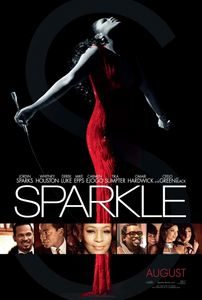
    (On Cable TV, June 2013) There’s something extremely comfortable in Sparkle’s story about three female singers trying to make it in late-sixties Detroit.  It doesn’t take a detailed history of The Supremes to know the place, understand the challenges and guess the dangers they face from boyfriends, drugs, fame and familial disapproval.  The music is familiar to the point of being curiously forgettable, the period detail easily mirrors countless other similar films and the stage cinematography feels like an old comfortable sequin dress.  The plot, more episodic than tightly-wrapped, can be followed along with some narrative pleasure even it’s a blend of conventional elements.  The only real question is whether the actors can do something with this material, and whether the music is worth it.  Sparkle doesn’t exactly sparks when it comes to its songs: they all skew toward the sultry rather than the rhythmic side of Motown –viewer’s appreciation will vary according to their own tastes.  Fortunately, the film does quite a bit better when it comes to performances: Mike Epps is deliciously evil as the antagonist, while Carmen Ejogo does fine as his main victim.  Jordin Sparks is comparatively duller as the title character (it’s not a challenging role, especially compared to Ejogo’s harsher dramatic arc) but relative newcomer Tika Sumpter gets a little bit more substance as the third sister of the ensemble.  Elsewhere in the cast, Whitney Houston gets one last role as the matriarch-who-learns-better, while Derek Luke is unexpectedly charming as the good guy.  While Sparkle won’t have much of a legacy, it is an acceptable film for those who want just a little bit more of that Motownish magic.

  • Black Gold aka Day of the Falcon (2011)

    Black Gold aka Day of the Falcon (2011)

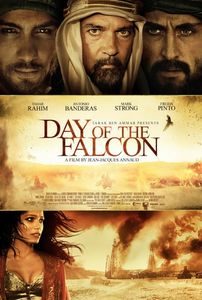
    (Video on Demand, June 2013) If you feel that there’s been a dearth of desert-adventure films out there, then take heart in Day of the Falcon’s existence and enjoy a trip to 1930s Arabia for an old-fashioned epic.  Tahar Rahim stars as Prince Auda, a bookworm son who eventually learns to lead an army and uphold progressive values at a time when the West is taking an interest in the oil reserves under the sand.  A co-production involving four countries, Day of the Falcon has a decent budget and a refreshingly earnest viewpoint toward traditional values in the face of western imperialism.  Directed with competence by veteran French filmmaker Jean-Jacques Annaud, the film can be enjoyed for its epic scope, interesting visuals and sympathetic characters.  It’s hardly perfect: there are a few pacing issues, and as much as I like Mark Strong and Antonio Banderas, casting them as warring emirs feels like a bit of a wasted opportunity for ethnicity-appropriate actors.  (The same goes, to a lesser extent, for Freida Pinto, except that she’s sultry enough to make anyone believe that the hero would wage all-out war simply in order to come back home to her.)  Historical parallels with the early days of Saudi Arabia are interesting (albeit not to be taken at face value) and so is the obvious commentary on the dominance of the oil industry in the region.  Parallels with Lawrence of Arabia are obvious, especially considering that the film offers a few desert-war sequences not commonly seen elsewhere in movies.  The stilted dialogues and acting definitely take a back seat to sweep of the film’s adventure.  For a film that probably flew under the radar of most north-American moviegoers, Day of the Falcon definitely qualifies as an underappreciated gem.

  • Broken City (2013)

    Broken City (2013)

    (Video on Demand, May 2013) A corrupt politician. An ex-policeman detective with a dark past.  An election.  Mega development projects.  Allegations of infidelity.  Murder.  Standard stuff when it comes to municipal political thrillers, and perhaps the most disappointing thing about Broken City is how it simply plays along with familiar tropes, delivering them with some competence but never quite going the extra mile for something more interesting than a straightforward script brought to life with capable actors.  Mark Wahlberg is his usual blue-collar protagonist self as said ex-policeman with a dark past, whereas Russell Crowe is deliciously slimy as a mayor without scruples.  They’re surrounded by good character actors (Barry Pepper, Jeffrey Wright and Catherine Zeta-Jones, who seems to have taken on a lot of smaller roles recently) but all have to contend with a script that goes through the usual motions and sometimes not even doing that (such as with the end-of-relationship subplot).  There’s a bit of an interesting character choice at the very end, but otherwise Broken City is the kind of standard fare that you see and soon forget.  This isn’t to say that it’s bad –just that it’s without big surprises, and seems content to deliver on basic assumptions.  The New York that the characters inhabit may have been more believable at a period piece rather than the somewhat cleaner image the city now has.  Still: While Broken City may be unremarkable, it has enough narrative momentum to keep things interesting… which isn’t half-bad when compared to many similar films.

  • Behind the Candelabra (2013)

    Behind the Candelabra (2013)

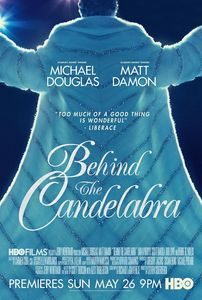
    (On Cable TV, May 2013) In the hands of HBO and Steven Soderbergh, made-for-TV movies clearly aren’t what they used to be: Here, with Behind the Candelabra, we get nothing less than two top-notch actors delivering a love story set against the flamboyant backdrop of Liberace’s career.  Michael Douglas is a surprisingly good Liberace (embracing the skill and the generosity but also the pathos of the man), while Matt Damon plays Scott Thorson, the (much) younger man who was his lover between 1977 and 1981.  (If the film has a flaw, it’s that Matt Damon is considerably older than Thorson was at the time –this softens much of the tension that an accurate portrayal of the story would have given.)  The doomed love story may be predictable, but it’s well-executed to make it dramatically interesting.  The two main actors are also fearless in their performances, openly embracing (and demonstrating) the romantic relationship between their characters, but there are plenty of scene-stealing cameos elsewhere in the film, whether it’s Dan Aykroyd playing a mousy manager, or Rob Lowe’s plastic-faced surgeon/dealer.  From a directing standpoint, Soderbergh delivers his usual brand of audience-riling iconoclasm, making the most out of his budget and crafting a film that’s more engaging than many of his last few colder efforts.  But the star of the show, frankly, are the set dressers, makeup artists and costume designers that bring to life the famed excess of Liberace’s work and personal life.  The camera moves through a lavish re-creation of Liberace’s homes, dwells on his spectacular stage outfits and convincingly recreates his performances.  It’s -to take up a theme of the film- a grand show, and it’s easy to just enjoy the film for its moments of comedy and pure surface sheen.  There’s more to Behind the Candelabra, of course: a reflection of that type of content that TV (well, HBO) audience are willing to embrace, a bit of a late screed against the unfairness of repressing one’s sexuality, a look at the way the rich and powerful can sculpt other people… this is a Soderbergh film, after all, and there’s a bit more behind the surface. So it is that we’ve come to this: A pretty good film, with big-name stars and impeccable technical credentials, delivered by TV.  Given that I’m an HBO subscriber, I can only applaud this.

  • Her Master’s Voice (2012)

    Her Master’s Voice (2012)

    (On Cable TV, May 2013) I don’t usually review one-hour-long documentaries, but Nina Conti’s Her Master’s Voice is good and unusual enough to warrant an exception.  It begins as Conti, a talented comedian/ventriloquist, inherits puppets from her mentor and once-lover Ken Campbell (a fascinating figure who towers over the entire film); in a creative crisis, Conti mulls over donating the puppets to a specialized museum before abandoning ventriloquism and decides to attend a trade convention as a final hurrah.  This, of course, is just prelude to a journey of self-discovery, vocalized doubts and a fascinating look at the ventriloquism subculture as seen at a specialized convention. Much of the material is unexpectedly powerful, and much of this impact depends on the very nature of ventriloquism as an art form: Conti appropriately dwells on the nature of speaking through another voice, the carefully-unleashed insanity of a visibly split personality and, in perhaps the film’s most poignant moment, the “bereaved objects” that are the puppets of a dead ventriloquist, as “they have lost their voice”.  It’s funny, touching, perhaps a bit self-consciously melodramatic (which the film admits early on, suggesting that while all the footage has really occurred… well, much of it was pre-scripted.) yet almost entirely fascinating.  Effortlessly-likable Conti and her suitcases of alter-egos make for a sympathetic ensemble, even if it’s easy to step back and acknowledge how thoroughly viewers are being manipulated.  But that’s in the nature of ventriloquism, which is asking us to see a dialogue where there’s a monologue, drama where there’s a script, and a personality where there is an object –it’s entirely appropriate that a film about ventriloquism would exploit those same flaws in human cognition.  While the film could have been a bit better with just a bit more content (extra footage of Conti’s performances would have been welcome, particularly the routine at the Vent Haven ConVENTion –but then again that’s what the DVD is for.) and it’s useful to check one’s disbelief at the door for some of the most orchestrated dramatic moments, Her Master’s Voice is a unique documentary, alternately hilarious and touching.  Few will be surprised to learn by the end of the film that Conti did not hang up her puppet (in fact, a bit of research shows that she has returned twice to the Vent Haven ConVENTion so far) but all should be glad that she hasn’t.  Trivia note: The film list Christopher Guest as an executive producer, which is appropriate enough since I first saw Conti perform as the best part in his otherwise-disappointing For Your Consideration.

  • Side Effects (2013)

    Side Effects (2013)

    (Video on Demand, May 2013) Director Steven Soderbergh often has very different goals in mind than what the average moviegoer would prefer, but occasionally his artistic impulses align with his target audience and the result can be spectacular.  Side Effects may exhibit much of Soderbergh’s usual tics, but it also features his technical proficiency and his ability to play with audience expectations.  Interestingly enough, the film doesn’t start out promisingly: As a troubled young woman murders her husband and everyone suspects that her medications are to blame, it’s easy to feel let down by yet another basic anti-pharma diatribe; surely Soderbergh wouldn’t steep to something so basic?  But then Side Effects becomes a much more unpredictable film, and we understand why the project attracted the director.  It ends up being a fine psychological thriller, shot with Soderbergh’s typical drab pseudo-realism but in increasingly compelling fashion.  The film switches protagonists midway through, Rooney Mara’s mopey performance receding in order to favour Jude Law’s increasingly tortured psychologist.  (Meanwhile, Catherine Zeta-Jones has another small but effective supporting role –she’s been doing a lot of those lately.) A clever script, coupled with capable direction, makes for an effective thriller.  Side Effects is easily one of the strongest films of 2013 so far, and it’s a remarkable testimony to Soderbergh’s skills once he sets out to deliver a crowd-pleaser.

  • Lay the Favorite (2012)

    Lay the Favorite (2012)

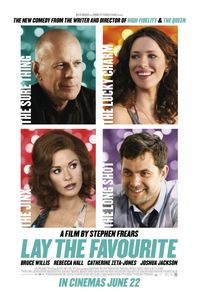
    (Video on Demand, May 2013) For an actress I didn’t even know at the beginning of the month, I’m suddenly quite impressed by Rebecca Hall’s screen presence and the range she shows from the “hero scientist” of Iron Man 3 to the “ice-cold English noble” of Parade’s End to the “trailer-park chic” of her role in Lay the Favorite.  [July 2013: Although the “non-nonsense pragmatist” of The Awakening and Vicky Cristina Barcelona suggest that Lay the Favorite is a bit of an outlier.]  Her performance is one of the few things that transform the somewhat ordinary script for Lay the Favorite to something worth remembering the day after.  A gambling comedy set in the sports-bookie world of Las Vegas, it at least has the merit of exploring a new subculture and doing so with just enough style to be interesting.  Much of the plotting is purely serviceable, with the expected story beats all carefully lined up in a row.  But it’s light-hearted enough to be unobjectionable and one suspects that the light breezy tone has a lot to do with how it landed notables such as a smiling Bruce Willis in the lead, usually-reprehensible Vince Vaughn as an antagonist of sorts, and Catherine Zeta-Jones in another of her increasingly-frequent strong supporting roles.  Still, the film really belongs to Hall, and she makes the most of her role, even elevating the somewhat slight film built around it.  Despite weak romances, tonal inconsistencies and a dull ending, she’s the reason why Lay the Favorite remains watchable throughout and leaves a generally favorable impression even despite its familiarity and lack of substance.

  • Spy Kids: All the Time in the World in 4D (2011)

    Spy Kids: All the Time in the World in 4D (2011)

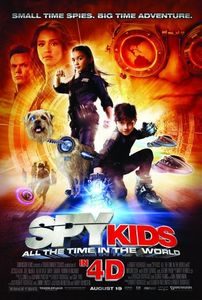
    (On Cable TV, May 2013) As much as I’m favourably predisposed toward writer/director Robert Rodriguez’s work (including his movies aimed at kids), it feels as if I’ve been making more and more excuses in order to enjoy his latest work.  The first two Spy Kids movies stand tall as fine examples of adult-friendly kid cinema, but this fourth entry is a bit of a disappointment closer to Shorts or The Adventures of Sharkboy and Lavagirl in 3-D: The script is easy, the themes are close to the surface, the dialogues are often too obvious (the endless puns on time eventually take their toll) and the originality of the previous films seem toned down.  It’s still fun to watch on account of pure forward rhythm and interesting visuals, but it does leave viewers a bit unsatisfied by the end of the show.  Still, I would call it anything harsher than a disappointment: It’s fun to see Jessica Alba as a spy-mom, Alexa Vega, Daryl Sabara and Danny Trejo all make short-but-welcome appearances to tie this fourth installment to the first four films in the series, and the family-positive message of the film shouldn’t be discounted.  It does all amount to a thin new film by Robert Rodriguez, though, and looking at the rest of his recent-or-upcoming filmography (filled with Machetes and Sin Citys) it would be nice to see him attempt something more ambitious than spinoffs of his previous films.

  • Ang-ma-reul bo-at-da [I Saw the Devil] (2010)

    Ang-ma-reul bo-at-da [I Saw the Devil] (2010)

    (On Cable TV, May 2013) I’m a jaded-but-reluctant viewer when it comes to movie violence, but when I say that I Saw the Devil made me feel a bit nauseous, it’s more a statement about the film’s conscious outrageousness than any squeamishness from my part.  Nominally the story of how a bereaved widower tracks down and tortures the serial killer responsible for the brutal murder of his pregnant wife, I Saw the Devil turns out to be a particularly gruesome thriller that seems to take delight in the worst possible perversions of the human mind.  It takes place in a universe where serial killers abound (poor guys; they can’t take a taxi without running into each other) and can take refuge at each other’s lairs.  It’s a film that half-heartedly tries to have its protagonist become as monstrous as the purely-evil antagonist, only to avoid making him face external consequences.  I Saw the Devil also feels profoundly misogynistic, with several female characters being graphically butchered along the way.  It is, in other words an almost-completely reprehensible film, barely saved by the impeccable quality of its production and its oft-astonishing direction.  As much as I dislike everything leading to and including the taxi cab scene, for instance, it’s shot in a way that I can only call magnificent.  I still can’t bring myself to recommend the film: it doesn’t have the maturity to say something about its own use of violence, and there’s the sense that a lot of big-budget resources have been invested in something that’s not much more respectable than a particularly gory Z-grade movie.  One thing is for sure: my PVR felt considerably cleaner once I had deleted I Saw the Devil from its hard drive.

  • Beasts of the Southern Wild (2012)

    Beasts of the Southern Wild (2012)

    (On Cable TV, May 2013) One of the best things about digital filmmaking is how it lowers the barriers to moviemaking, and so allows people traditionally left voiceless by Hollywood to find a way to tell stories that are meaningful to them.  The result often feels a lot like Beasts of the Southern Wild, an unpolished, grainy and loose blend of genres and influences that nonetheless feels like a welcome revelation.  Don’t expect solid world-building in this fantastical tale where global warming, gigantic beasts, post-apocalyptic imagery and poor coastal communities all intersect: it may be pure fantasy, it may be magical realism, it may be science-fiction, but it’s certainly something different.  The script may lurch from one thing to another, but it has something interesting to say, and honestly presents an oppressed viewpoint that’s rarely portrayed on-screen.  The real revelation of the film is young Quvenzhané Wallis, a tiny force of nature able to stop huge beasts in their tracks (not to mention ordinary moviegoers) by the sole power of her stare.  While the movie would have benefited from a more polished script, I fear that such an improvement would have taken away some of the film’s unusual power.  It’s probably best to experience Beasts of the Southern Wild as it exists and not worry about how it could have been better.

  • Just Go With It (2011)

    Just Go With It (2011)

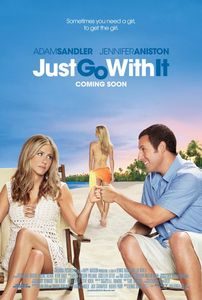
    (Video on Demand, May 2013) I’m not a big fan of Adam Sandler, but he can be effective when used in the right context (ie; not left free to indulge his man-child persona) and Just Go With It comes closer than most attempts at producing a non-irritating Sandler comedy.  It helps that the film uses some fairly convoluted plot mechanics to keep him from taking center-stage: the script involves a decent amount of romantic deceptions, mismatched identities, fortuitous meetings and tangled lies.  Set against the pleasant backdrop of a Hawaiian resort, well, it could be worse.  Sandler is restrained in a role that asks for more maturity from him than usual, while Jennifer Aniston gets a more interesting role than usual as his assistant-turned-fake-wife.  Nicole Kidman gamely tries to keep up, but this kind of comedy really isn’t her thing, and it shows.  Still, the plot circumvolutions are enough to keep our attention and while the end result doesn’t aspire, let alone attain, greatness, it’s good enough to fill up a lazy afternoon.  As the title says, just go with it.