Author: Christian Sauvé

  • The Letter (2012)

    The Letter (2012)

    (On Cable TV, May 2013) Stop the presses: It’s May, but I have already found my worst movie of 2013.  And probably 2012 as well, given how bad it truly is.  Oh, sure, there’s still months to go in the year… but I can’t imagine any other film approaching The Letter in sheer pointlessness, exasperation, and uninteresting actors.  Here, Winona Ryder stars as a playwright slowly losing her mind while developing her newest play.  Her anxieties about her lover, the actors working with her and her own talent are all reflected in the increasingly paranoid pages she gives to the actors.  To be fair, there’s a kernel of interest in this premise, and the potential through which it could be developed.  But hailing from the worst and most pretentious of the art-house film universe, The Letter strikingly fails to exploit any of the strengths at its disposal: Director Jay Anania doesn’t know what to do with a camera, the choppy editing makes the film near-incomprehensible at times, and none of the actors save for James Franco seem to know what they’re doing.  (The film’s lone laugh belongs to Franco, and it feels like an ad-libbed line.)  The plot make sense if you think about it long enough, but chances are that most viewers will never make it far enough in the film before turning it off.  It’s that bad.  I’ll gladly see dumb Hollywood crap over this kind of dull and pretentious trash.  Bring on terrible SyFy made-for-TV catastrophe films: My expectations for what is a bad film have been recalibrated. [January 2014: I still stand behind my assessment: The Letter is the worst of the 184 movies I’ve seen in 2013.]

  • New Year’s Eve (2011)

    New Year’s Eve (2011)

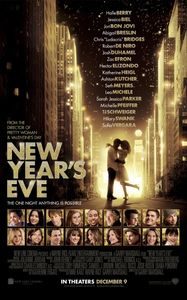
    (On Cable TV, May 2013) Ensemble movies are a tricky mixture: there are usually too many characters and not enough running time to do them justice, and that’s even before getting into the sad fact that not all stories are equally as compelling.  New Year’s Eve does its best at using pre-built sympathy for Dec.31 to launch a tapestry of romantic subplots, but the results are still variable.  The links between the characters are intricate (sometimes even played for ironic laughs, as the moment near the end where we think two characters are racing to meet… only to pass each other on the street as they race to get to someone else) and figuring them out can be a good way to keep those synapses busy… but the real point of New Year’s Eve is a big mushy feeling of romantic satisfaction by the time the end credits roll.  Director Garry Marshall does his best to keep everything interesting while juggling roughly two dozen name actors, but the script isn’t his best friend in this regard.  In fact, New Year’s Eve may be most remarkable for its inability to deliver a consistently enjoyable subplot.  Everything feels contrived, conventional, overly dramatic or implausible beyond belief.  Zac Efron romancing Michelle Pfeiffer?  Eh, why not –but don’t expect anyone but those two to care.  While it’s hard to single out any actor as being better than the others, it’s not so difficult to identify those who are more irritating than others: Sofia Vergara is particularly exasperating in her usual shrill near-incomprehensible screen persona.  Katherine Heigl also does herself no favour by reinforcing her already-annoying typecasting.  Otherwise, the best the actors can do in this mess is to remain unnoticed.  It’s not as if New Year’s Eve is dislikable; in fact, much of the issues with the film are that it tries so hard to be loved that it feels desperate in taking no chances.  See it at the tail end of Dec.31 if you must, but don’t let it come between you and any meaningful contact with your loved ones.

  • Inferno, Dan Brown

    Inferno, Dan Brown

    Doubleday, 2013, 480 pages, C$29.95 hc, ISBN 978-0-385-53785-8

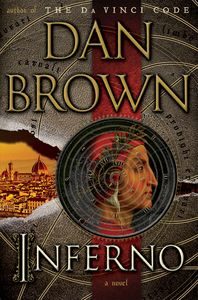
    How appropriate that Dan Brown’s Inferno would have me thinking about catastrophe theory and how it relates to reviewing: If Brown can link trans-humanism, obsolete Malthusian hysteria, Florentine history and Dante’s Inferno in the service of a moderately dull thriller, then what’s stopping me from misappropriating a branch of mathematical theory in order to make the point that I’m suddenly exasperated by Brown’s shtick?

    I suppose that a few reminders and pieces of background information are in order: Inferno is Brown’s sixth novel, the fourth to feature “symbologist” Robert Langon racing against the clock to solve intricate historical puzzles before a very modern and immediate threat unfolds.  The Da Vinci Code (2003) needs no introduction as one of the most widely read novel of the past decade, leading to controversy and a movie adaption in 2006; Angels and Demons (2000) was also adapted to the big-screen in 2009, whereas The Lost Symbol (2009) made a splash as the first direct sequel to The Da Vinci Code after years of silence from Brown. 

    Inferno shows up four years later, and delivers almost exactly what readers had been expecting: Standard thriller mechanics set against a richly-detailed travelogue, as the protagonist uses arcane knowledge to fight against a very contemporary threat.  This time around, it’s Florence (and a few other European destinations later in the novel) that provide the scenery, historical facts and enigmas to solve. 

    But the real mystery is this: I have defended Dan Brown against a number of detractors in the past, especially when I pointed out the savvier aspects of The Da Vinci Code against those who wanted to dismiss the book entirely.  Save for Digital Fortress, I could find good things to say about every one of Brown’s other books.  Why, then, do I feel so exasperated and frustrated by Inferno?

    It does handle a few things quite competently.  The initial set-up makes good use of the good old amnesia trope in order to place our protagonist in desperate circumstances.  Why is he in a Florentine hospital?  Why does he have a dangerous-looking artifact in his possessions?  And why-oh-why are people shooting at him?  As he retraces his steps with the help of a beautiful smart woman (the fourth in as many books –Langdon clearly isn’t very good at long-term relationships), he get to understand that he’s going through a do-over of his past few days, hoping to avoid what put him under medical care.

    And for about three-quarter of the book, it feels dull and interminable.  The accumulation of historical details that Langdon absorbs is a flood of trivia that has little to do with the plot, and unless you happen to be fascinated by Florentine history to a level to rival the Roman, Parisian/Londonian and Washingtonian settings of the previous Langdon novels, chances are that Inferno will be a tough slog.  Readers will make it through by repeating to themselves that it will get better, eventually.  Or that the novel may work better if you’re on the ground in Florence, pointing at the things described in the novel.

    And while it does get better, this change for the best comes at the expense of credibility-destroying narrative tricks in which villains are revealed to be heroes, allies are unmasked as psychopathological monsters and everything Langdon thought he knew (or more pointedly didn’t) crumbles as a sham.  In order to do that, Brown has to skirt perilously close to lying to his audience –readers who don’t like such narrative sleight-of-hand won’t find much to love here.  On the other hand, it does give a narrative kick in the pants to what had, until then, been a fairly sedate thriller, so there’s that.

    But as the last act of the novel unfolds, my boredom at the novel transformed into annoyance, especially as the villain’s plan was revealed.  While Brown does his damndest to give a shred of justification to the actions of his antagonist by pointing out the evils of overpopulation, his screed seems to be roughly forty years out of date, and unsupported by current research.

    (To summarize a complex set of objections, in a nutshell: Overpopulation is real and dangerous, but unlike the alarmist predictions of the 1970s, we now know a few things: Big populations have advantages for just about everything, from medical care to arts development to scientific progress to a well-functioning economy to better models for feeding a densely-packed community.  Better yet: Demographic statistics clearly demonstrate that overpopulation is a self-regulating problem, and that the world’s population will stabilize within a few decades –in fact is already doing so in large areas of the world.  Furthermore, advances in agriculture, environmentalism and logistics show that sustainable populations are within reach –the realities of 2013 disprove most of the so-called “realistic” thinking of the 1970s.  Simply put: Overpopulation is solving itself to non-problematic status.)

    Lunatic thinking by a novel’s villain is, of course, nothing new or unexpected.  The end of Inferno, however, suggests that this is lunatic thinking by the author himself.  The world-changing stunt at the end of the novel is problematic on numerous levels.  Even by the standards of previous novels, it may be time for Langdon to take an indefinite retirement while Brown moves on to other protagonists, because the universe he inhabits is getting cluttered by incompatible mythologies, radical events and Grand Revelations.

    Other annoyances abound: After several bout with Brown’s tone-deaf style, I’m finally acknowledging that he could write better.  I’m not at all pleased by the easy equation of trans-humanism with cuckoo-crazy antagonists.  Langdon is still as boring a protagonist as it’s possible to write in popular fiction.  The ending shows that the protagonist’s efforts all were for naught, negating the point of the narrative.  And have I mentioned that before the frantic last quarter of the novel, practically nothing noteworthy happens as we’re fed reams of Florentine history?

    Aas you already surely know, faithful reader, catastrophe theory is the study of “sudden shifts in behavior arising from small changes in circumstances”.  None of what has annoyed me in Inferno (the digressions, the nonsense science, the bad writing, the repetitive plotting, allies revealed as villains, Langdon’s lack of personality, the insane plot twists) hasn’t shown up in at least two of Brown’s previous novels.  But something has certainly changed since The Lost Symbol: myself as a reader, Brown’s smugness as a writer, the cultural matrix in which we live, or some deep zeitgeist shift barely perceptible through anyone’s Twitter feed.  As a result, I find myself disenchanted by Inferno and generally put off by Dan Brown as a writer.  His shtick doesn’t feel interesting any more, and I’m not at all tempted to defend him anymore.  Small changes, big behavioral shifts: I don’t intend to buy his next novel.  I’m pretty sure I already know how it turns out.

  • Brave (2012)

    Brave (2012)

    (On Cable TV, May 2013) While we’re still a long way from treating Pixar’s newest films as "just another animated movie", the last few offerings from this one-infallible studio have been, well, flawed.  Not bad, not terrible, just noticeably less accomplished as their best.  Brave comes at a crucial junction in the company’s history, soon after being formally acquired by Disney.  As such, it’s perhaps dismaying to find out that the narrative revolves around a princess: that particular Disney tradition feels overused enough that Pixar didn’t need to take it up as well.  But let’s not be too harsh, because Brave isn’t the usual princess-in-peril story: in fact, it’s very much a Pixar film in how it tweaks a few expectations, upends usual narrative schemes and even explores new grounds for the company in centering around a strong female character.  Our heroine Merida is very much her own young woman, and much of the film’s tension is in seeing her deal with what she wants as opposed to what is expected her… in addition to revisiting her relationship with people she knows.  The synthetic visuals of Highland Scotland are beautiful, and Pixar’s flair with CGI-enhanced direction is still as good as ever.  The story is engrossing despite a few concessions to the younger set (some easy gags, usually concerning the triplet characters), while the classic rebellious-teenager trope is handled with a fair bit of maturity.  In a few words, preconceptions may be the single worst thing running against Brave: approaching it without the burden of previous Pixar and Disney movies may be the best thing in order to appreciate the film on its own terms.

  • Jack Reacher (2012)

    Jack Reacher (2012)

    (Video on Demand, May 2013) Let’s get something out in writing right away: As a confirmed fan of Lee Child’s Jack Reacher series, I still have issues in seeing Tom Cruise cast as Reacher.  It doesn’t have to do with Cruise’s diminutive frame trying to occupy Reacher’s hulk of a character –it has to do with the way Cruise never plays less than a superstar, whereas my mental image of Reacher has always been about the way he tries to be inconspicuous in order to better do his job… at least until being conspicuous best serves his purpose.  But you can safely ignore this kvetching as another in an infinite line of book fans moaning about movie adaptations, because taken on its own and not as an adaptation of Child’s One Shot, Jack Reacher is a fairly strong thriller, with better-than-average plotting, efficient dialogues, solid direction and an unobtrusive sense of style.  As with the novel, it takes a while for the true nature of the plot to emerge, and there is a satisfying amount of complications along the way.  Cruise is his usual mister-megawatt-smile self, gamely hoping that his charisma will forgive the series’ built-in lack of character development and launch another franchise under his name.  Well, I, for one, hope it goes forward –I may not love Reacher as much on the screen as I do on the page, but I would certainly go see other films in the series.

  • Hop (2011)

    Hop (2011)

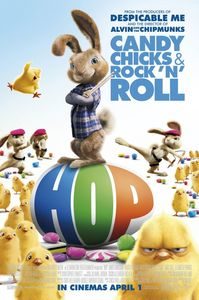
    (On Cable TV, May 2013) One of the unsung tragedies of parenthood is the cold realisation that tales of teenage rebellion don’t quite seem as cool as they once were.  But, of course, this isn’t the main problem with Hop –a bad script is.  As the story is intent on uniting two teenage losers (a human slacker, and the runaway son of the Easter Rabbit) who seem determined to waste every advantage given to them, Hop forgets to give us a reason to care for them and focuses on various idiot-plotting pratfalls.  At least there is something worth watching in the film’s more fantasy-driven sequences: The film’s introduction answer questions nobody ever thought about asking about the mechanics of Easter Egg distribution, while Peter de Seve’s creature design is almost too cute for words.  Otherwise, there isn’t much to say about the film’s straightforward plotting, short duration or routine direction.  The CGI-bunny/live-action integration is well done, but the human actors are so bland (with James Marsden apparently taking up roles that Seann William Scott is now too old to play) that it’s enough to make us wish for more CGI.  Oh well; More special effects wouldn’t have softened the grating feeling left by Hop’s unpleasant characters.  If nothing else, there are pretty bunnies everywhere in this film –might as well focus on the positive.

  • Fright Night (2011)

    Fright Night (2011)

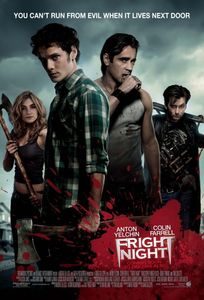
    (On Cable TV, May 2013) Nobody asked for this remake, but as it turns out, this updated take on the fondly-remembered eighties horror/comedy is pretty good on its own merits.  Fright Night pleasantly skips over most of a conventional first act as the teenage protagonist quickly discovers that his preposterously charismatic neighbor is a vampire.  Mayhem quickly ensues, in good bursts of memorable action beats.  The film’s biggest asset is probably Colin Farrell, all animal magnetism as the vampire antagonist.  The teenage protagonists are competent enough to make us root for them, but Farrell is the one who holds the picture together, proving once again that a strong antagonist helps a lot in defining a movie’s impact.  The pacing of the film gets faster and better as it goes along, while the direction has a few noteworthy touches here and there –the best being a quasi-subjective chase sequence in which our screaming protagonists are stuck in an SUV trying to escape a relentless opponent.  The deserted Las Vegas suburb in which the film takes place adds an unusual creepy atmosphere, while the 3D effects aren’t too obtrusive when seen on a flat screen.  While this new Fright Night isn’t and won’t become a classic, it’s a well-executed film that does not dishonor its inspiration.  There have been considerably worse horror remakes out there in recent years, and this isn’t one of the bad ones.

  • Iron Man Three (2013)

    Iron Man Three (2013)

    (In Theaters, May 2013) Going back to theaters after nearly a year spent at home enjoying a fully-loaded movie cable package with video on-demand feels… strange.  So many inconveniences.  Ill-behaved strangers.  Endless commercial come-ons.  Uncomfortable seating.  Oh well; at least Iron Man 3 is the kind of film designed to warrant theater viewing: It’s a big, loud, crowd-pleasing blockbuster spectacular, and it’s actually quite good at what it does.  You have to be a fan of the first two films (and having seen The Avengers helps as well, which by coincidence was the previous film I saw in theaters) in order to get the most out of this third entry in the Iron Man series: It re-uses many of the relationships set up in the previous movies in order to deliver a few dramatic pay-offs, from Gwyneth Paltrow suddenly cast as an action heroine, or seeing how deftly writer/director Shane Black is able to take the mantle from Jon Favreau and yet make the film his own, much in the same vein as Kiss Kiss Bang Bang.  The direction isn’t perfect –the action sequences aren’t as clean as they could be– but who cares when the dialogue is delicious, the plotting is strong and Robert Downey Jr. delivers another pitch-perfect performance as Tony Stark, a character so closely aligned with Downey’s public personality as to be undistinguishable from it?  It’s all good fun, and Black’s subversive instinct go from unconventionally unsentimental dialogue to messing with big audience expectations at the third-act pivot point.  That twist works as long as you’re willing to laugh at the reversal, and see how well it meshes with Stark’s thirst for being visibly indissociable from his superhero identity –otherwise, well, it’s one big thing the trailers haven’t revealed.  As the launching entry in Marvel Studio’s “Phase Two”, Iron Man 3 is a solid film.  It’s hardly perfect, but it’s accomplished and maybe even more purely enjoyable than the first two entries.

  • Seeking a Friend for the End of the World (2012)

    Seeking a Friend for the End of the World (2012)

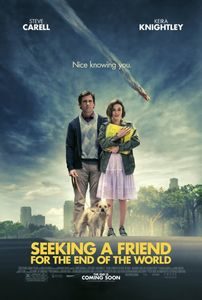
    (On Cable TV, April 2013) There have been a lot of films about the end of the world lately (a wave that shows no sign of abating), but there’s always a place for something different, and it’s in this light that Seeking a Friend for the End of the World is best appreciated.  Once the first few minutes establish that this is indeed the impending end of the world, the rest of the film follows an everyman protagonist as he witnesses the end of civilization, the various responses to the impending apocalypse, and even gets to find solace of sorts.  It’s too amiable to classify as a drama, but as a comedy, don’t expect big laughs as much as a series of poignant vignettes and a gentle romance.  Steve Carell is almost perfectly cast as the melancholic protagonist, while Keira Knightley gets an easy role as the girl who brightens up the last days of his life.  Based as it is on a road-trip series of vignettes, the film can’t escape some severe tonal consistency problems, but it does end in a satisfying (albeit predictable) fashion.  Cranking up many romantic clichés against the big ticking clock of the impending apocalypse, Seeking a Friend for the End of the World works best as a break from the usual bombastic disaster clichés, and as a slower deliberate exploration of what the end means to everyone.

  • Gangster Squad (2013)

    Gangster Squad (2013)

    (Video on-Demand, April 2013) There’s a fine line between parody, homage and unimaginative filmmaking, and it’s unfortunate that Gangster Squad seems to straddle all three at various times.  I’m certainly not objecting to the idea of a muscular crime thriller set in post-war Los Angeles: cops-versus-mob movies are the bread-and-butter of the crime-thriller genre, and a director as gifted as Ruben Fleischer should have done wonders with the concept, especially given a an ensemble cast of talented actors.  At times, Gangster Squad is exactly what it should be: a broad straight-up action movie where brash cops slap down the burgeoning L.A. mob scene.  Car chases, fist-fights, explosions and gunfights: No problem.  Unfortunately, Gangster Squad ends up feeling a bit too naive even for its intended goal: the tone isn’t controlled, the plot strands are both tired and used without refinements, the dialogues are weak and even the capable actors can’t do much with what they’re given.  The worst example of this is probably the romantic sub-plot between Emma Stone and Ryan Gosling: both are good actors with great chemistry, but they’re not given anything interesting to do together.  Historically inaccurate to a degree that can be divined even by the most unobservant of viewers, Gangster Squad should be an old-fashioned thriller à la L.A. Confidential, but ends up a barely-competent photocopy of better works.  The historical re-creation, decent actors and overall potential can’t make up for the wasted opportunities.

  • Womb (2010)

    Womb (2010)

    (Video on-demand, April 2013) Well, that was uncomfortable.  Some subject matters are almost entirely laugh-free, and a woman raising her dead lover’s clone as her son, with all psycho-sexual complication that entails, ranks way up there on the list of films that are as entertainment-free as possible.  It certainly doesn’t help that the film almost entirely takes place on a cold, windy, damp beach location that practically seeps through the screen to chill audiences.  Eva Green is superb in the role of a woman so consumed by grief that she ends up blurring the lines between mother and lover –the film takes a long time to get to a conclusion, but it’s as uncomfortable as it’s inevitable.  Fortunately, Womb has a bit more than discomfort to offer audiences: as a low-key emotional exploration of science-fictional concepts, it’s not dissimilar to Never Let Me Go (down to the damp beach locations), and the question it raises almost excuse the interminable time it takes to get there.  It’s not as much of a slam to say that I never intend to watch this film again: it fulfills its objectives, and none of those objectives are about repeated viewings or even simple entertainment.  While a better, more accessible film could have been made from the same elements, Womb isn’t without merits, even if it ends up being as uncomfortable to watch as Splice was.

  • Django Unchained (2012)

    Django Unchained (2012)

    (Video on-demand, April 2013) Over the past year, I have willingly forgone an almost-exclusive diet of theater films in favour of extensive sampling from premium cable channels, with the pernicious result that I am seeing a far wider variety in the quality of the films I watch.  From made-for-TV stinkers to big-budget critical darlings, I now watch everything and my expectations are now lower (ie: more realistic) than they used to be.  These personal considerations are prologue to one stone-cold fact: When such a great film as Django Unchained makes its way inside my brain after so many undistinguished movies, the sheer cinephile pleasure of it seems increased.  I’ve long admired nearly everything directed by Quentin Tarantino: his love of moviemaking is so infectious that every single film he makes is a treat for jaded movie fans, his script are unlike anyone else’s, his direction makes the familiar feel fresh and the depth of his films is such that you can spend a long time discussing them.  As a gleefully revisionist historical revenge fantasy, Django Unchained feels like a natural follow-up to Inglourious Basterds: It exploits the strengths of exploitation cinema to deliver a fully satisfying entertainment experience, putting power back in the hands of the oppressed and allowing for a graphic depiction of wrongs being righted.  It makes full use of a talented cast in order to provide unique moments of cinema.  Jamie Foxx is sheer charisma as Django, while Christoph Waltz completely owns his role.  Leonardo DiCaprio turns in a rare but effective villainous presence, while Kerry Washington singlehandedly raises the emotional stakes of the film. It takes its time in order to build single-scene suspense of a sort seldom seen in more average films.  But the exploitation/entertainment label that is so easily affixed to Django Unchained can mask something far more interesting: in fully showing the viciousness of slavery required for vengeance to be so effective, Django Unchained goes farther than most similarly-themed movies in graphically condemning this ugly chapter of American history.  It takes an exploitation film like this one to go where more serious films won’t dare, and this one is gleefully unrepentant in allowing the downtrodden to punish their exploiters.  When you combine such crowd-pleasing intentions with top-notch filmmaking skill, the result is irresistible and quickly climbs up year’s-best listings.  Django Unchained is, warts and slavery and self-indulgence included, a sumptuous cinematic feast and a splendid piece of entertainment.  Don’t dare miss it.

  • Chernobyl Diaries (2012)

    Chernobyl Diaries (2012)

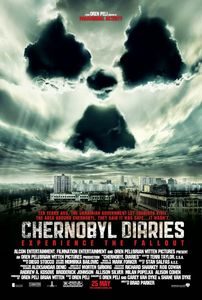
    (On Cable TV, April 2013) I’m all for minimalism in horror films: Oren Peli (who produced Chernobyl Diaries) did wonders on a shoestring budget with Paranormal Activities, and part of that film’s effectiveness depended on restraint and a willingness to go back to basics.  Sadly, Chernobyl Diaries manages to mishandle nearly every asset that could have run in its favour, starting with the idea of stranding young Americans in the hostile post-apocalyptic setting of Pripyat, the Russian city famously abandoned after the neighboring Chernobyl nuclear reactor disaster.  The scenery is interesting while the plot set-up remains familiar.  It’s what follows after the expected “stranded in the middle of nowhere!” plot beat that gets more and more tedious.  Things go bump in the dark, mysterious sights and sounds reinforce the idea that something awful is out there… and so what?  The scares are elementary in a way that feels dull, and as the annoying characters make dumber and dumber decisions, it quickly becomes apparent that few will mourn their inevitable demise.  The menace surrounding them is never clearly defined (whatever throwaway explanations are thrown around at the end are severely underwhelming) and even allowing for the short film’s slow-burn setup, Chernobyl Diaries feels too flat to be interesting.  Dull dialogue, flat cinematography, stock characters and shaky cameras don’t add much.  (The bear scene is good, through.)  It’s too bad that they couldn’t have done more with the initial idea.  Some of the last scenes, as frustrating as they are in their obstinate refusal to reward viewers, suggest a much better film.

  • The Expendables 2 (2012)

    The Expendables 2 (2012)

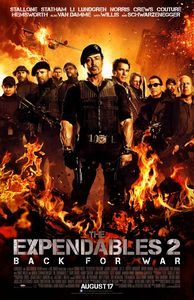
    (On Cable TV, April 2013) I was left unimpressed by The Expendables’ mixture of self-satisfied machismo, gory violence and incoherent direction, so to say that this sequel is better than the first one only requires slight improvements.  By far the best creative decision taken this time around is to give directing duties away from Sylvester Stallone and to veteran filmmaker Simon West –an inconsistent director, but one who at least knows what he’s doing.  The macho bravado and CGI gore is still there, but at least the film doesn’t struggle to make itself understood once the relatively coherent action sequences are put together.  The tone is much improved: Rather than trying to be a humorless pastiche of 80s action films, The Expendables 2 regularly acknowledges its own absurdity, whether in the form of stunned one-liners, or avowed deus-ex-cameo plot developments that allow icons such as Chuck Norris, Arnold Schwarzenegger and Bruce Willis to come in a save the day even at the expense of basic suspension of disbelief.  As with the first film, it’s the casting that provides much of the entertainment: Sylvester Stallone is still obnoxious in a self-indulgent lead role, but Jason Statham is reliably good, Jean-Claude van Damme relishes his role as an eponymous Vilain, Dolph Lundgren gets a bit more of that “mad chemist” character, while relative newcomer Nan Yu makes a bit of impression as a welcome female presence in the middle of so much testosterone.  As far as action is concerned, the beginning of The Expendables 2 is generally getter than its second half for reasons linked to the film’s intention: R-rated Eighties action film were heavy on violence (ie; personalized deaths, usually at gunpoint) while subsequent Nineties PG-13 action films relied more on, well, bloodless action: chases and explosions.  This sequel has more action at the beginning, and far more violence at the end, especially when is starts shooting up an airport terminal where no innocent travellers are to be found.  Dialogue and plot don’t deserve much of a mention, except to note their role in setting up the action sequences or the terrible self-referential humor.  While the film is definitively an improvement over the original, the final result isn’t much more than a routine shoot-‘em up: there is little in The Expendables 2 to spark the imagination or even to discuss once the credits roll.  It goes without saying that the entire thing is still an exercise is self-absorbed nostalgia.  There is no need for a sequel, even though one is nearly certain given the nature of the franchise.

  • I am Spock, Leonard Nimoy

    I am Spock, Leonard Nimoy

    Hyperion, 1995, 352 pages, ISBN 0-786-86182-7

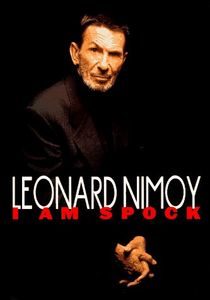
    At some point over the past few years, I got my hands on a copy of Leonard Nimoy’s second autobiography, titled I am Spock.  Dimly aware that the title was a reference to a first autobiography titled I am not Spock, I refrained from cracking open the book, hoping that someday I’d be able to read both books back-to-back and get the best out of the entire experience.  Against all odds, I got my wish when my work manager left a battered paperback copy of I am not Spock lying on her desk.  So how do the two compare?

    It’s worth keeping in mind that I am not Spock was published in 1975, at a time when cult interest in the then-defunct first Star Trek series was growing rapidly.  Nimoy earned much attention for his portrayal of the alien Mr. Spock, an unlikely sex-symbol who threatened the actor with typecasting and caused all sorts of amusing confusion when fans called by his character’s name or reflected upon him the qualities of the character.  I am not Spock, upon close reading, reveals no real animosity between Nimoy and Spock –merely a mildly-frustrated desire to distinguish between the character and the actor.  (Hence the book’s dialogues between actor Nimoy and character Spock.)

    While much of I am not Spock is about Nimoy’s formative experiences and the roles he played before and immediately after Star Trek, you can imagine that much of the book is about the making of Trek’s original three-season run, and the conflicts that eventually developed between Nimoy and the producers.  It’s an early revealing look into the difficulties of the show (one that would later be completed by other Trek autobiographies) that retains an evergreen fascination for fans.  Interestingly enough, it’s the now-dated parts of the book that remain most fascinating for contemporary readers, from slightly-psychedelic passages in which Nimoy argues with his alter-ego, or the typically-seventies expressions, hobbies and attitudes that Nimoy describes.

    I Am Spock’s title became mandatory considering that fans were not at all pleased with the title of the first book.  Hoping to make amends, Nimoy presented his twenty-years-later follow-up autobiography as even more of an unabashed love letter to his character.  You’d think that the narrative would simply pick up where the previous one ends, but I Am Spock incorporates and updates much of the previous book’s content.  The good news is that it makes the previous book redundant if you can’t find it.  The bad news is that if you’ve just read the previous book, much of the second one will feel like a re-thread, down to the same anecdotes and punch-lines.  There’s also a peculiar weirdness in reading I am Spock as a response to a book that it essentially contains: Your mind can expand in strange directions trying to make sense of this.

    But there is new content as well.  On the Star Trek front, I am Spock discusses the unexpected revival of Trek over the years, which included a series of successful movies featuring the cast of the original series.  On non-Trek matters, Nimoy discusses other acting jobs, and a successful foray in movie directing that saw him direct two Trek movies and the commercially-successful comedy Three Men and a Baby.  This, with the added benefit of twenty more years’ hindsight, make the follow-up book quite a bit more interesting than the 1975 installment: it presents Nimoy as a seasoned entertainer, able to fluently discuss challenges behind and in front of the camera. 

    One almost expects a third installment in 2015 called I Will Always be Spock; Nimoy, after all, has continued his association with the character by playing him as recently as in 2013’s Star Trek Into Darkness, and has added more roles and artistic activities to a lengthy career. 

    Unusually enough, I would advise time-pressed readers to skip the first book and focus on the second: while both are breezy, fun and revealing autobiographies, the second one has more to offer and repeats much of the first book’s material.  Reading them back-to-back is not a fascinating experience in how twenty years can change a person: it’s more of a exercise in repetitiveness.  Leonard Nimoy is Spock, and let’s leave it at that. (Sorry, Zachary Quinto.)