Author: Christian Sauvé

  • The Darkest Hour (2011)

    The Darkest Hour (2011)

    (In theatres, December 2011) There have been a lot of alien invasion films since fall 2010, so there are plenty of data points in saying that The Darkest Hour is an average example of the form.  Viewers’ appreciation of the film will depend on their own built-in liking for the average alien-invasion plot template in which survivors gradually understand, then fight back against the menace as their numbers dwindle.  What’s noteworthy about this take on the material is the welcome change of scenery offered by modern Moscow, a few visually arresting moments and direction flourishes by Chris Gorak, as well as an alien menace that seems just a bit more original than the average.  Plot-wise, The Darkest Hour has a nice ramping-up from confusion to comprehension to action and the script has a few clever moments in dealing with its own set of rules regarding the alien threat.  These qualities mitigate, but don’t really compensate for a lack of more traditional strengths.  The not-especially-likable characters are relatively dull, and their motivations start iffy –then become nonsensical in propelling the last act.  It’s no great feat of prediction to pick who’s going to die next… and the film’s Russian characters all seem more interesting than the American ones.  The plot is strictly by the numbers, and the dialogues don’t do much to raise the overall level of the film.  Still, as an alien-invasion package we have seen far worse: The Darkest Hour is certainly more optimistic than Skyline and not as aggressively dumb as Battle: Los Angeles.  It may not aspire to Super 8’s character development or Monsters’ thematic depths, but it’s a satisfying straight-ahead example of the form.  It’s the kind of B-movie that meets expectations.

  • Bunraku (2010)

    Bunraku (2010)

    (On DVD, December 2011) Every so often, a visually ambitious film slips through the cracks of distribution and promotion to land almost unannounced on video-store shelves.  From the first few moments, executed with a gorgeous mixture of animation and puppet-theater, it’s obvious that Bunraku is going to be an odd and interesting film.  With its fantasy-world mixture of western and samurai iconography, colourful art direction and dynamic direction, Bunraku certainly looks and feels completely different from your run-of-the-mill film.  Experimental, action-packed, crammed with confident performances, it’s also a movie that aspires to the “hidden gem” section of anyone’s collection, right next to films just as The Fall and Sin City: not perfect, maybe not even accessible to audiences who aren’t predisposed to this kind of genre-blending, but surprisingly satisfying to those to do get it and certainly looks like no other film: writer/director Guy Moshe has put together a lovely piece of art.  Josh Hartnett and Gackt share the lead roles, but Woody Harrelson, Ron Perlman and Kevin McKidd get more remarkable roles as supporting players.  (McKidd is particularly good as an eccentric killer.)  The script certainly could have been tightened up: Demi Moore’s character doesn’t look as if she has anything to do, the dialogue sometimes veers toward the pretentious and there’s a pacing slowdown during the third act of the film.  Nonetheless, Bunraku gains back all of its lost points on sheer visual fun alone, and from its references to other tough-guy movies.  For a film that never really showed widely in North-American theaters, I predict a modest cult following.

  • Attack the Block (2011)

    Attack the Block (2011)

    (On DVD, December 2011) Sometimes, all you need is a good old premise with new characters and setting.  So it is that Attack the Block, one of the most entertaining of 2011’s crop of alien-invasion movies, is basically “aliens invade inner-city London; the local hoods fight back.” It works pretty well, as long as you get over the opening narrative lump of portraying the local hoods realistically.  They’re reprehensible to the affluent white audiences most likely to watch the film, but writer/director Joe Cornish eventually walks the audience back to a tremendous amount of sympathy for his unlikely heroes.  The rest of the film is almost pure fun as the local street gang defends itself from hungry monsters from outer space.  Much of Attack the Block’s charm is pure execution: confident camera work, astonishing performances from a cast of mostly-unknowns (including headliner John Boyega), very clever creature design and a neatly wrapped script that manages to tie nearly everything together.  It’s a very unusual Science Fiction film in that it dares to explore a conventional idea with an unconventional cast of character; it speaks volume about Cornish’s work that by the end of the film, we have gained both understanding and respect for the street gang.  One essential tip: leave the subtitles on, as even the best-meaning audiences will have a bit of trouble understanding the thick South London inner-city street accent.

  • Street Kings 2: Motor City (2011)

    Street Kings 2: Motor City (2011)

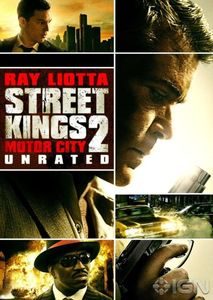
    (On DVD, December 2011) The trend toward “cheap but effective direct-to-video sequels related to their predecessor except in title only” continues with this follow-up to 2008’s corrupt-cop drama.  The only constant here is the theme of police corruption, as the action moves to Detroit (just like S.W.A.T.2: Fireight, in fact) and features an entirely different cast of character.  Ray Liotta headlines the picture as an aging police veteran, but the picture eventually revolves around Shawn Hatosy as an eager young cop trying to piece together the truth behind a few deaths in the police force.  It doesn’t turn out cheerfully, especially given what he has to lose.  The bleak conclusion is one of Motor City’s low points, but it caps a fairly average effort that seem well in-line with many recent direct-to-video thriller “sequels”.  The visual polish of the digitally-shot film is up to most standards, with a few directorial flourishes by DTV veteran Chris Fisher and stylistic touches that are a bit more ambitious that what the picture strictly needed.  Detroit, in its lapsed glory, has a large presence as the setting of the picture and this influences leads to some interesting choices as the film focuses on American muscle-car cinematography.  It’s a bit of a shame, then, that the familiar story deflates a bit after a promising first half: By the time the third act descends in increasing nihilism and abrupt ending, it’s unclear why, Motor City needs to be told or watched if it’s going to be so bleakly routine without any other redeeming qualities.  At least the film itself struggles to a certain level of competence, even though it doesn’t really know what to do once it has covered most of the basic requirements of an acceptable film.  The recent revival of DTV films to a level of quality roughly equal to the lower-tier of theatrical features is a welcome improvement over the historical standard, but there’s still a way to go before fully erasing the DTV stigma; it will start once the stories are just as interesting as what we can pay to see in theatres.  The DVD contains a large number of extra features that, by letting its filmmakers speak, make Motor City appear more pretentious than if you’d just watched the feature alone.

  • The Hit List (2011)

    The Hit List (2011)

    (On DVD, December 2011) If nothing else, this direct-to-video thriller has an intriguing premise: What if, discussing a very bad day at the local bar, you accidentally made a deal with a hit-man willing to take care of your hit-list?  Unsurprisingly, the film’s execution can never quite match the development of the premise: Shot on a budget in Spokane, The Hit List looks and feels like the newest digitally-shot direct-to-video effort: acceptable cinematography, two or three big action sequences, and some directing flair.  It’s in the limp script that the film’s limited ambitions become clearer.  The protagonist is meant to be portrayed by Cole Hauser as an everyman pushed beyond his limits, but he initially comes across as a schmuck and never recovers from this initial impression.  Cuba Gooding Jr. impresses as a grizzled hitman, although though his performance seems erratic and his dialogue feels forced.  The script shies away from its most interesting implications, and wastes time showcasing an overlong, mean-spirited and largely unnecessary police station shoot-out.  The lacking quality of the script, from its overreaching dialogues to its lack of thematic depth to the graceless way it moves its plot pieces, is the film’s biggest disappointment: While it tries to ape a bit of Collateral’s impact, The Hit List never really rises above its mediocre execution.  The ideas are there, but the polish isn’t… and as any good hit-man will tell you, execution is far more important than intentions.

  • Blitz (2011)

    Blitz (2011)

    (On DVD, December 2011) If ever you find yourself wondering what sets Jason Statham apart from other actors specializing in action movies, look no further than the extra interest and energy he brings to this otherwise fairly routine police thriller.  A pure product of the British film industry, Blitz it technically slick and actually benefits from its London location: Compared to other comparable LA-based crime thrillers, it’s a welcome change of pace to see British policemen at work in a different environment.  As far as the plot is concerned, though, it’s the usual psycho-cop-killer routine, with an implausibly super-powered antagonist and policemen unable to counter him.  Added spice comes from the subplots; I assume that they reflect material from the eponymous Ken Bruen book on which the film is based.  The problem is that subplots that fit within a series book aren’t necessarily fit for transposition within a standalone film.  The best/worst example of this concerns a subplot featuring an arresting performance by Zawe Ashton: It’s a great piece of drama that would be integral to a TV series, but it doesn’t fit within the thriller framework of the film itself and, as such, doesn’t seem to lead anywhere.  If you don’t know that Blitz is adapted from an ongoing series, you may have trouble figuring out the extent of the characters’ developing relationships.  The fall-back position is the vicious police drama as headlined by Statham; never mind the fascistic position taken by the film’s “cop-killer versus killer-cop” attitude (everything can be blamed back to political correctness, as is usually the tendency with films of this sort)… it just seems like the kind of easy ending tacked-on to make everyone feel better.  As a film, Blitz isn’t too bad.  But it has a few rough edges that Statham’s typical performance can’t completely save.

  • The Girl with the Dragon Tattoo (2011)

    The Girl with the Dragon Tattoo (2011)

    (In theaters, December 2011) Trying to review this film on its own is impossible given how recently I have read the Stieg Larsson book and seen the Swedish film adaptation.  It also doesn’t help that the American version seems so intent on faithfully adapting the book and taking its cues from the previous film: There’s no denying that the American version is good, but it’s so similar that the tendency is to focus on the areas of difference.  (Amazingly enough, through, the American version is 100% as Swedish as it’s ever been, taking place in Sweden with Swedish characters to the point of having the actors play with slight Swedish accents.)  Budget certainly makes a difference: Where the Swedish version had a scene at Millennium magazine with half a dozen staffers, the American version has the feel of a working magazine office.  Where the Swedish version held its outdoors scenes to a minimum, the American version indulges in scene-setting.  But don’t assume that all the edges have been filed away in an attempt to be audience-friendly: There is a least as much crude violence here, and perhaps a bit more nudity.  The bleak coda of the book has been kept over the Swedish film’s more hopeful finale, even as an expensive side-trip during the Swedish conclusion has been pared back for the American one.  Director David Fincher is a smart filmmaker, but even his talent and experience doesn’t seem to add all that much to this adaptation when compared to the Swedish one.  At least, there’s no arguing about the main casting is correct: Daniel Craig makes for a good Mikael Blomvkist, whereas Mara Rooney is almost as good as Noomi Rapace as Lizbeth Salander.  While the end result has a few flaws in pacing, most of them can be attributed to the book itself rather than any special flaw in the adaptation (which does dispense with some extraneous material, such as the carnal relationship between Blomvkist and one of the Vengers)  The main question about the film isn’t as much “Is it good?”  as “Why does it exist?” The Swedish version was good, but the American version isn’t that much better to justify having a director like David Fincher work-for-hire on it.  At some point; why bother?  Still, it may be best to focus on the idea that, for once, the American version is just as respectable as its foreign counterpart.  Small comfort, but we might as well take what we get.

  • Mission: Impossible – Ghost Protocol (2011)

    Mission: Impossible – Ghost Protocol (2011)

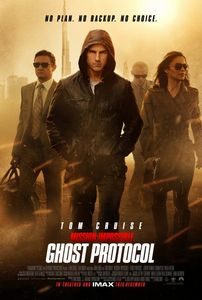
    (In theaters, December 2011) The Mission: Impossible series has never been about realism, and this fourth entry continues to deliver the kind of spying-fantasy action that the franchise does so well.  While it would be correct to bemoan the series’ lack of real-world themes or relevance, it’s also missing the point: Mission Impossible is about featuring visually dynamic action directors, giving Tom Cruise a rock-solid star vehicle, and having just enough plot to run through a series of action/heist set-pieces.  It works pretty well: Brad Bird’s live-action debut as a director show his skill in handling complex sequences mixing together wide-screen locales around the world, high-tech equipment (which, hilariously enough, always seems to be failing), movie-slick stars and a good sense of rhythm.  The series has been good at showcasing innovative action sequences and Ghost Protocol does well in setting a chase inside a sandstorm and then later on a fight in an automated parking garage.  What’s somewhat new is a tenuous amount of continuity with the previous installment: just enough to give the actors something to do during the dialogue scenes, but also in terms of visual continuity, much stronger between the third and fourth film than any of the previous entries.  While Ghost Protocol doesn’t have a villain as strong as Philip Seymour Hoffman in the third installment, it’s good enough to give a little bit more of what has been good about the series so far.  While Cruise is now pushing credibility as an action hero (the next ten years are going to be tough for him as he’ll have to let go of his boyish grin), the Mission: Impossible series is still his most reliable, most audience-friendly franchise.  Expect another installment within a few years… and expect it to be decent.

  • Transylmania (2009)

    Transylmania (2009)

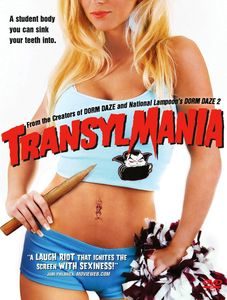
    (On DVD, December 2011) There is a correct state of mind in trying to appreciate this film, and it includes the words “Stoner college comedies are pretty bad and we shouldn’t expect much from them”.  Once you’d gone over that particular conditioning exercise (and maybe watched a few terrible Friedberg/Seltzer “comedies” as a reminder of how bad the sub-genre can be), then Transylmania isn’t all that bad.  Oh, it’s still not very good: Not only is it a sequel to the two National Lampoon Dorm Daze comedies in which a bunch of American students go study abroad in a foreboding Transylvanian university set in an age-old castle, it’s rife with dull dialogue, contrived situations, unimpressive humor and one strikingly out-of-place gory sequence.  Still, there’s quite a bit more artistic ambition here than in most of the big-budget “concept comedies” you’re likely to catch in multiplexes: The motif of doubles (either through twins, possession or doppelgangers) leads the script to some fairly sophisticated farce-plotting, whereas some of the cinematography is surprisingly good for the kind of college comedy this is billed as: The filmmakers obviously had a few higher goals in mind in trying to ape German expressionism (among other classic influences) and blending it with dope-fueled inanity.  Among other performances, Jennifer Lyons is adorable as a cheerleader possessed by an ancient witch, allowing her to alternate between an airhead and a vamp; Musetta Vander is also remarkable with a strong action-heroine performance as a vampire hunter.  If you’re not convinced, have a look at the DVD supplements, which features an entertaining commentary, a good making-of featurette, and alternate sequences that are just as interesting as the material that ended in the film.  While this won’t be a film for the ages, it’s funny and good-natured enough to leave no ill feelings.

  • Stan Helsing (2009)

    Stan Helsing (2009)

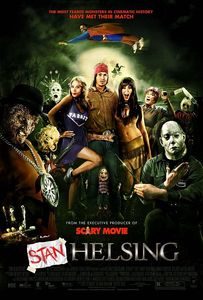
    (On DVD, December 2011) There’s an intriguing concept at the heart of this spoof parody film updating the Van Helsing legend (and terrible 2004 movie) to modern times and just-as-modern monsters taken from the horror genre.  Concepts don’t make a movie, though, especially not when it’s backed with a dull script and a low budget.  The result is a movie that’s bad by almost every standard: Amateurishly written, staged with mediocre competence, put together in a botched fashion (even allowing for the low budget)… it’s just not very good.  But having survived a feverish back-to-back-to-back viewing of far worse spoof comedies as appetizer, I can say that there are a few things in Stan Helsing that make it rise above the muck of Wayans and Friedberg/Seltzer zero-effort zero-result trash.  For one thing, the actors seem determined to give it their best.  Here, the spotlight belongs to Desi Lydic for stealing nearly every scene she has as an adorable bubblehead, whereas Steve Howey is fine as the title character.  Limited by its PG-13 rating, Stan Helsing also manages to avoid much of the over-the-top grossness, violence and mean-spiritedness of several of its “unrated/extreme” contemporaries.  The result may indeed not be very good, but it’s not particularly offensive, and even occasionally charming in its earnest goofiness.  Having a karaoke contest to decide the fate of a monster-ridden town sounds like a terrible idea, but darn if I didn’t smile like an idiot as the monsters were singing “S-T-A-N” and promising the worst torture to the lead character to the tune of the Village People’s Y-M-C-A.  Dumb stuff, but writer/director Bo Zenga has a few solid instincts –I wonder what he could do with a better script and a bigger budget.  I’m not recommending the film… merely pointing out that it’s nowhere near the bottom of the heap when it comes to spoof comedies.  The DVD edition has a number of disappointing extras: The DVD commentary is practically useless (other than some making-of details on how to operate within a low budget) and many of the extended scenes show the wisdom of cutting the film down to its PG-13 rating.

  • Meet the Spartans (2008)

    Meet the Spartans (2008)

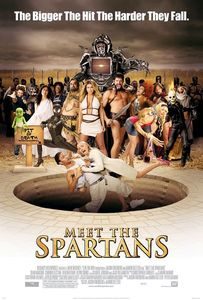
    (On DVD, December 2011) Watching Friedberg/Seltzer “parody movies” is an exercise in curious masochism, such has their entire body of work been so embarrassing to date.  Meet the Spartans has an unchallenged reputation as one of the worst box-office-number-one movie in recent memory (Fact: It won over Rambo as the top-selling movie in the US upon release in January 2008) and viewing it merely confirms its standing.  Even critics wary of superlatives won’t have a hard time saying that this is the worst so-called spoof comedy on record so far.  A witless recreation of key scenes from 300 with added bodily fluids, celebrity references and cartoon violence, Meet the Spartans struggles ineptly to even deliver smiles.  Relentlessly stupid, irrevocably dated to 2007 and never too sure when it has ground a concept into the ground (the “Pit-of-Death” sequence goes on for five minutes), this film isn’t amusing even to those who thought 300 was an overrated piece of pap aimed at teenagers.  Almost painful in its ineptness, Meet the Spartans doesn’t really understand what humor is, and seems happy to substitute the same tired elements (grossness, celebrities and violence, usually mixed together).  There’s no cleverness to the commentary on 300 (forget about discussing the fascistic elements when even the jokes at the original film’s unintentional homoeroticism seem like mean-spirited homophobia) and no conceptual humor at throwing together pop-star abuse in an antique context.  Meet the Spartans doesn’t work as a parody; it doesn’t work as absurdity and it doesn’t even work as caricature.  It just doesn’t work, and its aggressiveness in repulsing its audience seems a key piece of why it doesn’t.  I have seen several low-budget straight-to-video comedies that were funnier than this.  Struggling to find nice things to say about this film, it’s true that Sean Maguire makes a convincing replacement for Gerard Butler and that the production design is often instructive in showing how to cheaply re-create 300’s distinctive aesthetics.  Otherwise, the unrated DVD edition has a few bonus features that are better than the movie itself: The “Tour the set” featurette is sporadically amusing, whereas the commentary track is arguably funnier than the main feature as actors and filmmakers have a good time.  Tellingly, though, everyone seems repulsed by the film’s grosser moments… leaving open the question as to who thought those moments were a good idea.  No wonder Friedberg/Seltzer have earned such widespread hatred in the movie-fans community.

  • Extreme Movie (2008)

    Extreme Movie (2008)

    (On DVD, December 2011) A sketch comedy about teen sex sounds like a dubious prospect for more than one reason: Sketch comedies aren’t that common for good reasons; sex comedy in American cinema is usually an arousal-free mixture of guilt and vulgarity; and American teens aren’t known for discriminating tastes when it comes to that material.  Extreme Movie confirms all three problems and adds a few of its own.  Hobbled by a low-low-low budget (1.2$M) and even lower comic standards, the film is very loosely based on a high-school sex-education class and the issues students confront at home.  While some of the sketches gets a few points for originality and concepts that leave hum-drum reality behind (such as the Weird Science parody, or the Lincoln-obsessed teen who ends up inventing a time machine to fulfill his fetish) and a few other moments have known actors (Michael Cera, Frankie Muniz) gamely submitting themselves to the requirements of the script, much of Extreme Movie is just one lame gag after another, heavily dosed with the kind of embarrassment that seems to be the norm for discussions of teenage sexuality in a comic context.  Heavily biased in favour of a male-centric view of sex (only one sketch revolves around a teenage girl), which is another problem in itself, Extreme Movie does itself no favour by jettisoning most of its accumulated character development every five minutes or so –some of the film’s most amusing jokes are call-backs to previous events.  The telling lack of nudity (at one or two specific exceptions which are probably specific to the “unrated” DVD) hints at a broader problem about the contradictory impulses dictating any discussion of teenage sexuality in North America: the underlying puritanical social impulses are about shame, whereas the broader customer culture is about desire –but does commentary on this film warrant deeper introspection of this issue?  In any case, the “unrated” DVD supplementary material isn’t particularly interesting, although you can almost feel some sympathy for the filmmakers as they describe how to work within a budget that’s a tiny fraction of what most Hollywood productions require.

  • Dance Flick (2009)

    Dance Flick (2009)

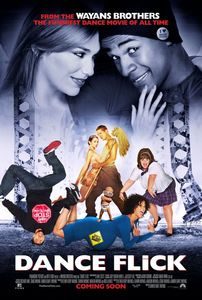
    (On DVD, December 2011) If Wayan Brothers parody films seemingly write themselves without too much thought, reviewing them can be done just as automatically.  There’s little here that will be surprising to anyone who’s seen any of the sub-standard parody films of the 2000s: Dance Flick seems happy to take up a subgenre (here: teenager dance movies), extract its basic plotline, and re-create striking moments with more cartoon violence and gratuitous profanity.  It’s not great art, and it struggles to become even adequate entertainment.  Often more groan-inducing than funny, Dance Flick has a few moments… but most of them are buried under tedious recreations of better movies that don’t even bother adding any comic intent.  It’s a bit worse than being useless, though: despite black writers, directors and producers, Dance Flick seems almost determined to reinforce most movie stereotypes of the American black community.  You almost have to feel sorry for Shoshana Bush, who turns in a game performance as the heroine of the film.  While Dance Flick is a cut above some of the worst examples of the parody genre, that’s not much of a recommendation.  (At least it avoids the meanness and gross-outs of the worst of its brethren.)  Perhaps it’s best to say that the film will appeal most to teenagers that have seen most of the referenced dance movies and not much more.  The initial-release DVD has no supplemental material, but that’s OK: we didn’t necessarily want to see more.

  • American Steel, Richard Preston

    American Steel, Richard Preston

    Avon, 1992 reprint of 1991 original, 278 pages, C$12.00 pb, ISBN 0-380-71822-7

    Even two decades later, journalist Richard Preston is still best-known for The Hot Zone, a mesmerizing account of deadly viruses run amok.  A few follow-ups, including The Demon in the Freezer and the novel The Cobra Event followed; his collection of non-fiction pieces was even titled Panic in Level 4 as a nod to his best-selling work.  But Preston’s bibliography is more diverse than just deadly viruses, and 1987’s American Steel is a good demonstration of his versatility in telling us about the renewal of the US Steel industry as exemplified by the construction of a Nucor facility in Crawfordsville, Indiana.

    Preston was allowed access to the site as it was being built and tested; no insignificant achievement as the “Crawfordsville Project” tried to build a new kind of facility at a time where few were willing to even bet on the company’s chances of success.  The history of US steel-making, explains Preston, is one where gigantic steelwork operations were gradually replaced by nimbler, smaller competitors.  The “mini-mills” led by technological innovation, a willingness to deal in smaller profit margins and a belief that they could do better jobs if they specialized in specific market niches.  The Crawfordsville project was one of those status-upsetting move; an American company using German technology to develop a machine that could transform rusting carcasses into shining new metal.

    One of the most surprising facts from American Steel, especially to 2011 readers, is the blanket statement that over half the steel used in the US in the mid-eighties was recycled.  (This figure has since gone up significantly.)  Newer steelworks don’t refine iron ore extracted from the ground as much as they recast existing iron in newer forms; the Crawfordsville location was selected in part because it was geographically located close enough to the ruins of the “rust belt” and amply served by train lines carrying recyclable metal.

    But machinery is far from American Steel’s only concerns, especially not when steelworkers prove to be such memorable characters.  It takes a special kind of man to work in a steel foundry, explains Preston; trying to manipulate hot steel with cold steel is a bit like building a water machine with ice, except that renegade hot steel tends to explode, melt human bodies and destroy buildings.  Working in such facilities means always being ready to run outside at a moment’s notice, breaking bones after jumping down platforms if the alternative is being burnt alive.  Those steelworkers are the focus of the book, and hanging with them as they work hard and party even harder becomes one of the Preston’s ways to involve the reader with his subject matter.

    You would think that presenting a corporate history of parent corporation Nucor would be relatively dull in comparison, but that’s not considering the tortuous road taken by automobile manufacturer REO (as in “REO Speedwagon”, the O of REO also standing for “Olds” as in Oldsmobile –it’s a complicated story) as it transformed itself in a Nuclear-focused company (hence “NUclear CORporation”), then as a holding company for various ventures before realizing that the best profits were to be made in the steel industry.  Nucor eventually became one of the most aggressive of the US steelmakers that renewed US steel production.  What contemporary readers know is that the electric arc furnace-driven mini-mills as exemplified by Nucor did manage to remake the US steel industry to their image: Once-mighty corporate behemoths such as blast furnace-powered Bethlehem and U.S. Steel have closed down, bought by mini-mills or been restructured in smaller entities.  There’s a darker side to Nucor’s success in its opposition to labour unions, but Preston also portrays a corporation with few management perks, a strong emphasis on humane working conditions and no layoffs to date.  The safety of Nucor’s plants is disputed throughout the book; a spectacular blow-out with fatal consequences at the Crawfordsville plant is discussed in one of the last chapters.

    While the book isn’t perfect (some of the dialogues are so steeped in steel-making jargon that they give a flavour of the workers but no real understanding) and could now use at least one updated afterword to bring us up to speed with the latest developments regarding the industry, American Steel is a fine and gripping non-fiction account of a fascinating and dangerous industry.  Considering our reliance on steel produced in facilities just like the Crawfordsville plant, it’s not a bad idea to pay attention to those kinds of things.

  • Sherlock Holmes: A Game of Shadows (2011)

    Sherlock Holmes: A Game of Shadows (2011)

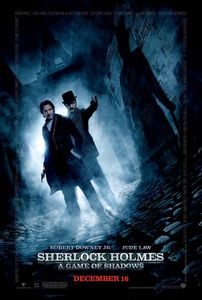
    (In theaters, December 2011) It goes without saying that sequels often aim to replicate the elements that made the success of their predecessor, and add something more.  In this light, this follow-up to 2009’s Sherlock Holmes is an unqualified success, and maybe even a more enjoyable film than its predecessor.  Front and center, of course, is Robert Downey Jr.’s fast-witted take on the title character, complete with instant-strategy monologues and slashy repartee with Jude Law’s dependable Watson.  More importantly, though, Game of Shadows ups the ante by providing an antagonist that is strong enough to present a challenge to Holmes: Jared Harris’ Moriarty lives up to its literary namesake, and makes for a formidable opponent.  It all leads to a climactic chess game that plays off a few of the series’ signature motifs.  (Literary fans will see Reichenbach Falls appear and nod at where the film is going.)  Casting Stephen Fry as Mycroft is a bit of a coup, while it’s nice to see Noomi Rapace’s high cheekbones get a bit of Hollywood gloss after her role as “The Girl” of the Millennium trilogy.  Director Guy Richie once again provides an action-adventure take on the basic premise, along with light steampunk esthetics and slow-motion action sequences.  (A blue-tinted run through a forest provides a quasi-impressionistic sequence of almost-still images.)  While the end result doesn’t transcend the Hollywood holiday blockbuster genre, it’s a well-executed example of the form, keenly aware of its audience’s demands and almost eager to satisfy them.