Author: Christian Sauvé

  • Echoes of Earth, Sean Williams & Shane Dix

    Ace, 2002, 413 pages, C$9.99 mmpb, ISBN 0-441-00892-5

    All right, Science Fiction fans: Your wait is over. If you’ve been scouring bookstores and libraries for the next Big-SF adventure, this is it: Echoes of Earth, a spectacular, large-scale future tale with plenty of guts and a willingness to follow up on initial promises.

    Admittedly, it doesn’t start all that strongly: In this imagined future, Earth has decided to explore the stars by proxy: Volunteers had their personalities scanned, copied and digitally sent to nearby stars inside an automated craft. (Shades of Greg Egan’s Diaspora, proving how the genre is evolving away from outdated assumptions.) There aren’t enough bodies for everyone, so personalities are downloaded in generic android bodies, ready to explore their destinations whenever they’re there. As the novel begins, our protagonist (an “engram” named Peter Alander, who nearly underwent a complete nervous breakdown upon arrival) is taking a bath.

    Of course, there’s more. Somehow, a mechanism is activated on the planet they’re exploring, and out of nowhere, massive structures start to grow from the ground up, eventually forming -in a matter of hours!- not only a series of orbital towers, but an orbital ring around the planet. Investigating the event, our protagonist is blessed with “gifts”—automated, quasi-miraculous systems and equipment left behind by an alien race.

    But wait! There’s even more! Peter quickly discovers that one of the gifts bestowed by the aliens is a faster-than-light ship. When the exploration team starts discussing what to do with that particular gadget, an automated “mole” buried deep within one of the personalities aboard the exploration ship is activated and takes control of the expedition, shutting down the rest of the crew to ensure compliance with mission directives. After some unpleasantness, Peter leaves for Earth—and discovers something very very shocking. Fortunately, an old acquaintance which has survived it all is (reluctantly) ready to help him absorb the new paradigm.

    Echoes of Earth really hits its stride in this second half. The high-speed acceleration of Earth’s technological progress has radically changed the solar system, leaving deep scars. This kind of free-wheeling extrapolation is seldom seen in SF, and always welcome. The future imagined by Williams and Dix combines elements from other previous SF works, give them a spin and plays along with the results. It also helps that the second part of the novel is told from the perspective of a different character, giving an interesting take on the first protagonist, a deeply flawed personality that purposefully doesn’t include the capability to see anything wrong with itself.

    It all accelerates in a scenario that would be highly unpleasant if it wasn’t told with the energy it displays. Suffice to say that if you like your SF big and spectacular, you’d be hard-pressed to find a more spectacular canvas than Echoes of Earth this year.

    The only quibble I had with the novel -save for the unspectacular opening- was the ending, which seemed to wrap quickly and leave a lot of loose ends. I still might have been satisfied if it had stopped there, but it turns out that a second volume, Orphans of Earth, has appeared in bookstores as I was reading what is the first volume of a new series. Completists and singleton-lovers might want to temper their enthusiasm in consequence. Other might as well start reading as quickly as possible.

    [July 2004: My enthusiasm hasn’t survived the reading of the last two tomes of the trilogy. While there’s a decent bag of cool stuff in these three books, it’s spread way too thin and never equals Echoes of Earth‘s portrait of the post-Spike solar system. The trilogy’s biggest problem, however, is that it’s all too easy not to care about the aliens and engrams characters. It certainly doesn’t help that Heirs of Earth, the conclusion of the series, purposefully avoids giving answers as to What Just Happened. Some scenes are spectacular (including an exploding sun), some ideas are nifty, some twists are intriguing, but the whole thing barely holds together. What was intriguing quickly became ordinary. It’s no wonder if it was published as a series of paperback originals.]

  • Phone Booth (2002)

    Phone Booth (2002)

    (In theaters, April 2003) There is something… pure about this location-locked thriller, and this purity is what director Schumacher (yep; who would have thought?) best achieves. The dynamic camera whips, cuts and twirls around one man, one phone… and one booth. Indeed, once the fantastic opening is over (“this is the story of the last user of this phone booth”), the movie loses interest whenever the camera stops focusing on the lead protagonist. Collin Farrell proves that he possesses a certain movie-star quality by carrying pretty much the whole film on his shoulders. (Though Kiefer Sutherland does excellent voice work) The screenplay is able to wring much out of few elements, and it knows enough to stop whenever the film threatens to become tiresome. There are flaws (an underwhelming justification, a diffusion of tension in the last act, disposable female roles) but none are big enough to derail one of the crunchiest thrillers in recent memory. Delicious from beginning to end through the magic of good writing, directing and acting, Phone Booth isn’t likely to be forgotten anytime soon.

  • A Man Apart (2003)

    A Man Apart (2003)

    (In theaters, April 2003) Yes, I think Vin Diesel is The Man, the most credible action hero on the market right now. But even he can’t save this tepid attempt at a “thriller”, packed with stuff we’ve seen elsewhere before. It’s not as if the “crazed vigilante cop” shtick hadn’t been done before, but to do it with such a lack of energy is almost fatal. The film never plays to Diesel’s strength, except for two scenes (a shakedown in front of a hairdresser, and an undercover transaction that goes horribly wrong) that seem out of place. Replace Diesel with some other no-name actor, and A Man Apart would have gone straight to video. Everything else is average and scarcely worth paying attention to.

  • It Runs In The Family (2003)

    It Runs In The Family (2003)

    (In theaters, April 2003) Tolstoi once muttered something about dysfunctional families being unique and interesting, but the wisdom of his maxim continues to be lost in Hollywood, where the “dysfunctional family” movie has acquired a set of clichés that are usually followed to the letter. Family members hate each other until a terrible event brings them together. Young people are rebellious; old people face death, middle-aged people face overwork and adultery. From the movie-of-the-week credit sequence onward, It Runs In The Family feels like a film made by numbers. Through all the adventures that afflict the protagonists, dramatic tension runs low and the ending isn’t as much a climax than a conclusion. There are a few noteworthy things about It Runs In The Family, and they all pretty much relate to the Douglas family; Kirk impresses with his patriarch performance, while Michael is as much fun as he usually is and Cameron doesn’t embarrass himself in presence of his acclaimed elders. (On the other hand, Bernadette Peters has a bigger speech impediment than Kirk) Still, this is an amusing and, to its credit, it didn’t bore me as much as I thought it would. But the perfunctory ending (Hey, how about the girl?) mirrors the film as a whole, which is worthwhile if you like family dramas, but not deserving of any particular sacrifice. The Douglasses had their fun.

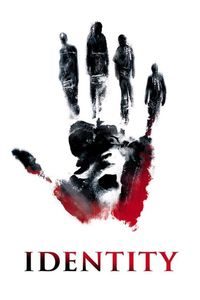
  • Identity (2003)

    Identity (2003)

    (In theaters, April 2003) It is incredibly fitting that this film will leave viewers with (at least) two very different impressions. The first one stems from the first half of the film, which is a cliché-ridden, yet aptly-executed murder mystery that lulls us in predictable conformity. But pay attention, because the film suddenly veers in fantasyland, leading to our second impression. The central conceit of Identity is so audacious it feels like something midway from genius and pure audience contempt. In a way, it rescues a film that seemed to be headed for pure clichés. In another, it slaps the audience in the face and shouts loudly “Ha. Didn’t see That Coming!” Some of you will enjoy. Some of you won’t care. Some of you will feel cheated. And some of you will feel all of this at once. Suffice to say that there’s a lot to like at a basic level: John Cusak turns in one of his best performances in years, with able support from Ray Liotta, Amanda Peet and a good supporting cast. Director James Mangold manages to do interesting things with familiar material. Plus, of course, the script… but enough about that. Except to say that the last minute is a howler, the kind of cheap ending that has no relation to reality. But that, in many ways, is the whole point.

  • On Writing: A Memoir of the Craft, Stephen King

    Pocket, 2000, 297 pages, C$10.99 mmpb, ISBN 0-7434-5596-7

    If you are a Stephen King fan, there is only one thing you need to know about this book: It’s essential reading. Go get it. Now. Shoo. Come back whenever you’ve read it. I’ll wait. It won’t take a long time, trust me.

    For everyone else, it’s important to place On Writing in the proper context of Stephen King’s life and times. In King’s nearly thirty-year-long career (Carrie was published in 1974, though King wouldn’t become a mega-selling author until after the de Palma and Kubrick adaptations of, respectively, Carrie and The Shining in the late seventies.) King has never been shy about either talking about himself or the craft of writing. (For proof, see, oh, the “Constant Reader” forewords, interviews and non-fiction pieces in places like Writer’s Digest.)

    But until now, though he had published non-fiction before (his book-length exploration of horror fiction, Danse Macabre, is a must-read for every serious student of the form), King had never tackled a sustained autobiography, nor a lengthier piece on the act of writing.

    Well, no more. On Writing is on shelves, and it’s definitely worth reading. Part confessional autobiography, part inspirational advice, part reflection on the techniques of writing, On Writing is of most interest to existing fans of King’s work, but should reach a much larger public by sheer virtue of honesty. The big surprise, in light of the massive length of some of King’s novel, is how On Writing comes out as an easy, short and snappy book, just long enough to leave us wanting more.

    The first section is a collection of thirty-eight memories, anecdotes and vignettes of his life, from the infant Stephen King to the seasoned best-selling writer. Though I’m no literary scholar, the level of honesty exhibited here by King is commendable. From an unremarkable childhood in a single-parent family to his first forays in writing, King gives us a glimpse in the formative experiences of the writer he has become. Future King specialists will read this in awe; the rest of us won’t be any less fascinated. King occasionally shocks (On his addiction problems: “I wrote The Tommyknockers, often working until midnight with my heart running at a hundred and thirty beats a minute and cotton swabs stuck up my nose to stem the coke-induced bleeding.” [P.90]) but follows up with some good advice (in this case, that the myth of the gloriously addicted writer is a false and dangerous one; “Hemingway and Fitzgerald drank because that’s what alkies are wired to do.” [P.92]) King also describes the fascinating process by which several of his best-known books were written. He doesn’t even remember writing entire novels, but what he does remember is sobering.

    He follows this confessional with writing advice that occasionally takes up more of an inspirational quality than a strictly didactic one. It also helps that this is a book about writing from someone who knows how to write and loves doing it. A random selection of King’s fiction shows an uncommon fascination with writers and the writing process (One title: Misery), and this fascination is entirely organic to his own writing process. It would be hard to imagine his best-selling colleagues (say, Tom Clancy or Danielle Steele) being able and willing to write a similar book. (Audaciously enough, King also takes the time to criticize some of his colleagues)

    The book closes on more autobiographical material, this time a lengthy description of his 1999 accident (in which he was hit by a drunk driver) and his rehabilitation. Seasoned horror readers might find themselves cringing with sympathy as King spares no details in recounting how difficult the experience was. At this stage in the book, it comes as no surprise if starting to write again has been a key element in his recovery.

    At this stage of his career, it’s widely acknowledged that King is well on his way to become the representative popular writer of the late twentieth century. On Writing shows the qualities that will make him a Dickens for our time in years to come. His dedication to craft and his knowledge of what he is doing are unequalled in the best-selling arena. There are undoubtedly better writers out there, but few have been able to marry popular success with literary quality like he has been able to do. We are lucky that he’s been so willing to set down his advice and his memories in such a book.

  • Confidence (2003)

    Confidence (2003)

    (In theaters, April 2003) Ah yes. The con film that begins with the narrator describing his own death. It doesn’t take a genius to figure out that this is all going to turn out nicely, but the twists and turns are the name of the game and if Confidence isn’t particularly revolutionary, it plays well enough. I’ve been, inexplicably, a mild fan of Ed Burns for a while and he certainly knows how to play as the lead man in a gang of con artists on a rampage in Los Angeles. One operation goes too well, they find out they just double-crossed a powerful crime lord and suddenly, they must atone for their miscalculation by performing another con. Double-crosses, counter-crosses, infini-crosses follow. Fans of Rachel Weisz will not be disappointed, as she demonstrates an uncanny capability at playing a scheming seductress. The rest of the supporting cast is also quite good, with the usual props to Dustin Hoffman, Paul Giamatti and Andy Garcia. The direction moves with a certain style and the screenplay efficiently propels the story forward. The ending is a bit of a mess; I’m not even sure if it makes any sense at all. But in a con film, these senseless twists are the norm, and they are easily forgiven as long as it ends in a satisfactory fashion. Indeed, it’s hard to imagine a happier ending than the one featured here, and this happy impression is the one to keep.

    (On DVD, September 2010) Years later, this film may play even more smoothly than it first did: I had forgotten much about the smooth scene transitions, clever dialogues and exceptional ensemble cast. Director James Foley knows what he’s doing, and his Los Angeles is drenched in unusual color accents. As a con film, it’s hardly revolutionary… but it promises a good time and it fulfills its part of the bargain handily.

  • Bulletproof Monk (2003)

    Bulletproof Monk (2003)

    (In theaters, April 2003) Kung-fu is cool. Ancient secrets on scrolls are cool. Chow Yun-Fat is the king of cool. Sean William Scott can be cool. Jamie King will be cool one day, once she acquires a distinct personality and starts playing off her resemblance to Catherine Zeta-Jones. Nazis are cool, and gorgeous blonde Nazi psycho bitches are even cooler. Why, then, is Bulletproof Monk so uncool? Maybe it’s the lazy direction. Maybe it’s the uneven script which neutralizes every cool thing with an uncool things seconds later. Hey, if you can’t even use a mega-über-cool character name like “Mister Funktastic” properly, you’re just not trying. Bulletproof Monk barely distinguishes itself in the “let’s pair an Asian cinema star with a hip Hollywood young thing” sub-genre that has become so tiresome in recent years. Rather than exploit Hong Kong cinema stars’ innate charm, they try to shoehorn them in yet another Hollywood formula and the result is generalized boredom. Bulletproof Monk has a few worthwhile moments, but frankly… it’s as if the filmmakers didn’t even care. So neither will we.

  • Bend It Like Beckham (2002)

    Bend It Like Beckham (2002)

    (In theaters, April 2003) Behold the most charming teenage sport romance since Bring It On. A successful blend of light ethnic drama and underdog comedy, this is the kind of low-budget film that doesn’t need much more money to keep the audience interested. A good script coupled with great performances… and voila! Keira Knightley may be the “sexiest tomboy beanpole on the planet” (to borrow an unfortunate expression from the embarrassing ads running on Aint-it-Cool-News), but she’s nowhere nearly as hot as Parminder Nagra, the adorable protagonist of the story. You don’t need to be a fan of soccer/football to cheer for our plucky heroine as she tries to reconcile both her Indian heritage and her English culture. (Don’t worry, it’s far from being as dreary as it sounds) Certainly a painless conversation piece about ethnic integration if there’s one, Bend It Like Beckham earns that highest distinction; a film that deserves to exist. While the script often takes easy dramatic shortcuts (“comic” misunderstandings can often be seen coming miles away), the film also exhibits a remarkable level of realism on how some characters react to some situations. Good stuff. The direction is appropriate, with frenetic soccer scenes and lush wedding sequences. Existing in a continuum forged by films like The Full Monty, My Big Fat Greek Wedding and East Is East, Bend It Like Beckham is one delicious piece of cinema. Please don’t miss it.

  • Field of Dishonor (Honor Harrington 4), David Weber

    Baen, 1994, 367 pages, C$7.50 mmpb, ISBN 0-671-87624-4

    Well, that’s a pleasant surprise.

    After bemoaning the lack of variety in Honor Harrington’s first three adventures, here’s a fourth volume that delivers exactly what I’ve been asking for. No space battles for Honor this time around; in fact, precious little military action is featured in Field of Dishonor. As the title may suggest, this time the action pretty much all takes place in the political arena, with consequences far more affecting than any of Harrington’s military engagements.

    The novel starts scant moments after A Short Victorious War, as Pavel Young’s (grrr!) cowardly behaviour during the third novel’s final engagement is examined by military analysts. The recommendation is swift to come; Young should be court-martialed for his actions, a process that may carry with it the death penalty for treason. All is not so simple, however, as the case becomes a battleground for the political factions in the Manticoran parliament. Conservatives are quick to defend Young, which they see as an unfairly persecuted member of one of the most honoured families in the kingdom. Many of the other factions rally around Honor… well, except for those who still remember her punching one of theirs in the face during the events described in The Honor of the Queen. It’s a complex issue and it quickly gets even more complicated when the court-martial is decided by a jury with opposing -but definite- views.

    All of the above takes place before the novel is halfway through. What follows is, by a significant margin, the most interesting section of the Honor Harrington novels yet. Matter of revenge and retribution are exacted left and right, with Harrington in the middle of the conflict. Pretty much all of the series becomes important in many subtle ways; no details are forgotten as Harrington becomes an unfortunate media darling. Nearly all characters are involved in the story. The final chapters are a heck of a lot of fun as, finally, we get something else than a Big Space Battle as a climax. Harrington’s involvement is also deeply personal, going beyond simply playing a lethal video-game combat really well with occasional casualties. This fight has no intermediaries.

    In short, it is by side-stepping the usual military SF dramatic arc and embracing a character-driven plot that Field of Dishonor becomes the best entry (so far, so far!) in the series. Real character development takes place, with real issues affecting the characters. Though some of it may be predictable (it’s not as if we couldn’t see part of the story coming, even from the previous volume), it’s very well-done and carries with it a great sense of urgency. It’s also deeply satisfying in a very unconventional way. For maybe the first time, the entire series truly pays off. While a dramatic loop of some kind has been closed, it’s clear that this is far from being an ending.

    (I’m not too pleased, however, with the off-screen death of one major character, whose demise is simply reported in the next chapter without any attempt at showing what happened. Kind of a missed opportunity for a good dramatic scene, if you ask me.)

    Field of Dishonor might be a lot of things, but it’s -perhaps most importantly- a shot in the arm for the entire Honor Harrington saga. Wisely concentrating, maybe even only for one novel, on the characters rather than the hardware and the strategies, Weber has ensured a renewed interest in the adventures of his heroine. Despite the sombre tone of the last few pages, there is no doubt that Harrington will be back in action, and soon. Next volume, please!

  • Prey, Michael Crichton

    Harper Collins, 2002, 367 pages, C$39.95 hc, ISBN 0-00-200554-9

    Experienced genre critics just looove to review Michael Crichton’s novels. Rather than spend any time finding interesting things to say about the book’s strengths and weaknesses, it all too easy to dust off the old list of Crichton’s failings (provided free of charge to anyone who subscribes to the shadowy Criticaluminati! organization) and simply riff on that.

    But that would be lazy. And whereas laziness has always been a hallmark of the reviews on this site, I have already discussed Crichton’s motifs several times before. It’s not as if anyone cares, but I thought I’d do something different this time around.

    It’s not as if I wasn’t tempted, though. Prey is just begging to receive the full Crichton Treatment. Once again, a promising new technology (nanotechnology, to be precise) is meticulously described in luscious detail, and then exploited for cheap thrills as everything goes wrong, protagonists are threatened and the survival of the world is at stake. Bibliography provided. Added bonus reactionary points are given since the the evil characters are from a corporation and the wife of the narrator is a baaad mother. Boo!, said the peanut gallery.

    But let’s tackle something else. Crichton’s unfailingly clear writing style, for instance. (Hey, when so many of your novels have been adapted by Hollywood, it’s tempting to deliver something that can be transformed in a screenplay in a few hours) Told from a first-person viewpoint (which I believe to be a first in the Crichton oeuvre), Prey flows along with nary a slowdown. It’s only after reading the first hundred pages that we come to realize how much hasn’t happened by then. (If you’ve been paying attention, though, you’re already far ahead of the protagonist. Moody personality? Ah-hah! Weird dream? Ah-hah! Disintegrating electronics? Ah-hah! The clues accumulate… even though a few of them are ultimately revealed to be meaningless even at the end.) The novel quickly rushes to its second act, a little marvel of quirky suspense that, for a while, almost makes us feel as if this is the best thing Crichton has written since Jurassic Park. This impression passes as soon as we move in the third act, a silly possession thriller that can’t be bothered to be any more original than a catwalk fight. (Though it features a nifty sequence inside an MRI machine)

    Through it all, Crichton’s sceptical attitude (once again) makes a perfect foil for the subject he tackles in Prey. The dangers offered by nanotechnology, once we put aside the unconvincing features of the “evil bugs” in the novel, are obvious. Crichton’s well-worn contention that unrestrained technological development can be devastating seems obvious in light of the craziness of the late-nineties “Internet Gold Rush”. At least there wasn’t any possibility of destroying the world through the Internet. Things may very well be different with nanotech.

    Still, one wonders why it’s so hard for Crichton to adopt a more balanced approach. Why do all of his novels have to be cautionary tales? Why can’t he present a more balanced approach, once in a while? Granted, his shtick is well-worn and has proven to be rather effective as a tool to get on best-seller lists. But as a true novelist, however, Crichton doesn’t inspire a lot of faith in his range.

    But that’s sliding a little bit too close to the standard rant about Crichton. Truth be told, Prey‘s subject matter is more immediate than Timeline, and if details of the execution are troubling (including some of the technical details for knowledgeable readers), the overall readability of the book does a lot to distract anyone from being too critical. Flaws and all, Crichton remains of of the most reliable suspense novelists around, and Prey merely confirms it.

  • Rising Phoenix, Kyle Mills

    Harper Choice, 1997, 486 pages, C$8.99 mmpb, ISBN 0-06-101249-1

    I recall being rather impressed by Kyle Mills’ second novel, Storming Heaven, a fun thriller animated by a vast conspiracy, a chilling sect inspired by Scientology and good-old-fashioned police work. It wasn’t particularly original, but it was very well executed and featured an interesting protagonist in the character of maverick FBI agent Mark Beamon.

    For the same reason, I was hesitant to pick up Rising Phoenix, Mills’ first novel also featuring Mark Beamon. Had the second volume featured enough spoilers to ruin the first novel? Would this first effort measure up to the standards of the second book?

    As is turns out, Rising Phoenix is a different book. First, it’s not spoiled by Storming Heaven. The two stories are very distinct, and it’s almost an accident if they both happen to have the same protagonist. Certainly, no major events or secondary characters cross over in more than a passing mention.

    Furthermore, whereas Storming Heaven had a run-of-the-mill concept helped by a great execution, Rising Phoenix is closer to an original premise given life in a very ordinary fashion.

    It starts as a nationally-renowned preacher gives carte blanche to an assistant (as it turns out, a sadistic ex-policeman with a record of excessive brutality) to solve, once and for all, the drug problem in America. The operative then goes and executes a plan near and dear to his heart; poison a substantial fraction of the Columbian drug supply with a deadly spore. One whiff of the poisoned material and the poison starts to act. Two weeks later—goodbye, drug user.

    Terrorism by any other name, this action quickly strikes fear among the drug-using population of the United States. Given the latency period, it’s nearly impossible to quickly detect the contaminated shipments. Thousands quit their nefarious habit, drug prices shoot through the roof, Columbian drug lords go nuts and several citizen applaud the gesture. This uncommon ambiguity is further heightened when the preacher has remorse, drug lords dispatch their operatives to catch the poisoner and the government has to do something to stop the health catastrophe.

    It’s up to special agent Mark Beamon to investigate the case and catch the culprit, a culprit who turns out to be an old acquaintance of his. And this is where Rising Phoenix takes a departure from a fantastic premise over to a hum-drum thriller. It’s almost as if Mills didn’t know what to do with his initial concept and had to stick in a hero to bring back law and order. It’s not as interesting as seeing an unconventional plan do some ambiguous good, mind you. A bit like Vince Flynn’s Term Limit, it’s as if the authors had to de-fang their initial idea with something closer to what the general public is able to stomach.

    Oh well. At least the novel is competently written. While the concept of “poisoning America’s drug supply” may sound dubious at first, Mills makes it uncommonly believable. He also paints his characters with some skill, though the image of the antagonist is muddled though inconsistent heroics. The other letdown is the way in which an interesting political debate is toned down in favour of more straight-up police thriller mechanics. Then again, this is Mills’ first novel: some flaws are to be expected, such as the unfortunately confusing action scenes and the imperfect characterization.

    But what Rising Phoenix clearly does establish is Kyle Mills’ potential as a thriller writer to watch. While both of the novels I’ve read from him so far have had flaws, they still remain good examples of capable genre novels. Worth a look.

  • Fatal Voyage, Kathy Reichs

    Pocket, 2001, 420 pages, C$10.99 mmpb, ISBN 0-671-02837-5

    I have made no secret, in past reviews of Kathy Reichs’ novels, of my decidedly mixed feelings about her literary output. While I’m more than happy enough to read an American writer setting stories in my quasi-native Quebec, I was rather less enthusiastic about the lack of originality and the awful contrivances of her plotting. Alas, Fatal Voyage, keeps most of the problems and few of the qualities of Reichs’ previous books.

    This time, rather than steal the plot of her novel from French-Canadian headlines, Reichs is a touch more original by using a plane crash as her initial situation. As the novel opens, protagonist Tempe Brennan is in the middle of a debris field, looking dispassionately at body parts strewn across the North Carolinian landscape. As an official investigator for a disaster response team, her efforts to understand what has just happened go awry when an unidentified body part complicates her investigation. The item doesn’t fit anything else on the plane; where has it come from, then?

    If you’re familiar with the old joke about an airplane crashing in a graveyard, you’re already far ahead of Reichs’ protagonist. Furthermore, chances are that you’re already half annoyed by this plot cheat. But don’t be too exasperated yet; in typical Reichs fashion, it quickly becomes apparent that her daughter might have been on the plane and that the partner of her good friend Andrew Ryan was also on the plane, escorting a dangerous criminal. Anyone else would say that these are two coincidences too many, but this kind of lazy plotting is, in fact, routine for this author. But wait; there are other howlers later in the book.

    The biggest plot cheat is that the plane crash ends up being a sideshow to another, rather less interesting story about a decades-old mystery, a secret society and a bunch of killers hiding corpses in the North Carolinian wilderness. Add to that a rather dull romance and this is one Fatal Voyage where we’re constantly asking ourselves if we’re there yet. As vicious hillbillies threaten Brennan with all sort of bad things, it struck this reviewer that her untimely disappearance wouldn’t be an entirely unwelcome event.

    Even the usual reliable standby of the series -the Quebec setting-, disappeared almost entirely from this particular novel. Save for a brief scene, Brennan spends the whole novel in Carolina, with only the (coincidental) presence of Sûreté du Québec policeman Andrew Ryan as a reminder of the usual setting of the series.

    What’s worse is that the novel is dull. Fatally dull. The age-old conspiracies are underwhelming, the hillbillies don’t amount to much of a menace and there’s a definite sensation of having seen this before.

    In fact, without being so nasty as to accuse Reichs of outright plagiarism, the opening few scenes of Fatal Voyage are very, very similar to James Thayer’s Terminal Event, which also featured an investigator taking a look at a crash scene. The various possibilities about what brought down the plane are also similar; missile, organized crime bomb, political terrorism, etc. While it’s entirely possible that Reichs has read Terminal Event before working on Fatal Voyage, I’d rather blame similar plotting than idea stealing (there are only so many ways a plane can be brought down, after all). Plus, the novels evolve in entirely different directions. Weirder synchronicity has happened before.

    But it doesn’t change my perception of Fatal Voyage. Filled with implausible happenstance, kept away from distinctive Quebec and dull above everything else, Fatal Voyage is best avoided. For that matter, I’m starting to think that Reichs’ oeuvre itself is best avoided. It’s not as if there aren’t better writers out there.

  • Goliath, Steve Alten

    Forge, 2002, 416 pages, C$35.95 hc, ISBN 0-765-30064-8

    (Read in French as Goliath, translated by Marie Claude Elsen)

    It must be a rotten time, in these early years of the twenty-first century, to be a techno-thriller writer. For decades, the Cold War provided a stable framework in which to set tales of global domination and intrepid freedom-loving heroes. Then, during the nineties, relative global quiet allowed them a few good years of stability battling drug cartels and (then) fictional terrorists. But even as the Bush administration seems to be engaged in a long campaign to secure everyone’s New American Century (whether they want it or not), techno-thrillers are being strangled by the incertitude. It’s no longer possible for anyone to depend on geo-political alliances that will last more than a few years, or long enough for the novel to make it to paperback. Anything can happen, and since November 2000, it seems as if just about anything has.

    No longer is it possible to write an explicitly post-September-11 novel taking place in 2009 in which Baghdad is destroyed by American nuclear weapons. Or rather; it might have seemed like a good idea when I started reading Steve Alten’s Goliath, but it didn’t seem nearly so amusing by the time I finished it, as real bombs were falling over the real city, killing real people despite unreal news reports. But let’s not turn this into (yet another) dreary case of literary criticism turned political diatribe Truth is, there’s a lot to like and to skewer in Goliath, even when you shove aside the politics and the economics of starving techno-thriller writers.

    Take, for instance, how Alten stuffs his usual motifs in his latest novel. It’s not enough for “Goliath” to be an incredibly powerful submarine being controlled by a renegade scientist and a pre-sentient artificial intelligence. The submarine is shaped like a Manta Ray, and its smaller submarine drones look like… sharks. After Alten’s previous Meg and The Trench, which featured giant sharks and impressive underwater wildlife details, it’s not as if he’s stretching.

    This being said, Alten has obviously read a lot of military thrillers: his heart is definitely at the first place and so is his imagination. While the technical exactitude of the novel often seems stretched beyond any reasonable measure at times, Alten is first and foremost an entertainer, and he certainly delivers the goods. The opening chapter features the spectacular destruction of an American carrier group, and the action scene that details the escape of the sole survivor is as exciting as anything I remember reading in the genre recently.

    Alas, Alten isn’t as skilled when comes the time to add Science Fiction in the mix. The SF-themed sections of Goliath, featuring yet another AI that flips out and wants to eradicate humanity, read like an intentional take-off on Frankenstein (Oooh, that lightning-strikes scene! It’s ALIIIVE!) mixed with a bio-mechanical monsters that seems poorly stolen from the the awful movie VIRUS. Everything’s just too easy to this mad scientist, able to design several Manhattan-sized projects single-handedly. (I can only guess it’s true when they say that being evil gives you extraordinary powers.)

    There are also problems with the narrative arc of the novel. The background relationship between protagonists Rochelle Jackson and Gunnar Wolfe are mostly useless, and so is Jackson’s presence in the opening of the novel. Alten succumbed to the usual lure of making everything interconnected, making the universe of his novel look much smaller than it ought to be.

    But sacrificing plausibility, be it in domains like military technology, scientific accuracy, characterization or geopolitical politics, can be forgiven if the result is interesting. And for all of its faults (and the slight last-third lull), Goliath delivers the goods when it comes to pure reading fun. So maybe, despite changing geopolitics, there’s hope for techno-thrillers after all. If the current world situation doesn’t make any sense, maybe they don’t have to either.

  • Turning Thirty, Mike Gayle

    Flame, 2000, 350 pages, C$14.99 tpb, ISBN 0-340-76794-4

    I know it’s fashionable among some genre readers to deride “general” fiction as being, somehow, un-cool. I should know; I’ve been there. When you’re used to star-spanning wars, far-reaching conspiracies, intricate murders and a bunch of dungeons and/or dragons, why even care at all about boring “relationships”? I get enough of that in my own life, thank you. What doesn’t help is the (oft-justified) sense that a lot of that so-called “mainstream” fiction are merely navel-gazing exercises by pretentious artistes with, er, deficient story-telling abilities. Life is too short; why bore myself with a dull three-hundred-pages meditation on how being single sucks? I could write such things myself.

    But genre readers should also be the first ones to warn others against hasty judgements based on clichés and hasty generalizations. Helen Fielding’s Bridget Jones’s Diary, for instance, meets most of the prerequisites for general, mainstream fiction… and yet it proved to be a hilarious and impulsively readable account of modern life. Mike Gayle’s Turning Thirty is in the same tradition, down to the oh-so-fashionable iconic cover design that manages to convey its “not your parents’ gen-lit!” hip attitude.

    Turning Thirty begins as its narrator manages to undergo the easiest break-up in the history of mankind. Officially single, bored with his life in fast-paced New York, lined up for a job in Australia, he decides to take a short sabbatical back in his hometown back in England. A few weeks at his parents’ place, a few reunions with old friends, some time off until it’s time to start his new job in Australia… it’s a good plan, if it wasn’t for one slight detail: the clock is ticking down to his thirtieth anniversary, and his sort-of-early-mid-life crisis is ticking along with it. An ex-girlfriend will complicate things… but then again, this sort of thing wouldn’t be worth reading if it didn’t feature tons of complications.

    Fortunately, Gayle can write as well as Fielding (sigh; I need a bigger data sample. I really should start reading some Nick Hornby) when it comes to presenting the complexities of today’s younger adults. He does so from a male perspective, granted, but it doesn’t matter much one way or the other; it would be highly presumptuous to consider Turning Thirty as an examination of what it means to be thirty in today’s western democracies, but the novel is peppered with flashes of recognition that will be shared by most. (Even die-hard geeks like me get a chance to nod their heads as one character maintains that the last three hours of “Babylon 5” were the best thing ever broadcast on TV.) The dry British tone is just distant enough to offer something new to North-American readers.

    While the protagonist’s lack of decisiveness can be annoying (and depressing) at time, Turning Thirty is easy reading; just sit down on a sunny afternoon and turn the pages. There are plenty of laughs, plenty of good turns of phrases and plenty of plain good fun. I wasn’t terribly impressed by the wimpy resolution (which doesn’t seem solidly motivated), but plenty of room is left in the epilogue to suggest that the likely couple will get to snoggle a lot once the final page is turned.

    All told, this is one worthwhile non-genre novel. Deftly mixing romantic pains, growing-up concerns, a heavy dose of nostalgia with assorted musings on modern life, Turning Thirty is the kind of novel worth reading, worth sharing and worth discussing. Not perfect, but good enough that it doesn’t matter.