Author: Christian Sauvé

  • Blood of Others, Rick Mofina

    Pinnacle, 2002, 466 pages, C$9.99 mmpb, ISBN 0-7860-1267-6

    (Obligatory disclaimer; adjust the following review according to my acknowledged favorable bias for A> local authors and B> authors I’ve met.)

    Fans of Rick Mofina, rejoice; the Ottawa-area thriller writer shows no sign of slowing down, turning in his third novel in three years. After the unconventional Cold Fear this novel is somewhat of a return to the settings, characters and conventional structure of his first book, If Angels Fall.

    For one thing, Blood of Others is mostly located back in San Francisco, where the events of the first novel took place. For another, Blood of Others features the protagonists of Mofina’s first novel in a rather more active role than in Cold Fear.

    As the story begins, a few months have gone by since the events of the previous novel, but things look a lit like they did two novels ago; Walt Skydowski is still the same irascible super-cop, though he’s making progress on the dating front. Tom Reed is still an overworked, underappreciated journalist, hated by his bad boss, hounded by his wife and once again on the prowl for a good story. He’s about to get a big one; the spectacularly ghoulish display of a murder victim leads him to an informant who claims to have seen the victim enter a police car on the day of the murder. Clearly, something is up and neither Tom nor Walt have any idea what they’re up against. Fortunately, another character looks as if he does, and by the end of the book, we can only wonder if the next novel won’t feature a third major recurring character…

    It’s risky to talk about “an author’s favorite themes” after only three books, but risk has never stopped this particular reviewer in the past. Truth is, anyway, that several familiar elements do re-occur. The antagonism between the media and the police is still very present and personified by Tom and Walt’s antagonistic relationship. On the other hand, Tom’s complicated work/life balance is getting overused as a dramatic device. It would be about time for him to have a good boss and be able to write his articles without antagonizing his whole family. Maybe in time for the next novel!

    Still, there’s no denying that Mofina is becoming better and better. The overall pacing of Blood of Others is generally more sustained than that of its predecessor, and the hair-raising finale is appropriately located at a San Francisco landmark. I wasn’t overly impressed by the antagonist in this volume, but then again I’m liable to unfavorably prejudiced whenever a character like that turns out to be a raving psychopath. (There’s also the whole bad-internet-bad! angle, but I need to lighten up about such things) Still, I wonder if the little time-bomb buried at the end of the epilogue will be used in Mofina’s next novels in the Reed/Skydowski cycle. Tick-tick-tick-tick…

    In the meantime, have fun with Mofina’s first three novels. I’m impressed enough to put him on my short to-buy list, though I’ll be the first to admit that his stuff fits squarely in the crime-fiction mid-list, there isn’t anything wrong with that. At least you can rest assured of a good read; Mofina writes clearly and concisely and with more than enough suspense to keep you intrigued. A promising initial trilogy from a writer to watch.
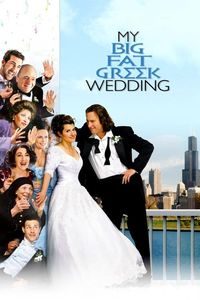
  • My Big Fat Greek Wedding (2002)

    My Big Fat Greek Wedding (2002)

    (In theaters, August 2002) The surprise hit of summer 2002 is nothing more (or less) than a deliberate attempt at giving a certain audience exactly what it wants. As such, it works really well: Writer/star Nia Vardalos delivers a romance, a family reconciliation tale as well as a duckling-to-swan transformation. The romance might be the film’s least impressive element, especially when compared to the impressive evolution of the protagonist. This isn’t simply a Rachel-Leigh-Cook-with-glasses metamorphosis, mostly because no one pulls any punches in representing the “before” state; baggy clothes, thick glasses, stringy hair, blank stare and makeup-enhanced face lines, Vardalos throws herself in the pre-transformation role with abandon and emerges as an even more adorable woman at the end of the process. That’s when the romance kicks in, but it’s not nearly as interesting as a process by which we discover the eccentricities of this particular Greek family. It’s a welcome glimpse in an ethnic group that’s long been neglected by Hollywood. (Expect a surge of imitators in the next few years.) It ends exactly as we think it will; no surprises, but good warm fuzzy feelings. It’s not a raucous comedy; the pacing is only a-joke-a-minute and the film wouldn’t have felt out of place as a television movie-of-the-week. But it’s worth seeing, especially if you’re stuck in a situation where you have to see a movie with a wide audience; this will do for the whole family.

  • Made (2001)

    Made (2001)

    (On DVD, August 2002) Though Made is billed as a mob comedy, this low-budget film written and directed by Jon Favreau is too often irritating to be consistently amusing. Vince Vaughn’s character is one of the most obnoxious protagonists in recent memory, and a large portion of the film’s suspense is in wondering when someone will finally shut up the loud self-centered idiot. The making-of featurette on the DVD, however, is gracious enough to let us know that this effect is fully intentional, as the filmmakers were self-consciously trying to mix an uncomfortable blend of comedy and tension. They recommend a second viewing. I’m not sure I’m willing to undergo that particular punishment. In any case, there are few bad things to say about the film’s technical polish; despite the low budget and the tight shooting schedule, the film looks great, makes good use of its LA/NYC location shooting and manages to build complete characters, despite how one may feel about them. (Though if someone can explain the sudden appearance of someone near the end…) If you liked Swingers (about which I have similar reservations), please feel free to enjoy Made.

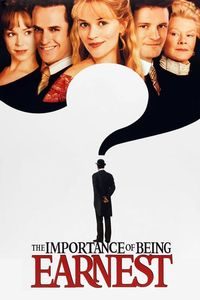
  • The Importance Of Being Earnest (2002)

    The Importance Of Being Earnest (2002)

    (In theaters, August 2002) I like adaptations of Oscar Wilde’s plays. I just do. Trying to explain why or how I loved The Importance Of Being Earnest would be useless if you don’t share my overall love of such stories. Wilde can be cynical without being dour, romantic without being sappy and this is one of this film’s biggest strengths. Did you like An Ideal Husband? Rush to see The Importance of Being Earnest, then. Good acting, warm finale and ultra-sharp dialogue. Plus great performances from Rupert Everett, Colin Firth, Reese Witherspoon and Frances O’Connor, who should stick to period pieces if we’re to compare this to Mansfield Park and/or Bedazzled or Windtalkers. Wonderful date movie. I guess.

  • Callahan’s Key, Spider Robinson

    Bantam Spectra, 2000, 335 pages, C$8.99 mmpb, ISBN 0-553-58060-4

    I have detailed, in previous reviews, my various annoyances with Spider Robinson’s unique brand of fiction. With Callahan’s Key, Robinson has come up with a novel that is almost indistinguishable from the previous two or three books in the “Callahan’s” series. So why have I liked it so much?

    This latest installment begins on one of the darkest winter days of early 1989, as narrator/protagonist Jake Stonebender suffers through the indignities of yet another Long island snowstorm. Things look grim, but before long, the usual gang of very exceptional friends shows up and convinces Jake to A> move to Key West, Florida and B> save the universe. Not merely the world, mind you, but the universe. The gang reacts in their usual blasé fashion. (“God damn it. AGAIN?” [P.7] Also see P. 181 and 201 of the paperback edition.)

    There remains the slight matter of moving some hundred-odd (very odd) people from upstate New York to Key West. Doing so will require some ingenuity, work and more than a dozen yellow school buses. Most of the novel’s first half is spent following Jake and the gang as they first plan and then go on the road trip to end all road trips. Several cool not-so-tourist attractions are visited. A few puns are slung. Authority is defied. A shuttle is launched. A good time is had by all. This first half is by far the most enjoyable; the process of mass-moving from New York State to Florida is far more relevant to us than the process of saving the universe.

    Then we’re due for the gang’s arrival in the Keys, where even their full-blown exceptional nature is unremarkable. There remains the slight matter of saving the universe, but as we all know, that part proves to be a cinch. No matter; you know you’ll devour it at once.

    No, there isn’t much that’s new or even original at Callahan’s. Robinson has found himself a comfortable niche, and as long as he continues to deliver the goods, he’s not tinkering with the formula. Regulars will appreciate the tall stories, the anti-establishment tone, the puns and of course the feeling that every one is welcome at Callahan’s.

    Callahan’s Key is still one of the best entries in the series, though, what with its unusual travelogue that takes the bar away from the characters, somewhat. Robinson doesn’t waste as much time setting up elaborate puns and his description of a shuttle launch seems as moving as the event itself. The book isn’t nearly as weepy as its immediate prequel. There’s also a good role for Nicola Tesla, one of my own favorite historical character, with a wonderful explanation of the man’s latter-year slide in crackpot-hood. (Think Siberia, 1908 and slap yourself for not thinking of it earlier. [Chapter 13])

    I still hold on to most of my reservations about Robinson’s shtick, mind you. His cast of characters is, by now, ridiculously powerful (and bulletproof). Group telepathy seems to be the ultimate answer to a remarkable number of things. He still displays a remarkable intolerance for “bureaucrats and Pentagon dolt-heads” (someone should sit with him and explain the nobility of public service, as well as how We Are Not A Monolith, Damnit.) Robinson also overplays to his crowd (we’re go smart, so advanced, so civilized, etc.), but whoever is still reading the Callahan’s series after nearly ten volumes shouldn’t be surprised at most of this stuff.

    So why do I keep counting myself as one of them? Well, one of the surprises of Callahan’s Key was finding out that I actually enjoyed reading about Robinson’s merry band of iconoclasts. While Robinson and I obviously come from different backgrounds and would probably start arguing the minute we met (not that this would be a bad thing, mind you), the truth is that coming back to Callahan’s universe almost felt like going someplace familiar. I suspect that a large part of Callahan’s appeal is in offering an idealized representation of a place where all are welcome regardless of prejudice, as long as you enjoy good company, good ale and good songs. I think we’re all looking for something like that. Hurrah to Robinson for providing it, even in a diluted fictional form!

  • Faa yeung nin wa [In The Mood For Love] (2000)

    Faa yeung nin wa [In The Mood For Love] (2000)

    (In theaters, August 2002) Would you willingly see a subtitled period Chinese film describing how a man and a woman decide not to have an affair? Seriously; how much money would it take to make you see this? How about I throw in a fifteen-minutes-long epilogue that doesn’t lead anywhere? What if you have to see two great actors (Maggie Cheung and Tony Leung) do nothing during all that time? Would you mind a bunch of moody shots without whom this would become a short film? Can you feel my pain, now? Good.

  • Greenfingers (2000)

    Greenfingers (2000)

    (On DVD, August 2002) Innocuous, rather inoffensive gardening comedy starring convicts. Clive Owen is good as the lead protagonist (he’ll be James Bond one day, I swear!) and the rest of the actors hold their own. It’s a low-budget film, but an enjoyable one in The Full Monty tradition of British underdog comedies. There isn’t much here that is memorable or profound, but it’s a good time at the movies. The DVD is a bare-bones edition.

  • Full Frontal (2002)

    Full Frontal (2002)

    (In theaters, August 2002) There are times when I worry about seeing too many movies. The usual casual moviegoer sees maybe five to ten movies a year and likes most of them because, hey, he doesn’t know better. Big-time cinephiles such as myself easily see five times as many movies and feel their critical judgment consequently affected. Years ago, I would have hated Full Frontal, with its deliberately-muddy cinematography, non-linear structure, very loose narrative coherency and frustrating improvised dialogue. But I was surprised by how willingly I went with Full Frontal. In many ways, it’s another entry in what others have called the “Hollywood Home Movie” genre. But unlike The Anniversary Party, Full Frontal is funny. And unlike Time Code, it’s not quite as much in love with its own cleverness. We can almost feel writer/director Stephen Soderbergh nudging us in the ribs throughout; “Get it? Get it? It’s all a joke!” (Indeed, Soderbergh himself appears in a quirky movie-within-a-movie-within-a-movie moment, his face hidden behind a “censored” black box.) Full Frontal is a bunch of very loosely-connected vignettes. Some work; some don’t. I still ended up laughing more here than at Austin Powers 3: Goldmember. But don’t try to link everything together too much; many scenes simply don’t fit together anyway. See Full Frontal for the industry jokes, the tons of cameos or the edgy feel of a film made without studio supervision. Just don’t expect ordinary, safe material.

  • Ed Wood (1994)

    Ed Wood (1994)

    (On TV, August 2002) Interesting film that transcends its geeky origins to become a triumphant document on a pathetic filmmaker. Though the historical accuracy of the film can be taken apart with some elementary research (the screenplay mostly telescopes longer periods in shorter amounts of time and conveniently forgets a few intervening events.), it’s hard to dislike the sympathetic portrait of an anti-genius like Wood. What separates the film from a simple funny biography is the haunting (Oscar-winning) performance of Martin Landau as the dying Bela Lugosi. Acting credits are excellent throughout the picture, with a bunch of known names here and there. (Particular props to Johnny Depp as Wood, though I was oddly reminded of Steve Buscemi at times) Don’t miss the delightful opening credit sequence. This is an essential film for cheap-SF geeks, and a worthwhile one for everyone else.

  • Double Take (2001)

    Double Take (2001)

    (On DVD, August 2002) It doesn’t take much to deliver a fun buddy crime comedy, and that’s exactly what Robert Gallo does, after a laborious start, with Double Take. Granted, the film sank at the box-office, but once you get past the irritating opening, the film settles down as one of the twistiest fun thrillers since Wild Things. (It never attains the earlier film’s trash-thriller brilliance, of course. The lack of sex scenes alone is enough to take it down one notch.) While Eddie Griffin can often grate, you get used to him. Orlando Jones is a star throughout, though, as he switches comfortably from a chic Wall Street businessman to a loudmouth from the projects who just wants some Malt-Liquor. This whole theme of appearance versus reality is Double Take‘s motif, given all the twists and counter-twists in the film. The film’s internal logic eventually comes to make sense after many exasperated gasps from the audience, but the external plausibility (ie; why go through all the trouble?) remains highly doubtful. In any case, the filmmakers on the DVD commentary track take as much time self-congratulating themselves than discussing the film itself. But that’s fine, because the film is a little surprise, a solid buddy comedy that holds up rather well to a commentary-enhanced second viewing. It grows on you. Naturally, it helps that the film stars three luscious black women, with particular nods to Garcelle Beauvais, who appears in full lingerie in one of the film’s most regrettably cut scene, now included on the DVD for your viewing pleasure. Also worth viewing on the DVD: A surprisingly interesting “filmmaker’s diary” making-of feature that gives a real feeling of being on a movie set.

  • Fresh Styles for Web Designers, Curt Cloninger

    New Riders, 2002, 211 pages, C$52.95 tpb, ISBN 0-7357-1074-0

    I’m not sure why or how, but I have long been fascinated by design. Whether graphical design, web design or pure design (ie; the thousand ways to make a chair), I can be endlessly entertained by the intricacies of putting a detail here rather than there and the effect this can have on an overall piece. (Actually, I lied about not have any idea about the source of my design fascination: I suspect that it stems from my problem-solving fetish, which is a large part of what design is all about.)

    Alas, as a quick look at my web site will reveal, I’m not a very good designer myself. I don’t have much imagination, and what I do best is either do a lot with nothing or slavishly copy whatever’s been done before. “Efficient” is one way of characterizing my work. “Boring” is another.

    Still, I approached Curt Cloninger’s Fresh Styles for Web Designers with something approximating glee. I looked forward to reading it with the same feeling I have whenever I’m about to read a crunchy good SF novel from a reliable author. Simply paging through the book was difficult, as I wanted to just dive in and read everything at once.

    Fresh Styles is a book-length expansion on an article available at http://www.lab404.com/dan/, a list of twelve new “cutting edge” styles to help designers break out of the curiously similar web sites you can find just about everywhere on the web. Cloninger doesn’t pay much heed to usability concerns here, usually justifying his position by the idea that personal sites can afford to be slightly user-unfriendly, and some commercial sites do, in fact, demand a slightly edgier look. In any case, anyone looking for usability design tips should read another book.

    So Fresh Styles details ten new and unusual styles one could conceivably adopt and modify for one’s own purposes. The styles range from soft and cuddly to harsh and industrial, with everything from simple and minimal to complex and dirty in between. Though there is some technical advice here and there, this is more of an inspirational book than an instructional one. Indeed, it helped me come to grip with my own style, which I’ve come to recognize as an inept take on HTMinimaLism (“Say it! Say it loud! I’m an HTMinimaList and I’m proud!”)

    Overall, this is a fun and inspiring tour: The design styles covered by Cloninger are indeed fresh (on or off the web) and he does explain a few of the techniques used in creating these styles, in addition to the philosophy (or desired effect) behind them. The book offers proof that everything old can be new again, and a simple exploration of past design trends can be applied in a fresh way to a new medium. The book is abundantly illustrated, so there are quite a few examples for the reader to enjoy.

    Maybe not enough of them, though. In fact, my single biggest criticism of the book is flattering; I would have appreciated more stuff. For wannabee designers such as myself who excel in replicating styles, it’s also a bit of a bother that Cloninger doesn’t spend more time qualifying and explaining why and how to realize a design. One (or two) site does not a movement make! But that’s unlikely to bother more seasoned designers who will use the book as a springboard toward something wholly different.

    Considering the book from a wider perspective, it can also stand in as a quick tour of the web circa late 2001, at a point where the medium began to acquire an artistic maturity of its own. It’s easy to be respectable when there’s VC money around, but once the big bucks and the glamour’s been stockbrokered away, that’s when the medium’s resilience shows through. The design philosophies in Fresh Styles are demonstrations that, yes, the web is a bold and new medium that just won’t go away, and might actually thrive best once the dot-com hype has died down.

    But more prosaically, Fresh Styles is an all-too-rare glimpse in the mind of working design professionals, beyond the dirt-common “design” manuals that are really HTML coding primers. I’m glad this book exists, and I’m even happier that I’ve read it. Now I want a sequel with more styles, more details and more design considerations. As soon as possible!

  • Dong jing gong lüe [Tokyo Raiders] (2000)

    Dong jing gong lüe [Tokyo Raiders] (2000)

    (On DVD, August 2002) Unlike many dour Hong Kong action films, this one doesn’t waste any time pointing out its amusing nature, as it begins with a playful fight scene in which star Tony Leung dispatches a series of opponent in a way which would make James Bond feel ashamed. In fact, the martial art scenes in Tokyo Raiders often feel like riffs on Jackie Chan’s antics, including a male/female fight accompanied with a tango-inspired musical piece. Acting highlights go to Leung for his portrait of a dapper action man, but it’s no secret that the action scenes are the film’s main selling points. The highlight is the middle fight/chase sequence, which involves a golf-club battle, a chase using a motorized skateboard and a deliriously fun sequence aboard a car-freighter truck. The closing boat chase underneath one of Tokyo’s highways is also impressive. It’s a shame, though, that foreigners such s myself won’t properly appreciate the cultural shock of Chinese characters in Japan. (There are a few scenes where characters have to translate for each other, which of course doesn’t come across very well in English!) The DVD includes a fluffy making-of documentary which proves to be eerily similar to its Western counterparts. (Interestingly enough, the subtitles of the documentary don’t exactly match the subtitles of the feature…) Despite some lengths and a touch too much pathos in a film that is otherwise quite lighthearted, Tokyo Raiders is one of the most polished, accessible Hong Kong action films of the year. Don’t miss it!

  • Blood Work (2002)

    Blood Work (2002)

    (In theaters, August 2002) I’m getting too good at this thriller shtick. Barely a few minutes in the film, I pegged the “secret killer” at the character’s oh-so-innocuous first scene. The rest of the film didn’t hold many other surprises; the procedural details are fascinating, but any sagacious viewer will be ahead of the lead protagonist by minutes. Clint Eastwood is always interesting enough to watch, but here he overdoes the “labored breathing” act. (It doesn’t help that his casting destroys most of the story’s initial dynamics. Here, we’re more concerned about him breaking his hip falling down than popping a blood vessel in his transplanted heart.) Some of the supporting actors are fine (Wanda de Jesùs! Fiiine!), but others seem to be there only to overact. Clichés abound, culminating -of course- in the climactic shootout. Plus you have to stomach both a series of awful “deep and meaningful” double-entendres about blood, hearts and such, but also a romantic scene between Eastwood and someone still thirty years away from retirement age. There are enough good things in Blood Work to keep you interested, but too many bad things about it to keep you from seeing it in the first place. You might as well wait until it plays on TV.

  • The Coming, Joe Haldeman

    Ace, 2000, 218 pages, C$??.?? hc, ISBN 0-441-00769-4

    (Read in French as Le Message, translated by Michel Pagel)

    Is it just me, or have Joe Haldeman’s latest few books been uniformly disappointing? Forever Peace unexplainably won the Hugo award despite reading like a first novel from a none-too-gifted neophyte. Forever Free was one of the worst SF novels of the past few years. If you want to be generous, you can say that lately, Haldeman has been churning books whose first half may seem promising, but whose ultimate effect is disappointing.

    He doesn’t break out of this rut with The Coming, a short novel that nominally deals with that most familiar SF situation; first contact.

    Oh, it’s not your usual average SF novel; from the first few pages, it’s easy to be fascinated by the narration, which flows almost seamlessly from one character to another in a manner reminiscent of the first few minutes of Brian de Palma’s film SNAKE EYES. As characters intersect on the First of October 2054, our viewpoint shifts, efficiently establishing a series of back-stories in a small academic Florida town.

    Haldeman’s usual brand of cynicism soon takes over, and we’re once more thrown in a mildly dystopian future: Corruption is everywhere, politicians are stupid (and dangerous), the environment is screwed, homosexuality has been outlawed (even though the market for VR pornography seems to be almost mainstream; hmmm?), Europe is on its way to another major war and, generally speaking, you wouldn’t want to live there.

    In the middle of all that comes a message from a source obviously not of this Earth. The message? “WE’RE COMING”. Earth has until January first to get ready. So, what is it? Aliens, a hoax or something else?

    The “something else” proves to be easily guessable and rather underwhelming. But that’s not the single biggest failing of The Coming, which is too often undistinguishable from the most ordinary crime thriller. Haldeman pads a novella with subplots that are scarcely relevant to the main theme or the Science-Fiction genre and the overall effect feels dull and disconnected.

    As the first day ends and a short summary of the rest of October 2054 is fed to us, the cycle repeats itself for the second third of the book (November first) and then the third (December first, with some space left over for January first). Haldeman’s viewpoint-changing conceit, however, is less rigorous in the latter parts of the book, with a jarring effect on the unity of the book. The sense of rolling urgency created by the switching viewpoint is also lessened by the discontinuities. It’s so much fun to see an author try an original stylistic device that’s it’s a let-down to see him stop whenever he feels like it.

    The other fascinating thing about the style of the book is how we eventually witness catastrophic events through media screens and the viewpoint of people scarcely connected to the action. Overall, I’m rather satisfied by Haldeman’s stylistic experiment in The Coming, if rather less impressed by what he does with it and how much potential he squanders on useless trivia, or completely gratuitous (and unpleasant) scenes. It doesn’t help that some plotlines are simply abandoned in the latter third of the book without much of an explanation. Coupled with the stupid rushed ending of Forever Free, it suggests that Haldeman’s writing is becoming seriously affected by his need to pay the mortgage.

    On the other hand, well, it’s a quick read and a short book, most probably available from your local library. If ever you’re in need of something quick to read, it might just be what you’re looking for. Like many of Haldeman’s latest few books, it might not be good or satisfying or pleasant, but it’s certainly interesting and fascinating to dissect afterward.

  • Flavor or the Month, Olivia Goldsmith

    Pocket, 1993, 880 pages, C$8.50 mmpb, ISBN 0-671-79450-7

    One of my favorite new words these days is “bonkbuster”, a term used to describe a novel consciously written to have wide commercial appeal and/through a lot of sex in it. As “blockbusters with a lot of bonking in them” go, I don’t think you can go wrong with Olivia Goldsmith’s Flavor of the Month. It’s pure titillating trash from a clever writer, and it makes no apologies for what it is. And, goodness, sometime it’s just so much fun to read novels like that.

    Consciously eschewing literary respectability, Goldsmith focuses her novel on a trio of actresses who will eventually come together in America’s #1 television show. The narrative is told “as if” from one of the nation’s foremost scandal-peddler (think Kitty Kelly, herself referenced on the novel’s first page) in some alternate version of 1993’s America. (Naturally, all characters, executives, studios and movies are fictive and should not be meant to represent real-life equivalents, mostly because their fictional equivalents are so much more interesting.)

    In short order, we’re introduced to three very different lead actresses: Sweet dumb Texas blonde Sharleen, bitchy rich L.A. brunette Lila and poor homely red-headed New Yorker Mary Jane. Of the three, it is Mary Jane who emerges as our lead protagonist and the moral center around which the rest of the novel will revolve. She is also the one who -initially, anyway- has to change herself the most in order to attain the pinnacle of fame; thanks to an unexpected influx of money, a bad break-up and some old-fashioned determination, Mary Jane undergoes extensive cosmetic surgery, learns some independence and loses a significant fraction of her body weight. When she emerges from the whole process, she’s beautiful, younger and is known by another name. Loosened in L.A. with more than thirty years’ worth of bitterness in an identity ten officially years younger, she quickly becomes the flavor of the month of the town… but will it last?

    I won’t spoil it, but Goldsmith certainly appears to be an extremely moralist novelist. Not that there’s anything wrong with that; after countless so-called “sophisticated” novels in which everything is painted in various shades of ethical grays, it’s refreshing to read a novel in which characters get what they so richly deserve, whatever their moral alignment. Several members of this novel’s cast go from pleasant to unpleasant and blow their last chance at redemption; Goldsmith’s justice is terrible and often none too swift.

    Flavor of the Month takes on the whole celebrity/beauty industry with acceptable gusto. Don’t expect a profound statement on the superficiality of today’s entertainment culture, but do be prepared for a few insightful observations here and there. Goldmsith is a professional at her craft, and she know which levers to use in order to get a rise from her readers and when enough’s enough.

    Speaking of arousing readers’ interest, there are certainly enough titillating sex scenes, scandalous behavior and lurid details to satisfy even the most sun-burnt beach reader. Above all, Flavor of the Month is a fun novel, and the speed at which anyone will be able to read this hefty tome speaks for itself. It’s delicious, hypnotic, compelling, often hilarious and wildly catty. Though the 1993 details are starting to be dated (some of the celebrity references almost require a companion guide to understand nowadays, so transient is celebrity pop culture), there’s no denying that Flavor of the Month is exactly what you want if ever you need a big thick diversion.

    I don’t think I’m the target readership of Goldmisth’s oeuvre, but after The Bestseller and this, I’m more than ready to become a regular reader of hers. It’s fluff, but it’s smooth fluff with a pleasant degree of cleverness. Perfect summer reading!

    [January 2004: In an absolutely mind-boggling ironic twist that wouldn’t be out of place in her novels, Olivia Goldsmith died of complications following… plastic surgery. Strange but true; the type of anecdotes in which the death of an author acts as a cornerstone for an entire career. Her first novel, after all, was The First Wives’ Club…]