Author: Christian Sauvé

  • Das Experiment [L’Expérience] (2001)

    Das Experiment [L’Expérience] (2001)

    (In theaters, October 2002) Small-scale, high-tension thriller loosely adapted from a real-life psychology experiment conducted in the sixties in which randomly-picked students were assigned “guard” and “prisoner” roles. The real-life experiment was scheduled to run two weeks and was stopped after six days out of concern for the participant’s mental stability. This fictionalized version, of course, is much worse and ends with a body count. While the film is low-budget, it’s exceedingly well-done with a real visual flair. The “scientific rigor” of the experiment’s handlers is laughable, but let’s not ask questions as long as it leads to some drama. And there’s plenty of drama here, mostly sparking from a smart-alexy protagonist who’s got a really good reason to cause mischief and a Hitler-haired antagonist who comes to use his position as a guard to let loose with his sadistic tendencies. It escalates, engulfs the rest of the participants and even spills in “the real world”. Good stuff! It’s a shame that this film won’t get a wider distribution, because it’s actually provocative, nightmarish and gripping. Destined to a certain cult following, much in the same way than the not-dissimilar Cube did. But even with the unsatisfactory coda, Das Experiment fares better as a psychological thriller. This film should prove to be of special interest to psychology students and fans of claustrophobic suspense. (Seen in French)

  • Bowling For Columbine (2002)

    Bowling For Columbine (2002)

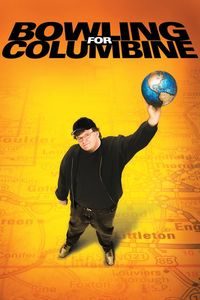
    (In theaters, October 2002) There’s a lot to say about America’s fascination with guns, deaths and violence, and it’s probably for that reason that Michael Moore’s documentary film clocks in at nearly two hours. But don’t worry, because you won’t feel bored at any point: Moore runs from comedy to tragedy in such a way that you can’t help but be impressed even as you realize how he’s manipulating you. We warned, though, that this isn’t as much filmed journalism as much as it’s filmed editorial. Some parts don’t really work, but there’s so much great stuff elsewhere that it doesn’t really matter. As a Canadian, I supposed that I’m having an easier time seeing the absurdity of the American condition… indeed, watching Bowling For Columbine does at time feel like a big love-you letter to Canada. (It helps that Canadian money co-financed the film) Moore comes up with surprising conclusions about violence in America, but there are times where we’d wish for more analysis (or, at least a deeper exploration) rather than some of the showier stunts he pulls. His commentary on the culture of fear is fascinating, though, and the ways he uses in which to make his point are quite effective. Don’t be surprised if you come out of this film liking Marilyn Manson more than Charlton Heston. The real tragedy of Bowling For Columbine, though, is that despite every viewer telling others how good, how insightful and how entertaining it is, people simply won’t bother to see it. In 2002, more people will forget about trash like Austin Powers 3 than people will see Bowling For Columbine. And yet, in 2052, guess which film will be most remembered? If there’s still a United States of America by then, that is…

  • Bait (2000)

    Bait (2000)

    (On DVD, October 2002) I’m typically a fan of those black-crime-comedy film (think Beverly Hills Cop, Blue Streak, Double Take, etc.) and Bait looked like it may be one of these. Alas, there’s a touch too much crime and a tad not enough comedy to make this one work at the appropriate level. While Jamie Foxx does his best to act like a moronic protagonist, the film tries to force him in a dramatic “family man” role, with typically scattered results. In the context of the film, the various drama/comedy directions taken by the script are conflicting and eventually harmful to the film. It’s a good thing, then, that Antoine Fuqua’s direction is rather tight and nervy. Despite the script’s occasional lengths, the film manages to maintain our interest through it all. (Well, except for the end where enough is enough.) While the film isn’t an overall wreck, it falls short of its potential and tries to have it both funny and thrilling without achieving much of either.

  • Lady Be Good, Susan Elizabeth Phillips

    Avon, 1999, 372 pages, C$8.99 mmpb, ISBN 0-380-79448-9

    Faithful readers of these reviews may be excused if they’d rather skip over to the next one. For what I’m about to do will be seen by many as a betrayal of my usual techno-scientific reading standards. A hidden side of my personality will be revealed! Multitudes will be shocked! For I am about to review a romance novel! And, darn it, a romance novel that I liked!

    Lady Be Good came to me in a serendipitous way not dissimilar to how hero and heroine usually meet in romance novels: I was walking down a country road at the end of a rainy day when I saw a book abandoned in a ditch, its pages curled by the moisture. I kept walking, but my bibliophile instincts ultimately took over. I felt an irresistible impulsion to pick up this poor lonely paperback, rescue it from an ignoble, humid end and give it a good home. Dried and flattened, it found a place on my bookshelves.

    Contrarily to what you may expect from the bulk of reviews on this site (SF, thrillers, scientific non-fiction, etc.), I don’t particularly dislike romantic fiction. True, I prefer other genres, but well-written (non-formula) romantic fiction can be a lot of fun if the author knows what she’s doing.

    And Susan Elizabeth Phillips is an author who knows what she’s doing. It doesn’t take a lot of time for Lady Be Good to announce its colors. A Texan golf superstar is pressured into acting as an escort to a prim English lady visiting the area. She assumes he’s a gigolo, hardly suspecting he’s a multimillionaire with attitude problems (hence his temporary suspension from the sport). But then again, little does he know that she’s deliberately trying to acquire a reputation as a bad girl in order to shock some folks back home… This naturally enough, is only the first of many misunderstandings that drive the plot in a typically shticky, but enjoyable fashion.

    Much as Science-fiction fans really dislike it whenever an outsider broadly confuses the genre with Star Trek, romance readers hate it when outsiders lump all romance with the basic Harlequin series. Well-written romance is much more than that, and Lady Be Good is an illustration why. The quality of the dialogues alone is enough to raise this novel a notch above most romantic fiction: It’s sharp, occasionally literate and crackles with intelligence. Characterization is also very well-handled, with enough quirks and convincing traits to endear us to the whole cast.

    As with many other contemporary romances, the love scenes are handled with a candid frankness that can easily compare to some pornographic fiction. There’s something hot for everyone here: One subplot’s denouement even takes the form of a spanking scene!

    Ultimately, though, this is the kind of novel to read for comfort value, for a little escape in a reality where good is rewarded, evil is punished, love leads exceptional people to wild impulsive decisions, everyone has devastatingly effective wit and everything ends really well. This is a romantic comedy of the purest order, so if there’s something that’s not quite right, just wait a few more pages and order will be restored.

    Frankly, I enjoyed it. Life’s too short for me to devote much reading time to romance, but I’m not averse to a few good fun reads from time to time. Good romantic fiction makes you smile and cheer for its characters, which is a pretty good deal compared to a lot of dour “harder” fiction out there. My knowledge of the genre isn’t sufficient to be able to say with confidence that, hey, Lady Be Good may be a shining example of contemporary romance, but I still think it’s a pretty nifty read.

  • Dead Hand, Harold Coyle

    Forge, 2001, 358 pages, C$9.99 mmpb, ISBN 0-812-57539-3

    In a way, it’s a shame that I only began to write full-length reviews in 1996. By that time, I had already read most of the military thrillers available on the market, and jotting down my impressions could have formed an instructive critical evaluation of that genre, while describing the early evolution of the top authors in the field.

    Take Harold Coyle, for instance: He began his career in 1987 with Team Yankee, a story about a NATO/Warsaw pact World War 3 fought in Germany. (In an interesting exercise, Coyle merely borrowed the conflict’s plot from Sir John Hacket’s The Third World War and inserted his characters in the middle of the ground battles.) He would then go on to write exceptional war novels about military engagements in the Gulf (1989’s Sword Point) and Northern Africa (1990’s Bright Star). I wasn’t quite so enthusiastic about 1992’s follow-up Trial By Fire, which took place in a Mexico gripped by a second revolution Mexico, or 1994’s Code of Honor, which dealt with a chaotic peacekeeping action in Columbia. On the other hand, I thought that 1993’s The Ten Thousand was one of the best war novels of the nineties.

    After that, well, Coyle started writing about the American civil war, and I can’t say that this is an event of much interest to me at this moment. So I waited until he came back to a more modern setting. Dead Hand is actually his second contemporary novel in a while, after God’s Children, which is apparently unavailable these days. But no matter; I was quite happy to read Coyle again after a lengthy hiatus.

    Alas, it wouldn’t be a happy reunion.

    The problem certainly isn’t with the premise, one of the neatest concepts I’d seen recently: “When an unforeseen asteroid strikes Siberia with the force of a thousand Hiroshimas, it triggers Dead Hand, the ultimate defence mechanism developed by the Soviets at the height of the Cold War… [Russian] ultra-nationalists are willing to use it as blackmail… a NATO special operations unit is dropped into Siberia, racing against time before a global holocaust is unleashed” [back cover]

    Wow! Asteroids, nukes and special forces? What can go wrong with these three elements? Well, plenty-especially when the writing’s barely adequate. There are flashes of the old Harold Coyle whenever technical matters are discussed, whenever the action really kicks up and whenever he extols the brotherhood of soldiers.

    But if it wasn’t for the name on the cover, I would never had guessed that this is from the same storyteller who knocked my socks off years ago. Dead Hand, as a novel, progresses by spurts and jerks: it never flows as a harmonious whole. In what surely feels like an attempt to dash off a novel too quickly, we get vignettes and snapshots of people doing something, but never a good story that advances naturally. This is fine when Coyle’s still putting all his pieces on the table, but it becomes increasingly frustrating as the narrative progresses.

    The writing itself is also a source of frustration. There are essentially no distinct characters worth discussing: All special forces men talk alike, feel alike and don’t generally act like people we’d cheer for. They do stuff; we read, but never out of any interest for the people, but just for the plot which itself becomes less and less urgent as it advances. It gets worse whenever Coyle steps on his soapbox and starts pontificating about soldiers, their place in society and the age-old traditions of warriors. While I normally enjoy such things, they feel awkwardly tacked-on here.

    In the end, Dead Hand feels like a wasted occasion. Coyle even mishandles the asteroid impact with a scene that should feel tragic but isn’t (maybe because the people involved are such idiots). I even thought I saw technical mistakes, but then again it’s been a while since I was conversant in military acronyms.

    Still, it doesn’t change that I’m very disappointed in Dead Hand. Though I still believe that Coyle is capable of writing great books, this is exactly the type of novel that should act as a warning sign, and surely represents a career low for the author. Tune in sometime in the future for another review confirming or disproving this trend.

  • Angelmass, Timothy Zahn

    Tor, 2001, 430 pages, C$32.95 hc, ISBN 0-312-87828-1

    I suppose it’s an unfortunate coincidence that I ended up reading Angelmass at a time where I was busy thinking about the current state of SF.

    What happened is that I was writing a paper on Terror in Hard-SF (yes, I’m that weird) when I noticed SF’s distinct lack of interest in the singularity, the irresistible acceleration of technological change and its impact on society. This ended up meshing well with John Clute’s concept of “First SF” and how he argues that most science-fiction nowadays has become a shared fantasy, based on outdated assumptions and shared clichés. He (and I, up to a certain point where I’m unable to articulate clearly) argues that in an increasingly Science-Fictional world, SF is increasingly looking backward, afraid of true change and what it may mean to us. It’s not a new notion (it’s been embraced by a few people, and even I have previously written about it other contexts), but it hit me again full-force in late September 2002.

    Alas, I happened to be reading Angelmass at the time. Let me say outright that Angelmass is a lovely book, with undeniable qualities that I’ll describe in a moment. Don’t go around quoting this review (as if) like a pan of the book, because I actually liked quite a bit.

    But sadly, Angelmass is yet another example of the type of current science-fiction that merely treads water in the river of change, not quite swimming backward, but not doing much in a progressive direction either.

    Okay, a word about the plot: Angelmass is by and large the story of two people: The first, Jereko Kostas, is a young scientist drafted by his empire’s intelligence service to infiltrate a research facility in another solar system. The second is one “Chandris Lalasha”, a gifted young female con-artist with uncanny skills and a very good reason to run away from her previous residence. Both Jereko and Chandris eventually end up on Seraph, a planet with a unique form of government based on the use of “angels”-harnessed subatomic particles with the power to make everyone within their field of influence entirely truthful and honest. Each working from their end, they will eventually join forces and discover a rather unpleasant truth about the angels…

    Angelmass is a perfect example of current commercial pure-SF; a decent read that is unarguably science-fiction and a worthwhile product by a real working professional. Timothy Zahn’s been in the business for a few years, and he knows how to deliver a polished product: Angelmass is progressively compelling and his prose delivers the story simply, with an adequate lack of panache. Special notice must be made of the characters, which are defined with an impressive amount of skill and sympathy. They are our gateway to the story, and they are indeed very good reasons to keep on reading. I particularly liked the portrait of the scientist-spy forced to keep on doing interesting research while simultaneously spying on his colleagues; Zahn’s portrait of scientific investigation is interesting enough, and entirely appropriate in a true science-fiction novel.

    There’s not a lot to dislike about Angelmass, in fact. The beginning is a bit slow, and the ending sort of diffuses itself rather than keep building steadily toward the climax. (It’s a good ending, but the lead-up is weaker and longer than it warranted.) The conclusion sort of argues in favour of the bottled genie, which generally annoys me for a whole lot of reasons: How about a synthetic way to re-establish balance?

    But in matters of making SF a newly-relevant genre for today’s world, this isn’t it. Angelmass isn’t meant to innovate or present a new vision of the future: It plays heavily on our pre-existing SF constructions: Planetary networks, galactic empires, space ships, etc… All very comfortable, all very classical. Nothing new, nothing big enough to stretch your mind. But maybe I can recommend Zahn’s novel as a solid SF adventure, with true SF content and plenty of good characters, if only for readers not as obsessed about a new mission for Science-Fiction as I was when I was reading Angelmass. Heck, give me a few more months and I might even rave about the book…

  • Creature Tech, Doug TenNapel

    Top Shelf, 2002, 208 pages, C$23.99 tpb, ISBN 1-891830-34-1

    Damn, this is a cool book.

    If you’re a geek like me, just think of what you think is cool. How about giant space eels? Well, okay, me neither. But how about a shotgun-wielding giant mantis? A young superstar Nobel-prize-winning protagonist? A government warehouse stuffed with dangerous alien technology? Demons? The Shroud of Turin? SDI Lasers? Possessed hellcats? Giant fights, musings on the nature of faith and a non-sappy romance? All of that and more is in Creature Tech, one of the most unique books you’re likely to read this year.

    It stars one Dr. Michael Ong, a hip prodigy scientist drafted by the American government to study the contents of some 750-odd crates of alien technology accumulated over the years. Forced to move back to his native small town of Turlock (where he has to deal with his estranged father, an old high-school classmate and the redneck locals), he is soon forced to deal with an immeasurably more dangerous situation: A freak lab accident frees a murderous monster, and by the end of the first fight, Ong is saddled with a parasitic alien life-form with some very curious properties. He’ll need all the help he can get, given that he has also unleashed a ghost with grandiose world-domination plan, demonic help and the Shroud of Turin, an artefact with complete regenerative powers.

    Whew! We haven’t even covered the first quarter of the book! All of that and then some is available to you in almost 200 pages. (The book isn’t paginated, which make it a bit difficult to refer to specific passages when commenting the story) Believe me, this is a comic book worth your money-

    -what? Oh, yes: Creature Tech is a graphic novel, a standalone comic book. But petty genre-distinctions be damned; this is one of the coolest things I’ve experienced in a while, books, movies or comics put together. In fact, it’s not an accident if Creature Tech reads a lot like a film (for better or worse, depending on your outlook) with a classical monster-movie structure; interviews with the author have revealed that this was a story first written as a script and then adapted to comic-book format when it became obvious that this wasn’t going to be made. (But what is hot is hot, and so the latest rumours have it that Creature Tech‘s been optioned by Hollywood. Go figure.)

    No matter, though; as in all media, what counts isn’t as much originality of structure as much as it’s the skill of the execution, and here is where this book truly delivers. Laugh-out-loud-funny dialogues alternate with occasional moments of deep poignancy and even some musings on the nature of faith and rationality. The art isn’t as crisp as I would have liked it to be, but I think it’s got plenty of personality, especially with the moody black-and-white compositions (fabulously enough, scenes that take place at night are inked white-on-black; nice!). Creature Tech fires on all cylinders and delivers pretty much everything you’d want from a story. Thrills! Chills! Romance! Comedy! Run and get it already: This is cool stuff! Don’t fret about the cost: If Creature Tech appeals to you as much as it did to me, you’ll end up re-reading it several times anyway.

    As for your reviewer, well, Creature Tech also represents an interesting departure of sorts. After years of reading Internet luminaries like Scott McCloud et al. boldly proclaim that the Internet will broaden the market for comic books by introducing “fringe” readers (like me, I suppose) to worthwhile books by global word-of-mouth, it finally happened to me. An article about Creature Tech by Aint-it-Cool’s trusted “Professor Moriarty” made me aware of Creature Tech‘s existence. I assumed that the book would remain unavailable up here in frosty Ottawa, but was happily proven wrong by a fortuitous visit to the neighbourhood comic book shop.

    But regardless of how the book ended in my hands, I just want to thank Doug TenNapel for producing such a cool story. Somehow, I wanted to read such a book for a long time, and there it is!

  • Reinventing Comics, Scott McCloud

    Paradox Press, 2000, 231 pages, C$31.00 tpb, ISBN 1-56389-695-8

    Panel 1: The reviewer is sitting in front of the computer, but he’s reading Scott McCloud’s Reinventing Comics rather than type at the keyboard.

    Panel 2: Same. The wall clock goes tic-tic-tic-tic…

    Panel 3: The Reviewer looks at the reader and quickly snaps the book shut. “Oh, excuse me. I was jotting down references when I just started re-reading everything again.”

    Panel 4: Angle on the book’s cover, showing a hex-armed caricature of McCloud handling comic book iconography. “This is such a fascinating book that it’s hard to resist the temptation.”

    Panel 5: Close-up on the reviewer’s face, his big angular glasses dominating most of his face. His hair’s much shorter than McCloud, and he does sport kind of an unkempt beard. “It seems a little bit amazing that I’ve managed to review books on a monthly basis for six years without mentioning Scott McCloud’s work at least once.”

    Panel 6: A younger Reviewer at the University of Ottawa’s Library, enthralled by McCloud’s Understanding Comics: “I first read McCloud’s first book in 1995, thanks to the good people at the University of Ottawa Library.”

    Panel 7: Short collage of Understanding Comics’ iconography, from the “Sequential art” drawing, pictorial vocabulary pyramid, scene transition chart and, of course, McCloud’s simplified alter-ego: “Published in 1993, Understanding Comics became an instant classic. Its influence was deeply felt in areas far removed from simple comics, as it explored the meaning of art, iconography and all sort of neat things.”

    Panel 8: The Reviewerat a Coles cash register, circa-1995, plunking down some cash for a copy of Understanding Comics: “I liked it some much, I went out and bought a copy. I end up re-reading portions of it every year or so.”

    Panel 9: Back on the Reviewer at his computer: “Unfortunately, though I may be sympathetic to the field, I’m not plugged into the comic book grapevine. I hadn’t even heard about a sequel until recently.”

    Panel 10: The Reviewer at the local Silver Snail comic book shop, Creature Tech in hand, pulling a copy of Reinventing Comics off the shelf with a big grin in his face: “Naturally, I took care of that as soon as I could.”

    Panel 11: Reinventing Comics partially obscured by the shadow of a well-lit Understanding Comics: “McCloud’s first book was so successful that any follow-up act will suffer from any comparison.”

    Panel 12: The reviewer duct-tapes the joint in the middle of an arrow branded with both books’ cover: “But it’s less of a sequel than an expansion on the themes defined in the first volume.”

    Panel 13: The Reviewer at a lectern, clenched fist raised (grasping a crumpled X-HUMANS comic book), a huge FIGHT THE STATUS-QUO poster behind him: “While Understanding Comics was an explanation, Reinventing Comics is a call to arms.”

    Panel 13: Overweight man-on-the-street muttering “that Superpeople stuff…”: “Now that we know what comics are and what they can be, it’s time to make them what they ought to be.”

    Panel 14: A diagram showing McCloud’s “Twelve Revolutions” [P.23]: “To this end, McCloud defines twelve ways to make comics evolves toward increased maturity. While some of them are familiar-”

    Panel 15: A university professor showing a comic book to a classroom of students: “-Like comics as literature, art, worthy of public and academic attention,-”

    Panel 16: McCloud’s dollar-shaped “Industry Monster” [P.71]: “-others are more technical, like a discussion of creators’ rights and the re-invention of the industry.”

    Panel 17: A picture of a randomly-selected crowd in a park: “McCloud also highlights comics’ essential need for diversity of gender, race, status or genre.”

    Panel 18: Pixellized low-resolution images of comic books surrounding a fuzzy web of computing devices: “He concludes the book on the three digital revolutions that will soon affect comics, from form to production to delivery.”

    Panel 19: Reinventing Comics‘s cover is shown, the right half heavily pixellized: “In fact, this book spends almost half of its length on the digital revolution.”

    Panel 20: A shiny Understanding Comics is placed besides a scruffy-looking Reinventing Comics: “Explicitly written in 2000, McCloud’s follow-up dates itself rather quickly whenever discussing technical issues.”

    Panel 21: Both books are enclosed in a protective glass. A security guard says “First Editions! Buy your own!”: “But then again, McCloud’s discussion of the issues is mostly theoretical, avoiding specific products and projecting far in the future. It’ll endure, don’t worry.”

    Panel 22: McCloud’s “tree of justification” [p.48]: “Especially when parts of it are so good, like his discussion of the roots of art-”

    Panel 23: The Reviewer standing in his local Comic Book Shoppe “-or his lucid explanation of the comics business circa 2000, which stands true for other publishing industries as well.”

    Panel 24: The Reviewer weights, Blind-Justice-like, both books in his hand: “While Understanding Comics is a work of brilliance, Reinventing Comics is merely very good.”

    Panel 25: The Reviewer stands in the middle of four intermingling groups of people: badly-dressed geeks with glasses, lugubrious young people with berets, overweight fan-boys and professorial middle-aged intellectuals. “Like its predecessor, its impact won’t be limited to the comics field, but will spill over in arts, academia and technical circles.”

    Panel 26: The Reviewer steps in the local Chapters bookstore: “But there’s one area where it’s far more effective, and it’s in convincing readers that everyone can contribute something to the next comics revolution.”

    Panel 27: The Reviewer picks up a book at the Graphic Novels section. Prominently displayed are copies of Ghost World, Watchmen, Sam & Max, Transmetropolitan, Doonesbury and -why not?- Small Favors: “I mean, I know my comic book classics, but is it enough?”

    Panel 28: The Reviewer, his find in hand, walks past a Comic Books section overstuffed with X-People, X-Stuff, X-Super, X-Steroids, X-13, X-Crement, X-Asperating and other muscle-bound titles: “I’ve got friends with forty-bucks-a-week habits at the comic book shop, but are they truly comic book fans, or just addicted to super heroic power fantasies?”

    Panel 29: The Reviewer is stuck waiting in line at the check-out counter: “Is this one of these cases where if you’re not part of the solution, you’re part of the problem?”

    Panel 30: The Revi
    ewer hands a copy of Maus to the cashier, specifying “Gift-wrapping, please!”: “If so, I’d like to help.”

  • Deadly Décisions, Kathy Reichs

    Pocket, 2000, 368 pages, C$10.99 mmpb, ISBN 0-671-02836-7

    Sigh.

    Another year, another Kathy Reichs novel.

    Even before opening the book, I knew what to expect. Cue a premise stolen from Québec’s newspapers. Cue Temperance Brenner, champ forensic pathologist, suckiest character judge ever. Cue one of her relatives conjured out of thin air, visiting Montréal just in time to get killed, brainwashed, kidnapped or otherwise hurt by Brennan’s latest cause du jour. Cue plot “twists” that are blindingly obvious to everyone but Brennan, self-imposed gratuitously dangerous situations, silly coincidences and implausible links between characters and the case.

    Sigh. Onward.

    After riffing off the sordid “Temple de l’ordre solaire” sect case that so dominated Québec news for a while in Death du Jour, Reichs here takes on the biker gang wars that ripped through the province in the late nineties. It is, granted, a solid premise: In real-life, the gang wars left behind dozens of dead bikers, taking with them a few innocent victims that happened to be at the wrong place at the wrong moment. (Indeed, most Quebec criminal statistics include a little asterisk during the late nineties specifically excluding biker-related violent deaths)

    From the first few pages, it’s obvious that Reichs is once again liberally borrowing from headlines: The first few pages describe how a little girl is brought in for autopsy, an unfortunate victim of a misguided shooting. The novel even explicitly refer to the famous real-life 1995 Fontaine murder, in which a young boy had died as he was bicycling near a car that had been wired to explode on ignition. [P.28]

    That’s the first of Reich’s many, many tics that pop up in this novel. This time, it’s her nephew who comes up north for a visit, arriving just in time to be befriended by the bad guys and dragged to the finale’s bloody shootout. Oh well. There’s also a “plot twist” involving a biker mole that anyone with half a brain can see coming as soon as the mole is ominously introduced. There are awful coincidences in which parts of a victim are to be found not only in Montréal -the series’ main location- but also in North Carolina, from where -surprise!- Brennan just happens to be.

    I wouldn’t mind if that only happened once in a while. But this is Reich’s third novel, and the silly coincidences involving members of her family and/or North Carolina are already becoming a regular occurrence. And I still haven’t mentioned the usual stooopid scene in which Brennan does something completely moronic (and out of character) in order to advance the plot. (In this case, she jogs to a biker bar.)

    After my kvetching, you’d be justified in asking why I keep reading her darn novels even as they evidently annoy me so much. The answer is, of course, that Brennan’s stuff all takes place in Montréal against a predominantly French-Canadian background. Whether her usual shtick drives me nuts or not is mitigated by seeing a major mystery series taking place in my backyard, so to speak. In Deadly Décisions, I was occasionally able to picture exactly where Brennan was, based on my visits at these places. This outsider’s view on Québec is one of the main draw of the series for me, despite everything else.

    It helps, of course, that for all her faults, Reichs writes books with a definite narrative drive. However easy and cheap some of her plot shortcuts may be, there is a real desire to read forward late in the night. That, by itself, is more important than densely plotted novels about which I couldn’t care less. Plus, the technical details are a lot of fun for Hard-SF/techno-thriller fans like me. Am I waiting for Reich’s next novel? Well, of course I am.

    Sigh.

  • The Wallace and Gromit Trilogy (1993)

    The Wallace and Gromit Trilogy (1993)

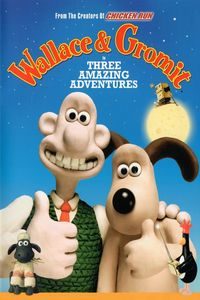
    (In theaters, September 2002) I call classic! I call comedy! I call genius! I even call for you all to rush out and get a copy of the DVD if you haven’t yet seen the “Wallace and Gromit” trilogy. A series of three animated shorts about the adventures of an inventor and his dog, Wallace And Gromit works really well on a wide variety of audiences. While their first feature (“A Grand Day Out”; fun but forgettable) leaves me mostly unaffected, their second one (“A Close Shave”; classic sheep comedy!) and the third (“The Wrong Trousers”: it even throws in a penguin!) are pure genius. The sheep-formation and toy-train-pursuit sequences alone are worth rushing out to your nearest video store. I won’t spoil anything more… just go, already!

  • The Complete Idiot’s Guide to Being a Model, Roshumba Williams & Anne Marie O’Connor

    Alpha, 1999, 391 pages, C$25.95 tpb, ISBN 0-02-863190-0

    I think that I know what you’re thinking: “Why has he read a book about becoming a model?”

    Hey, my mind works in mysterious ways, and it doesn’t take much more than a three-dollar book promising to reveal all secrets of the modeling field to interest me. I know next to nothing about that particular profession, but I can’t resist the attraction of random arcane knowledge. So I grabbed the book. And read it. And will now review it. You can send your complaints to our service department.

    At least I’ll admit that that I’m not the target audience for this material. This Guide is very explicitly written for teenage girls. It’s hard to ignore questions like “Are you old enough to A>Cross the street, B>Baby-sit, C>Drive, or D> Get your ears pierced?” [Front Inset] as a potential clue to the desired market for this book. Heck, before reading the book, I didn’t even have any idea who was Roshumba Williams!

    It turns out that she’s a relatively well-known black supermodel with an extensive portfolio of work. If we’re to believe the cover blurb, her years of experience in the field have given her the depth of knowledge required to explain the industry to interested young girls. Indeed, that’s what this Guide does: It introduces the business in general terms, then describe how a model can make it to the top, stay there and diversify her interests (financial, artistic and otherwise) in preparation for her modeling post-career.

    This is a book meant, like many of the other Guides I’ve read, to be bought by a beginner, re-read by a rising star and re-written by a seasoned pro. In passing, Williams gives a surprisingly complete view of the fashion industry, from the slang to the potential pitfalls, war anecdotes and unexpected rewards.

    It’s not as if she pulls any punches. She’s brutally honest in what it takes to be a model (work, work, work and, oh, don’t apply if you’re less than 5’8”), how it’s not easy money and which kind of predators cluster around models. There’s a chapter on substance abuse, excessive shopping, eating disorders and parasitic boyfriends. Fittingly enough for the target audience, there’s even a chapter that provides advice for parents!

    For chumps like me with no previous knowledge of the fashion biz, Williams’ discussion of the seven modeling types, the details of a model shoot, the classification of “fashion markets” (Ottawa definitely isn’t!) and the mechanics of runaway modeling are fascinating beyond belief. I would have appreciated many more pictures, but I guess there’s probably a whole bunch of licensing issues involved in illustrating her subject matter. Still, as a guy I can only bitch about the fact that she spends pages discussing supermodels without once showing us what they look like.

    With these kind of “celebrity” books, it’s always a risky thing to try to guess how much of the book she really wrote, and which part was put together by “the second writer”, in this case Anne Marie O’Connor. Not matter here, though; Whether Williams wrote most of it on her photo-shoot high chair or O’Connor re-wrote substantial portions of it in her overstuffed office, the whole Guide is infused with Williams’ personality and certainly feels as if she wrote most of it. There are a few exceptions (some material on agencies feels as if it’s adapted from a magazine article), but as someone with closer affective ties to writers than to supermodels, I’d like to congratulate Anne Marie O’Connor on, presumably, a job well done.

    Keep in mind, though, that even if I may feel informed and satisfied by the book, I lack the knowledge required to put a stamp of approval on the content of the book; I’ll leave those reviews to pros of the field. But I certainly feel as if I learned a lot from the Guide, and intend to refer to it once in a while, assuming that I’ll eventually need urgent fashion reference information.

    I’m just having a hard time picturing my visitors’ reaction to seeing that book on my reference shelves, though…

  • The Tuxedo (2002)

    The Tuxedo (2002)

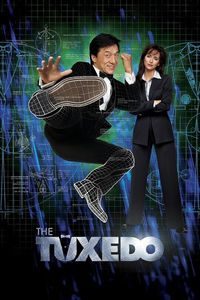
    (In theaters, September 2002) I’m a huge Jackie Chan fan, but even that particular indulgence fades fast when confronted to such dreck as The Tuxedo. A dumb premise handled without flair hasn’t stopped Chan in the past, but this time, the whole massive apparatus of Hollywood seems to have damaged his capacity to wow even the most lenient audiences. Sure, Chan’s not getting younger, but it’s about time he realized that fact on something other than a purely physical level: His character here might be sympathetic if he was a scrawny twenty year old, but as Chan has sped past fifty, his lecherous low-life antics feel all wrong for the role he’s chosen to play. The other thing that make The Tuxedo so hideously miscast is that the gimmick (a high-tech tuxedo that takes control of your body for amazing feats) doesn’t work on someone we’re already expecting to triumph over all. Owen Wilson would have been a fine lead. Ed Norton would have been a great lead. But Jackie Chan? C’mon, we’re already expecting him to beat’em all up. Surprisingly enough, Jennifer Love Hewitt is one of the few things that actually does work well. (But then again, excuse me as I once again revel in the memory of seeing her as a damp wavy brunette with glasses… okay, sorry) The rest of the film is a big dumb American action film: Few laughs, few cool scenes, stupid gags, nonsensical developments… the list goes on. Jason Isaacs (a fine, fine choice as the next James Bond) is taken out of the game way too early, the end fight isn’t as impressive as some of the preceding scenes and frankly, the film’s just written for retarded kids. The Tuxedo is, without a doubt, Chan’s biggest American dud since his Rush Hour breakthrough. Here’s hoping he does better the next time.

  • Trapped (2002)

    Trapped (2002)

    (In theaters, September 2002) A recrudescence of kidnapping reports in the media during summer 2002 forced this thriller to be released without fanfare, quietly dumped in theatres without much publicity surrounding it. This is quite unfortunate, because Trapped is an effective thriller, a good suspense film featuring good performances and a tight script. Kevin Bacon shines (as usual) in his portrayal of an experienced kidnapper who has perfected the crime until it becomes “a machine based on fear”. What he doesn’t know is that his latest attempt won’t go so well when both mother and father turn against him. There’s plenty of tension here, helped by a mechanically apt script that cranks the suspense like it’s supposed to do. The first half of the film is better than the second, as a “personal” motivation comes to ruin the more terrifying business-as-usual attitude of the antagonist. The film also does change tone radically in its last few minutes, with a thrilling blam-bang final sequence that teaches a few things to most of the “pure” action movies of the year. There is a lot to like in Trapped, especially when you’re not expecting much from it. Watching a nude Courtney Love being tortured by Stuart Townsend might not be anyone’s idea of a good time, but that particular scene is only one of the few interesting surprises about a film that should have done much, much better at the box-office than it has.

  • Swimfan (2002)

    Swimfan (2002)

    (In theaters, September 2002) Say what you want about this being a “Fatal Attraction teen rip-off” and you’d be right, but it doesn’t really mitigate the surprise that this is, in fact, an adequate thriller. Sure, the dialogues are lame, motivations are nebulous, plot contrivances abound and you can see so-called “developments” coming a mile away. But everything is helmed with some confidence, even some professionalism, and the overall result can hold anyone’s attention in the most basic way. Jesse Bradford manages to keep his dignity, but once again it’s baby-faced Erica Christensen (as the motiveless antagonist) who steals the show with a flashy role. Do try to ignore, though, the super-technology, the omnipotence of the antagonist and the ridiculous “artistic” touches. The plot steals liberally from every psycho-bitch film ever made, even though none of the teen characters have much of a psychological background (nor deep enough affective stakes) in order to make it work. (Act like a pretentious cinema critic, and you’ll see this as post-modern irony or kids playing stalker-dress-up. In this case, is it characters pretending to be older, or the audience wishing they were?) No surprises here, except for the fact that it plays much better than you’d expect it to.

  • Scooby-Doo (2002)

    Scooby-Doo (2002)

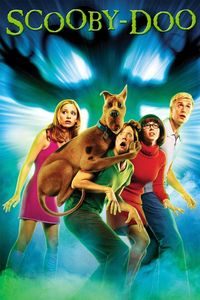
    (In theaters, September 2002) This constantly skirts the edge between being an earnestly dumb kid’s film and becoming a witty take-off for adults. Pot jokes (“My name’s Mary-Jane / Really? That’s, like, my favorite name!”), self-referential humour (“you’re only good at being captured!”) and some risky cleavage (but then again, Daphne was always the hottest) pepper the script as if someone had hastily re-written it without the producer’s consent. It’s a shame that this vein couldn’t have been pushed even further, because as it stands now, Scooby-Doo is pretty much a dud. The “Scooby-Doo” creature design is one of the ugliest things to disgrace the silver screen this year, and the film features unconvincing sets that just seem thrown together without effort. Sure, the film moves with a certain expediency and doesn’t leave you too bored until the excruciating finale, but still… I suppose it could have been much, much worse, but that’s praising the film with very slight compliments. I suppose that the DVD won’t even restore the long-rumoured Velma/Daphne kiss….