Author: Christian Sauvé

  • Free Guy (2021)

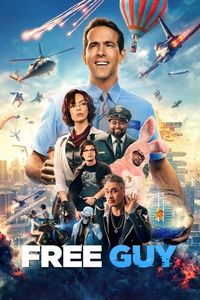
    Free Guy (2021)

    (Disney Streaming, October 2021) Hollywood hasn’t always known what to do with videogames. (Perhaps one day, we’ll gain perspective on the relationship between the two rivals for their audience’s time, and talk about it in the same way we look at Hollywood’s early efforts to talk about television without dismissing it.)  But that’s changing, as videogaming is firmly into the mainstream, and more filmmakers have experience playing games. Free Guy is interesting in many ways, not the least of them being how it acknowledges the toxicity of online gaming, while still delivering a fundamentally optimistic and upbeat film. A comedy taking a very fanciful look at an online gaming universe that spawns a self-aware non-playing character, Free Guy makes a lot of mileage out of having Ryan Reynolds as its headliner. His irrepressible charisma, combined with his well-established smiling personas, makes him an ideal actor for the role of a character coming to life and changing the virtual world around him. (Taika Waititi also has a featured role as an overbearing tech magnate.)  Crammed with more jokes, references and cameos than I could grasp, Free Guy is a buoyant science-fiction comedy that feels very much of the moment—the merger of Disney with Fox having happened as the film was in production, it’s barely a surprise if the film throws in a few references to the Avengers and Star Wars under the common umbrella of the Mouse. It’s simply a fun film, and that does set it apart (slightly) from a lot of the doom-and-gloom of the moment. I had a surprisingly good time watching it (despite being annoyed at some of the plotting along the way) and Free Guy should appeal even to those without an encyclopedic knowledge of videogames.
  • Black Sunday (1977)

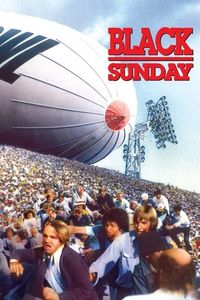
    Black Sunday (1977)

    (On Cable TV, October 2021) I don’t normally like the grittiness of 1970s filmmaking, but sometimes it’s just the right thing for the film, and so Black Sunday is a pretty good example of form following function. A type of thriller that has been gradually abandoned by Hollywood, it adapts the Thomas Harris novel (yes, that Thomas Harris) into an efficient thriller. Thick in mid-1970s politics, it features Palestinian terrorist groups allying themselves with a troubled Vietnam veteran to hatch a dastardly plot to kill as many people as possible at the Super Bowl. Unusually enough, the production features a copious amount of footage shot at the 1976 Super Bowl itself, with main characters looking at the crowds from the sidelines of the game, inspecting the stadium for signs of danger, or even running behind the end field to react to a sudden discovery. This helps a lot in ensuring the credibility of the thrills—as do the lavish aerial sequences. At a time when action filmmaking usually had to satisfy themselves with approximations, Black Sunday almost gets it right throughout—the exception being the crash of the Goodyear blimp into the stadium (not a spoiler, given that it’s the image used for the cover of the book and the movie poster), which suddenly degenerates into a blurry frantic mix of close-up shots and panicking crowds. (The production history of the film makes for interesting reading.) As much as I like Black Sunday when it works, I do wish it was shorter—there’s a lot of pointless throat-clearing in its first hour, and the action climax is easily a few minutes too long for its own good. Robert Shaw and Bruce Dern are fine as (respectively) the Mossad agent and the American terrorist battling it out, but Marthe Keller is not my picture of the beautiful operative that the film keeps identifying as the near-magical influence on the American renegade. Director John Frankenheimer was, at that point in his career, a veteran of big-ticket thrillers and that experience shows in the film at its best. It clearly fits within the disaster film trend of the 1970s, and still works remarkably well today. I’m not saying that Black Sunday should be remade with modern pacing and CGI spectacle… but I’ve seen worse ideas.

  • French Exit (2020)

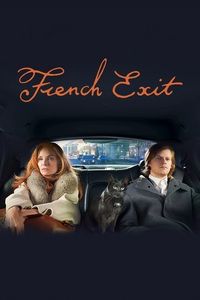
    French Exit (2020)

    (On Cable TV, October 2021) As I’ve mentioned in previous reviews, character-based films are best when they’re studies of entertainingly flawed characters, and it doesn’t take long in French Exit to understand that Michelle Pfeiffer plays a woman with a substantial number of issues. The defining event in her history seems to have been not calling the authorities for a few days (and a skiing vacation) after discovering her husband’s corpse, but that’s far from the only noteworthy quirk in her character. As the film begins, she decides to react to her lack of money by moving to Paris with her son (not really asking for his opinion beforehand) and burn through the rest of her funds with the intention of killing herself once the bill comes due. The film gets quite weird as it goes on, with steadily bigger dips into fantasy as the dead protagonist’s husband starts talking through the black cat she’s lugging around. The weirdness literally accumulates in the Parisian apartment where she makes her last stand, in the form of various characters that join the fun. It’s clear that Pfeiffer is the best thing about French Exit, closely followed by a handful of individual scenes that show her lack of grace in the face of her planned exit. Unfortunately, there’s not much more to the film—the overarching story is dull and empty, the conclusion only makes sense in the absence of any new material, and the weirdness of the film segments fails to build up to something that would wrap it all up in a more meaningful whole. We’re left to see Pfeiffer chew scenery (or set it on fire), which is not a bad time per se, but feels aimless in the absence of a plot strong enough to sustain her character. As much as we can claim that character studies don’t have to have a plot, it’s always better when they do.

  • The Virtuoso (2021)

    The Virtuoso (2021)

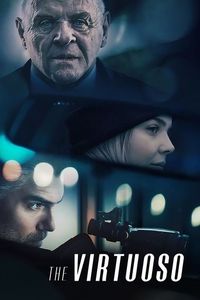
    (On Cable TV, October 2021) In many ways, The Virtuoso is your average small-town assassin film—you know the one: our super-assassin is given one last assignment, and that happens to take place in a very small town where everyone knows everyone, except the lead character. It’s obviously a trap of some sorts, but the film plays along some very familiar tropes—what kind of assassin accepts a brief with such a vague description of his target and an encouragement to investigate? This is the kind of genre fare that fans will like and others won’t. But what saves The Virtuoso from terminal boredom is the addition of a dispassionate voiceover from the main character describing the inner thinking process of a master assassin, the details that go in his planning and the decisions he makes along the way. As a way to bridge the gap between a character-driven narrative and the screen (it’s not adapted from a novel), it’s more interesting than had it not featured the narration. But there’s a limit to what an intriguing narration can do to save a bland, dumb story. Even worse: the film doesn’t even have the decency to end on a positive note, making the entire film feel even more pointless. Anson Mount plays the lead (this is a film in which very few characters are credited as having names), so if the film lured you with the mention of Anthony Hopkins, be forewarned that Hopkins’s involvement in the film is limited to a few barked assignments, a sad Vietnam story and a few more enigmatic pronouncements. There are a few ways in which The Virtuoso could have developed into something slightly more interesting than a low-end genre thriller, but writer-director Nick Stagliano seems content with the least amount of effort. Overhauling the trite plot would have required a lot more work than reworking the narration.

  • Smoke Signals (1998)

    Smoke Signals (1998)

    (YouTube Streaming, September 2021) As of 2021, September 30 is designated in Canada as a National Day for Truth and Reconciliation. A federal holiday but not exactly the kind of day fit for barbecues and celebration, it’s intended as an opportunity to reflect on the relationship, historical and present, between First Nations and other Canadians. I did my part in my own way — self-educating on related topics during the day, and pushing a landmark Native American film to the top of my evening watch list. To be fair, Smoke Signals often felt as if I was cheating — it’s so entertaining and occasionally so funny that it felt like a treat more than self-imposed viewing. Often hailed as the first widely distributed film entirely written, directed, co-produced and starring Native Americans (there were earlier examples, but none were as well known), Smoke Signals takes us on an evocative road trip, as two young men make a trek from Idaho to Arizona to gather the remains of a dead man with a complicated legacy. Adam Beach plays the dead man’s son, an aggressive young man who remembers his father as abusive before he left forever. Sitting alongside him is Evan Adams as a far meeker friend who still sees the dead man as a hero, having saved them (they were told) from a house fire as babies. Leaving the reserve is an adventure by itself, but it’s only the start of a journey that gets both protagonists to confront their own perception of what it means to be a Native American, and discover some troubling revelations about the dead man. Confidently directed with many cinematic moments, Smoke Signals is easy to watch even when it deals with tough issues. The heartfelt story is wrapped in just enough self-aware humour as to make everything easy to follow and enjoy. It’s an American film, but the ground covered here just as easily applies to Canadian First Nations. The insider’s perspective means that the film dispenses with clichés, or engages with them — it feels real and that may explain why the film has aged so gracefully, even nearly twenty-five years later. There’s a reason why Smoke Signals is still a reference in lists of Native American cinema — in fact, the lack of high-profile follow-ups is troubling. Canada has seen a small but worthwhile wave of First-Nation-led filmmaking in the past few years, and if the films themselves can be quite good, it hasn’t led to a breakout hit or cultural reference. There’s clearly some work to be done there too.

  • The Grass Is Greener (1960)

    The Grass Is Greener (1960)

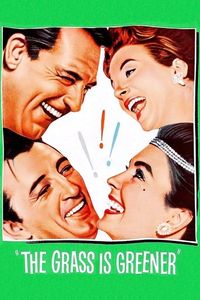
    (On Cable TV, September 2021) The cast alone would make The Grass is Greener worth a look: Robert Mitchum playing the cad trying to romance Deborah Kerr away from Cary Grant, while Jean Simmons looks on in amusement? Yes, that is the kind of film that even twenty-first viewers can enjoy. It’s not that good of a movie, but it has enough high moments to be fun. Grant isn’t quite in his persona here, as a British aristocrat fallen on hard times that must find a way to keep his wife away from a charming American oil baron while keeping the decorum we expect from his social class. As expounded in long but enjoyable soliloquies to other characters, too forceful a response would drive her farther away — he’s looking for a better solution. That eventually leads him to invite his rival to the estate for a weekend, and eventually initiate a pistol duel (!) in the corridors of the mansion. Mitchum plays an interesting mixture of wolfishness in a meek presentation, being utterly charming even as he tries to steal a wife away from her husband. Kerr does modulate carefully between her temptation and her duties as a rather bored wife, while Grant couldn’t have been better in a tricky role. It’s all presented in the very entertaining style of the 1950s looking back at the sophisticated Lubitschian comedies of adultery of the 1930s, but clearly anticipating the more permissive 1960s. There’s one standout sequence from director Stanley Donen in which split screens are brilliantly used to show parallel conversations taking place by phone — the rest of the film is far more sedate from the directorial aspect, but that one scene is terrific. The cast is great, but the story also works well. The Grass Is Greener all wraps up in schemes revealed, the lead couple reuniting and the oil magnate getting a quirky American heiress for his trouble. In other words, the kind of amusing romantic comedy that pokes at temptation but makes sure everyone goes home happy.

  • Le mystère Méliès [The Melies Mystery] (2021)

    Le mystère Méliès [The Melies Mystery] (2021)

    (On Cable TV, September 2021) The more I learn about the history of cinema, the more I understand how perilous film preservation can be. There are a mind-boggling number of examples of films that didn’t survive to the present, or nearly didn’t survive — Oscar-nominated films that we can still see because one single copy survived to be restored, for instance. George Méliès’s place in cinema history is now secure as the first showman of the medium and the first to truly understand what was possible with cinematic special effects over theatrical production. But as Le mystère Méliès demonstrates, being able to see a good fraction of his body of work is a recent and hard-fought victory. Méliès, after all, burned down his entire film archive in a fit of despair back in the 1920s, and for decades there was no comprehensive catalogue of his work. Five hundred short movies at the genesis of the art form: gone. What re-emerged over the years was pieced together from private collectors, archive donations and, in one recent spectacular find, film negatives sent to the United States during Méliès attempt to establish an American distribution company and then forgotten. Le mystère Méliès doubles both as a succinct examination of Meliès extraordinary life (once a giant of cinema in middle-age, reduced to being a shopkeeper as a pensioner, then gradually rehabilitated late in life), and as a thriller in which contemporary film archivists manage to find and preserve a good chunk of his catalogue. Leonard Maltin narrates with charm and expressiveness, while archive footage gives us a generous glimpse at Méliès’s surviving body of work. As a deep dive into early cinema, it’s unusually accessible and entertaining — and as a primer on how narrowly some films can survive to the modern age, it’s quite enlightening. A too-short sequence even shows how digital techniques are being used to piece together movies from damaged reels. Le mystère Méliès is well worth a look—not just for cinema historians, but anyone interested in the medium.

  • His, Hers & the Truth (2019)

    His, Hers & the Truth (2019)

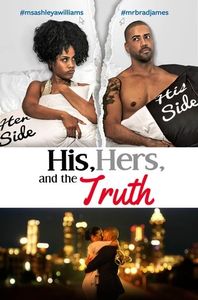
    (On TV, September 2019) The advantage of having something near ten thousand movie reviews on a backwater website is that I can now bury deep-down secrets in one of those reviews and be sure that no one will ever read it. And this is my confession, dear non-existent reader: If I regularly watch romantic comedies on BET, it’s strictly for the women. Where else can I be reasonably sure to see so many beauties smiling and having fun? Unlike Hallmark or Lifetime movies, BET doesn’t fear upsetting viewers by showcasing beautiful women. I surely got what I was looking for in His, Hers & The Truth, as female lead Ashley A. Williams is simply gorgeous here as a young urban professional telling the rocky story of her romance despite a very, very bad start. It’s not exactly an exceptional film even by romantic comedy standards: the borrowing from other sources is blatant (specifically the “males and females can’t be platonic friends,” theme from When Harry Met Sally). The framing device of having multiple versions of the same events is not used very effectively, the third act becomes a bit of a mess and you can sense the screenwriter throwing in arbitrary obstacles just to keep the story running longer. On the other hand, the film’s first half is quite a bit better than it had any right to be — the heavily dialogue-based opening amusingly features the male character behaving abominably during a terrible first date, and the lead couple is exceptionally likable. His, Hers & The Truth gets more muted at it goes on, as the story becomes more contrived, there are some awkward time-skips and the dialogue becomes both less polished and less important. Still, it’s a breezy romantic comedy at the best of times. Williams is superb, funny and likable, while co-star Brad James manages to keep the audience on his side despite a very poor introduction. It wraps up happily (perhaps more happily than you’d expect from the framing device), and there is strong comedic support from Cocoa Brown and Dorien Wilson as relationship counsellors not necessarily any wiser than the lead characters. It could have been better, but the film can be very compelling at times and that’s all I’m asking for. Well, that and the ladies.

  • I Am Chris Farley (2015)

    I Am Chris Farley (2015)

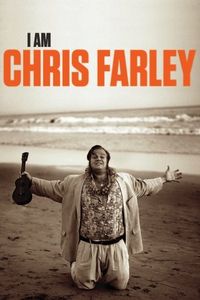
    (On TV, September 2019) I wasn’t much of a Chris Farley fan — his comedic appeal is undeniable, but I always felt it was better-suited to others. In I Am Chris Farley, documentarian Derrick Murray uses the familiar “I Am” formula to describe Farley’s meteoric rise and abrupt death. Much of the film consists of interviews with fellow comedians and SNL alumni, interspaced with clips from Farley’s best-known sketches. Unlike some of the other films of the series, this one doesn’t allow any niceties regarding Farley’s drug abuse — it’s all handled respectfully, with testimonials from friends (and some very insightful commentary from people in the same celebrity sphere as Farley was), but there’s no mistaking the criticism of his behaviour. Perhaps the most entertaining aspect of the documentary ends up being the insider’s look at comedy by seasoned comedians — from Adam Sandler (with bad audio), Bob Saget, Tom Arnold, Dave Foley and such. Some sketches are dissected almost beat-by-beat, as other professionals try to explain how a comedian can transform written material into something else (or outright steal a sketch with a single line). There is some repetitiveness to the clips used, rerunning the same sketches a few too many times. Still, the whole thing does stand as an eloquent testimonial to Farley’s oversized personality, his prodigious appetites, his almost childish attitude toward many things, and how he could elevate material through performance. It may not be the best “I Am” biopic, but it’s solidly in its good tradition.

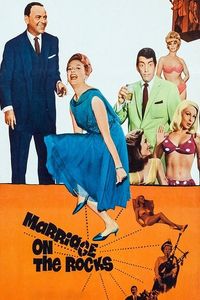
  • Marriage on the Rocks (1965)

    Marriage on the Rocks (1965)

    (On Cable TV, September 2019) While almost forgotten today, Marriage on the Rocks offers the still-amusing spectacle of seeing Frank Sinatra and Dean Martin as romantic rivals — the first one married, the second proudly single but still pining after the other man’s wife (played by Deborah Kerr). An attempt to transpose the 1930s comedy of remarriage in the 1960s, the film gets kicking in high gear when Sinatra’s character and his bored wife accidentally divorce while in Mexico, and she uses the episode to make him squirm a bit. Contrivances happen, and soon enough she’s just as accidentally wedded to her old flame. Don’t fret — there’s not even a suggestion of inappropriate hanky-panky here even as Sinatra’s character takes the accidental marriage in stride, moves out and encourages his friend to take his place as the head of the household. Comedy is often found in aberrant human behaviour and there’s plenty of that at play here, as the characters experience offence, revenge and counter-revenge. It ends a bit abruptly, but happily. Of course, the fun here is in seeing old Rat-packers Sinatra and Martin banter as friends and then rivals. Among minor amusements is the fact that Sinatra’s daughter Nancy plays Sinatra’s character’s daughter, and a pre-Star Trek DeForest Kelly is seen in a minor role. Marriage on the Rocks is hardly a perfect film — it has some curious lulls, and the style of the film seems stuck in that curious mid-1960s period where the studios were creatively exhausted and beginning to see the possibilities offered by New Hollywood, but not yet ready to make the jump. At times, Marriage on the Rocks feels tamer than the 1930s comedies of remarriage despite its 1960s setting, not quite able to take on the naughtiness of the (innocuous) sex comedies of the time. One suspects that any film featuring the biggest two Rat Packers simply could not get away with racier stuff — their audience was older and less forgiving than the teenage hordes that would redefine American cinema a few years later.

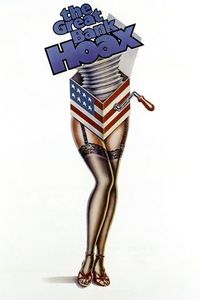
  • The Great Bank Hoax (1977)

    The Great Bank Hoax (1977)

    (On Cable TV, September 2019) The fun of low-key comedy film The Great Bank Hoax begins as the managers of a small-town bank discover that a hundred thousand dollars are missing from their ledger. Who took it? No clue. But what’s for sure is that the error has to be fixed quickly, otherwise word will get out and the bank will be in trouble. Ned Beatty is probably the best-known name in the cast, but don’t worry: this is the kind of plot-driven film that doesn’t need headliners to be enjoyable. And there’s quite a bit of plot to go through, with a young and easily seduced bank officer getting tangled up in the machinations of two women who want money, the bank officials cooking up a scheme of their own to get back in the black, and carefully plotted schemes blowing up in everyone’s faces. The portrait of a small Georgia town is convincing, and it works even better given that it means that the entire story plays within a carefully delineated setting, with everyone knowing nearly everyone to complicate things even more. It wraps up with a smile, which is the bare minimum we expected. I’m probably too detached from 1977 to catch the social satire that other reviewers have noted. Writer-director Joseph Jacoby probably could have tightened up a few things — as it plays, The Great Bank Hoax is more of an amiable than a funny affair. But in that, it does seem to reflect the none-too-fast atmosphere of its setting, and the slightly crooked nature of its genial characters. Not necessarily a gem, but not entirely deserving of its current obscurity.

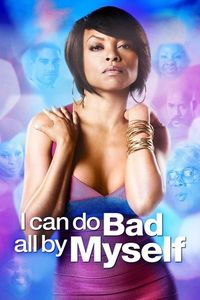
  • I Can Do Bad All by Myself (2009)

    I Can Do Bad All by Myself (2009)

    (On Cable TV, September 2019) Well, it finally happened — five movies into my Tyler Perry project, I’m actually enjoying them. To be fair, I Can Do Bad All by Myself was the first film from writer-director Perry to earn generally positive reviews, and one in which Madea’s presence became more than an irritant. It’s easy to see that, even with a rather predictable story, the film is executed with increasing skill. The added musical dimension can be tangential at times, but it does give ample chance for Mary J. Blige and Gladys Knight to shine in supporting roles. Still, the spotlight here is on a pre-“Empire” Taraji P. Henson as a self-centred, self-destructive nightclub singer who learns better after she takes responsibility for her sister’s three kids and realizes how terrible her boyfriend is. The dramatic arc of the film’s subplot is familiar, and so are the small-c conservative values that Perry espouses. I Can Do Bad All by Myself is rather fun at first (Tyler’s performance as Madea has a pair of very good scenes, even if the tone is a bit off at times) and then increasingly poignant as the comedy of the film gives way to the drama. Perry may be predictable and ham-fisted, but it’s coming from a heartfelt place and that does much to give life to the results even with its imperfections. I’m ready — bring in the next Perry movie and I’ll watch it without hesitation.

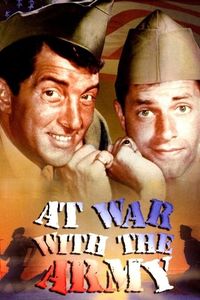
  • At War with the Army (1950)

    At War with the Army (1950)

    (On TV, September 2019) If anyone is looking for proofs of the United States’ history as a martial society, I’d like to provide a very long list of film comedies that only exist because a good chunk of the paying public was intimately familiar with how military service worked. Such comedies are meant to appeal to veterans, conscripts and their families in affectionately ribbing the habits of the army. By 1950, a good chunk of the American male population had still-vivid memories of their wartime service, and that’s clearly what At War with the Army was relying on, with its portrayal of barracks life with overbearing superiors, nonsensical bureaucracy, obstacle courses, family trouble and relationship between fellow soldiers. By the time the film launches into a mess-hall musical number titled “Beans,” well, you already know everything about the film. For generations of viewers, much of the draw of the film is in seeing Dean Martin and Jerry Lewis in the lead roles, playing off their stage persona to sing, goof-off or parody other movies along the way. Lewis is silly, Martin is suave and that’s quite enough to power the entire thing. Of course, some of the material is only funny in the abstract today — most of the twenty-first century audience has no direct knowledge of military service other than through films. But At War with the Army still works because Lewis and Martin are good at what they do: entertainers simply using military service as a scaffolding on which to hang their comic set-pieces.

  • Bob le flambeur [Bob the Gambler] (1956)

    Bob le flambeur [Bob the Gambler] (1956)

    (Criterion Streaming, September 2021) One of the most amusing side-stories in global cinema history is how film noir led to the French New Wave, spawning off the heist movie genre along the way. While there are other movies (Rififi, À bout de souffle, Pierrot le fou) to illustrate that transition, writer-director Jean-Pierre Melville’s Bob le flambeur remains one of the central texts of that shift, and it remains an interesting watch today because it plays with a newly-familiar formula. Roger Duchesne stars as the titular Bob, an ex-convict who has since “reformed” into becoming an inveterate gambler. Recently down-on-his luck, he sets the plot in motion when he’s told that the local casino has vast quantities of cash in its safe. Putting together a crew, he’s unaware that his plan won’t stay secret. I was not particularly looking forward to Bob le flambeur — I approached it as list-checking viewing, since I tend to be hit-and-miss on the French Nouvelle Vague, and was decidedly unimpressed by its 2002 remake The Good Thief. But the original is better. On one level, it’s a familiar heist film showing how the crew is assembled, cases the work to be done, finds ways to counteract the defences and tries to stay one step ahead of the police. On another level, it’s a film that hints toward the interiority of the French Nouvelle Vague — Duchesne is impassible as the lead (prefiguring Le Samourai), lending both coolness and distance to the character. But the most memorable aspect of the film remains the ironic ending, as Bob’s flaws end up making him a winner in a completely unlikely (but unbelievably lucky) way. The film jumps genres at that point, and that’s not necessarily a bad thing — probably because, as the formula was borrowed and perfected, we got to see the “conventional” ending so many times that this variation still feels fresh and amusing.

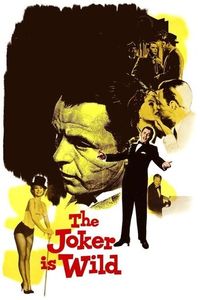
  • The Joker is Wild (1957)

    The Joker is Wild (1957)

    (On TV, September 2021) In comparing actors with character, there are few better natural matches than having Frank Sinatra play a comedian/singer (real-life figure Joe. E. Lewis) who gets involved with the mob and then struggles with alcoholism through a rocky marriage. No, Sinatra was not an active mobster or a non-functioning alcoholic, but his public image as a booze-swinging rat-packer and whispered rumours about his private life made him—and still make him—an ideal choice for the role. After a perfunctory opening in which the mob takes revenge on him and damages both his face and his voice, The Joker is Wild does get more interesting as the lead character claws his way back to crowd approval. Several nightclub sequences have us sitting in the audience for some comic banter and choice songs (including the classic Sinatra number “All the Way”) — it would be considered long if it wasn’t for the appealing time-travelling aspect of watching a Sinatra show. As a drama, The Joker is Wild tends toward repetitiousness — See Lewis become more famous, see him struggle with alcohol, see him struggle with his wife, and then repeat the cycle a few more times. But it works more often than it doesn’t, and few films have done as good a portrayal of stand-up comedy as a self-destructive exercise, as the on-stage patter painfully mirrors personal troubles: there’s an excruciating sequence in which a severely inebriated lead struggles to get through a show, his jokes about excessive consumption not fooling any member of the audience. It’s too bad that the film, made while Lewis was alive, can’t conclude on much more than a semi-fantastic oath to get his life in order (he never completely did) — the anticlimax is real, but isn’t as bad as it would have been had The Joker is Wild been a straight-ahead narrative. Instead, the high points are the performances, not necessarily the story. And Sinatra is very, very good in those moments.