Author: Christian Sauvé

  • Il gattopardo [The Leopard] (1963)

    Il gattopardo [The Leopard] (1963)

    (YouTube Streaming, August 2021) There’s a fun blend of international elements in The Leopard, being an Italian film from writer-director Luchino Visconti, with Claudia Cardinale, American Burt Lancaster and French Alain Delon in the starring roles. The plot takes us deep in Italian history, as a late-19th century Italian prince contemplates the way the world is changing (a nearby war doesn’t help) and wanders forlornly around a palace. That’s roughly all there is to the point of the film — the rest is window dressing, albeit technically successful window-dressing, as the film really shows its historical recreation budget. It’s sort-of-fun to see Lancaster with impressive facial hair, going up against both Delon and Cardinale — three actors not normally associated with each other. The much-ballyhooed ballroom sequence is the film’s finest moment. On the other hand, it’s a long sit at more than two hours, seemingly even longer considering the slow pacing of the thing and the interiority of the plot. I can admire that intention, but I can’t say that the execution of The Leopard is all that entertaining.

  • De Palma (2015)

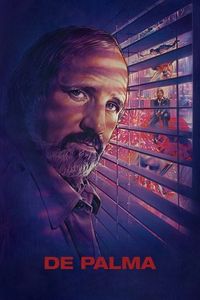
    De Palma (2015)

    (Tubi Streaming, August 2021) The standard mode for documentary movies about directors is hagiography (considering the effort, time and clearances required for a documentary, no one is going to go ahead with a critical look at someone who may still be influential) but De Palma is at least honest about it. It’s really a two-hour-long speech from writer-director Brian de Palma, interview footage interspaced with relevant footage of his films as he chronologically goes through his filmography, from film student days to his post-Hollywood European phase. There’s a bit of autobiographical material to kick things off and some concluding thoughts on his career, but considering that the now-80-year-old de Palma has only made one film since the documentary and isn’t likely to make many more, this is about as close as we’ll get to a definitive self-assessment. Despite narrating all the material, De Palma can be surprisingly dispassionate in the way he assesses his films — one of his running themes is how many compromises one must make by working within the Hollywood system. (As he observes astutely, what critics don’t get is that most directors don’t get to plan their careers: they’re working on this or that at the whim of others with money.)  The film does come with a few warnings. One for violence, obviously — you can’t talk de Palma without showing his films, and his films are largely in the thriller genre. But there’s also a contextual warning: This film makes very little effort to contextualize de Palma or his films. If you’re expecting plot summaries and a cool academic take on the films, this isn’t for you: this is de Palma reflecting on his own work, and what’s unfortunate is that with a thirty-item slate in a 107-minute film, we don’t always have time for more than glancing anecdotes… especially for his lesser-known or off-brand efforts. Still, what’s in there is interesting: his filmography has highs and lows, touching upon a good variety of stars, producers or critical reactions. It’s an easy film to watch if you’re moderately aware of his biggest hits. I’m missing a handful of his films since Carrie, plus his pre-Sisters titles, but this is the kind of film that makes me want to seek them all out. It does help that I consider de Palma to be an interesting director. His level of violence is excessive, his themes can be repetitive and his wilder ideas don’t always cohere, but his visual style is often amazing, and on his best titles he’s clearly going for broke, always pushing how hard or how far he can go. That’s much, much more than many of his contemporaries can say and at the end of his career (as we seem to be now), there’s a wistful sense that even a thirty-title filmography isn’t quite enough — we could have had more had a few things turned out differently. Again, I’m not sure we can say that about many other directors of his time. There’s a particular flavour and appeal to a typical de Palma film, and this documentary does much to try to explain what it is. One notes that the self-effacing director behind the film is none other than independent darling director colleague Noah Baumbach, and there’s some fun in trying to make links between De Palma and While We’re Young.

  • Mayday (2019)

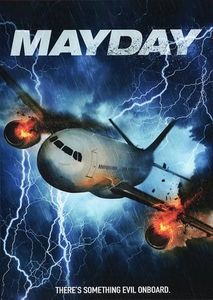
    Mayday (2019)

    (On Cable TV, August 2021) It takes maybe thirty seconds to understand that Mayday is a cheap, cheap film made on a tiny budget with subpar talent. There’s something immediately off-putting in the static camera movements, indifferent acting, tasteless writing and substandard production values. The only thing that helps is the mystery, once it gets started almost fifteen minutes in. We’re in a plane going from Los Angeles to London, and suddenly passengers vanish into thin air. What could possibly be the cause of this is the question that preoccupies our protagonist, an air marshal rather decently played by Michael Pare. If you’re intrigued, good, because that’s pretty much all that Mayday has going for it, especially as it develops its plot into something increasingly unsatisfying. Helped by a mysterious brunette who never seems to lose her cool (perhaps because she’s not a good actress, perhaps because of Botox), our protagonist discovers a mysterious magic tome. (It’s in old languages, but air marshal training apparently prepared him to read it.)  Then the plot leaps off the deep end in presenting an out-of-control demon taking people away (where?) for… reasons. The internal mythology presented in the film isn’t even consistent on at least two levels, and a dismayingly down-to-earth ending makes a mockery of whatever came before it. But don’t worry, because Mayday sabotages itself well before the underwhelming ending and its unconvincing CGI: it’s badly plotted, dumbly conceived and ineptly executed. The dialogue is terrible, the characters don’t have consistent motivations and it’s so badly handled that any working hypothesis viewers may have regarding what’s going on is guaranteed to be better than what actually happens later in the film. I still can’t quite square the purpose of it all, or the role played by the brunette character. There are tons of missed opportunities left on the table, and it’s a good thing that Pare is an old hand at saving bargain-bin movies like these because he’s often the least objectionable thing on-screen. Mayday does have a bit of that bad-movie ridiculousness about it — it’s terrible in a mildly entertaining way (wait until you get a longer glimpse at the demon!), and you can see opportunities that a better film would have taken. I’m not necessarily against this kind of low-budget thriller at all: I can recall a few other films using the confines of an airplane as an effective way to make good use of a tiny budget. But Mayday simply fumbles the elements at its disposal, or simply doesn’t want to do the work to get to the next level up.

  • Frosty the Snowman (1969)

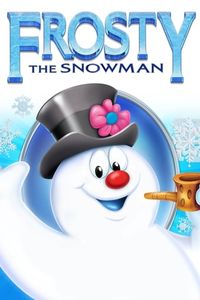
    Frosty the Snowman (1969)

    (YouTube Streaming, August 2021) I’m not sure I had ever seen Frosty the Snowman before — although I can certainly recognize the song and be amazed that it’s Jimmy Durante acting both as the film’s narrator and its lead singer. Made for TV, the animation style is simplistic and cheap… but it’s based on some very cute designs, which have certainly helped the result hold up even today. The story is an agreeable piece of nonsense mixing magic, fantasy and comedy — it’s not much, but it works. The Rankin/Bass pair responsible for putting together Frosty the Snowman had a long career producing holiday specials for TV, but few of them have the enduring popularity of this one. No wonder it still pops up every holiday season.

  • Romeo and Juliet (1968)

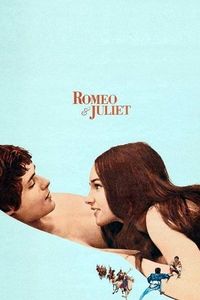
    Romeo and Juliet (1968)

    (Second Viewing, YouTube Streaming, August 2021) I last saw Franco Zeffirelli’s Romeo and Juliet in high school in the mid-1990s, and by that, I mean in high school: it was a teacher’s best bet for teaching the Shakespeare play to a bunch of overwhelmingly Francophone teenagers in a mandatory English course, and it has stuck in my mind since then as a mostly educational film. A second middle-aged viewing doesn’t really change my mind: if you want a basic version of the play in film form, this is it. It blends an old play with a now-old cinematographic style to produce something that feels very much like a didactic presentation. (Lurhman’s vastly more dynamic Romeo + Juliet came didn’t even exist when I was shown the Zeffirelli version in class.)  What does play a little better is the banter between Romeo and his group of friends — shot with a more mobile camera and featuring the play’s best action sequences, it’s the only part of the film that rises above simply showing the play on-screen. Considering that my brain doesn’t cope very well with Shakespearian dialogue, I find myself both underwhelmed and yet satisfied by the Zeffirelli Romeo and Juliet: It’s exactly what it wants to be in presenting the play on-screen without wilder expressionistic takes. I almost expect it to be shown to the next generation of high-school students.

  • Caligola [Caligula] (1979)

    Caligola [Caligula] (1979)

    (YouTube Streaming, August 2021) Even in the vast universe of wild movies in cinema history, there has never been and will never be anything quite like Caligula. Produced at the end of the 1970s by pornography mogul Bob Guccione with the intention of bridging the mainstream movie world with the “porno chic” movement of the permissive decade, this is a film that has both well-known actors (Malcolm McDowell, Helen Mirren) and pornographic footage. Even knowing all about Caligula’s reputation, I still blinked whenever the X-rated material showed up on-screen, gradually pushing back the familiar limits of what we’re used to seeing on-screen: Nudity: Yes. Erect phalluses: Yes. Graphic Oral Sex: Yes. Full penetration: Yes. Ejaculation: Yes. And that’s not even getting into the far less entertaining gore and violence. But wait, because the film’s production is one for the history books as well. Offering perhaps the purest example of how movies are written thrice, we here have a script by Gore Vidal (!) meaning to explore the concept of total power leading to total corruption, being handed over to exploitation director Tinto Brass meaning to show luridly how a corrupt individual becomes even more corrupt once powerful, being handed over to producer Guccione, who shot the X-rated footage that was then added after the main actors had left the film, blending everything into a bizarre mash-up of sex, violence and some remaining satire. Caligula is fascinating, but it’s not a good film: The many hands that rewrote the film just end up producing an incoherent historical drama with jolts of hard-core sex. On the other hand, it does offer the irresistible trivia that Mirren once starred in a film with unsimulated sex — and she still to this day seems amused by it, which is appropriate considering that her character is probably the most appealing in the film. Still, it’s a surprisingly dull movie, and its length is made even worse by the way the film repeatedly stops to highlight hardcore sex with no relationship to the plot. A unique viewing experience and a wild filmmaking history don’t always end up equalling a good film. The idea that there will never be another film like Caligula is frankly more of a relief than something to mourn. Fun fact: Midway through watching Caligula, the police came knocking at my door… but the explanation (it turns out that leaving a fully-lit garage door open at 1:30 AM in my quiet neighbourhood will get the police to come knocking to ask if everything is all right) is not quite as satisfying as the fun fact itself.

  • The Sons of Katie Elder (1965)

    The Sons of Katie Elder (1965)

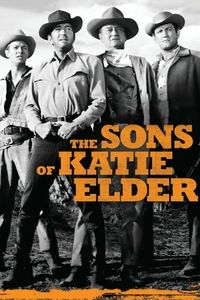
    (YouTube Streaming, August 2021) I’ve been scratching my head for a few minutes in order to find something to say about The Sons of Katie Elder, and it’s harder than you’d think. It’s a western, in colour, from a period in Hollywood history where the studios were running on empty — repeating familiar formulas without quite understanding why audiences were getting tired of them. The film, to be clear, is not a dud: it’s competently-made, with an effective hook (four brothers come back home for their mother’s funeral, and start fighting the resident evil businessman) and some big names on the cast. I’m not a fan of John Wayne, but there’s also Dean Martin to keep things interesting—plus George Hamilton and a young Dennis Hopper. On the other hand, The Sons of Katie Elder is a western film in a very traditional mould, riffing off some questionable frontier justice ideas. It’s watchable, but not particularly memorable. And that, perhaps, is the most lapidary review of all — what else is there to say when the result provokes so little reaction?

  • Beneath Still Waters (2005)

    Beneath Still Waters (2005)

    (In French, On Cable TV, August 2021) In horror, it’s not infrequent to find the setting and atmosphere taking over the plot to no one’s displeasure. Beneath Still Waters isn’t all that conventional in terms of story (it has something to do with someone destroying a town in order to prevent its great evil from escaping), but the most memorable element of the film is the flooded town in which much of the action takes place, as the characters dive underwater to discover all about the ancient threat it contains. Directed by horror legend Brian Yuzna, the film easily promises more than it delivers… but it does score a few remarkable images along the way. Unfortunately, Beneath Still Waters doesn’t completely cohere into something interesting: the plot remains subordinate to the visuals, and as a result the entire thing is flimsily justified, with some basic implausibilities that remain unanswered — and an ending that doesn’t satisfy. My standards for horror are so low these days that anything halfway interesting that’s not a slasher gets bonus points. I still think that Beneath Still Waters is more interesting than other 2000s horror films, but I won’t push my luck into claiming that it’s any better.

  • They Shoot Horses, Don’t They? (1969)

    They Shoot Horses, Don’t They? (1969)

    (YouTube Streaming, August 2021) It’s easy to be fascinated by the concept of 1930s dance marathons — well before reality TV invaded homes, there were weeks-long contests in which various hopefuls we asked to dance for as long as they could, and audiences paid to see such things. It sounds funny to us (dance marathons? For weeks?!?), but They Shoot Horses, Don’t They? takes us backstage for a particularly dark take on the concept. Venal producers, sadistic special events, manipulated plotlines — am I watching something modern or not? Compared to the setting, the story of the film is humdrum at best — a troubled young man and an equally-troubled young woman meeting on the gruelling dance floor, and being manipulated by the show’s producers… except that they have nothing to lose. The ending is particularly grim. Still, the setting is more than worth a look: director Sydney Pollack was clearly part of the New Hollywood at the time, and there’s a streak of nihilistic meanness that permeates the entire film. As contestants drop dead (this is not a figure of speech), the endurance contest becomes inhumane and our characters start looking for a way out. They Shoot Horses, Don’t They? is not a fun or easy film — some will even call it pointless with some justification. But there’s something both novel and familiar to the dance marathon that, to my knowledge, hasn’t been captured in another film. They may or may not shoot horses, but they don’t shoot movies like this one any more. Perhaps that’s for the best.

  • Robowar—Robot da guerra (1988)

    Robowar—Robot da guerra (1988)

    (In French, On Cable TV, August 2021) I did not suspect that there was such a thing as a low-budget Predator rip-off. But there is. To be specific, Robowar could easily be retitled “That scene in Predator where they machine-gun the entire jungle—The Movie,” considering how often our characters unload their entire arsenal at innocent flora. The pretext for their landscaping has something to do with a soldier robot out of control (bringing in the mix either Robocop or The Terminator) but you know the routine no matter the justification: A bunch of good guys against one bad guy, this time in the jungle. It’s about as good as you’d expect, which is to say — not very. Behind the scenes, the film is a mixture of Italian filmmaking, Philippines production values (at a time when the Marcos regime was only too willing to help movies shoot in the country) and American actors. Not that it matters when bad filmmaking transcends international borders: Robowar is just terrible. Bad actors, bad script, bad directing from Bruno Mattei, and bad production values — you’ve certainly spotted the common denominator here. It does have a rough sense of fun in terms of bad-movie watching, but the bad pacing kills off any of the energy that such a production could have had. If you want to sit through Robowar just to claim that you’ve finally seen an Italian Predator rip-off, well, I’m not going to stop you. But there are better things to do.

  • A Woman Under the Influence (1974)

    A Woman Under the Influence (1974)

    (Criterion Streaming, August 2021) I don’t particularly like A Woman Under the Influence, but I have to recognize that writer-director John Cassavetes has achieved something remarkable with the film, something as of yet not quite duplicated. It’s essentially a slice-of-life narrative of a housewife with a mental illness, but it defies any attempt to make the narrative (or the illness) fit in easy Hollywood conventions. Our protagonist, in a rather brave performance from Gena Rowlands, has a lot of problems, and they’re not the cute Hollywoodized version of a mental illness. It escapes easy categorization, and it’s not neatly resolved or even managed by the end of the film. Her husband, in another bravura performance by Peter Falk, is not the saint to her sinner — he’s ill-tempered, ill-suited to take over the kids when she is sent away, ill-prepared to deal with what’s going on with her. In other words, A Woman Under the Influence avoids most attempts to transform it into something that can be neatly squared away after the credits roll. There’s a painful realism to it, and while that still makes it a remarkable movie nearly fifty years later, it’s also the kind of film that gets practically zero repeat value: it ends on such a note that few will get the impression of a conclusion. Clearly a product of the New Hollywood, it’s practically impossible to imagine something this being backed by a major studio today — sure, I’d see independent films tackling something close to it… and then be ignored by nearly everyone.

  • The Man with Two Brains (1983)

    The Man with Two Brains (1983)

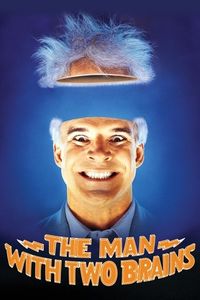
    (YouTube streaming, August 2021) I’m sure that I’ve seen parts of The Man with Two Brains at some point in the twentieth century — I still remembered the Merv Griffin gag, and some of the humour felt familiar. Of course, much of Steve Martin’s humour, in general, is based on the idea of familiarity — he tells you what he’s going to do, and then he does it in the most ridiculous way possible. In this film, dating from what we can call the golden age of his film career (those four films written/directed by Carl Reiner being the core of it, with the period extending from 1979’s The Jerk to 1991’s L.A. Story), Martin is as absurd as he can be in the framework of a silly story. He plays a neurosurgeon who falls in love with a disembodied brain that talks with him telepathically while trying to deal with his cheating spouse. While the plot is pretext to all sorts of dumb gags, it’s actually not too bad for such a film — there’s some narrative interest beyond the next laugh, and the subplots extend for more than the immediate scene. The proof of The Man with Two Brains’ success is in the laughs, smirks, grins and groans that it creates. It’s a shame that Martin retreated from this kind of humour in favour of more family-friendly fare later in his career — surely, I can’t be the only one bemoaning his “earlier, funnier films”?

  • Nostalghia (1983)

    Nostalghia (1983)

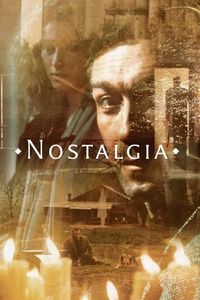
    (YouTube Streaming, August 2021) You wake up. The light is dim, the surroundings are shrouded in fog, the figures around you indistinct. You can only see shades of grey, except in those rare occasions where you think you see a dark shade of colour. There are people; ordinary-looking people, world-weary people; peasants without a shred of refinement to the way they look. The people speak another language, but even seeing subtitles under them merely prolongs your lack of understanding. Their dialogue is crafted, elusive and metaphorical even at the clearest of times. They are preoccupied with matters of some significance but no real importance. They torture themselves with meaning to the point where you wish anyone would crack a joke or even anything sounding like normal human conversation. Your attention is directed in long static shots, sometimes simply panning to something else. But you feel trapped in those long shots, those monochromatic compositions, those overworked expressions. And then it strikes you for its obviousness. You are trapped in a Tarkovsky film. This is all normal. But this is also eternal. Time stretches on to infinity. You will be here forever. This is Nostalghia.

  • Flight of the Navigator (1986)

    Flight of the Navigator (1986)

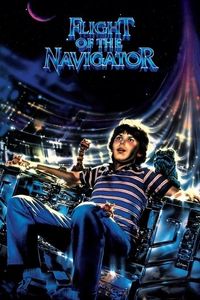
    (Disney Streaming, August 2021) I spent the first half-hour of Flight of the Navigator wondering why I hadn’t heard of the film before, and the rest of the film understanding why I hadn’t. It does start on an intriguing note, as (after many fake-out of UFOs not quite appearing on-screen) a 12-year-old boy of 1978 finds himself in 1986 without interruption or explanation. His home is inhabited by strangers, and the police struggle to figure out what to make of him until they find trace of him as a missing person… from eight years before. Things take a turn for the wilder side, as a strange UFO (well, UUO — Unidentified Unmoving Object) is taken in by NASA, an organization with a secure facility to keep kids locked in. (Albeit with the hottest 1986 toys.)  A young and cute Sarah Jessica Parker has a supporting role as a likable liaison, and our protagonist is soon revealed to have a lot of information locked away in his mind. At this point, we’re probably 35 minutes into Flight of the Navigator and there isn’t much to criticize: it’s a capable science-fiction adventure for 12-year-old boys, the likes of which (along Explorers, DARYL, and The Last Starfighter) were particularly robust in the mid-1980s. But it’s also the kind of film that the entire family can watch and enjoy. But then, well, the family can take a hike, because the level of the film drops down a few notches as soon as the boy gets inside the mysterious craft and makes friends with the ship. The dialogue, events and preoccupation become quite juvenile all of a sudden, and the plot almost entirely stops in favour of the now-UFO zooming around the place. There’s some interesting early-CGI special-effect work considering the limited technology of the time, but the plot really takes a break during that last half. Even the third act’s tension is an obvious cheat that will obviously be resolved using the most obvious way, which is to say, ”Never mind!”  I do like that first section of Flight of the Navigator. The second one, though… eh, a return to the norm and then some. Yes, I was almost 12 in 1986 and should have seen the film then — but I wasn’t watching first-run films at the time, and the tight grip of Disney (plus the film’s unabashed Americanism) probably explains why it didn’t make its way to French-Canadian TV.

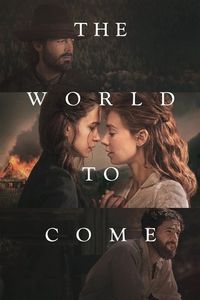
  • The World to Come (2020)

    The World to Come (2020)

    (On Cable TV, August 2021) It would be fun to claim that I went in The World to Come completely ignorant of its nature, expecting a Science Fiction film along the lines of the classic Things to Come. But that would be a lie — I knew exactly what kind of film The World to Come would be because it’s not subtle about it. From the premise, poster and first few minutes, there’s no doubt about its nature: a “forbidden period romance” (i.e.: non-heterosexual romance in intolerant times) almost too eager to revel in the misery of its characters. Nothing that follows is surprising. Our narrating heroine is a young woman out of place and out of time: She’s living in a hardscrabble rural area of 19th century America, with her husband toiling the land as she keeps (pick one at random and repeat:) grieving her dead daughter; rebuffing her husband’s advances; bemoaning being stuck in the middle of nowhere; craving the companionship of equals; writing in her diary. You know — exactly like a twenty-first century urban lesbian would act in the same situation. But then, at long last in-between the deliberately spirit-killing scenes of rural farming, comes a new fiery-headed neighbour. This is followed by more waiting, as we wait for the same-sex relationship to blossom into a full-fledged love affair. (All during which the husband keeps toiling the land.)  Further playing along expected lines, our newcomer’s husband is clearly abusive and we all know what that means. Which the film obligingly follows. The ending was foretold from the start — especially considering the heavy-handed message of how unhappy the female leads are supposed to be except when each other. My sarcasm is puerile but not surprising: “forbidden period romances” are the new hotness in independent film and while I liked The Favourite, I’ve also seen Lady on Fire and a few others and can’t really muster up any more interest for a film whose main points have been done better elsewhere. You may be surprised, after the above, to hear that I did like some aspects of The World to Come: Vanessa Kirby is terrific as the object of fulfillment and desire, and she looks amazing in symbolic red curls. I’ve been wondering for a while if she’s about to become The Next Big Thing, and this is the kind of performance that nicely counterbalances a few striking turns in big-budget action films. I have some sympathy for the poor dumb hard-working farmer played by Casey Affleck, doomed to a perpetually unhappy wife/life and yet helping her out to get to the end of her journey. The cinematography is not enjoyable in its depiction of hardscrabble frontier living, but it is remarkably convincing. Despite being the furthest thing from The World to Come’s intended target audience, I still went into the film hoping that something would hook me. The result is not satisfying — sure, some fine acting and cinematography, but the rest is often obnoxious in its insistence on repeating an increasingly clichéd formula as if it was brand new. Given so, I’ll have a rewatch of The Favourite before I touch this one again.