Author: Christian Sauvé

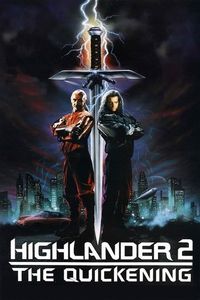
  • Highlander II: The Quickening (1991)

    Highlander II: The Quickening (1991)

    (Second Viewing, Amazon Streaming, August 2021) I remember watching a version of Highlander II in the early-to-mid-1990s and not liking it at all — as a nerdy late-teenager, I was incensed that a sequel to Highlander would so thoroughly corrupt everything that was interesting about the first film. Aliens stranded on Earth rather than mythical immortals in a grand tournament? Blech. Considering that the timeline of my first viewing precedes the release of the reworked “Renegade Version” that recuts material in a (slightly) more coherent way to get rid of the alien factor, I must have watched the original theatrical version. Good news (?): that version isn’t available any more unless you scour old VHS tapes — all releases since 1995 have been of the Renegade Version, and since 2004 of an even-more-fixed Special Edition with a spackling of additional CGI. My second viewing is of the Amazon Prime Special Edition, so it’s probably not an accident if I found the film bad-but-not-that-bad. (Seeing it after a spate of very bad movies further recalibrated matters.)  The aliens may be gone from this cut, but what replaces them is still nigh incomprehensible, with warriors beyond time fighting under a shield protecting the Earth from Ozone depletion. (Obviously, the shield is now useless — Highlander II comes complete with a fight-dictatorship subplot and bright shining skies at the end.)  Christopher Lambert does his best in the lead role, with Sean Connery lending some of his charm to a largely useless character brought back in an even more arbitrary fashion. One thing I had unfortunately forgotten is that Virginia Madsen and her glorious mane of blonde hair also star in the film, adding further interest. The film, even in a special edition, is still a bunch of nonsense that molests a wonderful first film —which is really weird considering that they share the same director Russell Mulcahy, and it does have a few sequences that succeed at getting an appreciative nod. For instance, the scene in which Lambert fights off another immortal and regains his youthful powers is meant to impress and it does, even including a darkly funny “kiss” from an oil tanker. Connery gets to have some fun in a suit shop, and Madsen gets to look good in an otherwise underwritten character. Special Edition or not, Highlander II is more watchable than what I remembered, even at its worst — or it may be that I’m just getting more generous in my advancing age.
  • Underground (1995)

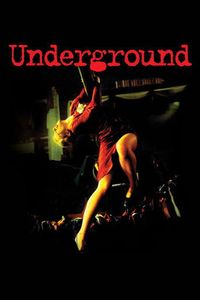
    Underground (1995)

    (In French, On TV, August 2021) The weirdness of Underground is only matched by the weirdness of the commentary surrounding it. The premise already takes us somewhere unusual by supposing a group of people hiding underneath Belgrade as World War II rages on, but being kept ignorant of the end of the war for decades. There’s a lot more to it, though, and what writer/director Emir Kusturica ends up creating is a phantasmagorial blend of comedy and drama, with a strong dash of surrealism to keep things interesting. Trying to describe it is probably not possible if you’re not from around Belgrade, since so much meaning seems to rest on evasive cultural references. It’s often exhausting — at 170 minutes, it’s already a punishing sit, but even that extravagant length is condensed from an even longer initial cut. But all of this is even before getting into the thornier aspects of the film — if you recall your European history correctly, you’ll remember that the 1990s were not a pleasant time in that area, and the film does play off that tension. …and that’s when the reaction to the film kicks in, because looking up commentary on Underground is like stepping into a minefield of unimaginable complexity to us ignorant North Americans — commentators are quick and vicious in analyzing the film throughout the prism of Serbian war atrocities and intellectual philosophy. Whew. If you’re just looking for light entertainment, this isn’t it. In fact, Underground is probably more suggestive than pleasant in its own right — an intriguing piece of cinema, but not necessarily something you’d want to watch twice.

  • Crooklyn (1994)

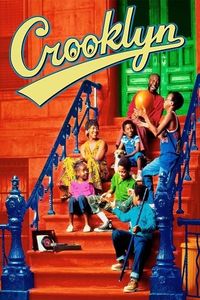
    Crooklyn (1994)

    (On Cable TV, August 2021) It’s not quite fair to call Crooklyn a kinder, gentler Spike Lee movie —it’s just as engaged as other films, but it turns its attention to domestic issues in presenting a semi-autobiographical tale about growing up in Brooklyn in the 1960s/70s. As a result, you won’t necessarily find as many guns as other Lee films (despite a title that promises crooks), as this one focuses on the pressures that a mother has in taking care of her five children in a cramped apartment. The surrounding neighbourhood is portrayed with a great deal of affection, and the period soundtrack is nothing short of terrific. It’s not as if Crooklyn doesn’t pack a punch of a different sort — much of the third act is driven by a sudden death. While I’m not always a big fan of when directors turn to autobiographical stories, I think it’s an essential part of cinema — unlike, say, a novel, films take so much money to put together that they rarely turn toward that kind of intimate biographical storytelling. It does show Lee being at ease in a different register, and does make a statement about a specific kind of black life in America. Not bad — but Crooklyn does ask viewers to switch gears and not necessarily expect the usual Spike Lee joint.

  • Pacific Heights (1990)

    Pacific Heights (1990)

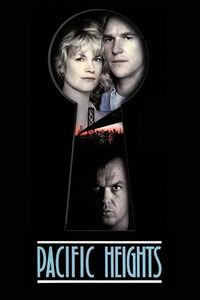
    (On TV, August 2021) As much as Pacific Heights tries to stack the deck in making us sympathize with its young couple of protagonists (they’re in love, they’re in debt, they’re expecting a baby!), I’m not sure that a thriller in which we’re meant to side with the landlords is going to find much of an audience in a twenty-first century defined by unaffordable housing. Ah well — 1990 was at the end of the ultra-capitalistic 1980s and renting was the ultimate achievement for middle-class bourgeois. Not that Pacific Heights particularly cares about the plight of the common man or even simple plausibility: not when the antagonist is a consummate conman who’s able to manipulate the laws of California to his advantage. Step one is getting the apartment; step two is doing whatever he wants, knowing that he can’t be evicted; and step three is ruining his landlord’s lives so that they either go to prison or bankrupt. (Since there are two of them, why not in prison and bankrupt?)  It’s particularly far-fetched, so it’s a good thing that the film has one lawyer character to explain the labyrinthine way in which our protagonists are trapped. It does feel like an unusually conservative film in-between glorifying yuppies, criticizing renters’ rights and justifying extreme violence from the landlords. It doesn’t help that the script is occasionally slapdash — the male lead (played by Matthew Modine) often explodes in violent confrontation in ways that could have been interesting to explore in their own right. I’m really not fond of Melanie Griffith most of the time, so having her become the protagonist of the film didn’t do it any favours. But there’s one bright spot, and that’s Michael Keaton playing the brilliant yet utterly deranged tenant who becomes the film’s deliciously cartoonish villain — Keaton plays against type here and does it really well. It’s not quite enough to make Pacific Heights a good movie, but it does take the edge of what could have been a much worse film.

  • A Quiet Place Part II (2020)

    A Quiet Place Part II (2020)

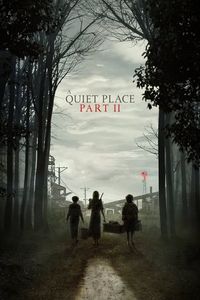
    (Amazon Streaming, August 2021) The first A Quiet Place was one of the unexpected solid hits of 2018 — a solid blend of careful moviemaking (with an unusual emphasis on the use of sound weaved into its premise), a stripped-down premise, some good suspense sequences and some great work on both sides of the camera for John Krasinski and his wife Emily Blunt. With sequel A Quiet Place Part II, the novelty effect is clearly lessened, but the effectiveness remains high. Once more, we follow a family in a post-apocalyptic setting as it deals with murderous alien invaders with the keenest of hearing. A single sound can mean death, and so once more writer-director Krasinski deftly plays with sound and the absence of sound (one character being deaf, which is not always an advantage). Krasinski himself does appear on-screen thanks to the magic of flashback in an opening sequence that shows how much more comfortable he is in featuring the aliens in dynamic broad-daylight sequences. More action-oriented than the first, A Quiet Place Part II doesn’t completely avoid some plausibility issues, but is confident enough that they don’t matter. Emily Blunt does good work, but the spotlight is on young Millicent Simmonds, who exceeds expectations. Cilian Murphy and Djimon Hounsou join the series. The dual-track ending is cleverly constructed and if the film can’t avoid a certain repetitiveness, it wisely keeps things short with an intense 97 minutes and wraps up satisfyingly, but not enough to preclude another sequel. Proving that the success of the first film wasn’t a fluke, Krazinski now has the credentials to take on just any project — hopefully, we’ll see something other than another film in the same series.

  • The Swan (1956)

    The Swan (1956)

    (On Cable TV, August 2021) At this point, I’m nearly convinced that tales of European royalty romance are only fit to bore me mildly. I simply don’t have the interest in whatever they’re playing off. It’s even worse in The Swan, which sets up a familiar tale of romance between a princess and a commoner… only to deliberately avoid the expected happy ending. Rather than make a point, it merely seems to be flaying about in confusion, just ending on a note of disappointment. Of course, The Swan is still being watched today for factors not entirely of the film’s own making. Here, Grace Kelly plays a princess in her next-to-last Hollywood movie before becoming… a princess. (The film was released on the day of her royal wedding, no less.)  Still, that doesn’t make Kelly’s performance any more animated — it’s easy to start rooting for Alec Guinness when he acts like an overgrown boy in a royal role, even as the film tries to have us sympathize with Louis Jourdan at the other extremity of the love triangle. I watched The Swan but I can’t say I have any definite feelings one way or the other. My expectations aren’t necessarily subverted by the anticlimactic ending — I just feel as if it’s missing something. Kelly looks like a princess but acts like a block of ice, whereas Guinness is an unexpected highlight. It’s clearly the film director Charles Vidor wanted to make, but I just keep on questioning whether it was a good idea at all.

  • Discarnate (2018)

    Discarnate (2018)

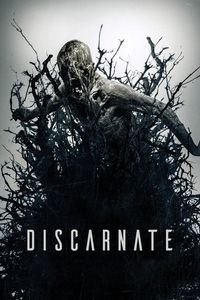
    (In French, On Cable TV, August 2021) All right, all together now: if you think you’ve found a way to bring people back from the dead… just don’t. Say no. Walk away. Forget about it. If more than a hundred years’ worth of accumulated evidence (in the form of horror movies) is to be believed, only terrible things will start happening if you try bringing back loved ones. Those fools in Discarnate were only the latest not to listen to reason and, well, a horror movie largely copied from Flatliners ensues. Director Mario Sorrenti has higher visual ambitions than many other working horror directors, but he clearly still has much to learn in terms of telling a story. The blocks of text thrown on-screen a few minutes into the film are bad enough, but the way Discarnate misses the mark with familiar elements is much worse. A good creature design really isn’t enough to make us forget about the silliness of the herbal tea premise or the slap-dash way the film moves forward, almost as if it was bored with itself. The result may get a few points from minor intriguing ideas that could have been developed more thoroughly (such as an overseer from the money people) but just falls flat as yet another undistinguishable low-budget horror film.

  • Blood Dolls (1999)

    Blood Dolls (1999)

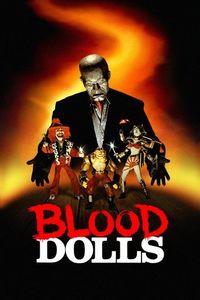
    (In French, On Cable TV, August 2021) The more I watch entries in low-budget genre producer-writer-director Charles Band’s filmography, the more I’m gradually beaten into submission by appreciating what he’s trying to do. Blood Dolls, for instance, is not a good movie. It’s clunky, dubiously “funny,” nonsensical even at the best of times, and considerably less accomplished than what it intended. Consider that the film has to do with an evil billionaire (or rather ex-billionaire) who transforms enemies in often horribly racist dolls that do his bidding, which is to kill his opponents. This is not high-ambition material, but there’s something almost charming in the way the zany elements are put together. More to the point, I found that the film eventually set up an interesting relationship between its anti-hero and an equally bad antagonist, filled with romantic rivalry and murderous intentions. (Debra Mayer spends most of her screen time in a dominatrix outfit — Band has faults, but he got that one right.)  Clearly, the dialogue and direction and, well, everything else can’t quite catch up to the potential outlined here. But the film does have its distinctions in a crowded horror filed that often has far less to offer. And that, despite low production values and often-moronic intention, is something I’m noticing across the Band filmography — it sets itself apart with a few things that you won’t find anywhere else, and that’s practically a rarity in low-budget horror filmmaking. I may not like the result all that much, but I respect the intention, and the more I watch his films, the more I’m willing to appreciate the results.

  • Kiss Me, Stupid (1964)

    Kiss Me, Stupid (1964)

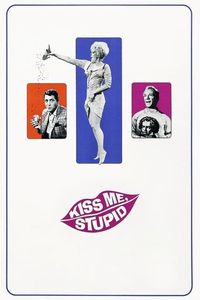
    (On Cable TV, August 2021) One of the sure-fire ways to build an effective comedy is to get the characters to behave in ways that would be entirely contrary to expectations or common sense. So it is that by the time writer-director Billy Wilder gets cracking on the premise of Kiss Me, Stupid, he has a man doing everything he can to ensure that his wife has sex with a famous singer. Of course, she’s not really his wife and there’s a significant reward for him if he gets in the singer’s good graces, but that’s not the point — the point is seeing Ray Walston (as the man) setting up Dean Martin (obviously the singer) with Kim Novak (the “wife”) in flagrant contravention of all moral good sense. Getting there is half the fun, and getting out of it is the rest. Although the film lacks a clear climax and generally feels like lower-tier Wilder (it’s not one of his most popular features), there are plenty of good moments, starting with Martin spoofing himself by seamlessly going from his show to an exaggerated womanizing parody of his stage persona. (Some of the early plans for the film sound wilder — but Peter Sellers had a heart attack and Marilyn Monroe died, landing us with Walston and Kim Novak.) The result does feel more overtly ribald as other Wilder films of the time and not quite as witty, but as a 1960s sex comedy, Kiss Me, Stupid is not a bad pick at all.

  • Blue Iguana (2018)

    Blue Iguana (2018)

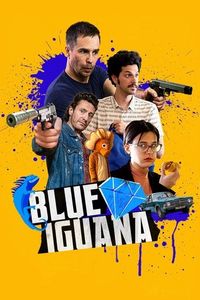
    (In French, On TV, August 2021) There’s a heavy dose of Guy Richie’s influence in British gangster comedy Blue Iguana, but I’m surprised at how little of it seems effective. Maybe it’s because I’m getting older and jaded; maybe it’s because I watched the film in French; maybe it’s just underwhelming. Suffice to say that this fast-paced, darkly comic crime film does go through the motions of a heist comedy but doesn’t quite manage to impress. Oh, it’s entertaining enough, but just enough: Despite Sam Rockwell’s usual presence and Phoebe Fox’s willingness to repeatedly turn her attractiveness dial up and down, it’s curiously just… passable. Writer/director Hadi Hajaig is clearly having fun, but there’s a spark or two missing despite a few good ideas. I suspect that the way you approach the film will shape a good chunk of your reaction: If you’re willing to tolerate a second- or third-generation copy of better British crime comedies, then Blue Iguana will do just fine. But the moment you expect something more, well, you may not have such a good time.

  • Equus (1977)

    Equus (1977)

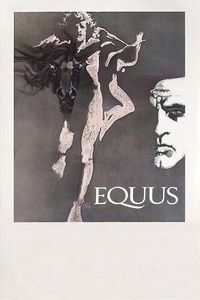
    (On Cablet TV, August 2021) I’m a philistine when it comes to modern theatre, but even I was dimly aware of Equus’s reputation, largely because there seems to be a scandal whenever it’s revived, and that one of the last spats involved an attempt by Daniel Radcliffe to get away from his earlier teenage persona. If nothing else, the film adaptation would let me experience some of what the fuss was about, and help complete my filmography for both Sidney Lumet and Richard Burton. The opening is really quite good, as Burton sombrely frames the story in apocalyptic terms from the back of his darkened office. Then there’s an immediate narrative hook in how our psychologist protagonist (Burton, appropriately rumpled) is asked by an old friend to take on a most unusual case: a young man who abruptly blinded six horses. Getting to the heart of mystery will, obviously, take us deep in repressed perversion, Freudian symbolism and out-there psychological problems. The mystery is matched by the protagonist’s own descent into issues of his own. Like many theatrical adaptations, Equus is very talky and arguably too long for the film format. It also, crucially, literalizes many of the metaphors and stage tricks employed during theatrical productions that can’t bring real horses onstage. You can feel some of the symbolic power of the theatrical play leeched away by the realism of the film adaptation, but enough of it remains to get the point across. Burton got an Oscar nomination for the role, and so did Peter Firth for his intense performance as a troubled young man. There’s an interesting footnote in finding out that this very respectable film was a product of the infamous Tax Shelter years of Canadian cinema, in which many very bad movies (and a few surprisingly good ones) emerged from federal fiscal policy. As for Equus itself, it’s curiously respectable even after taking so many risks for a delicately evocative source material. It’s blunt in its psychological drama, but then again — it’s about a young man blinding horses in the throes of psychosexual trauma, so it has to go big.

  • Percy aka Percy vs Goliath (2020)

    Percy aka Percy vs Goliath (2020)

    (On Cablet TV, August 2021) The story of Canadian farmer Percy Schmeiser is the stuff of intellectual property precedent — cross-pollinization between his seeds and those of Monsanto led to a lawsuit from Monsanto alleging intellectual property theft, a case that went to the Canadian Supreme Court and resulted in a mixed decision. Percy is a heavy dramatization of the entire multi-year saga, featuring Christopher Walken as a humble down-to-earth farmer who steps into a world of seed activism, intellectual property, arcane precedent-setting legal rulings and becomes the symbol of agricultural malaise against megacorporations. It wears its messaging on its sleeve — by mid-film, we’re asked to consider issues with ramifications going well beyond a simple farmer and his seeds. It also shoots in very many directions, which is not always all that effective. While I’m on-board in questioning the idea of patenting nature, I’m not necessarily as anti-GMO as the filmmakers and their characters so firmly want us to be as a package deal with the other issues. (There’s a counter-argument about feeding increased populations, barely mentioned in the film, that isn’t truly explored.)  Percy isn’t as heavy-handed as it could have been: its depiction of anti-GMO crusaders taking on Percy’s case is suitably dubious, clearly highlighting the trade-offs in accepting their support. Walken remains a rock throughout their entire film, although it’s important to note that the character he’s meant to portray is almost a fictional creation. The film doesn’t even acknowledge the real Percy’s long career as a provincial politician — not exactly a salt-of-the-earth type unaware of the world. Still, the portrait can be interesting, and the film does make its way to a suitably nuanced conclusion.

  • Paisà [Paisan] (1946)

    Paisà [Paisan] (1946)

    (On Cable TV, August 2021) It’s almost amazing to see how quickly Roberto Rossellini’s Paisan came together after World War II, given how it deals with evens scarcely two years distant. Set during the Italian campaign of 1944, it’s a film that presents 6 smaller stories as the American forces move north, either set during combat or shortly thereafter. It’s not a war film in the usual sense of the world, as physical violence takes second place to other considerations, and practically no large-scale warfare is shown. Clearly belonging to the neo-realist school, Paisan offers a stripped-down, on-location, down-to-earth approach with unpolished actors and scripts that don’t necessarily follow conventional lines. As for the stories themselves, they cover a wide range from theological debate to romantic betrayal, guerilla warfare, missed romance, culture clashes and life-and-death drama. I can’t say that I was particularly charmed by the results, but the production year makes it a fascinating piece of cinematic history, as the people playing the characters had direct experience of what they were playing, and the film could use the scarred settings where it all took place. It’s also interesting in that the film, coming far away from Hollywood, had little of the propagandistic bombast of most WW2 films until the late 1960s. War does much to make Paisan interesting, even to those usually dubious about neorealism—and so the film may end up reaching a wider audience than the arthouse crowd.

  • The Wilde Wedding (2017)

    The Wilde Wedding (2017)

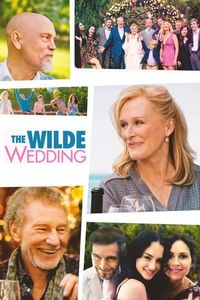
    (In French, On TV, August 2021) I rarely talk about the quality of a French dub, let alone lead a review by its mention. There are a few good reasons for that: Not only are French dub assessments of no interest to Anglophone readers of these reviews, the French dubbing industry has grown remarkably competent during the decades of American filmmaking hegemony. It’s not rare to find some clever turns of phrase in the translations, and the actors specialized in dubbing are good at what they do — films with less-than-average actors are often improved by the dubbing process. (Madonna and Kirsten Stewart, for instance, are far better in French than in English — their dull line readings are improved by more capable actresses.)  In other words — most of the time, it doesn’t make that much of a difference if you see a film in original English or in dubbed French. But we Francophones have grown complacent regarding the quality of dubs, and it takes one striking counterexample to highlight how good we’ve got it, and that example is the French dub of The Wilde Wedding (“Mariage chez les Wilde”), which is by far the worst dub I’ve experienced in years. There’s a basic disconnect between the voices and the actors, and the dub direction is atrocious to the point of wondering who allowed it to be released. The worst performers are, alas, the most important two: The male lead (played by John Malkovich in English, and a wheezing amateur in French) and—ack—the narrator of the film dubbed with an almost-complete lack of affect that makes you wonder if it wasn’t a voice synthesizer at work. I’m not blaming the dubbing actors as much as the dub director here, because it’s that’s terrible. Worse: this terrible dub is overlaid on top of a film that would be disappointing even in an original 4K 3D stereo widescreen presentation: Taking on the old trope of a wedding bringing together friends, family and exes in a posh remote location, it starts out breathlessly presenting more than a dozen characters, only a handful of which will prove to be actually important in the ensuing chaos. There are so many sex scenes shown or implied that it probably would have been better as a pornographic film. Worse yet: The Wilde Wedding leads to a place so trite that you can see it coming well in advance, and can’t muster any sympathy for the characters. (If you were expecting anything close to the wit of Oscar Wilde, as I was… you’re not going to have a good time.)  The result is all the more disappointing that it features actors that I either really like (Minnie Driver, Patrick Stewart — albeit that last one near unrecognizable with some curly hair) or respect. (Glenn Close, Malkovich, bringing back memories of Dangerous Liaisons that aren’t to this film’s advantage.) They don’t have a lot to play with, even with sex hijinks and family strife (and sometimes sexy family hijinks). Even the plotting feels doubly dubious toward the end: Much of the third act is a detonation caused by a character sleeping with… the only dark-skinned character of note, whose exoticism in the middle of so many WASPs is highlighted by her bisexuality and her dancing at the drop of, er, anything. Hey, I get it — Paula Singer is lovely. But she’s stuck with a really problematic character in the middle of a damaged film. Even the extensive use of electro swing, a favourite genre of mine, simply sticks out incongruously. Writer-director Damian Harris clearly fumbles the ball here, and his multi-decade career means that he doesn’t have the excuse of youth or inexperience. But the result is a disappointment no matter the reason, as they layer on top of each other. At least watching it in the original English will remove the constant irritation of the French dubbing.

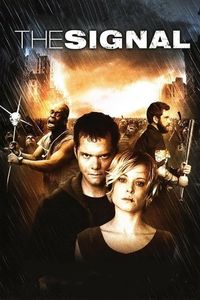
  • The Signal (2007)

    The Signal (2007)

    (In French, On Cable TV, August 2021) Even though there have been many, many horror movies about electronic signals turning people crazy, I still hold out hope that, some day, someone will manage to make a worthwhile movie out of it. Even after watching The Signal, I’m still waiting. A hodgepodge of ideas badly stuck together, it does have some residual interest… but it doesn’t take a long time for the usual horror silliness to undermine the ideas. In true genre fashion, writers-directors David Bruckner, Dan Bush and Jacob Gentry seem more interested in gore and cheap scares than in exploring any of the ideas they may have started with. It doesn’t really help that the film is structured along three shorter films, and that much of the film focuses on TV signals, probably as a visual device. While the result is much narratively tighter than most anthology films, it’s still a disappointment. There is a good case to be made that the filmmakers were interested in showing people being violent to one another, and that the TV thing was just a thin justification on top of what they wanted to do anyway, and I’d go for that… except that stripped of its rationale, The Signal is another one of those cheap horror films that seem to find inherent worth in violence, which is where I disagree. Instead, it feels like so many forgettable films, the madness of its characters poorly motivated and ultimately leading to nothing but more red syrup spilling out. It’s striking that such a great idea, reflective of our ambivalent relationship with technology, hasn’t managed to produce at least one great horror film where the metaphor is made literal. Maybe some day…