Movie Review

  • Harry and the Hendersons (1987)

    Harry and the Hendersons (1987)

    (On TV, July 2019) I expected quite a bit less from Harry and the Hendersons. There are only so many ways that a family film about vacationers picking up a Sasquatch can go, and I thought I had a handle on the film as a kid’s movie before it even started. But as it turns out, Harry and the Hendersons goes a bit wider, to include quite a bit of dramatic material for the father character, as well as a dogged antagonist with a dramatic arc of his own. I’m not saying that it’s a particularly good movie—but it is more entertaining and interesting than expected. Very good makeup effects still work today, but it’s the script that works best despite using well-worn tropes unapologetically: it’s best when it goes beyond those tropes. John Lithgow turns in a decent performance as the patriarch of the family, with some added visual interest when you see the Sasquatch character towering above an already-imposing Lithgow. Not particularly sophisticated but well executed, Harry and the Hendersons proves to be a more decent than expected product of the 1980s.

  • Vampyr (1932)

    Vampyr (1932)

    (On Cable TV, July 2019) For all its qualities, Vampyr is best recommended to those who have already seen Dracula and Nosferatu among the early vampire films, because it strikes out in a direction of its own that remains remarkable (if not completely satisfying) even to modern audiences. Going for eeriness rather than more straightforward horrific qualities, writer-director Carl Theodor Dreyer, fresh off the success of La Passion de Jeanne d’Arc, decided to mash up a few vampire-themed short stories and to deliver something not yet seen in cinema. After equipping his camera with gauze for a soft-lens look that almost looks like a restoration error today, Dreyer shot a story that takes off from Stoker’s classic tale (what with a young man coming to a small town and a woman lying in a coma after being bitten) to deliver something far stranger than a straight-ahead vampire-fighting film. Primitive but still-effective camera tricks are used to present shadows without figures, events happening backwards and villagers behaving strangely. It doesn’t quite work for modern audiences—the deliberate lack of narrative clarity is annoying, and the stylistic quirks of the film can be difficult to distinguish from early-1930s cinematic amateurishness. Still, those very quirks are also what makes the film worth a look for fans of the subgenre—it’s clearly a forebear of more arthouse horror movie sensibilities. Very much executed in the manner of a silent film despite having a synchronized soundtrack, Vampyr is thankfully short at no more than 75 minutes—at that length, it’s worth a quick look just to see the difference with other classic vampire movies.

  • Desperately Seeking Susan (1985)

    Desperately Seeking Susan (1985)

    (In French, On Cable TV, July 2019) There are two reasons to watch Desperately Seeking Susan, and both involve a bit of time travel. The first is a look at mid-1980s Madonna, before she started exposing herself (in all senses of the word) as an in-your-face sex symbol. It turns out that naturalistic Madonna was an incredibly cute performer, and some of the best moments of the film revolve around her smashing through the other character’s suburban lives. The other reason to watch the film has something to do with director Susan Seidelman’s portrayal of the mid-1980s New York City bohemian subculture, living at night in between the big buildings of the city. Rosanna Arquette is nominally the film’s protagonist, but she gets overshadowed, by design, by flashier performers—including early turns from John Turturro, Laurie Metcalf, Aidan Quinn (as a Byronian hero) and Steven Wright. The plot is refreshingly indescribable, belonging to the “one-damn-thing-after-another” school of screenwriting where weirdness and strange encounters (and dropped subplots) aren’t necessarily flaws to be corrected. Desperately Seeking Susan is not quite your usual bored-housewife, free-spirit film and that’s to its advantage. I only moderately liked it, but it’s certainly something else even today.

  • Fantastic Beasts: The Crimes of Grindelwald (2018)

    Fantastic Beasts: The Crimes of Grindelwald (2018)

    (On Cable TV, July 2019) As someone who liked Fantastic Beast and Where to Find Them more than most, I was primed for more of the same with The Crimes of Grindelwald: Another trip through J.K. Rowling’s universe, perhaps a bit of fantastical sightseeing and enough special effects fit for a blockbuster. I got all of that indeed, except that it came with a scattered script and a barely-sensical plot. Reading about the making of the movie, or specifically its post-production reassured me: Many of the most nagging plot points in the film are explained by the overenthusiastic editing process that took away several explanatory scenes. Director David Yates has a lot to answer for. Unfortunately, the films’ lackadaisical plotting, which seems to be spinning in circles for most of its first half, is not so easily explained. Nor are the convoluted coincidences. They do end up robbing The Crimes of Grindelwald of most of its urgency, not helping the added confusion of the truncated narrative content. Adding further strangeness is the retconning of some plot elements of the first film, which is particularly vexing considering that the whole cycle of movies is said to have been planned well beforehand. (I think there’s more to the story here, considering the constantly changing plans for the overall series.) Plot weirdness aside, at least there is something to see when the film gets cracking: heading for Paris rather than New York, The Crimes of Grindelwald multiplies vintage visuals, even though it squanders quite an opportunity to ground its wonders in French magic—whatever glimpse we get at Paris’s magical societies feel exceptionally generic. The images aren’t bad in their non-specific ways, though. The actors are also usually good. Eddie Redmayne doesn’t have as much to do here than in the prequel, but Johnny Depp has one of his most dynamic roles in years here, with Jude Law offering a bit of support along with Carmen Ejogo, Zoe Kravitz and Claudia Kim. Still, the overall mix doesn’t quite gel— The Crimes of Grindelwald seems to be loitering in place for its first hour and a half, then rushes through predetermined plot points in a way that doesn’t seem organic. There’s some dodgy ethnicity stuff that seems tacked on a pre-existing mythology (many of the convoluted plot points have to do with integrating non-white characters in a very Caucasian mythology—I appreciate the attempt, but wish it had been done more gracefully) and some eye-raising revelations that feel forced. I still mildly enjoyed it, but more as a visual showcase than an actual fantasy film. By the end of this second volume, it seems as if Rowling has clumsily placed a lot of cards on the table, but it doesn’t feel as if we’re ready for the real story to start yet. Suddenly, I don’t feel so optimistic about the rest of the series.

  • Saint Elmo’s Fire (1985)

    Saint Elmo’s Fire (1985)

    (In French, On Cable TV, July 2019) It’s one thing to have complex nuanced characters, especially in an ensemble film. But Saint Elmo’s Fire is almost impressive in the way that it features one unpleasant character after another, self-absorbed and terrible to each other. It does start promisingly in its mid-1980s Georgetown setting, as its freshly-graduated protagonists try to figure out life, love and everything else. Alas, this quickly goes nowhere as the characters engage in self-defeating behaviour, do terrible things to each other and can’t seem to learn a single thing. The point of the film, for many viewers, will be the cast and director: A defining work of the “Brat Pack,” Saint Elmo’s Fire features Rob Lowe, Demi Moore, Emilio Estevez, Ally Sheedy, Judd Nelson, Andrew McCarthy and, not quite in the Brat Pack nor all that long in the movie, my own favourite Andie MacDowell, with Joel Schumacher at the helm (and, unusually, as a co-writer). It does feel like an immature teen movie with characters who only happen to be old enough for sex but not anything feeling like human interaction. It’s hard to believe that anyone involved in the film wasn’t aware of the inanity of the script, but if they tried doing a comedy then it’s a complete misfire. Trying to explain the finer details of the film’s plot is begging someone to call you insane. Anyone thinking of watching Saint Elmo’s Fire for the cast may want to reconsider the limits of that intention.

  • Willard (1971)

    Willard (1971)

    (On Cable TV, July 2019) You could call Willard “a boy and his rats,” because its idiosyncratic premise has an isolated mama’s boy discovering a particular affinity with the rodents and convincing them to do his bidding, including at least one justifiable murder along the way. Despite the silliness, there’s a surprising amount of thematic material here as the film spends a lot of time describing its protagonist and his interactions with his limited world. The rat effects are not always convincing, but it’s the thought that counts. Bruce Davidson is suitably off-kilter in an unusual character, while Sondra Locke has one of her earliest roles here as the love interest. The direction is a bit too bland to make for more than a creature chiller horror movie and the film doesn’t quite go as far in black comedy than it could have done. Still, the premise works in Willard’s favour, and quirkiness certainly isn’t a bad thing.

  • Heaven’s Gate (1980)

    Heaven’s Gate (1980)

    (On Cable TV, July 2019) Some films live in infamy no matter their content, and so Heaven’s Gate is usually remembered nowadays as one of the most infamous bombs of all time, a critical and commercial flop so famous that it not only destroyed the career of then-renowned writer-director Michael Cimino, but killed the studio United Artists and is credited with ending the New Hollywood movement, thus altering the history of movies themselves. Whew. Of course, that’s not true: New Hollywood was already on the way out by the time Star Wars opened in theatres three years earlier, United Artists was being mismanaged by its corporate overlords, and Cimino’s reputation as a difficult auteur was going to catch up with him sooner or later. The point being that Heaven’s Gate commercial flop and troubled production history certainly contaminated its critical reception: Like near-contemporary Ishtar, critics piled on the film far beyond its putative lack of qualities. The result, for contemporary moviegoers approaching Heaven’s Gate by way of its reputation, may be a pleasant surprise at the film’s undeniable qualities. Now, let’s be careful: I am not accusing Heaven’s Gate of being a good movie. It’s incredibly indulgent, often boring, exasperating at times and certainly not as good as it could have been given its premise, cast or means. If you’re allergic to the New Hollywood style, with its digressions, long-winded pacing, gratuitous and repetitive scenery shots, then this will not help you. On the other hand… this is clearly a big-budget production (one of the main causes of its reputation) and a lot of it is on the screen, what with a convincing recreation of the American West, elaborately constructed set-pieces and convincing sequences. The cast remains fascinating forty years later (if you’ve ever wanted to see Kris Kristofferson and Christopher Walken go at each other in a fist-fight, then this is the movie for you) and Cimino’s eye as a director, while flawed in terms of pacing and concision, remains a cut above most other directors of the time. Even the flawed quirks of the film (including an interminable sequence with a roller-skating fiddler) are sort of impressive in their own way. I don’t really like Heaven’s Gate and will not try to rehabilitate it, but it’s better than expected and better than what its reputation would suggest.

  • Spider-Man: Far from Home (2019)

    Spider-Man: Far from Home (2019)

    (In Theaters, July 2019) Life goes on after The Avengers: Endgame, and so Spider-Man: Far from Home is our first glimpse at the way the MCU reconfigured itself in the wake of its latest event movies. In the Spider-Man context, it does mean going back to a more basic adventures, albeit not an unspectacular one: As Peter Parker and his high-school class heads over to Europe as part of their senior year, trouble keeps following Parker no matter where he goes. The psychological impact of previous movies isn’t forgotten (Parker’s hero worship of Tony Stark ends up being one of the film’s dramatic strands), but we can occasionally take a breath to focus on such teenage issues such as asking out a girl and/or dealing with romantic competitors. From a narrative standpoint, Far from Home is cut from the same cloth as other MCU movies: There’s an effective balancing of character, action, comedy and spectacular set-pieces, pulling elements from previous entries to add a bit more depth to the mayhem. The special effects are quite good, although the film’s ongoing theme of illusions does mean that we’re in for some disorienting visuals that seem markedly less than photorealistic. There is also some weirdness in terms of plotting and characterization (mostly Nick Fury’s, which seems like a parody of itself) that eventually get explained by the end of the credits, but they’re still distracting for most of the film. Tom Holland once again turns in a great dual performance as Parker and Spider-Man, with some great co-leading work by Jake Gyllenhaal, and supporting performances by Zendaya (finally realizing the promise suggested in the first film) and the Marisa Tomei/Jon Favreau couple. The result is generally satisfying, although it comes so close on the heels of Endgame and the spectacular Spider-Man: Welcome to the Spider Verse that it seems perhaps a bit too ordinary in comparison. Still, it’s guaranteed entertainment for dollars, and that’s been the trademark of the MCU for a while now.

  • Money Train (1995)

    Money Train (1995)

    (On Cable TV, July 2019) There’s a clear attempt in Money Train to duplicate some of the easy chemistry between Wesley Snipes and Woody Harrelson in White Men Can’t Jump: the banter attempts to be as fast and knowing, with two transit cops (also foster brothers) teaming up to rob a train carrying the cash receipts of a particularly busy week in the subway. There are a few subplots, one of them involving a serial killer played by Chris Cooper, and another with a stunning Jennifer Lopez as a romantic interest. Money Train didn’t get good reviews back in 1995, but time may have been kinder to it in that we get to see a few known actors looking great as their younger selves, and because such mid-budget action movies are getting increasingly scare now compared to the mid-nineties. Speaking of which, the film is becoming a period piece with every passing year—among other things, cash has almost disappeared from the New York Subway system. Still, there are annoyances: our designated heroes aren’t particularly admirable most of the time, and there’s some weirdness in seeing the film go all-in in them planning a robbery of citizen dollars. (That’s when creating an evil boss becomes important, but now we’re stretching contrivances.)  It does amount to a decent watch today, even though it doesn’t quite pack the punch of White Men Can’t Jump or many of the better action movies of the time. I’d suggest pairing it with the 1970s The Taking of Pelham 123, but Money Train probably wouldn’t sustain the comparison.

  • The Death of Stalin (2017)

    The Death of Stalin (2017)

    (On Cable TV, July 2019) Calling The Death of Stalin a comedy only works if you include the darkest, most uncomfortable sort of comedy, describing life under a tyrannical regime in absurdist life-or-death fashion. Nominally a historical work (albeit one taking many, many liberties), the film follows the last moments of Joseph Stalin and the weeks following his death, commenting on the inherent instability of an authoritarian regime suddenly stripped of its leader. Following absurd orders and pretending everything is normal is the least of the characters’ worries when even a hint of disloyalty can get you shot. The political shenanigans to succeed Stalin grows complex even before the funeral is underway, and if the actors all have a talent in common, it’s to play this deadly eeriness with a deadpan expression. The terrific cast includes names such as Steve Buscemi, Jason Isaacs, Michael Palin and Jeffrey Tambor among many others—considering writer-director Armando Iannucci’s pedigree, the dialogue-heavy, almost theatrical script is an actor’s dream to play. The film would act as a powerful warning to anyone tempted by the lure of authoritarianism that such regimes are actively dangerous to everyone including the person at the top—but one suspects that anyone tempted by dictatorial regimes today are nowhere near Iannucci’s target audience. Alas, the effectiveness of the premise is not completely met by its execution: Considering that The Death of Stalin had been on my radar for more than a year before seeing it, I found myself underwhelmed by the actual film—while interesting, it’s not as gripping or amusing as I’d hoped. It didn’t help that I had a self-censor tripping up whatever amusing moments I found myself enjoying: This is a film that places a lot more emphasis on the dark of dark comedy.

  • Hotel Artemis (2018)

    Hotel Artemis (2018)

    (On Cable TV, July 2019) You can either consider Hotel Artemis as a Science-Fiction film or a stylish criminal drama, but it really makes most sense as the latter. The SF elements are merely dystopian window-dressing for an unusual premise: a hidden hospital catering to an exclusive underworld club, headed by a medical professional who has made it her refuge. When someone gets shot in the Los Angeles area, they can just show up, machines will patch them, and they can recuperate in peace in one of the hotel’s five rooms. Of course, the kind of people who would need access to such an establishment… Are the reason why we’re watching. There isn’t much missing to declare Hotel Artemis as taking place in the same universe as John Wick, with impossibly competent assassins operating within a secret society. Who cares if Los Angeles is burning due to ten-years-in-the-future water riots? The point here is seeing the characters colliding, old grudges being settled and some compelling actors being asked to do what they do best … or go beyond their usual persona. The case in point for the latter has to be Jodie Foster, here playing much older and wearier than usual but exceptionally good at it. Then there’s Sterling K. Brown and Sofia Boutella showing up as the lead couple, Boutella being back to her usual femme fatale roles. Jeff Goldblum, Jenny Slate, Dave Bautista, and Zachary Quinto also show up, although Slate (in a dramatic turn) doesn’t have as much to do as she should. Writer-director Drew Pearce here delivers a lot of atmosphere, somewhat less excitement and only the bare minimum of a plot. Hotel Artemis is fun to watch, but it’s best not to ponder what else could have been done with the same premise, or how the story may have played out more excitingly in other hands. It does manage to be entertaining, but does leave a lot on the table.

  • Silent Rage (1982)

    Silent Rage (1982)

    (In French, On Cable TV, July 2019) There’s a fair point to be made that nearly all Chuck Norris movies feel the same, but Silent Rage is a bit of a departure in that it features Norris in what I think remains his only science-fiction film. Oh, it’s not much of a science fiction film: It simply uses the hoary concept of a super-serum to make a serial killer even more formidable a foe, just to keep things interesting for Norris and his unstoppable, unflappable screen persona. Of course, with a setup like that, it plays almost exactly like a horror slasher movie, with Norris hitting him a few more times until he’s dead. Considering Norris’s usual lack of charisma (or, if you want to be generous, Norris’s usual very specific charisma), it’s the science fictional elements of the film that stick in mind well after the formula karate sequences have faded away. I suppose that Silent Rage does distinguish itself as the only Chuck Norris horror/SF movie, but that’s really not much of a distinction. Even in the underwhelming Norris oeuvre, this is nothing remarkable.

  • Funny Farm (1988)

    Funny Farm (1988)

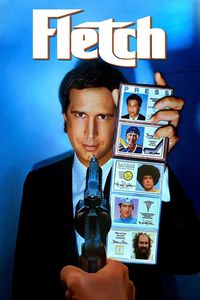
    (In French, On Cable TV, July 2019) Chevy Chase heads to rural Vermont in a comedy that pretty much plays as you’d expect. As Funny Farm begins, a Manhattan sports journalist and his wife head over to the country in the hopes of transforming an advance for a novel into a fresh start for them both, away from the busy rhythm of the city. Of course, they don’t know squat about the new house, the town, its people or even how to make friends with the locals. Hilarity, or at least predictable gags ensue. The inversions happen, the ironies pile up and yet Funny Farm isn’t much of a comedy. The comic style is very broad, to the point of feeling overly familiar even before seeing what happens next. You can call out the jokes from their setup, and even a slightly less predictable third act doesn’t really improve the entire thing. Chase is up to his usual self (which is either funny or not—his specific brand of comedy can go both ways), while Madolyn Smith is more remarkable as his wife. As someone who fetishizes the idea of writing full-time, I did get a kick out of some aspects of the film. Alas, that’s not quite enough to make me like the film. On the plus side, I didn’t quite hate Funny Farm either. But it would be fair to say that I found it almost useless, and not really worth revisiting.

  • Death Wish 3 (1985)

    Death Wish 3 (1985)

    (In French, On Cable TV, July 2019) I’ve been plumbing the depths of 1980s Hollywood lately, and movies seldom get as crazy as Death Wish III. If the original 1974 film was arguably a statement on early-1970s urban crime and the second 1982 film became an outright exploitation picture, this third instalment goes full-on bonkers in an attempt to give more to the target audience. Here we have the series protagonist (once again played by Charles Bronson, here in his mid-sixties) coming back to New York to visit an old army buddy. Except that the cops know what he’s done and are aware of the bad neighbourhood where he’s going and they have a deal for him: kill as many criminals as you want, and let us claim the credit. With a setup like that, it’s no surprise to find out that the protagonist’s army buddy is one of the last decent people in a crime-ridden neighbourhood where even the police fear to tread. Put together as if someone had no experience of American cities other than the worst crime dramas of the 1980s, this neighbourhood hosts ludicrous gangs with stylish looks that pretty much do whatever they want to anyone. Bronson steps in with a crime-fighting attitude and an unexplained supply of heavy weaponry. It all escalates ludicrously to out-and-out urban warfare by the end of the film, complete with anti-tank rockets being used to dispatch opponents. We’re far, far away from the 1970s angst of revenge here … and that may be part of the film’s peculiar charm. The Death Wish series has never been about serious exploration of issues, and while Death Wish 3 is fantastical in the way it treats New York City as a playground for explosive mayhem … at least it’s a bit less hypocritical about its intention. It’s really not a good movie, but at least it’s interesting in its craziness. In keeping with the series’ tradition of having a famous actor in an early role, here we have the always-stunning Marina Sirtis playing a victim of the hooligans. I’m not even covering half the nonsense of the film: Suffice to say that Death Wish 3 inches toward the have-to-be-seen-to-be-believed category of the worst of 1980s Hollywood. Alas, there’s a lot of competition in that field, but still: at least it’s an improvement over Death Wish 2.

  • Endless Love (1981)

    Endless Love (1981)

    (In French, On Cable TV, July 2019) Considering that an endless loop of “Endless Love” is the soundtrack of my nightmares, I really couldn’t wait until Endless Love (the movie) had run its course. Taking teenage romance to an obnoxious melodramatic intensity seldom seen elsewhere in fiction, this film features an obsessed male lead taking wilder and more dangerous steps to be with a particular girl, with devastating consequences. This is a film with several significant problems, but the biggest is probably a fundamental disconnect between its romantic and thriller elements. There’s an attempt her to recast a dangerously obsessive protagonist as a romantic hero and it really just doesn’t work. In fact, it’s so incongruous that at some point it’s justifiable to ask pointed questions about the filmmakers themselves and whether they’re being stupid or disingenuous in shaping the film to its final form. In any other movie, having a young man lust over a girl, setting fire to her house, going to a mental institution, being seduced by her mom, killing her father, pursuing her to Vermont and fighting her brother (even in a series of accidents) would be seen as, well, an outright villain. Or most likely a dark comedy if handled by sufficiently skillful filmmakers. Here, we’re close to full-on apologia at the protagonist just being romantic, up to and including her coming back to him at the end. You don’t need to look any further to understand how weird early-1980s films could be. It sounds like a nightmare when summarized, and it doesn’t feel any better when experienced one minute at a time. Except that you then spend two hours wondering what quirk of upbringing, touch of psychopathology or outright misanthropy from director Franco Zeffirelli would lead to such a badly ill-advised film. It’s this close to self-parody as it is that I wouldn’t mind someone actually taking one step further and making an actual parody out of it. Maybe they can even get a cameo from Tom Cruise, who here appears for the first time in a small but pivotal role.